Paul Cézanne’s “Two Vases of Flowers”: A Bridge Between Worlds
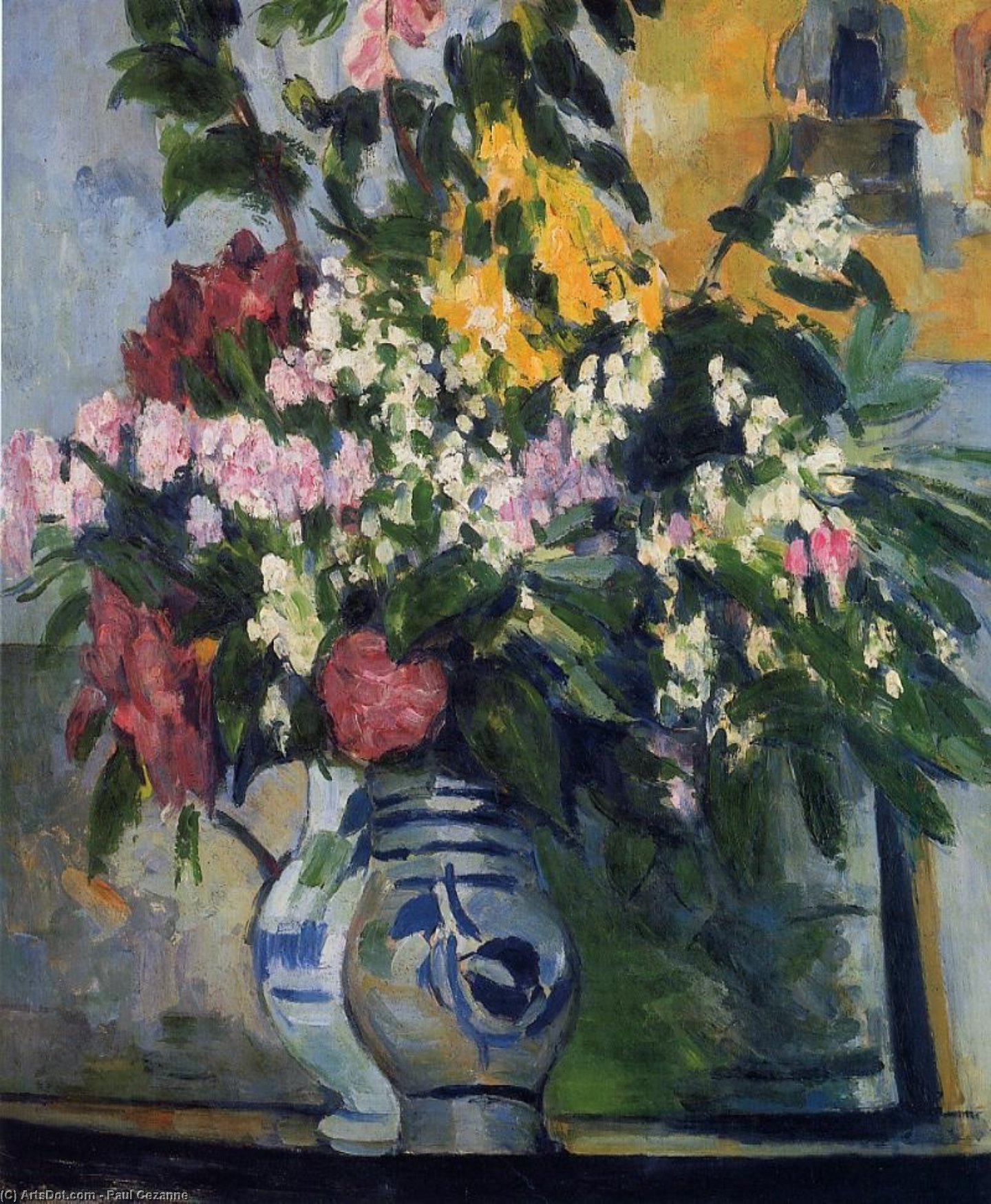
The world of art in the late 19th century was undergoing a profound transformation, and few artists captured this shift with such exquisite precision as Paul Cézanne. His “Two Vases of Flowers,” painted around 1877, isn’t merely a depiction of still life; it's a carefully constructed meditation on perception, form, and the very nature of seeing. This intimate scene, brimming with delicate pinks, purples, and yellows, represents a pivotal moment in Cézanne’s artistic journey – a bridge between the fleeting impressions of Impressionism and the nascent explorations of Cubism that would soon reshape modern art.
Cézanne's early work was deeply influenced by the Impressionists, particularly his time spent observing Monet and Pissarro. He initially embraced their focus on capturing the ephemeral effects of light and color, striving to render the immediate sensory experience. However, Cézanne quickly recognized that Impressionism, while beautiful, lacked a fundamental structure. He began to systematically dissect the objects before him – not just their appearance but also their underlying geometric forms. “Two Vases of Flowers” exemplifies this shift; the vases themselves are rendered with a solidity and depth rarely seen in earlier works, suggesting an attempt to capture the essence of the objects rather than simply reflecting their surface.
The Art of Observation: Cézanne’s Revolutionary Technique
What distinguishes “Two Vases of Flowers” is Cézanne's innovative approach to brushwork and color. He abandoned the short, broken strokes favored by the Impressionists in favor of larger, more deliberate planes of color applied with thick impasto. These bold strokes don’t blend seamlessly; instead, they retain their individual texture, creating a palpable sense of physicality within the painting. This technique wasn't simply about mimicking reality; it was about constructing an illusion of depth and volume through the manipulation of color and form. Notice how he uses subtle shifts in hue to define the contours of the vases and flowers, suggesting three-dimensionality on a two-dimensional surface.
Cézanne’s use of perspective is equally revolutionary. He deliberately distorted traditional spatial relationships, flattening the foreground and pushing the background elements forward. This wasn't an act of carelessness; it was a conscious decision to prioritize the formal qualities of the painting over strict adherence to realistic representation. The arrangement of the flowers within the vases feels slightly off-kilter, creating a sense of unease and inviting the viewer to actively engage with the composition.
Symbolism and Emotional Resonance
While Cézanne avoided overt symbolism in his work, “Two Vases of Flowers” is rich in subtle emotional cues. The vibrant colors evoke feelings of warmth, tranquility, and beauty – a celebration of the natural world. Yet, there’s also an underlying sense of stillness and contemplation, as if the artist were inviting us to pause and appreciate the simple pleasures of everyday life. Some art historians suggest that the arrangement of the flowers—particularly the placement of the yellow blooms—could represent a subtle commentary on the fleeting nature of beauty and the passage of time.
The painting’s enduring appeal lies in its ability to resonate with viewers on multiple levels. It's a visually stunning work of art, showcasing Cézanne’s mastery of color and form. But it’s also a deeply personal expression of his artistic vision – a testament to the power of observation, experimentation, and the pursuit of truth through art.
A Legacy of Innovation
Cézanne's influence on subsequent generations of artists is immeasurable. He paved the way for Cubism, with its fragmented forms and multiple perspectives, and inspired countless painters to explore new ways of representing reality. Artists as diverse as Henri Matisse and Pablo Picasso have acknowledged Cézanne’s profound impact on their work, famously declaring him “the father of us all.” “Two Vases of Flowers” stands as a powerful example of this legacy – a timeless masterpiece that continues to captivate and inspire art lovers around the world. For those seeking a high-quality reproduction, TopImpressionists offers meticulously crafted oil paintings that faithfully capture the essence of Cézanne’s vision.
Further Exploration: To delve deeper into the life and work of Paul Cézanne, we recommend visiting these resources:
Related Resources:
Learn More About Cézanne’s Influence: TopImpressionists offers a curated selection of reproductions showcasing the artist's groundbreaking techniques and enduring legacy.


 شراء نسخة مطبوعة
 مشاركة
 مشاركة
 التفاصيل

 تحميل الملف
 قطع مشابهة
 الأشعة السينية
 عرض شرائح


 عرض المزيد






































 خيار الزجاج متاح فقط للمقاسات التي تقل عن 110 سم



