

المعروض: · بالإطار:
 معاينة الحجم الواقعي
 مشاركة
 مشاركة
 التفاصيل
 دليل
دليل

 تحميل الملف
 قطع مشابهة
 الأشعة السينية
 عرض شرائح
 الأسئلة والأجوبة
 الإحصائيات
- 105.0 x 108.0 cm


E£ 14070
نسخة زيتية مرسومة يدوياً
لوحة زيتية مرسومة يدوياً على الكانفاس بالمقاس والإطار الذي تفضله، تُنفذ حسب الطلب على أيدي فنانينا. ( التبديل إلى نسخة مطبوعة الانتقال إلى الصورة الرقمية)
المقاس
·قياسي
حسب الطلب
CM
INCH
اختر من بين أحجامنا المُعدّة مسبقاً والتي تتوافق مع النسب الأصلية للعمل الفني.
جاري تحميل المقاسات...

العرض
الارتفاع
أدخل العرض والارتفاع اللذين تحتاجهما ليتناسب العمل مع إطارك أو جدارك. وبما أن هذه اللوحة مرسومة يدوياً، ففي حال اختيار مقاس بأبعاد مختلفة، يمكن للفنان رسم مساحة إضافية حول الصورة أو تقليصها قليلاً — الخيار لك. سنرسل لك نموذجاً رقمياً تجريبياً لاعتماده قبل البدء في الرسم. علماً بأن الصورة المعروضة في هذه الصفحة لا تعكس النتيجة النهائية الحقيقية، فالنموذج التجريبي هو الوحيد الذي يوضح ذلك بدقة.
 للمزيد من المعلومات
إنهاء
·
أبيض E£1

حواف ضبابية E£1

ممتد الحواف E£1

P118B E£10

P118H E£10

P118W E£10

P438Z E£10

P508JH E£12

P508YH E£12

P805H E£10

P805Z E£10

P919BZ E£10

P919G E£10

P919XJ E£10

P959ZH E£10

P968JZ E£12

W106C E£8

W218G E£10

W218JH E£8

W218Y E£10

W307PJ E£10

W316G E£10

W316PJ E£8

W316Y E£10

W398PJ E£8

W4111J E£10

W500HY E£15

W500JH E£15

W692G E£12

W849H E£8

W940BG E£15

W953PJ E£8

H24-GOLD E£30

H24-SILVER E£30

H36-GOLD E£45

H36-SILVER E£45
تُشحن في أنبوب واقٍ، لتكون جاهزة للتأطير لدى فني الإطارات الخاص بك.
للقطع التي يتجاوز طولها ١٠٥ سم، يتم شحن الإطار كمجموعة مخصصة لخبراء التأطير — اقرأ التفاصيل.
خدمات إضافية
اختياريماذا تشمل الإضافات؟
أمثلة على ما يمكن تغييره: استبدال الوجه بصورة العميل؛ إضافة حيوان أليف (على سبيل المثال، استبدال قطة بكلب)؛ تضمين رسالة مخفية في الخلفية؛ تغيير المناظر الطبيعية أو العناصر في الخلفية.
بعد الطلب، سيقوم فريق TopImpressionists.com بمراسلة العميل عبر البريد الإلكتروني للحصول على التعليمات وتزويده بمعاينة تجريبية للعمل
بعد الطلب، سيقوم فريق TopImpressionists.com بمراسلة العميل عبر البريد الإلكتروني للحصول على التعليمات وتزويده بمعاينة تجريبية للعمل
توصيل عالمي إلى خلال 3 إلى 4 أسابيع بدلاً من المدة المعتادة البالغة 5 أسابيع. (4 نوفمبر). جودة لا تهاون فيها.
ورنيش واقٍ
بطاقة التعريف
تفاصيل اللوحة البرونزية المحفورة
This elegant plaque features the artist's name and the title of the artwork, finely engraved for a timeless presentation.
It is made from bronze with a refined, elegant finish. The text is precisely laser-engraved for a sharp and permanent result. Measuring 9x2 cm, the plaque is compact yet easy to read. It's built to be durable and scratch-resistant, offering a professional, museum-quality look. Mounting is simple thanks to the included adhesive backing.
تفاصيل اللوحة الأكريليكية الشفافة
The plaque includes essential engraved details such as the artist's name, the title of the artwork, the date it was created, the type of media used-like oil on canvas or watercolor-a brief description of the piece, and a QR code that links to the complete artwork information.
It is crafted from clear acrylic, offering a sleek, modern appearance. The text is UV-engraved in black to ensure strong visual contrast. With a size of 10x15 cm, it ensures optimal readability. It comes equipped with two metal hooks for secure wall mounting. The plaque is designed to be weather-resistant, making it suitable for various environments, and it includes interactive features that work seamlessly with smartphone scanning.
تفاصيل اللوحة الأكريليكية السوداء
This elegant plaque includes engraved information such as the artist's name, the title of the artwork, the date it was created, the type of media used (like oil on canvas or watercolor), a short description of the artwork, and a QR code for quick access to more information.
The plaque itself is made from refined black acrylic with a premium finish. The text is laser-engraved in white for high contrast and readability. Its size is 10x15 cm, designed to be easy to read. It comes with two metal hooks for professional mounting. The design is sleek and fits any interior style. It is also weather-resistant and durable, with built-in digital integration for mobile compatibility.
خيار الزجاج متاح فقط للمقاسات التي تقل عن 110 سم
 خيار الزجاج متاح فقط للمقاسات التي تقل عن 110 سم
- شحن سريع ومجاني لجميع أنحاء العالم
- قماش كتان عالي الجودة
- تأمين شامل على الشحن
- ضمان استرداد الرسوم الجمركية
- ضمان مطابقة الألوان الحقيقية
- سياسة الإرجاع خلال 100 يوم (في حالات العيوب فقط)
- ضمان استرداد نقدي بنسبة 100%
- خصم عند طلب كميات


وصف القطعة المقتناة
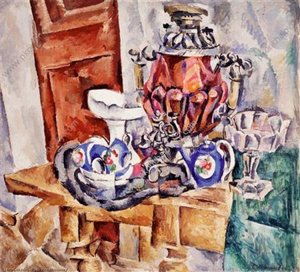
Experience Konchalovsky's 'Still Life with a Coffeepot,' a vibrant 1919 Fauvist masterpiece! Bold colors & Cubist influences create a harmonious, balanced scene.
السيرة الذاتية للفنان
فنان روسي بارز، بيوتر كونتشالوفسكي (1876-1956)، اشتهر بدمج أساليب الانطباعية والفاووية والواقعية الاشتراكية. استكشف أعماله الرائعة من المناظر الطبيعية والصور الشخصية التي تعكس تحولات روسيا الفنية والسياسية.
عن اللوحة
Still Life with a Coffeepot: A Fauvist Celebration of Everyday Objects
Pyotr Konchalovsky’s Still Life with a Coffeepot, painted in 1919, is a vibrant and captivating example of the Fauvist movement. Measuring 105 x 108 cm, this artwork transcends a simple depiction of domestic items; it's an exploration of color, form, and the expressive potential of paint itself.
Composition and Subject Matter
The painting presents a carefully arranged still life set upon a table draped with a warm yellow cloth. The scene is populated with familiar objects: a blue vase brimming with flowers, a small white bowl holding green fruits (likely limes), and the titular yellow teapot. These elements are not rendered with photographic realism but rather simplified and stylized to emphasize their inherent shapes and colors. The background, painted in varying shades of blue, provides a cool counterpoint to the warmer tones dominating the foreground, creating visual balance and depth. The arrangement isn't haphazard; it demonstrates Konchalovsky’s skill in orchestrating a harmonious composition that guides the viewer's eye across the canvas.
Fauvist Style and Influences
Konchalovsky was deeply influenced by French Impressionism and, most notably, Fauvism. The term "Fauve" (meaning “wild beast”) was applied to artists who utilized bold, non-naturalistic colors and expressive brushstrokes. Still Life with a Coffeepot exemplifies these characteristics. The colors are not used to accurately represent the objects but rather to evoke emotion and create visual impact. The visible brushwork adds texture and dynamism to the painting, further distancing it from traditional realism. One can also detect echoes of Paul Cézanne’s influence in Konchalovsky's approach to form and structure, particularly in the way he simplifies shapes and explores spatial relationships.
Historical Context and Artistic Significance
Created in 1919, shortly after the Russian Revolution, this painting reflects a period of significant social and artistic upheaval. Konchalovsky was a member of the Jack of Diamonds group, a collective of artists who actively challenged traditional representational art forms. This group sought to introduce modern European trends – particularly Fauvism and Cubism – into the Russian art scene. Still Life with a Coffeepot stands as a testament to this artistic rebellion, showcasing Konchalovsky’s contribution to the development of Fauvism within the context of Russian art. It represents a move away from academic conventions towards a more expressive and subjective approach to painting.
Emotional Impact and Lasting Appeal
Beyond its historical significance, Still Life with a Coffeepot possesses an undeniable emotional appeal. The vibrant colors and dynamic brushstrokes create a sense of energy and vitality. While the subject matter is commonplace – everyday objects found in a home – Konchalovsky elevates it to something extraordinary through his artistic vision. The painting evokes feelings of warmth, comfort, and perhaps even a touch of nostalgia. It’s a celebration of the beauty that can be found in the ordinary, rendered with an exuberance that continues to captivate viewers today.
الأسئلة والأجوبة
كيف يرتبط موضوع "Still Life with a Coffeepot" بالمواضيع المعتادة لدى بيوتر كونشالوفسكي؟
من بين الثيمات المسجلة لـ بيوتر كونشالوفسكي - وهي french impressionism, fauvism influence, paul cezanne’s style, everyday objects depicted artfully, russian art development, breaking from traditional art, contribution to fauvism - يركز عمل "Still Life with a Coffeepot" بشكل خاص على still life, coffeepot, flowers, tableware, fauvism, composition, warm colors, blue vase.
ما هي إعدادات الطباعة المقترحة لـ "Still Life with a Coffeepot" للفنان بيوتر كونشالوفسكي؟
مقاس Medium، واتجاه Square: هذا هو إعداد الطباعة المقترح لـ "Still Life with a Coffeepot" للفنان بيوتر كونشالوفسكي.
هل يمكن تنزيل صورة "Still Life with a Coffeepot"؟
يمكن تحميل صورة "Still Life with a Coffeepot" للفنان بيوتر كونشالوفسكي من صفحة التحميل الخاصة بالعمل الفني: تحميل الصورة الرقمية تحميل صورة رقمية عالية الدقة.
حقائق سريعة واختبار فني
عن بيوتر كونشالوفسكي

بيوتر كونشالوفسكي
1876 - 1956, روسيا
السيرة الذاتية للفنان
بيوتر كونشالوفسكي: بين التجديد والواقعية الاشتراكية في الفن الروسي
في قلب روسيا المتغيرة باستمرار، برز بيوتر بتروفيتش كونشالوفسكي (1876-1956) كفنان ومؤرخ بصري لتاريخ الأمة المضطرب. لم يكن عمله مجرد سلسلة من اللوحات؛ بل كان سجلاً مرئياً للتحولات العميقة التي شهدتها روسيا، بدءًا من الثورات وصولاً إلى التحولات الأيديولوجية الجذرية. وُلد في قرية سلافيانسك بالقرب من خاركيف، نشأ كونشالوفسكي في بيئة غنية بالتيارات الفكرية والإبداعية. كان والده، بتر بتروفيتش كونشالوفسكي، مترجمًا ومؤلفًا فنيًا مرموقًا، وقد تحولت منزلهم في موسكو إلى ملتقى للفنانين الروس البارزين مثل فالنتين سيروف وميخائيل فروبيل وفاسيلي سوريكوف. هذا التعرض المبكر للفن لم يكن مجرد ملاحظة عابرة؛ بل زرع في قلب الشاب بيوتر تقديرًا عميقًا للتعبير الفني، ومهد الطريق لمسيرته الفنية المستقبلية. كانت الرحلات الأسبوعية إلى معرض تريتياكوف للمعارض الفنية بمثابة تجارب تحويلية، حيث شكلت ذوقه الفني بجماليات الفنانين الروس العظام.
من باريس إلى طليعة الفن الروسي
بعد تلقيه تدريبه الأولي في مدارس موسكو للفنون، سافر كونشالوفسكي إلى باريس عام 1896، حيث درس في أكاديمية جوليان. كانت هذه الفترة بمثابة نقطة تحول في حياته الفنية، حيث اكتشف أعمال بول سيزان وفنسنت فان جوخ، الفنانين الذين تحدوا التمثيل التقليدي واستكشفوا طرقًا جديدة لإدراك الشكل واللون. رحلة لاحقة إلى أرليس سمحت له بفهم أعمق لرؤية فان جوخ الفنية - رحلة في قلب الكثافة التعبيرية. بعد عودته إلى روسيا، واصل دراسته في الأكاديمية الإمبراطورية للفنون في سانت بطرسبرغ، لكنه سرعان ما بدأ في صقل أسلوبه الفريد. أصبح كونشالوفسكي شخصية مركزية في حركة الطليعة الروسية، حيث شارك في تأسيس مجموعة "Knave of Diamonds" (البستوني)، التي رفضت التقاليد الأكاديمية واحتضنت التجريب. لعب دورًا حيويًا كأول رئيس للمجموعة في تشكيل اتجاهها وتعزيز أفكارها الجذرية.
التطور الفني: من التأثيرات الأوروبية إلى الواقعية الاشتراكية
شهدت رحلة كونشالوفسكي الفنية تطوراً ملحوظاً، متأثرة بالتيارات السياسية المتغيرة في روسيا. في البداية، تأثر بأعمال فاوڤيسم وسيزان، وتميزت أعماله المبكرة بالألوان الجريئة والأشكال المبسطة والتركيز على الهيكل. تجسد هذا الأسلوب بوضوح في لوحات مثل "Still Life with a Coffeepot"، والتي تعرض لوحة ألوان نابضة بالحياة وتكوينًا ديناميكيًا. بعد خدمته في الجيش الروسي خلال الحرب العالمية الأولى، بدأ أسلوبه في التحول. مع صعود الواقعية الاشتراكية بموجب النظام السوفيتي، طُلب من الفنانين أن يخدموا أغراضًا إيديولوجية، وأن يحتفلوا بالمثل العليا الاشتراكية وأن يصوروا شخصيات بارزة. على الرغم من هذا الانحراف عن استكشافاته الطليعية السابقة، إلا أن كونشالوفسكي تكيف مع هذه المتطلبات الجديدة، وأصبح معروفًا بصورته الاحتفالية. ومع ذلك، فقد حافظ على صوته الفني المميز، حيث أضفى حتى أعماله الأكثر ارتباطًا بالسياسة إحساسًا بالصلابة والضخامة. على مر حياته المهنية المثمرة - التي تقدر بأكثر من 5000 عمل - استكشف باستمرار الحياة الساكنة والمناظر الطبيعية وصور الأشخاص، مما يدل على تنوعه وتفانيه في فن الرسم.
إرث فني دائم
لا يمكن إنكار مساهمة بيوتر كونشالوفسكي في الفن الروسي. لقد جسر الفجوة بين الحداثة المبكرة والواقعية الاشتراكية، متجاوزًا التيارات السياسية المعقدة بينما ظل قوة فنية كبيرة. عززت معرضه المنفرد الأول في معرض تريتياكوف للمعارض مكانته كواحد من أبرز فناني روسيا. يتجاوز عمله مجرد كونه أشياء جمالية ممتعة بصريًا؛ إنه وثائق تاريخية تلقي ضوءاً على الفترة المضطربة التي تم إنشاؤها فيها. إنهم يقدمون رؤى قيمة حول تطور الفن الروسي والتحديات التي واجهت الفنانين الذين يعملون في مجتمع يتغير بسرعة. إن قدرة كونشالوفسكي على التكيف مع الحفاظ على أسلوبه المميز رسخت مكانته كشخصية رئيسية في تاريخ الفن الروسي، تاركًا وراءه إرثًا لا يزال يلهم ويأسر الجماهير حتى اليوم. عمله شهادة على مرونة التعبير الفني في مواجهة الاضطرابات السياسية، ويمكن رؤية تأثيره في فن روسيا المعاصر.
مواضيع وأعمال رئيسية
تكشف الأعمال الكبيرة لكونشالوفسكي عن موضوعات وشخصيات متكررة تعكس اهتماماته الفنية. كانت الحياة الساكنة ثابتًا طوال حياته المهنية، مما سمح له باستكشاف الشكل واللون والتكوين في بيئة خاضعة للرقابة. غالبًا ما صور أشياء عادية - فواكه وأزهار وأطباق - منحه إياها إحساسًا بالوزن والحضور. احتلت المناظر الطبيعية، وخاصة تلك المستوحاة من رحلاته، مكانة خاصة في أعماله، حيث التقطت جمال العالم الطبيعي وعظمته. ومع ذلك، ربما برع كونشالوفسكي بشكل خاص في تصوير الأشخاص، حيث ابتكر صورًا مقنعة لرفاقه، غالبًا ما كانت تنضح بعمق نفسي. تراوحت صوره بين تصويرات حميمة لأفراد العائلة وتمثيلات احتفالية لشخصيات سوفييتية بارزة. كما جرب مشاهد الأنواع والمواضيع التاريخية، مما يدل على استعداده لمواجهة تحديات فنية متنوعة. حجم عمله الهائل - أكثر من 5000 قطعة - هو شهادة على تفانيه الدؤوب والتزامه الثابت بفن الرسم.
حقائق سريعة عن بيوتر كونشالوفسكي
- Artistic Movement Or Style: الفنون الحديثة، الفافيزم، الواقعية
- Artists Or Movements Influenced By This Artist: ['الفنون الحديثة الروسية']
- Artists Who Influenced This Artist:
- بول سزان
- فينيسس فان جوخ
- Date Of Birth: ٢١ فبراير ١٨٧٦
- Date Of Death: ٢ فبراير ١٩٥٦
- Full Name: Pyotr Petrovich Konchalovsky
- Nationality: روسي
- Notable Artworks:
- لوحة طبيعية
- إناء قهوة
- أفراد نوفغورد
- Place Of Birth: خركيف، روسيا
أعمال فنية ذات صلة




بيوتر كونشالوفسكي
Still Life with a Coffeepot
() ·
بالإطار: · رُسمت يدوياً بالزيت على الكتان
الإجمالي