La etapa: A Surrealist Echo of Childhood Trauma
René Magritte’s “La etapa,” or “The Stage,” is more than just a depiction of an ordinary scene; it's a meticulously crafted puzzle designed to unsettle the viewer and invite contemplation on themes of memory, loss, and the elusive nature of reality. Painted in 1962, this iconic Surrealist artwork embodies Magritte’s signature style—characterized by deceptively simple compositions juxtaposed with jarring incongruities that challenge our assumptions about perception.
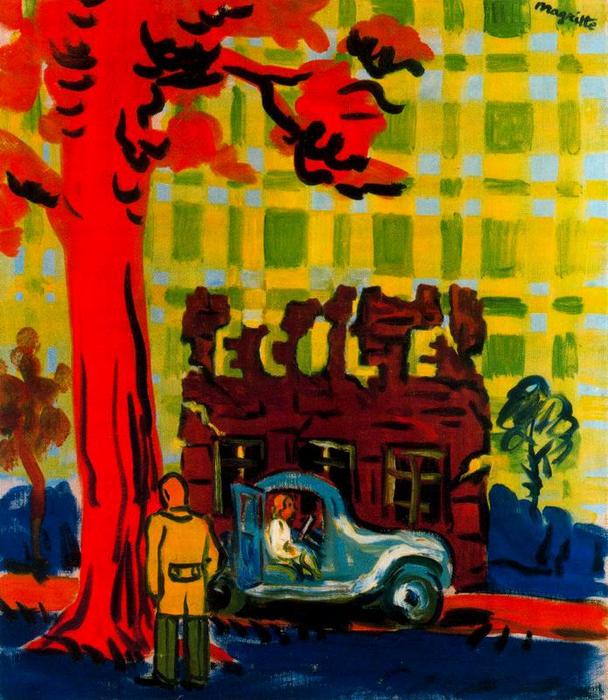
- Subject Matter: The painting presents a stark tableau featuring a man standing beside a tree and gazing upon a parked automobile. Alongside him sits a woman, seemingly absorbed in her own thoughts. These figures are rendered in muted tones, contributing to the overall atmosphere of quiet contemplation.
- Style & Technique: Magritte’s masterful use of oil paint creates a textured surface that subtly enhances the visual impact of the scene. The artist employs a technique rooted in meticulous observation and careful blending—a hallmark of Surrealist practice—to achieve an illusionistic realism that simultaneously reinforces and undermines its subject matter.
- Historical Context: Created during Magritte’s prolific period, “La etapa” reflects the broader artistic currents of Surrealism, which emerged in Europe after World War I as a reaction to rational thought and championed the exploration of dreams and subconscious desires. Influenced by thinkers like Sigmund Freud, Surrealists sought to liberate art from conventional constraints and tap into the realm of irrationality.
Symbolism: The Tree, The Car, And The Hidden Face
The tree itself serves as a potent symbol—representing resilience, growth, and perhaps even the enduring presence of formative experiences. Its stark silhouette against the muted backdrop underscores the painting’s melancholic mood. Simultaneously, the automobile embodies modernity and progress, yet its positioning before the tree introduces an element of discordance. The car's headlights illuminate the scene, casting shadows that heighten the sense of mystery.
Perhaps the most striking visual detail is the woman seated in the car—her face obscured by a curtain or cloth. This deliberate concealment speaks to Magritte’s preoccupation with concealing what is seen and revealing what remains hidden beneath the surface. It echoes the image of his mother's body recovered from the River Sambre, symbolizing the trauma of childhood and the difficulty of confronting painful memories.
Emotional Impact & Artistic Legacy
"La etapa" resonates deeply with viewers due to its ability to provoke introspection and question our understanding of reality. Magritte’s deliberate ambiguity compels us to confront uncomfortable truths about memory, identity, and the limitations of perception—themes that continue to fascinate art historians and critics today.
Its influence extends far beyond the Surrealist movement itself, inspiring artists across genres to explore similar strategies of visual paradox. “La etapa” stands as a testament to Magritte’s genius—a deceptively simple painting that encapsulates the profound philosophical concerns of its time and endures as an emblem of Surrealist artistry.
- Recommended Reproduction: Consider commissioning a high-quality hand-painted reproduction from TopImpressionists.com for your home or office – bringing Magritte’s visionary aesthetic into your space.
- Further Exploration: Visit the Magritte Museum in Brussels (Museées Royaux Des Beaux) to immerse yourself in the artist’s oeuvre and gain deeper insights into his artistic philosophy.


 معاينة الحجم الحقيقي
 اشترِ نسخة مطبوعة
 مشاركة
 مشاركة
 التفاصيل

 تحميل الملف
 قطع مشابهة
 الأشعة السينية
 عرض شرائح
 عرض المزيد






































 خيار الزجاج متاح فقط للمقاسات التي تقل عن 110 سم



