A Portrait of Quiet Contemplation: René Magritte’s “The maimed”
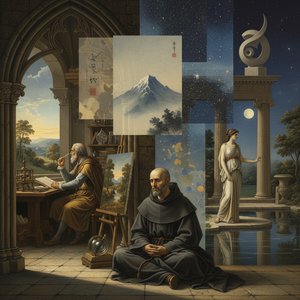
“The maimed,” painted in 1948 by René Magritte, stands as a deceptively simple yet profoundly unsettling exploration of perception and identity—a hallmark of Surrealist art. This striking image depicts a man seated at a table, bathed in muted light, meticulously examining a clock. Beside him rests a cigar and a cigarette, adding layers of visual detail that subtly complicate the scene’s narrative. The artist's masterful use of color – predominantly shades of brown and beige – contributes to an atmosphere of stillness and introspection, mirroring the man’s focused gaze.
- Style: Surrealism
- Technique: Oil on canvas
- Size: Unknown
The painting's historical context is firmly rooted in the burgeoning Surrealist movement of the mid-20th century, spearheaded by André Breton. Magritte’s work deliberately challenged rational thought and embraced dreamlike imagery to provoke viewers into questioning accepted realities. Influenced heavily by Dadaism and Expressionism, Magritte sought to liberate art from conventional representation, prioritizing emotion and subconscious associations over literal depiction. He famously declared that he wanted to “paint what I see,” but insisted that what he sees isn’t necessarily what is there—a statement that encapsulates the core tenet of Surrealist philosophy.
- Historical Context: Mid-20th Century Surrealism
- Influences: Dadaism, Expressionism
Symbolically, “The maimed” operates on multiple levels. The clock itself represents time—a concept Magritte frequently tackled in his art, often portraying it as an illusion or a barrier to understanding. Its placement beside the cigar and cigarette suggests contemplation of pleasure and indulgence juxtaposed against the relentless march of time. Furthermore, the man’s posture conveys a sense of detachment and observation, hinting at a preoccupation with inner thoughts and anxieties—themes prevalent in Magritte's oeuvre. The muted color palette reinforces this mood of quiet melancholy, inviting viewers to ponder the complexities of human experience.
- Symbolism: Time, Pleasure vs. Reflection
Ultimately, “The maimed” transcends mere visual representation; it’s an invitation to engage in a dialogue with the viewer's own perceptions. Magritte compels us to confront the limitations of logic and embrace the ambiguity inherent in artistic expression. Like many of his celebrated works—including "The Lovers" and "The Treachery of Images"—this painting continues to resonate today, captivating audiences with its understated elegance and enduring psychological depth. It serves as a testament to Magritte’s genius in capturing not just what is seen but what lies beneath the surface of consciousness.



 اطلب نسخة مرسومة يدوياً
 مشاركة
 مشاركة
 التفاصيل

 تحميل الملف
 قطع مشابهة
 الأشعة السينية
 عرض شرائح

 عرض المزيد






































 خيار الزجاج متاح فقط للمقاسات التي تقل عن 110 سم