

المعروض: · بالإطار:
 معاينة الحجم الواقعي
 مشاركة
 مشاركة
 التفاصيل
 دليل
دليل

 تحميل الملف
 قطع مشابهة
 الأشعة السينية
 عرض شرائح
 الأسئلة والأجوبة
 الإحصائيات


E£ 14089
نسخة زيتية مرسومة يدوياً
لوحة زيتية مرسومة يدوياً على الكانفاس بالمقاس والإطار الذي تفضله، تُنفذ حسب الطلب على أيدي فنانينا. ( التبديل إلى نسخة مطبوعة الانتقال إلى الصورة الرقمية)
المقاس
·قياسي
حسب الطلب
CM
INCH
اختر من بين أحجامنا المُعدّة مسبقاً والتي تتوافق مع النسب الأصلية للعمل الفني.
جاري تحميل المقاسات...

العرض
الارتفاع
أدخل العرض والارتفاع اللذين تحتاجهما ليتناسب العمل مع إطارك أو جدارك. وبما أن هذه اللوحة مرسومة يدوياً، ففي حال اختيار مقاس بأبعاد مختلفة، يمكن للفنان رسم مساحة إضافية حول الصورة أو تقليصها قليلاً — الخيار لك. سنرسل لك نموذجاً رقمياً تجريبياً لاعتماده قبل البدء في الرسم. علماً بأن الصورة المعروضة في هذه الصفحة لا تعكس النتيجة النهائية الحقيقية، فالنموذج التجريبي هو الوحيد الذي يوضح ذلك بدقة.
 للمزيد من المعلومات
إنهاء
·
أبيض E£1

حواف ضبابية E£1

ممتد الحواف E£1

P118B E£10

P118H E£10

P118W E£10

P438Z E£10

P508JH E£12

P508YH E£12

P805H E£10

P805Z E£10

P919BZ E£10

P919G E£10

P919XJ E£10

P959ZH E£10

P968JZ E£12

W106C E£8

W218G E£10

W218JH E£8

W218Y E£10

W307PJ E£10

W316G E£10

W316PJ E£8

W316Y E£10

W398PJ E£8

W4111J E£10

W500HY E£15

W500JH E£15

W692G E£12

W849H E£8

W940BG E£15

W953PJ E£8

H24-GOLD E£30

H24-SILVER E£30

H36-GOLD E£45

H36-SILVER E£45
تُشحن في أنبوب واقٍ، لتكون جاهزة للتأطير لدى فني الإطارات الخاص بك.
للقطع التي يتجاوز طولها ١٠٥ سم، يتم شحن الإطار كمجموعة مخصصة لخبراء التأطير — اقرأ التفاصيل.
خدمات إضافية
اختياريماذا تشمل الإضافات؟
أمثلة على ما يمكن تغييره: استبدال الوجه بصورة العميل؛ إضافة حيوان أليف (على سبيل المثال، استبدال قطة بكلب)؛ تضمين رسالة مخفية في الخلفية؛ تغيير المناظر الطبيعية أو العناصر في الخلفية.
بعد الطلب، سيقوم فريق TopImpressionists.com بمراسلة العميل عبر البريد الإلكتروني للحصول على التعليمات وتزويده بمعاينة تجريبية للعمل
بعد الطلب، سيقوم فريق TopImpressionists.com بمراسلة العميل عبر البريد الإلكتروني للحصول على التعليمات وتزويده بمعاينة تجريبية للعمل
توصيل عالمي إلى خلال 3 إلى 4 أسابيع بدلاً من المدة المعتادة البالغة 5 أسابيع. (6 نوفمبر). جودة لا تهاون فيها.
ورنيش واقٍ
بطاقة التعريف
تفاصيل اللوحة البرونزية المحفورة
This elegant plaque features the artist's name and the title of the artwork, finely engraved for a timeless presentation.
It is made from bronze with a refined, elegant finish. The text is precisely laser-engraved for a sharp and permanent result. Measuring 9x2 cm, the plaque is compact yet easy to read. It's built to be durable and scratch-resistant, offering a professional, museum-quality look. Mounting is simple thanks to the included adhesive backing.
تفاصيل اللوحة الأكريليكية الشفافة
The plaque includes essential engraved details such as the artist's name, the title of the artwork, the date it was created, the type of media used-like oil on canvas or watercolor-a brief description of the piece, and a QR code that links to the complete artwork information.
It is crafted from clear acrylic, offering a sleek, modern appearance. The text is UV-engraved in black to ensure strong visual contrast. With a size of 10x15 cm, it ensures optimal readability. It comes equipped with two metal hooks for secure wall mounting. The plaque is designed to be weather-resistant, making it suitable for various environments, and it includes interactive features that work seamlessly with smartphone scanning.
تفاصيل اللوحة الأكريليكية السوداء
This elegant plaque includes engraved information such as the artist's name, the title of the artwork, the date it was created, the type of media used (like oil on canvas or watercolor), a short description of the artwork, and a QR code for quick access to more information.
The plaque itself is made from refined black acrylic with a premium finish. The text is laser-engraved in white for high contrast and readability. Its size is 10x15 cm, designed to be easy to read. It comes with two metal hooks for professional mounting. The design is sleek and fits any interior style. It is also weather-resistant and durable, with built-in digital integration for mobile compatibility.
خيار الزجاج متاح فقط للمقاسات التي تقل عن 110 سم
 خيار الزجاج متاح فقط للمقاسات التي تقل عن 110 سم
- شحن سريع ومجاني لجميع أنحاء العالم
- قماش كتان عالي الجودة
- تأمين شامل على الشحن
- ضمان استرداد الرسوم الجمركية
- ضمان مطابقة الألوان الحقيقية
- سياسة الإرجاع خلال 100 يوم (في حالات العيوب فقط)
- ضمان استرداد نقدي بنسبة 100%
- خصم عند طلب كميات


وصف القطعة المقتناة
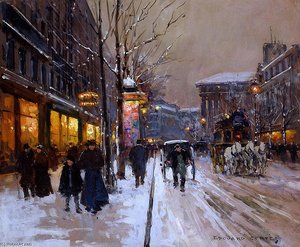
Robert Henri’s "Snow in New York" (1902) captures a gritty NYC street scene with thick impasto and muted tones, reflecting the Ashcan School's realism. Explore urban life through this iconic painting.
السيرة الذاتية للفنان
"روبرت هنري (1865-1929) رائد حركة "أشكان سكول"، اشتهر بتصويره الواقعي الصارخ للحياة اليومية في أمريكا. أثر على فنانين مثل إدوارد هوبر، وساهم في تطوير الفن الأمريكي الحديث."
عن اللوحة
A Winter’s Gaze: Robert Henri's "Snow in New York"
Robert Henri’s “Snow in New York,” painted in 1902, isn’t merely a depiction of a snowy street; it’s a raw, almost brutal, distillation of urban life captured with an unprecedented honesty for its time. Far removed from the idealized landscapes favored by many of his contemporaries, Henri plunges headfirst into the gritty reality of New York City, presenting a scene both familiar and profoundly unsettling. The painting immediately commands attention not through picturesque beauty, but through its stark simplicity and the palpable sense of unease it evokes – a feeling that speaks volumes about the burgeoning anxieties of a rapidly changing America.
Henri’s style firmly places “Snow in New York” within the Ashcan School movement. Rejecting the academic traditions of the National Academy of Design, the Ashcan painters sought to portray everyday life—often the less glamorous aspects—with unflinching realism. This isn't a romanticized view; instead, we encounter a common side street, devoid of grand avenues or iconic landmarks. The composition is deliberately straightforward, utilizing a single-point perspective that draws the eye directly into the scene, emphasizing its immediacy and lack of embellishment. Thick impasto—a technique where paint is applied thickly to create texture—dominates the canvas, lending a tactile quality to the buildings, the snowdrifts, and even the figures traversing the street. The muted palette – browns, grays, and whites – further contributes to the painting’s somber mood, creating an atmosphere of quiet desperation.
The Painter's Perspective: Henri and the Ashcan School
Understanding Robert Henri requires acknowledging his pivotal role in shaping the Ashcan School. Born Robert Henry Cozad in Cincinnati in 1865, Henri’s early life was marked by instability following a fatal shooting involving his father. This event profoundly shaped his artistic vision, leading him to embrace a radical approach to painting—one that prioritized direct observation and honest representation over idealized beauty. Henri's time in Paris exposed him to the Impressionists, but he quickly moved beyond their focus on light and color, seeking instead to capture the essence of American life with unflinching detail. He famously declared that art should be “akin to journalism,” mirroring the straightforwardness and social commentary found in contemporary newspapers.
Henri’s studio became a hub for a group of like-minded artists—including George Luks, Everett Shinn, and William Glackens—collectively known as the "Philadelphia Four." They gathered regularly to discuss art, literature, and philosophy, fostering a spirit of experimentation and challenging established artistic conventions. This collaborative environment fueled their shared desire to depict the realities of urban America, often focusing on marginalized communities and the struggles faced by ordinary people.
Symbolism in the Streetscape
While seemingly simple, “Snow in New York” is rich with symbolic meaning. The absence of grand buildings or recognizable landmarks suggests a sense of anonymity and isolation within the vastness of the city. The figures walking along the street—carrying handbags, bundled in coats—represent the everyday lives of New Yorkers, their faces obscured by the gloom, lost in their own thoughts. The snow itself acts as a metaphor for both hardship and resilience – covering the streets but also creating a temporary sense of stillness. The presence of a wagon suggests commerce and the relentless cycle of urban activity, highlighting the constant struggle for survival.
Notably, Henri’s choice to depict a common street rather than a major avenue is significant. It reflects his deliberate rejection of romanticized views of New York and his focus on the overlooked corners of the city—the places where life unfolded with quiet intensity. The painting isn't about spectacle; it’s about capturing the essence of an ordinary day in an extraordinary place.
A Legacy of Realism
“Snow in New York” remains a powerful testament to Robert Henri’s artistic vision and his pioneering role in American art. It stands as a crucial example of the Ashcan School, demonstrating a commitment to realism, social commentary, and an honest portrayal of urban life. Reproductions of this evocative painting continue to resonate with viewers today, offering a glimpse into the heart of early 20th-century New York—a city grappling with rapid change, industrialization, and the challenges of modernity. Its enduring appeal lies in its ability to capture not just a scene, but also the complex emotions and experiences of those who lived within it.
الأسئلة والأجوبة
ما هو الشعور الذي يجسده "Snow in New York" للفنان روبرت هنري؟
تتجلى النبرة العاطفية لـ "Snow in New York" للفنان روبرت هنري في كونها Melancholic، مما يلخص الإحساس الذي يفيض به العمل الفني.
ما هي التقنية المستخدمة في تنفيذ "Snow in New York" للفنان روبرت هنري؟
تعتمد التقنية المستخدمة في "Snow in New York" للفنان روبرت هنري على Acrylic On Canvas، وتهدف النسخ المطبوعة إلى محاكاة مظهر هذه التقنية.
من أي بلد ينتمي عمل Ashcan School بعنوان "Snow in New York"؟
أُنجز العمل الذي ينتمي إلى مدرسة Ashcan School بعنوان "Snow in New York" على يد فنان وُلد في الولايات المتحدة الأمريكية.
حقائق سريعة واختبار فني
عن روبرت هنري

روبرت هنري
1865 - 1929, الولايات المتحدة الأمريكية
السيرة الذاتية للفنان
نشأة روبرت هنري: حياة مبكرة مضطربة
روبرت هنري، وُلد روبرت هنري كوزاد في سينسيناتي بولاية أوهايو عام 1865، حمل بداخله منذ البداية شعورًا بالتشرد وإعادة الاختراع الذي سيشكل بعمق حياته وفنه. لم تكن طفولته مثالية؛ بل كانت مظللة بالعلاقة المتوترة بين والده، جون جاكسون كوزاد - رجل طموح ومخاطر كمقامر ومطور عقاري - ووالدته، ثيريزا جيتوود كوزاد. بلغ هذا الاضطراب ذروته في حدث مأساوي عام 1882: إطلاق نار قاتل بسبب نزاع على الأراضي أجبر العائلة على الفرار وتبني هويات جديدة لتجنب الانتقام. أصبح روبرت الصغير روبرت هنري، وهو فصل متعمد عن ماضٍ مليء بالصراع وولادة رمزية كفنان. ورحلة الغرب عبر نيوبرسكا وكولورادو، والتي انتهت بالاستقرار في مدينة نيويورك ثم أتلانتيك سيتي، غرست فيه تعاطفًا عميقًا مع أولئك الذين يعيشون على هامش المجتمع - وهو التعاطف الذي سيصبح سمة مميزة لرؤيته الفنية. عززت هذه التجربة المبكرة من الاضطرابات وإعادة الاختراع روح الاستقلالية والالتزام بتصوير الحياة كما هي حقًا، دون قيود أو توقعات مجتمعية.
تشكيل رؤية جديدة: التطور الفني والتأثيرات
بدأ تعليم هنري الفني الرسمي في أكاديمية بنسلفانيا للفنون الجميلة بفيلادلفيا تحت إشراف توماس أنشوتز، حيث صقل مهاراته التقنية. ومع ذلك، كانت رحلته اللاحقة إلى باريس عام 1888 هي التي أشعلت حقًا نهضته الفنية. انجذب في البداية إلى التقليد الأكاديمي في أكاديمية جوليان وتأثر بالأساتذة مثل ويليام أدولف بوغيرو وفرانسوا مييه، لكن هنري لم يكتفِ بمجرد تكرار ما رآه؛ بل سعى إلى مشاركة أعمق مع الواقع - وهي طريقة لالتقاط ليس فقط التأثيرات العابرة للضوء ولكن أيضًا المشاعر الخام وحيوية الحياة الحديثة. قاده هذا السعي إلى تبني نهج أكثر جرأة ومباشرة، متأثرًا بالواقعي الهولندي فرانز هالز، الذي لاقت أعماله الفنية بفرشاتها الحرة وبصيرتها النفسية صدى عميقًا لحساسيته الفنية الخاصة. بدأ في تجربة *pochades*، وهي لوحات خشبية صغيرة تستخدم للرسومات السريعة، مما يشجع العفوية والاندفاع في عمله. بعد عودته إلى أمريكا، أصبح معلمًا متفانيًا، حيث لم يلقن التقنيات فحسب، بل أيضًا فلسفة فنية متجذرة في الملاحظة والصدق والتعبير الفردي.
الدفاع عن الواقع: مدرسة أشكان و"الثمانية"
امتد تأثير روبرت هنري على الفن الأمريكي إلى ما هو أبعد من لوحاته الخاصة؛ فقد أصبح محفزًا للتغيير، حيث تحدى الأعراف المحافظة للعالم الفني الراسخ. كان شخصية مركزية في ظهور مدرسة أشكان - وهي مجموعة من الفنانين الذين تجرأوا على تصوير الحقائق القاسية للحياة الحضرية، من شوارع المدينة الصاخبة إلى المساكن المزدحمة. أدى التزام هنري بالواقع ورفضه للزخرفة الأكاديمية إلى تنظيمه "الثمانية" في عام 1908 - وهي مجموعة من الفنانين ذوي التفكير المماثل بما في ذلك ويليام جلاكنز وجورج لوكس وإيفرت شين وجون سلوان - الذين نظموا معرضًا مستقلاً كاحتجاج مباشر على السياسات المقيدة لأكاديمية التصميم الوطنية. كانت هذه الفعلة الجريئة لحظة فاصلة في تاريخ الفن الأمريكي، حيث أشارت إلى تحول بعيدًا عن الهيمنة الأوروبية نحو صوت فني أمريكي فريد من نوعه. التقطت لوحات هنري خلال هذه الفترة، مثل "امرأة بمعطف" (1899) وصوره المؤثرة، كرامة ومرونة الناس العاديين، وقدمت تناقضًا قويًا مع التمثيلات المثالية المفضلة لدى المؤسسة.
الإرث والتأثير الدائم
إن تأثير روبرت هنري على الأجيال اللاحقة من الفنانين الأمريكيين لا يقدر بثمن. كمعلم، قام بتوجيه قائمة رائعة من المواهب بما في ذلك جوزيف ستيلا وإدوارد هوبر وروكويل كنت وجورج بيلوز ونورمان رايبن ولويس دي فانشر وستيوارت ديفيس - فنانين سيشكلون مسار فن القرن العشرين. لا يزال كتابه، *روح الفن*، الذي نُشر بعد وفاته عام 1923، نصًا أساسيًا للفنانين الطموحين، حيث يقدم حكمة خالدة حول الملاحظة والتقنية وأهمية النزاهة الفنية. إن التزام هنري بتصوير الحياة بصدق وتعاطف ورفضه للاتفاقيات وإيمانه الراسخ بقوة الفن للتواصل مع الجماهير يستمر في إلهام الفنانين اليوم. لوحاته ليست مجرد تمثيلات للواقع؛ إنها نوافذ على الحالة الإنسانية - شهادات على جمال وكفاح ومرونة الروح البشرية. لقد ترك بصمة لا تُمحى على الواقعية الأمريكية، ممهدًا الطريق لعالم فني أكثر ديمقراطية وشاملة يحتفل بالتجارب اليومية للناس العاديين. يستمر إرثه ليس فقط من خلال أعماله الرائعة الخاصة ولكن أيضًا من خلال الفنانين الذين ألهمهم لإيجاد أصواتهم الخاصة ورواية قصصهم الخاصة.
حقائق سريعة عن روبرت هنري
- أعمال بارزة:
- امرأة بمعطف
- الثلج
- O بوشاح أسود
- الاسم الكامل: روبرت هنري
- الجنسية: أمريكي
- الحركة الفنية: مدرسة أشكان، الواقعية
- تاريخ الميلاد: 24 يونيو 1865
- تاريخ الوفاة: 12 يوليو 1929
- فنانون مؤثرون:
- ويليام بوغيرو
- فرانسوا مييه
- فنانون متأثرون:
- إدوارد هوبر
- مجموعة الفنانين الثمانية
- مكان الميلاد: سينسيناتي، الولايات المتحدة
أعمال فنية ذات صلة




روبرت هنري
Snow in New York
() ·
بالإطار: · رُسمت يدوياً بالزيت على الكتان
الإجمالي