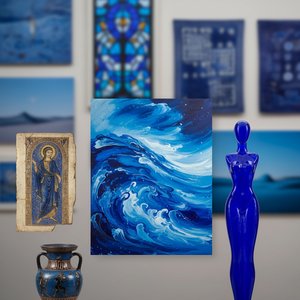
Vertigo: A Descent into Surreal Imagination
Salvador Dalí’s “Vertigo,” completed in 1930, isn't merely a painting; it’s an invitation to wander through the labyrinthine corridors of the subconscious. This monumental oil on canvas captures a scene of profound unease and fascination—a man perched precariously on a cliff edge overlooking a desolate valley, accompanied by figures whose movements seem strangely disconnected from reality.
- Subject Matter: The painting depicts an unsettling juxtaposition of natural landscape and human presence. The cliff face represents instability and impending doom, while the valley below embodies emptiness and oblivion.
- Style & Technique: Dalí’s signature style—characterized by meticulous detail and hallucinatory imagery—is evident throughout “Vertigo.” He employs a technique known as hyperrealism, pushing the boundaries of observation to create an illusion of palpable presence. The unsettling distortions of perspective and scale contribute to the painting's dreamlike quality.
- Historical Context: Created during Dalí’s formative years as a Surrealist artist, “Vertigo” aligns perfectly with the movement’s exploration of irrationality and psychological anxieties. Surrealism sought to liberate art from the constraints of logic and reason, tapping into the realm of dreams and unconscious desires—a preoccupation that finds its most striking expression in this artwork.
Symbolism: Layers of Meaning Beneath the Surface
Beyond its visual impact lies a rich tapestry of symbolism. The prominent blue ball positioned centrally serves as a focal point, representing both stability and detachment. Its presence disrupts the cliff’s precariousness, suggesting an unattainable ideal or perhaps a futile grasp at control. Furthermore, the figures surrounding the man are rendered in ambiguous poses, hinting at anxieties about identity and fragmentation—themes central to Dalí's broader artistic concerns.
- The Cliff Edge: Represents vulnerability, fear of falling, and the confrontation with mortality.
- The Valley Below: Symbolizes emptiness, despair, and the abyss of oblivion – mirroring anxieties about existential uncertainty.
- The Blue Ball: Suggests unattainable perfection or a futile attempt to maintain equilibrium amidst chaos.
Emotional Resonance: Capturing the Essence of Dread
"Vertigo" succeeds in conveying an overwhelming sense of dread and disorientation. Dalí expertly utilizes color palettes—primarily muted browns and blues—to heighten the painting’s oppressive atmosphere. The meticulous rendering of textures – from the rough stone of the cliff to the smooth surface of the ball – engages the viewer's senses, immersing them in a world where reality bends to the will of imagination.
- Color Palette: Creates an unsettling mood of isolation and melancholy.
- Texture Rendering: Enhances realism and contributes to the painting’s immersive quality.
Conclusion: An Enduring Legacy
"Vertigo" remains a cornerstone of Surrealist art, demonstrating Dalí's unparalleled ability to translate psychological anxieties into visual splendor. Its enduring appeal lies in its capacity to provoke contemplation about the human condition—a reminder that beneath the veneer of everyday life lurks a hidden world of dreams and desires. A reproduction of this masterpiece offers not only aesthetic pleasure but also access to the profound intellectual currents that shaped one of art history’s most influential figures.



 معاينة الحجم الحقيقي
 التحويل إلى لوحة مرسومة يدوياً
 مشاركة
 مشاركة
 التفاصيل

 تحميل الملف
 قطع مشابهة
 الأشعة السينية
 عرض شرائح
 عرض المزيد






































 خيار الزجاج متاح فقط للمقاسات التي تقل عن 110 سم