

Shown: · With its frame:
 معاينة الحجم الواقعي
 إرسال
إرسال مشاركة
 عرض التفاصيل
 دليل الأعمال الفنية للطلاب

 تحميل
تحميل
 قطع مشابهة
 الأشعة السينية
 عرض شرائح متتابع
 Q&A
Q&A الإحصائيات
Study (verso)
 Oil On Panel
- Tonal Impressionism
 Modern
 25.0 x 33.0 cm
 The Munnings Art Museum
E£ 14013
نسخة زيتية مصنوعة يدوياً
لوحة زيتية مرسومة يدوياً على الكانفاس بالمقاس والإطار الذي تفضله، تُنفذ حسب الطلب على أيدي فنانينا. ( التبديل إلى المطبوعات التحويل إلى الصورة الرقمية)
هذا العمل الفني محمي بموجب حقوق الطبع والنشر
إن العمل الفني المعروض في هذه الصفحة محمي بموجب قوانين حقوق الطبع والنشر، مما يعني أنه لا يحق لنا قانوناً إنشاء أو بيع نسخ مطابقة له. وتُطبق هذه الحماية بموجب الاتفاقيات الدولية مثل الـ اتفاقية برن ووفقاً للقوانين الوطنية، بما في ذلك تلك المنصوص عليها في قانون حقوق الطبع والنشر في الولايات المتحدة - الباب 17.
وكبديل قانوني ومحترم، نقدم أعمالاً فنية مخصصة ومرسومة يدوياً مستوحاة من العمل الأصلي. حيث يقوم فنانونا المهرة والمحترفون بدراسة أسلوب العمل الأصلي، وأجوائه، وجوهره الفني بعناية فائقة لابتكار قطعة جديدة وفريدة تثير الشعور ذاته - مع بقائها عملاً أصيلاً بحد ذاته.
تتوافق هذه الطريقة تماماً مع لوائح حقوق النشر لأنها لا تتضمن نسخ أو تكرار العمل الفني المحمي، بل هي إعادة تفسير إبداعية؛ أي أنها لوحة جديدة مستوحاة من الأصل ولكنها ليست مطابقة له.
 اقرأ المزيد
Size
·مقاس قياسي
مخصص
CM
INCH
اختر من بين أحجامنا المُعدّة مسبقاً والتي تتوافق مع النسب الأصلية للعمل الفني.
Loading sizes...

العرض
الارتفاع
أدخل العرض والارتفاع اللذين تحتاجهما، ليتناسب العمل مع إطارك أو جدارك. وبما أن هذه اللوحة مرسومة يدوياً، ففي حال اختيار مقاس بشكل مختلف، يمكن للفنان رسم مساحة إضافية حول الصورة أو تقليصها قليلاً — الخيار لك. سنرسل لك نموذجاً رقمياً تجريبياً لاعتماده قبل البدء في الرسم. علماً بأن الصورة المعروضة في هذه الصفحة لا تعكس النتيجة النهائية الحقيقية — فالنموذج التجريبي هو الوحيد الذي يوضح ذلك بدقة.
Finish
·
White E£1

Blurside E£1

Extended E£1

P118B E£10

P118H E£10

P118W E£10

P438Z E£10

P508JH E£12

P508YH E£12

P805H E£10

P805Z E£10

P919BZ E£10

P919G E£10

P919XJ E£10

P959ZH E£10

P968JZ E£12

W106C E£8

W218G E£10

W218JH E£8

W218Y E£10

W307PJ E£10

W316G E£10

W316PJ E£8

W316Y E£10

W398PJ E£8

W4111J E£10

W500HY E£15

W500JH E£15

W692G E£12

W849H E£8

W940BG E£15

W953PJ E£8

H24-GOLD E£30

H24-SILVER E£30

H36-GOLD E£45

H36-SILVER E£45
Shipped in a protective tube, ready for your own framer.
Above 105 cm the frame is shipped as a kit for a professional framer — read the details.
Extras
optionalWhat do the extras include?
Examples of what can be changed: Replace face with customer photo; Add pet (e.g., replace cat with dog); Include hidden message in background; Change background landscape or elements.
After order, TopImpressionists.com team will email client for instructions and provide a mockup preview
After order, TopImpressionists.com team will email client for instructions and provide a mockup preview
توصيل عالمي إلى خلال 3 إلى 4 أسابيع بدلاً من المدة المعتادة البالغة 5 أسابيع. (29 أكتوبر). جودة لا تهاون فيها.
ورنيش حماية
لوحة التعريف
تفاصيل اللوحة البرونزية المحفورة
This elegant plaque features the artist's name and the title of the artwork, finely engraved for a timeless presentation.
It is made from bronze with a refined, elegant finish. The text is precisely laser-engraved for a sharp and permanent result. Measuring 9x2 cm, the plaque is compact yet easy to read. It's built to be durable and scratch-resistant, offering a professional, museum-quality look. Mounting is simple thanks to the included adhesive backing.
تفاصيل اللوحة الأكريليكية الشفافة
The plaque includes essential engraved details such as the artist's name, the title of the artwork, the date it was created, the type of media used-like oil on canvas or watercolor-a brief description of the piece, and a QR code that links to the complete artwork information.
It is crafted from clear acrylic, offering a sleek, modern appearance. The text is UV-engraved in black to ensure strong visual contrast. With a size of 10x15 cm, it ensures optimal readability. It comes equipped with two metal hooks for secure wall mounting. The plaque is designed to be weather-resistant, making it suitable for various environments, and it includes interactive features that work seamlessly with smartphone scanning.
تفاصيل اللوحة الأكريليكية السوداء
This elegant plaque includes engraved information such as the artist's name, the title of the artwork, the date it was created, the type of media used (like oil on canvas or watercolor), a short description of the artwork, and a QR code for quick access to more information.
The plaque itself is made from refined black acrylic with a premium finish. The text is laser-engraved in white for high contrast and readability. Its size is 10x15 cm, designed to be easy to read. It comes with two metal hooks for professional mounting. The design is sleek and fits any interior style. It is also weather-resistant and durable, with built-in digital integration for mobile compatibility.
خيار الزجاج متاح فقط للمقاسات التي تقل عن 110 سم
 خيار الزجاج متاح فقط للمقاسات التي تقل عن 110 سم
- شحن سريع ومجاني لجميع أنحاء العالم
- قماش كتان فاخر
- تأمين شامل على الشحن
- ضمان استرداد الرسوم الجمركية
- ضمان دقة مطابقة الألوان
- سياسة الإرجاع خلال 100 يوم (في حالات العيوب فقط)
- ضمان استرداد نقدي بنسبة 100%
- عرض خصم الكميات


وصف المقتنيات
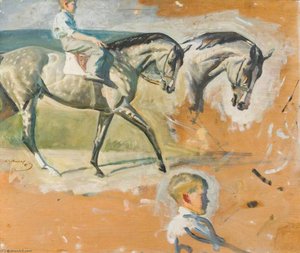
A serene oil study capturing a horse grazing in lush grass by Sir Alfred James Munnings, reflecting the timeless beauty of British equestrian art that you can bring into your own collection.
نبذة عن الفنان
ألفرد مونيجز: رسام بريطاني بارز اشتهر بلوحاته الخيالية للحياة الريفية والخيول، وأعماله الانطباعية النابضة بالحياة التي تجسد جمال المناظر الطبيعية والصيد. فنان تقليدي عارض الحداثة وخلّدت أعماله سحر إنجلترا الزائل.
About the painting
The Quiet Intimacy of an Equine Moment
In the delicate realm of British Impressionism, few moments capture the profound stillness of rural life as tenderly as Sir Alfred James Munnings’s Study (verso). This intimate oil on panel serves as a window into a private, unobserved second in time, where the grandeur of the horse is replaced by a sense of gentle vulnerability. The painting depicts a single horse, its head bowed toward the earth, lost in a moment of quiet foraging amidst the lush grasses. There is no thunder of hooves or dramatic gallop here; instead, Munnings invites us into a sanctuary of peace, where the only movement is the soft rustle of the meadow and the rhythmic grazing of a creature at rest.
The composition, though modest in its 25 x 33 cm scale, possesses an expansive emotional depth. By focusing on the horse’s downward gaze, Munnings directs our attention to the connection between the animal and the land. This downward focus creates a closed loop of intimacy, making the viewer feel less like an intruder and more like a silent witness to a natural ritual. For collectors and lovers of classical realism, this piece offers a rare glimpse into the artist's preparatory mind—a study that prioritizes the essence of life over the spectacle of action.
Mastery of Light and Texture
Technically, this work exemplifies Munnings’s ability to manipulate oil paint to evoke the tactile reality of the English countryside. The brushwork is masterful, blending the fluid, impressionistic strokes required to render the swaying blades of grass with a more controlled precision used to define the muscular anatomy of the horse. One can almost feel the weight of the animal and the dampness of the earth beneath its hooves. The light in this study is soft and diffused, characteristic of the overcast, luminous skies often found in the East Anglian landscapes that so inspired the artist.
The palette is a sophisticated arrangement of earthy tones—deep greens, muted ochres, and warm browns—which ground the subject in a sense of timelessness. For interior designers seeking to introduce a sense of calm and heritage into a space, this painting provides an anchor of organic warmth. The subtle interplay of light and shadow across the horse's coat adds a three-dimensional quality that breathes life into the panel, ensuring that even as a reproduction, the work retains its soulful, living presence.
A Legacy of Rural Tradition
To understand this study is to understand the heart of Sir Alfred James Munnings himself. As a painter whose life was inextricably linked to the equine world, Munnings sought to preserve a vanishing way of life—a Britain defined by the rhythms of hunting, racing, and the pastoral beauty of the countryside. This particular work, housed in the Munnings Art Museum in Colchester, represents the foundational sketches of a master documenting a disappearing era. It is more than just a depiction of an animal; it is a nostalgic tribute to the dignity of nature.
Owning or displaying a high-quality reproduction of such a piece allows one to bring a fragment of this historical elegance into the modern home. Whether placed in a sunlit library or a sophisticated contemporary living room, Study (verso) acts as a meditative focal point. It reminds us of the beauty found in simplicity and the enduring grace of the natural world, making it an incomparable choice for those who value art that speaks to both the eye and the soul.
الأسئلة والأجوبة
من الذي يبيع نسخاً مرسومة يدوياً من "Study (verso)" للفنان ألفريد جيمس مونينغز؟
تتوفر نسخة "Study (verso)" المرسومة يدوياً عبر نسخة زيتية مرسومة يدوياً على قماش الكتان. ويمكن تقديم الطلب من خلال صفحة نسخة زيتية مرسومة يدوياً، مع إمكانية اختيار أحجام مختلفة.
ما مدى تشبع الألوان في "Study (verso)" للفنان ألفريد جيمس مونينغز؟
تتميز ألوان "Study (verso)" للفنان ألفريد جيمس مونينغز بدرجة تشبع Clear Color Presence. ويصف التشبع مدى حيوية الألوان أو خفوتها.
كيف يلتقي الأسلوب الفني مع العصر في "Study (verso)" للفنان ألفريد جيمس مونينغز؟
في "Study (verso)" للفنان ألفريد جيمس مونينغز، تلتقي حركة Tonal Impressionism مع عصر العصر الحديث.
Quick facts and art quiz
About ألفريد جيمس مونينغز

ألفريد جيمس مونينغز
1878 - 1959, المملكة المتحدة
نبذة عن الفنان
سير ألفريد جيمس مونيجز: رسام الخيول والريف الإنجليزي
ألفريد جيمس مونيجز، اسم يتردد صداه في عالم الفن البريطاني، ليس مجرد رسام؛ بل هو شاعر بصري للخيول والمناظر الريفية الإنجليزية. ولد عام 1878 في قلب ستافوردشاير، نشأ مونيجز محاطًا بجمال الطبيعة وحياة المزرعة الصاخبة، وهي البيئة التي شكلت رؤيته الفنية العميقة. لم يكن عمله مجرد تسجيل لما يراه، بل كان تجسيدًا لشعور، وأجواء، وعالم على شفا تحول جذري. لقد التقط طريقة حياة متلاشية، صورة حية لبريطانيا غارقة في التقاليد والصيد وإيقاعات الريف.
من بدايات ريفية إلى تطور فني
لم تبدأ رحلة مونيجز الفنية داخل جدران الأكاديميات الرسمية، بل في عالم العمل الواقعي لدار الطباعة في نورويتش. هذا التدريب صقل مهاراته في التصميم والملاحظة بينما سمح له في الوقت نفسه بمتابعة دراسته في مدرسة نورويتش للفنون. كانت فترة تشكيلية، زرعت فيه انضباطًا سيخدمه جيدًا وهو يتنقل في تحديات تأسيس نفسه كفنان. تأثرت بداياته بفنانين الهواء الطلق من مدرسة نيويلين في كورنوال، حيث تبنى التزامهم بالتقاط الضوء والغلاف الجوي مباشرة من الطبيعة. هذا الانغماس في التقنيات الانطباعية وضع الأساس لأسلوبه المميز - ضربات فرشاة فضفاضة، ولوحة ألوان نابضة بالحياة، وشعور ملموس بالحركة. غالبًا ما تصور أعماله المبكرة مشاهد ريفية، وخاصة تلك التي تتميز بالعرب والخيول التي تجوب الريف في ستافوردشاير، وهي الأعمال التي تنضح بحساسية رومانسية تعرض إتقانه المتزايد للألوان والضوء. لم تكن هذه اللوحات مجرد تمثيلات؛ بل كانت تعبيرات عن حب عميق للأرض وسكانها.
الحرب والتقدير والدفاع عن التقاليد
شكلت الحرب العالمية الأولى منظور مونيجز الفني وملفه العام بعمق. على الرغم من أنه لم يتم اعتباره لائقًا للخدمة الفعلية في القتال، فقد أرسل كفنان حرب مع فرقة سلاح الفرسان الكندية، حيث وثق الدور الحيوي الذي لعبته الخيول في الصراع. واجهت هذه التجربة حقيقة الحرب القاسية - المعاناة والخسارة والصلة الدائمة بين الإنسان والحيوان. لوحاته من تلك الفترة ليست تمجيدًا للقتال، بل تأملات مؤثرة في التضحية والمرونة، حيث تلتقط جمالًا قاتمًا وسط الدمار. شهدت سنوات ما بعد الحرب ارتفاعًا في شعبية مونيجز وأمنياته المالية. تدفقت عليه العديد من المفوضيات المرموقة، مما سمح له بشراء Castle House في Dedham, Essex - وهو عقار سيصبح كلًا من منزله ومرسمه لبقية حياته. أصبح رسام بورتريه مطلوبًا، حيث التقط صور شخصية لشخصيات بارزة من الأرستقراطية وعالم السباقات. قدرته على نقل ليس فقط التشابه الجسدي ولكن أيضًا الشخصية والروح عززت سمعته كواحد من أبرز فناني بريطانيا. ومع ذلك، كان مونيجز مدافعًا قويًا عن القيم الفنية التقليدية.
صوت مثير للجدل وإرث دائم
كانت فلسفة مونيجز الفنية متجذرة بعمق في التقاليد، وأصبح منتقدًا صريحًا للحركات الحديثة المتنامية التي كانت تتحدى المفاهيم التقليدية للفن. أثار خطابه الشهير - وغالبًا ما يكون مثيرًا للجدل - على إذاعة BBC عام 1949 غضب دعاة الفن الحديث، لكنه صدى أيضًا لدى أولئك الذين يقدرون الرسم التمثيلي وقوة الفن الدائمة. لم يكن يقاوم ببساطة التغيير من أجل ذاته؛ فقد آمن بأهمية الحفاظ على معايير الفنية والاحتفاء بالجمال في أشكاله التقليدية. تجسد هذا الإيمان بانتخابه رئيسًا للأكاديمية الملكية للفنون عام 1944، وهو منصب شغله حتى عام 1949، مما عزز مكانته داخل المؤسسة الفنية البريطانية. وقد مُنح لقب فارس في عام 1944 وعُين قائدًا لفرقة Royal Victorian Order في عام 1947، مما أقر بمساهماته في الحياة الثقافية للأمة.
الإنجازات الرئيسية
- رئيس الأكاديمية الملكية: انتخب رئيسًا للأكاديمية الملكية للفنون عام 1944، وشغل المنصب حتى عام 1949.
- التقديس: مُنح لقب فارس في عام 1944 وعُين قائدًا لفرقة Royal Victorian Order في عام 1947.
- مفوضيات فنان الحرب: تم الاعتراف به عن عمله الذي يوثق فرقة سلاح الفرسان الكندية خلال الحرب العالمية الأولى.
- العمل النحتي: أنشأ منحوتات، بما في ذلك تمثال حصاني لـ Edward Horner.
يستمر إرثه ليس فقط من خلال لوحاته المتقنة ولكن أيضًا كمدافع شغوف عن التقاليد الفنية في عالم يتغير بسرعة.
لمحة سريعة
- Artistic Movement Or Style: الطباعة الضوئية الحرّة
- Artists Or Movements Influenced By This Artist: ['الطباعة الضوئية الحرّة']
- Artists Who Influenced This Artist: ['مدرسة نيولين']
- Date Of Birth: 8 أكتوبر 1878
- Date Of Death: 17 يوليو 1959
- Full Name: Sir Alfred James Munnings
- Nationality: إنجليزية
- Notable Artworks:
- غروب الشمس فوق حقل الحصاد
- العارقة
- Place Of Birth: مندهم، إنجلترا
أعمال فنية مشابهة



استكشف الأعمال الفنية المصنفة حسب الموضوعات والأنماط والخصائص.


Study (verso)
·