The Soul of the Harvest: Unveiling Van Gogh’s “Sower”
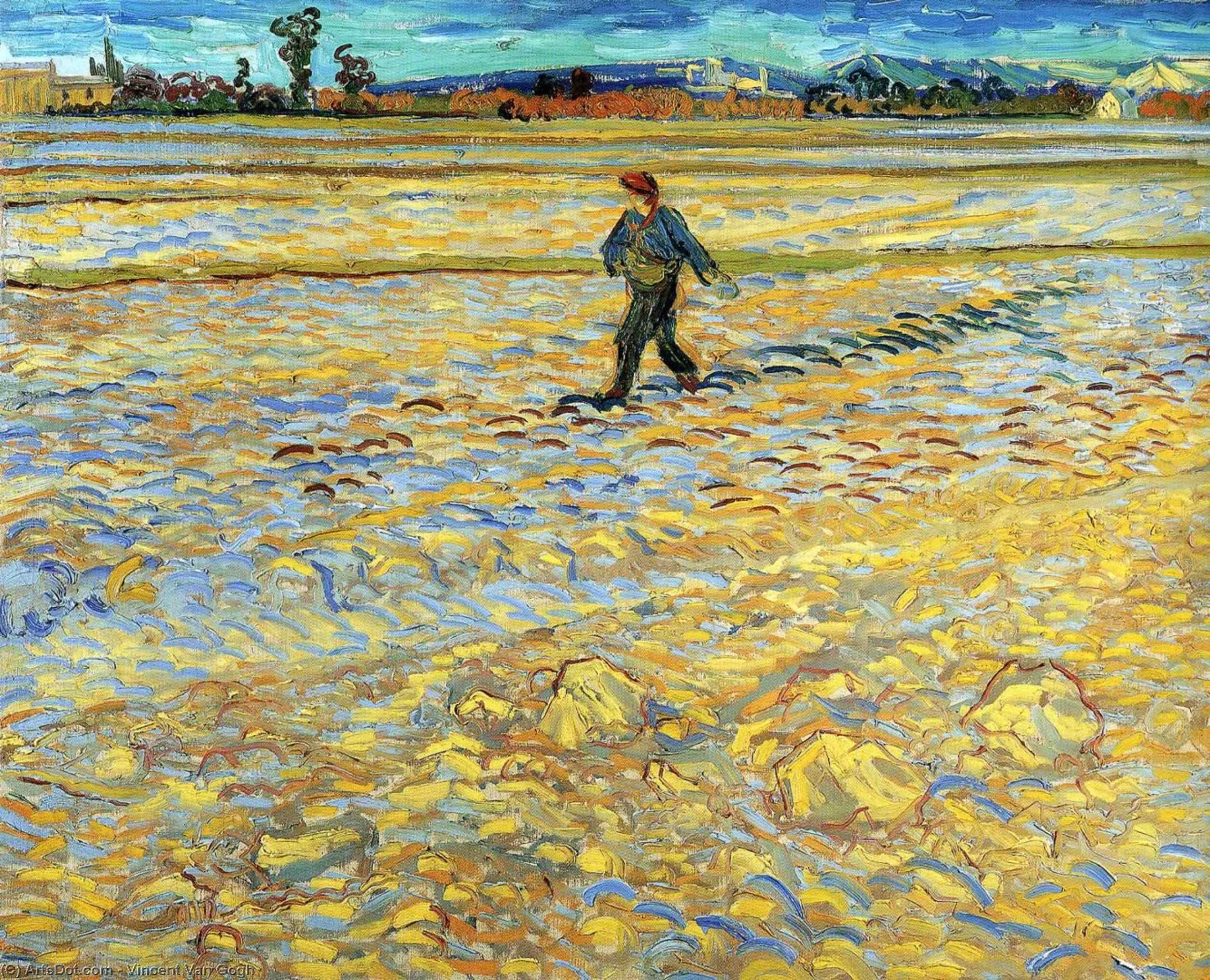
Vincent van Gogh's "Sower," painted in 1888, isn’t merely a depiction of rural labor; it’s a profound meditation on hope, renewal, and the cyclical nature of life itself. Born from a deep admiration for Jean-François Millet’s “The Sower,” Van Gogh sought to transcend mere imitation, imbuing his subject with an intensely personal and emotionally charged vision. This wasn't simply about capturing a farmer sowing seeds; it was about distilling the essence of faith, perseverance, and the enduring promise held within the earth.
The painting immediately draws the eye to the solitary figure, rendered in bold, earthy tones – ochre, umber, and a vibrant, almost luminous, orange. He’s not presented as a heroic figure, but rather as an ordinary man, his posture suggesting quiet determination as he casts his seeds across the field. The composition is deceptively simple: a vast expanse of plowed earth receding into the distance, punctuated by the dark silhouette of the sower and the warm glow of the setting sun. Yet, within this apparent austerity lies a remarkable dynamism – a sense of movement and energy that vibrates through every brushstroke.
Post-Impressionist Brilliance: Technique and Style
“Sower” is a quintessential example of Van Gogh’s distinctive Post-Impressionist style. He abandoned the muted palette and observational accuracy favored by his Impressionist predecessors, opting instead for an intensely subjective approach to color and form. Thick, impasto brushstrokes—a hallmark of his technique—create a tactile surface that seems almost sculptural. The paint is applied with a raw energy, capturing not just the appearance of the field but also the feeling of its texture and warmth. Notice how he builds up layers of pigment, creating a sense of depth and volume, as if inviting you to step into the scene.
The use of color is particularly striking. The vibrant orange of the sun isn’t merely a representation of light; it's an embodiment of hope and vitality. The deep blues and purples of the twilight sky contrast dramatically with the warm earth tones, creating a powerful visual tension that underscores the painting’s central theme – the transition from day to night, from labor to rest, from sowing to harvest.
Symbolism and the Language of the Land
The sower himself is laden with symbolic weight. He represents not just a farmer but also humanity's role in nurturing life and ensuring its continuation. Van Gogh’s choice to depict him in the act of sowing, rather than reaping the harvest, suggests that his work is focused on the *process* of creation—the planting of seeds for future generations. The fact that the field behind him already contains a hint of ripe grain hints at the promise of abundance and fulfillment, even amidst hardship.
Furthermore, the painting can be interpreted as an allegory for faith and spiritual renewal. Just as the sower plants seeds in the earth, Van Gogh believed that God planted ideas within the human soul—ideas that needed to be nurtured and cultivated. The setting sun, a recurring motif in his work, often symbolizes both death and rebirth, reinforcing this theme of cyclical transformation.
A Timeless Resonance: Legacy and Inspiration
“Sower” continues to resonate with audiences today because it speaks to fundamental human experiences—the connection between humanity and nature, the struggle for survival, and the enduring hope for a better future. Van Gogh’s innovative use of color and composition has profoundly influenced generations of artists, from Expressionists like Edvard Munch to Abstract Expressionists like Jackson Pollock. It remains a powerful testament to the transformative power of art—a reminder that even in the simplest scenes, profound truths can be revealed.


 شراء نسخة مطبوعة
 مشاركة
 مشاركة
 التفاصيل

 تحميل الملف
 قطع مشابهة
 الأشعة السينية
 عرض شرائح


 عرض المزيد






































 خيار الزجاج متاح فقط للمقاسات التي تقل عن 110 سم



