أتيليه — شحن مجاني لجميع أنحاء العالم — مدة التوصيل ٢–٦ أسابيع
تحويل الصور إلى لوحات قائمة الأمنيات عربة التسوق
معاينة الحجم الحقيقيمعاينة الحجم الحقيقي معاينة بالواقع المعززمعاينة بالواقع المعزز اشترِ نسخة مطبوعة اشترِ نسخة مطبوعةاشترِ لوحة مرسومة يدويًا اشترِ لوحة مرسومة يدويًا مشاركةمشاركة
التفاصيلالتفاصيل أضف إلى المفضلة أضف إلى المفضلة تحميل الملفتحميل الملف قطع مشابهةقطع مشابهة الأشعة السينيةالأشعة السينية عرض شرائحعرض شرائح

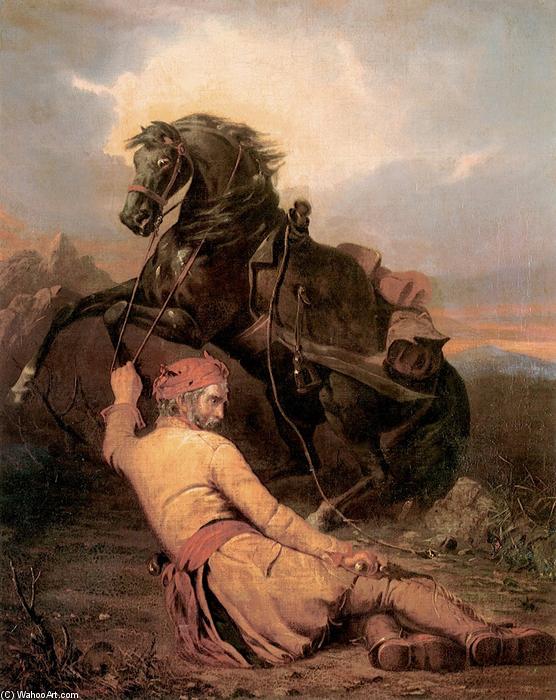
The Fallen Trapper

Discover "The Fallen Trapper" by William Tylee Ranney – a poignant oil painting capturing frontier life. Explore the rich details of this American Romanticist masterpiece and its historical context.

Discover William Tylee Ranney (1813-1857), a pioneering American painter! Explore his captivating Western scenes, sporting art & historical genre paintings. A key figure before the Civil War.

احصل على صورة رقمية عالية الدقة ومعزّنة، بجودة تفوق بكثير المعاينة عبر الإنترنت.

يتم إعداد كل ملف بعناية فائقة من قبل متخصصينا الداخليين باستخدام أدوات متقدمة ولمسات يدوية خبيرة. نضمن أن تتمتع كل صورة بوضوح استثنائي، ودقة لونية متناهية، وتفاصيل دقيقة.

يتم تسليم الملف النهائي عبر البريد الإلكتروني في غضون 72 ساعة، وهو مُحسَّن للاستخدام الفوري في المجالات المهنية والتحريرية ومجالات الطباعة. هذه هي ذات الجودة التي تعتمد عليها كبرى استوديوهات التصميم ودور النشر والمعارض الفنية المرموقة.

صورة رقمية

حمّل ملفاً عالي الدقة للعرض الشخصي، والطباعة، والمشاريع الإبداعية. (اشترِ نسخة مطبوعة اشترِ نسخة مطبوعةاشترِ لوحة مرسومة يدويًا اشترِ لوحة مرسومة يدويًا)

إجمالي السعر

$ 24,90

مزايا مُضمّنة في كل طلب صورة رقمية

تسليم رقمي احترافي، مضمون

عندما تختار TopImpressionists.com، فأنت لا تحصل على مجرد صورة فحسب، بل ستحصل على عمل فني رقمي مُحسّن باحترافية، صُمم بدقة متناهية ومصحوب بضمان الرضا. إليك كل ما يتضمنه طلبك تلقائياً:

shipping_icon
تسليم سريع عبر البريد الإلكتروني

ستصلك ملفات صورك الرقمية عالية الدقة عبر البريد الإلكتروني في غضون 72 ساعة من إتمام الطلب - لتكون جاهزة للاستخدام الفوري.

canvas_icon
ملف رقمي مُحسّن بالذكاء الاصطناعي

يتم تحسين عملك الفني باحترافية باستخدام أدوات الذكاء الاصطناعي المتقدمة والتحرير اليدوي، لضمان أقصى درجات التفاصيل والوضوح ودقة الألوان.

insurance_icon
إعادة إرسال مجانية مدى الحياة

هل حذفت ملفك أو فقدته عن طريق الخطأ؟ لا تقلق - سنعيد إرساله إليك في أي وقت، ومجاناً.

tax_icon
بدون رسوم استيراد - على الإطلاق

استمتع بأعمالك الفنية فوراً دون أي رسوم جمركية أو ضرائب أو مصاريف شحن - فالتحميلات الرقمية دائماً ما تكون معفاة من الضرائب.

color_icon
ضمان دقة الألوان

نحن نضمن أن تعكس صورتك الرقمية الألوان الأصلية بأقصى قدر ممكن من الدقة، وذلك باستخدام أدوات احترافية وتقنيات إدارة الألوان.

return_icon
ضمان الرضا لمدة 60 يومًا

إذا لم تكن راضياً عن صورتك الرقمية، فسنقوم بتعديلها أو استرداد 100% من قيمتها خلال 60 يوماً - دون أي أسئلة.

guarantee_icon
ضمان استعادة الأموال بنسبة % 100

لم تكن راضياً؟ احصل على استرداد كامل المبلغ خلال 60 يومًا من استلام ملفك الرقمي - دون أي أسئلة.

discount_icon
خصومات الطلبات الكبيرة

اشتري 3 صور، ووفر 10% - اشتري 5، ووفر 15% - اشتري +10، ووفر 20%. مثالية للمشاريع الإبداعية، والمعارض، والوكالات.

معلومات سريعة

  • Artistic style: American Romanticism
  • Title: The Fallen Trapper
  • Year: 1852
  • Artist: William Tylee Ranney
  • Notable elements: Depicts a trapper
  • Medium: Oil on canvas

اختبار الفنون

يوجد إجابة صحيحة واحدة فقط لكل سؤال.

سؤال 1:
What is the primary subject depicted in William Tylee Ranney’s ‘The Fallen Trapper’?
سؤال 2:
According to the description, what is notable about the man in ‘The Fallen Trapper’?
سؤال 3:
In what year was ‘The Fallen Trapper’ painted?
سؤال 4:
William Tylee Ranney is considered significant in American art for being a pioneer of which genre?
سؤال 5:
The painting includes two other horses in the background. What does their presence suggest about the scene?

وصف المقتنى الفني

A Moment Frozen in Time: William Tylee Ranney’s “The Fallen Trapper”

William Tylee Ranney's "The Fallen Trapper," painted in 1852, isn’t merely a depiction of a solitary figure; it’s a poignant encapsulation of the American West at a pivotal moment. The painting immediately draws the eye to a man, weathered and weary, slumped against a horse beneath the imposing shadow of the Rocky Mountains. He's not a heroic adventurer or a triumphant frontiersman, but rather a vulnerable individual, stripped bare by circumstance – a hunter brought low, perhaps by hardship, illness, or simply the relentless indifference of nature. This deliberate lack of grandiosity is central to Ranney’s artistic vision; he eschewed romanticized narratives in favor of honest portrayals of everyday life, reflecting his own experiences and observations during his time in Texas.

The scene unfolds within a carefully constructed landscape, rendered with a remarkable attention to detail. The rugged mountains, painted with a muted palette of browns, grays, and ochres, convey both the grandeur and the unforgiving nature of the territory. Notice how Ranney utilizes atmospheric perspective – distant peaks fade into a hazy blue, creating a sense of depth and vastness that emphasizes the man’s isolation. The horse, a sturdy Appaloosa with distinctive spotted markings, is not merely a mount but an integral part of the scene, its presence grounding the figure in this harsh environment. The subtle variations in texture – the rough bark of the trees, the worn leather of the saddle, the folds of the man’s clothing – speak to Ranney's meticulous technique and his ability to capture the tactile qualities of the world around him.

A Pioneer Painter: Contextualizing Ranney’s Vision

To fully appreciate “The Fallen Trapper,” it’s essential to understand William Tylee Ranney’s unique position in American art history. Born in Middletown, Connecticut, in 1813, he was a self-taught artist who emerged during a period of rapid westward expansion and profound social change. Unlike many artists of his time who trained in European academies, Ranney developed his style through direct experience – his service in the Texas Army following the Battle of the Alamo profoundly shaped his artistic sensibilities. This firsthand encounter with frontier life instilled in him a deep respect for the resilience and resourcefulness of those who carved out a living in the wilderness.

Ranney’s work stands apart from the prevailing romanticized depictions of the West that often glorified conquest and heroism. Instead, he presented a more nuanced and realistic portrayal of frontier life, focusing on the struggles and vulnerabilities of ordinary people. His paintings frequently depicted scenes of hunting, trapping, and exploration, but always with an emphasis on human dignity and quiet contemplation. He was considered one of the first major genre painters to work in New Jersey, and his art reflects a unique blend of Romanticism and Realism.

Symbolism and Emotional Resonance

The painting’s power lies not just in its technical skill but also in its subtle symbolism. The fallen trapper represents more than just a single individual; he embodies the broader themes of hardship, loss, and the precariousness of life on the frontier. His slumped posture and weary expression convey a sense of defeat, yet there's also an underlying dignity – a quiet acceptance of fate. The horse, tethered to the ground, symbolizes both dependence and restraint, suggesting the limitations imposed by circumstance.

Ranney’s masterful use of light and shadow further enhances the emotional impact of the painting. The diffused sunlight filtering through the mountains creates a melancholic atmosphere, reinforcing the sense of isolation and vulnerability. The muted color palette contributes to this mood, evoking a feeling of quiet contemplation and understated sadness. “The Fallen Trapper” is not a triumphant celebration of the West; it’s a poignant meditation on its challenges and its human cost.

Bringing Ranney's Vision Home: Reproductions and Legacy

Today, "The Fallen Trapper" continues to resonate with viewers who appreciate its honest portrayal of frontier life. High-quality reproductions offer an accessible way to experience the painting’s beauty and emotional depth. Whether displayed in a study, living room, or gallery, this artwork serves as a powerful reminder of the sacrifices made by those who shaped the American West. Consider commissioning a custom reproduction from TopImpressionists.com to bring this iconic image into your own space – a tangible connection to a pivotal moment in American art and history.


السيرة الذاتية للفنان

A Pioneer of American Genre: The Life and Art of William Tylee Ranney

William Tylee Ranney, born in Middletown, Connecticut, on May 9, 1813, occupies a pivotal yet often understated position in the narrative of 19th-century American art. He wasn’t a product of European academies or established artistic circles; instead, his journey was one of self-discovery and immersion in the burgeoning spirit of a nation rapidly expanding westward. His early life, marked by a move to Fayetteville, North Carolina, at age thirteen to live with an uncle, saw him apprenticed as a tinsmith – a practical trade that likely honed his observational skills and meticulous attention to detail, qualities that would later define his artistic style. This period of apprenticeship, though seemingly distant from the world of painting, instilled in Ranney a grounded sensibility and a keen eye for the textures and forms of everyday life. The call of artistry eventually proved too strong, leading him to Brooklyn in 1833 to pursue his passion, largely self-taught, yet driven by an innate talent and relentless dedication.

From Texas Fields to Canvas: Shaping a Unique Artistic Vision

A defining chapter in Ranney’s life unfolded with his unexpected enlistment in the Texas Army in 1836, following the tragic fall of the Alamo. This wasn't merely a patriotic impulse; it was an immersion into a world vastly different from the quiet landscapes of Connecticut and North Carolina. For nine months, he experienced the raw realities of frontier life, serving under General Sam Houston and even reportedly guarding Santa Anna after the Battle of San Jacinto. These experiences were not simply biographical details but became the very bedrock of his artistic vision. Returning to Brooklyn in 1837, Ranney didn’t paint grand historical narratives of battles or heroes; instead, he focused on the lives of those who inhabited these spaces – the hunters, trappers, pioneers, and ordinary individuals forging a new existence on the American frontier. His early success with “A Courting Scene” at the National Academy of Design in 1838 signaled his arrival as a promising talent, but it was his ability to translate the visceral experiences of Texas into compelling visual stories that truly set him apart. He wasn’t simply *depicting* the West; he was conveying its atmosphere, its challenges, and its inherent drama with an authenticity rarely seen at the time.

Master of Genre and Sporting Scenes: A Detailed World

Ranney's artistic style is characterized by a remarkable realism and attention to detail. He wasn’t interested in idealized representations or romanticized visions; he sought to capture life as it was, with all its complexities and nuances. His paintings are populated with figures rendered with sculptural solidity, their clothing and equipment meticulously researched and depicted. This dedication extended to the landscapes themselves, which were not merely backdrops but integral components of the narrative. “On the Wing,” perhaps his most celebrated work – existing in multiple versions – exemplifies this approach. The painting captures a fleeting moment of sporting success with an almost photographic clarity, showcasing Ranney’s mastery of light, texture, and composition. Similarly, works like "Prairie Burial" and "Scouting Party" are imbued with a sense of quiet drama and psychological depth, revealing the hardships and resilience of those who ventured into the unknown. Beyond Western scenes, Ranney also excelled in sporting art, particularly depictions of duck hunting and equestrian subjects, and historical genre paintings focusing on everyday life during the American Revolution.

Legacy and Significance: A Voice of Pre-Civil War America

By the early 1850s, Ranney had established himself as a leading figure in American art, contributing regularly to exhibitions at the National Academy of Design and the American Art Union. His move to West Hoboken, New Jersey, in 1853 provided him with both a studio overlooking the Manhattan skyline and access to the natural landscapes that continued to inspire his work. He was considered the first major genre painter to truly establish himself in New Jersey, and his influence extended far beyond the state’s borders. Tragically, Ranney's career was cut short by illness; he died on November 18, 1857, likely from tuberculosis, at the age of forty-four. Despite his relatively brief life, his impact on American art is undeniable. He helped to popularize depictions of the American West and contributed significantly to the development of genre painting, focusing on the lives of ordinary people rather than grand historical events or aristocratic portraits. His contemporaries recognized his importance; one observer noted that “a specimen of Ranney is indispensable wherever a collection of American art exists.” Today, William Tylee Ranney stands as a vital link between the early traditions of American landscape and genre painting and the more complex artistic movements that would emerge in the aftermath of the Civil War. His work remains a powerful testament to the spirit of exploration, resilience, and the enduring beauty of everyday life in 19th-century America.

Notable Works

  • "On the Wing"
  • "Prairie Burial"
  • "Scouting Party"
  • "Hunting Wild Horses"
  • "Trapper's Last Shot"
  • "The Match Boy"
  • "Old Oaken Bucket"
© TopImpressionists.com — جميع الحقوق محفوظة  ·  مطلية يدوياً 100% · ضمان الرضا · شحن مجاني لجميع أنحاء العالم
VISA MASTERCARD