


 Se i rummet
 Send
Send Del
Del
 Detaljer
 Studieguide til kunstværker

 Download
 Lignende værker
 Røntgenundersøgelse
 Se diasshow
 Statistik
Dans til Musikken om Tid
 Olie på lærred
- Vægkunst
- Baroque
 1638
1638- Renæssance
 82.0 x 104.0 cm
 Wallace Collection
Oplev Nicolas Poussin's ikoniske værk 'Dans til Musikken om Tid', hvor fire figurer danser i cirkel før en statue og repræsenterer menneskelivets stadier - et tidløst kunstværk fra Det Kongelige Konservatorium.
 Læs mere
Nicolas Poussin - En fransk klassicist, hvis kunst var præget af lys og skønhed samt en dyb forståelse for klassiske idéer og temaer.
Giclée / Kunsttryk
Giclée- eller lærredstryk i museumskvalitet med hurtig produktion og fleksible muligheder for finish. ( Bestil håndmalet reproduktion Skift til digitalt billede)




P118B Dkr10

P118H Dkr10

P118W Dkr10

P438Z Dkr10

P508JH Dkr12

P508YH Dkr12

P805H Dkr10

P805Z Dkr10

P919BZ Dkr10

P919G Dkr10

P919XJ Dkr10

P959ZH Dkr10

P968JZ Dkr12

W106C Dkr8

W218G Dkr10

W218JH Dkr8

W218Y Dkr10

W307PJ Dkr10

W316G Dkr10

W316PJ Dkr8

W316Y Dkr10

W398PJ Dkr8

W4111J Dkr10

W500HY Dkr15

W500JH Dkr15

W692G Dkr12

W849H Dkr8

W940BG Dkr15

W953PJ Dkr8




Standardstørrelse
speciallavet
CM
INCH
Vælg mellem vores forudindstillede størrelser, der matcher kunstværkets originale proportioner.
Loading sizes...

bredde
højde
Indtast den bredde og højde, du har brug for, så det passer til din ramme eller din væg. Et print kan kun beskæres, aldrig gøres større end billedet, så en størrelse med en anden form vil miste en del af motivet. Vi sender dig en digital mockup til godkendelse, før vi printer noget. Billedet vist på denne side viser ikke den faktiske beskæring — det er kun mockuppen, der gør.
Verdensomspændende levering () på 2 uger i stedet for de sædvanlige 4/5 uger. (26 oktober)

Gratis ekspresforsendelse til hele verden

Lærred af linned i høj kvalitet

Komplet transportforsikring

Garanti for refusion af told og importafgifter

Garanti for autentisk farvegengivelse

100 dages returret ved fabrikationsfejl

100% fuld returret

Mængderabat ved flere køb
 Glasmulighed er kun tilgængelig i størrelser under 110 cm

Dans til Musikken om Tid
Giclée / Kunsttryk
Reproduktionsstørrelse
-


Samlet pris
Dkr 459
A Dance to the Music of Time: Exploring Poussin's Masterpiece
Nicolas Poussin’s “Dance to the Music of Time,” painted in 1638, transcends mere visual representation; it embodies a profound philosophical dialogue between antiquity and Renaissance ideals. Commissioned by Cardinal Giulio Rospigliosi – later Pope Clement IX – this monumental canvas swiftly ascended to prominence within the Wallace Collection in London, captivating audiences for centuries with its serene beauty and intricate tapestry of symbolism. Poussin, already establishing himself as a vanguard of French Baroque art’s classical revival, skillfully fused Roman grandeur with a distinctly modern sensibility, crafting an image that continues to resonate powerfully today. The scene unfolds outdoors, bathed in the ethereal glow of dawn – a deliberate choice reflecting the liminal space between day and night, order and chaos – mirroring precisely the core concept of time itself. This juxtaposition immediately establishes a thematic framework for understanding Poussin’s artistic vision.The Composition: A Harmonious Circle Reflecting Cosmic Order
At first glance, “Dance to the Music of Time” presents a deceptively simple tableau: nine figures engaged in graceful movement before a stately statue. However, beneath this apparent tranquility lies a meticulously constructed composition governed by principles of balance and proportion – hallmarks of Poussin’s rigorous classical training. The artist’s mastery is evident in his careful orchestration of diagonals, drawing the viewer's eye across the canvas and creating a palpable sense of dynamism within the overarching stillness. Each figure possesses distinct character and occupies a specific position within the circular arrangement, contributing to an overall harmony that speaks to Poussin’s belief in the inherent orderliness of the universe. The statue at the center serves as a silent sentinel, embodying timelessness and representing Justice or Reason – guiding forces shaping human destiny.Symbolism: Echoes of Antiquity and Renaissance Thought Illuminated
The painting is rich with symbolic iconography drawn from classical mythology and humanist philosophy. Time himself, depicted as an elderly figure playing a lyre, symbolizes the relentless passage of time and its influence on human affairs. The four dancers embody stages of life – Poverty, Labour, Wealth, and Pleasure – each representing facets of the human experience. These figures are not merely performers; they represent archetypal roles within the cosmic drama. Furthermore, Aurora, goddess of dawn, heralds new beginnings and symbolizes renewal—a visual affirmation of cyclical time. The inclusion of these elements underscores Poussin’s intention to elevate the scene beyond a mere depiction of dance into an allegory exploring fundamental questions about existence.Technique: Mastering Light and Color – A Baroque Revelation
Poussin's unparalleled skill is showcased in his masterful manipulation of *chiaroscuro*, utilizing dramatic contrasts between light and shadow to sculpt form, heighten depth, and imbue the painting with atmospheric luminescence. The soft, diffused dawn light illuminates the figures with a warm glow, while subtle shadows delineate their contours and enhance their presence—creating an illusionistic effect that transports the viewer into the depicted landscape. Poussin’s brushwork is remarkably smooth and controlled, achieving unparalleled delicacy and precision. This meticulous technique contributes to the painting's overall sense of elegance and refinement, cementing its place as a cornerstone of French Baroque art and influencing generations of artists who followed.Reproductions Available at TopImpressionists: Bringing Poussin’s Vision to Life
For those captivated by the beauty and profound symbolism of “Dance to the Music of Time,” handmade oil painting reproductions are available at TopImpressionists. These meticulously crafted replicas capture the essence and detail of the original masterpiece, allowing you to bring Poussin’s timeless vision into your home or studio. Each reproduction is created by skilled artisans using traditional techniques and high-quality materials, ensuring that it faithfully reflects the artist's intent. Whether displayed as a statement piece in a grand salon or a subtle accent in a cozy corner, an TopImpressionists reproduction of “Dance to the Music of Time” will serve as a constant reminder of the enduring power of art to inspire contemplation and evoke emotion. Explore our collection today and discover the perfect way to celebrate this iconic work of art.- Harlequin and Columbine by Jean Antoine Watteau
- Marguerite Gérard by François Dumont
A Life Steeped in Classical Reverie
Nicolas Poussin, a name synonymous with the grandeur of French Baroque painting, was nonetheless a soul deeply rooted in Italian soil for much of his artistic life. Born in Le Havre, Normandy, in June 1594, his early years remain somewhat veiled in mystery, yet they undoubtedly laid the foundation for a career that would become pivotal in shaping the classical tradition within French art. Though he briefly studied in Paris during the early 1610s, absorbing influences from lesser-known artists of the time, it was his journey to Rome in 1624 that truly ignited his artistic destiny. This wasn’t merely a geographical relocation; it was an immersion into the heart of antiquity, a pilgrimage to the very source of inspiration that would define his aesthetic vision. Poussin's initial forays into painting were marked by a sensuous quality reminiscent of Venetian masters like Titian, yet even in these early works, a nascent sense of order and iSpørgsmål & svar
Hvilke andre navne er Nicolas Poussin kendt under?
Nicolas Poussin optræder under de alternative navne Nikolas Poussin.
Hvordan kan jeg få et tryk af "Dans til Musikken om Tid" af Nicolas Poussin?
"Dans til Musikken om Tid" er tilgængelig som et fine art-print på bomuldscanvas eller arkivbestandigt lærredspapir. Bestilling sker på dens Fine art-print-side i den størrelse, du ønsker.
Hvilken lysstyrke har "Dans til Musikken om Tid" af Nicolas Poussin?
Luminansen registreret for "Dans til Musikken om Tid" af Nicolas Poussin er Blød skygge.
Om kunstneren
Nicolas Poussin – En Klassiker Af Fransk Barokkunst
Nicolas Poussin, en navn synonymt med den majestætiske franske barok kunst, var dog en sjæl dybt rodfæstet i italiensk jord gennem størstedelen af sin kunstneriske karriere. Han blev født i Les Andelys, Normandien, i juni 1594 og hans tidlige år forbliver noget eftertragtet, hvorimod de uden tvivl lagde grundlaget for en beskæftigelse, der skulle forme klassisk tradition inden for fransk kunst. Selvom han kortvarigt studerede i Paris i begyndelsen af 1610’erne og absorberede indflydelse fra mindre kendte kunstnere på tiden, var hans rejse til Rom i 1624 virkelig en katalysator for hans kunstneriske skæbne. Dette var ikke blot en geografisk omplacering; det var en immersion i hjertet af antikken, en pilgrimsfærd til selve kilden til inspiration, der skulle definere hans æstetiske vision. Poussin’s første forsøg på maleri var præget af sensualitet, hvilket mindede om venetianske mesterværker som Titian, men selv i disse tidlige værker begyndte en næsten følelsesløs orden og intellektuel dygtighed at dukke op – et forvarsel om stilen han så perfektionerede.Rom Årene: Skabelsen Af En Klassisk Ideal
Rom viste sig mere end blot et atelier for Poussin; det blev hans intellektuelle kildehus. Han fandt sig midt i en blomstrende cirkel af forskere, arkæologer og kunstnere, hvoraf Cassiano dal Pozzo var særligt bemærkelsesværdig – hvis dybe forståelse af klassisk antikken havde en enorm indflydelse på kunstnerens tilgang. Dal Pozzo’s dedikation til omhyggeligt dokumentation af gamle rester fik Poussin til at udvikle en dyb respekt for historisk nøjagtighed og et ønske om at præge hans malerier med følelsen af tidløshed. Denne periode så Poussin træde væk fra den flamboyante ekstravagance hos nogle af sine samtidige og omfavne en stil karakteriseret af klarhed, balance og en målrettet fokus på linjekomposition. Han studerede minutiøst Rafael’s værker og absorberede deres harmoniske arrangementer og elegante former, samtidig med at han søgte inspiration fra gamle statuer og litterære kilder som Ovids *Metamorphoser*. Hans malerier begyndte at udfolde sig med figurer trukket fra klassisk historie og mytologi og blev præsenteret ikke blot som dekorative elementer, men som udtryk for moralske værdier og filosofiske idealer. Han var særligt imponeret af Rafael’s brug af perspektiv og lys – teknikker han efterfølgende perfektionerede og anvendte konsekvent i sine værker.Temaer Af Historie, Myth Og Det Hellige
Poussin’s kunstneriske produktion var bemærkelsesværdigt diversificeret, men forbundet af hans engagement i disse grundlæggende principper. Han malede ofte scener fra klassisk historie – den tragiske skæbne for Germanicus, f.eks. – hvilket blev præget af stoic visdom og moralsk vægt. Hans mytologiske billeder var ikke blot fortællinger om kendte historier; de var udforskninger af menneskelig natur og ofte fyldt med allegorisk betydning. *Arcadia*-serien, især *Et in Arcadia ego*, blev ikonisk for hans filosofiske dybde og fremkaldte refleksion over døden og den vedvarende kraft af hukommelse. Han var en stor admirer af klassisk kunst og arkitektur og søgte konstant inspiration fra gamle monumenter og kunstværker. Denne interesse manifesterede sig i hans præcise gengivelse af detaljer og hans omhyggelige brug af komposition – egenskaber, der gjorde hans værker unikke og satte nye standarder for kunstuddannelse og praksis i Frankrig. Han var en aktiv deltager i Akademiet i Paris og blev betragtet som en af de mest betydningsfulde kunstnere på sin tid.Et Efterladenskab Af Orden Og Æstetisk Reflektion
Nicolas Poussin døde i Rom i 1665 og efterlod sig et kunstnerisk arv, der fortsatte at inspirere efterfølgende generationer af kunstnere. Hans fokus på klassiske idealer var ikke blot en stilistisk præference; det repræsenterede en dyb respekt for menneskelig kultur og historie samt en søgen efter skønhed og harmoni – et testament til en kunstner, der ønskede mere end blot at gengive verden; han ville hæve den gennem linserne af fornuft og æstetisk refleksion. Hans værker blev udstillet i nogle af Europas mest prestigefulde museer og galerier og fortsætter med at fascinere publikum over hele verden. Han er blandt de få kunstnere, hvis stil og filosofi har haft en varig indflydelse på udviklingen af europæisk kunst gennem århundrederne. Hans navn vil altid være forbundet med klassisk fransk kunst og hans værker vil fortsat inspirere kunstnere og kunsthistorikere til denne dag.- Bemærkelsesværdige Værker: *The Death of Germanicus*, *The Seven Sacraments Series*, *A Roman Road*, *Orion Blinded Searching for the Sun*, *The Seasons*.
- Nøgleegenskaber: Klassisk Komposition, Linjekomposition, Historiske Og Mytologiske Temaer, Serene Landskaber.

Nicolas Poussin
1594 - 1665 , Frankrig
Hurtige fakta
- Artistic Movement Or Style: Barok, Klassicisme
- Artists Who Influenced This Artist:
- Raphael
- Titian
- Date Of Birth: 1594
- Date Of Death: 1665
- Full Name: Nicolas Poussin
- Nationality: Fransk
- Notable Artworks:
- Døden af Germanicus
- Syv Sakramenter Serien
- Romersk Vej
- Orion Blinde Efter Solen
- Sæsonerne
- Place Of Birth: Les Andelys, Frankrig
Relaterede artikler

Nicolas Poussin: Classicism, Allegory & Order in 17th-Century French Painting
Explore the life & work of Nicolas Poussin, a master of French Classicism. Discover his allegorical paintings, Roman influences, and enduring impact on art history. Expert analysis & insights.

Barokkens Drama: Hvordan Storhed og Emotion Bringes Ind i Moderne Interiører
Dyk ned i barokkunstens verden! Lær om stilens historie, karakteristika og hvordan du integrerer dens drama og elegance i dit moderne hjem. Inspiration & ekspertrådgivning.

Barokkens Mestre: Top 10 Kunstværker der Definerede en Æra | TopImpressionists.dk
Oplev barokkens storhed! Udforsk 10 ikoniske malerier af Caravaggio, Rembrandt & Vermeer. Lær historierne bag mesterværkerne og find inspiration til din indretning med TopImpressionists.dk – museumskvalitet reproduktioner online.

Baroque Classicism: Reconciling Drama & Order in 17th-Century Art
Explore the captivating world of Baroque Classicism! Discover its history, key artists like Caravaggio & Rubens, and defining characteristics. Expert insights & high-quality reproductions at TopImpressionists.
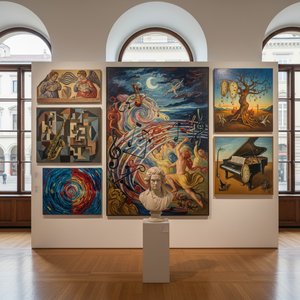
Harmonies on Canvas: Exploring the Visual Representation of Music in Art History
Explore the fascinating history of music's visual representation in art! From ancient symbolism to modern abstraction, discover how artists have captured sound and emotion on canvas. Expert insights & stunning examples.
Udforsk kunstværker organiseret efter temaer, stilarter og karakteristika.


