Vorschau anzeigen
 Versenden
 Teilen
 Details anzeigen
 Leitfaden

 Herunterladen
 Ähnliche Objekte
 Röntgenaufnahme
 Diashow
 Fragen & Antworten
 Statistiken
Der Violette Ton

- 18.0 x 26.0 cm


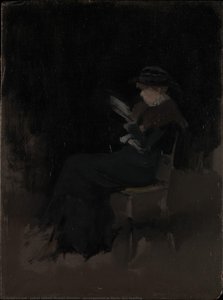
James Abbott McNeill Whistlers 'Der Violette Ton' (1886) fängt eine Frau im Vorbereitungszustand ein. Ein atmosphärisches Porträt, das die Ästhetik der Zeit verkörpert.
 Weiterlesen
Erkunden Sie James Abbott McNeill Whistler (1834-1903): Amerikanischen Künstler der Tonalismus & Ästhetizismus. Entdecken Sie 'Whistlers Mutter', Nachträge, Porträts und seine 'Kunst für Kunst's Sake'-Philosophie.
Giclée / Kunstdruck
Giclée- oder Leinwanddruck in Museumsqualität mit schneller Produktion und flexiblen Veredelungsoptionen. ( Handgemalte Reproduktion bestellen Zum digitalen Bild wechseln)




P118B €10

P118H €10

P118W €10

P438Z €10

P508JH €12

P508YH €12

P805H €10

P805Z €10

P919BZ €10

P919G €10

P919XJ €10

P959ZH €10

P968JZ €12

W106C €8

W218G €10

W218JH €8

W218Y €10

W307PJ €10

W316G €10

W316PJ €8

W316Y €10

W398PJ €8

W4111J €10

W500HY €15

W500JH €15

W692G €12

W849H €8

W940BG €15

W953PJ €8




Standardformat
individuell anpassbar
CM
INCH
Wählen Sie aus unseren vordefinierten Formaten, die den ursprünglichen Proportionen des Kunstwerks entsprechen.
Loading sizes...

Breite
Höhe
Geben Sie die benötigte Breite und Höhe an, damit der Druck perfekt in Ihren Rahmen oder an Ihre Wand passt. Ein Druck kann nur beschnitten, aber niemals größer als das Originalbild angefertigt werden; daher verliert ein Format mit anderen Proportionen einen Teil des Bildes. Wir senden Ihnen ein digitales Mockup zur Freigabe, bevor wir den Druck ausführen. Das auf dieser Seite gezeigte Bild zeigt nicht den tatsächlichen Beschnitt – dies ist nur im Mockup ersichtlich.
Weltweiter Versand () innerhalb von 2 Wochen statt der üblichen 4/5 Wochen. (5 November)

Kostenloser weltweiter Expressversand

Hochwertige Leinenleinwand

Umfassender Versicherungsschutz beim Versand

Zollgebühren-Rückerstattungsgarantie

Garantie für exakte Farbtreue

100 Tage Rückgaberecht (nur bei Mängeln)

100% Geld-zurück-Garantie

Mengenrabatt verfügbar
 Die Glasoption ist nur für Größen unter 110 cm verfügbar.

Der Violette Ton
Giclée / Kunstdruck
Format der Reproduktion
-


Endpreis
€ 62
Das Violette Echo: Eine Studie in Melancholie und Vorbereitung
James Abbott McNeill Whistler’s “The Violet Note,” painted in 1886, is not merely a portrait; it's an exquisitely rendered meditation on transition and the quiet anticipation of departure. The work immediately draws the viewer into a scene steeped in subtle emotion – a woman, her back turned to us, poised on the cusp of something significant. Her posture, leaning slightly against a worn suitcase, speaks volumes without uttering a word. It’s a gesture both vulnerable and resolute, hinting at a journey undertaken with a mixture of apprehension and determination.
Whistler, a pivotal figure in the Aesthetic movement, deliberately rejected the didactic narratives favored by his contemporaries. He championed “art for art's sake,” prioritizing formal beauty and sensory experience above moral instruction. This philosophy is powerfully evident in "The Violet Note." The muted palette – dominated by blues, greys, and the delicate violet of the title’s namesake – creates a mood of contemplative melancholy. Whistler masterfully employs *tonal harmony*, layering shades to achieve an almost velvety texture, particularly noticeable in the folds of the woman's dress and the worn leather of the suitcase. The brushstrokes are loose and expressive, prioritizing capturing the essence of light and shadow over meticulous detail, a hallmark of his signature style – often referred to as “Broken Color.”
Die Sprache der Details: Objekte und ihre Bedeutung
- The suitcase itself is more than just an accessory; it represents a life packed—literally and figuratively. Its worn appearance suggests countless journeys, hinting at a past filled with experiences and perhaps a future yet to be written.
- The vase of flowers, positioned on the right, introduces a touch of domesticity and fleeting beauty into the scene. Flowers often symbolize remembrance, hope, or even farewells – elements that resonate deeply within the painting’s overall theme.
- The potted plant to the left offers a grounding element, a connection to nature and stability amidst the implied movement of travel. It subtly anchors the composition while simultaneously suggesting a longing for rootedness.
- Even the two books, carefully stacked together, contribute to the narrative. They represent knowledge, contemplation, and perhaps the stories carried within the woman’s mind as she prepares to embark on her journey – a silent companion for the road ahead.
Whistler's meticulous attention to detail extends beyond mere representation; he uses these objects to amplify the painting’s emotional resonance. Each element is carefully placed, contributing to a complex web of symbolism that invites interpretation and reflection.
Historischer Kontext und Whistler’s Einfluss
“The Violet Note” was painted during a period of significant artistic upheaval in Europe. The Aesthetic movement, fueled by figures like Oscar Wilde and Walter Pater, challenged traditional notions of art and its purpose. Whistler sought to elevate painting to the status of pure sensory experience, divorced from narrative or moralizing content. He famously argued that “art is the thing with feathers,” referring to the intangible beauty it evokes.
Whistler’s work was often met with criticism and controversy during his lifetime. His rejection of conventional subject matter and his emphasis on formal qualities were seen as elitist and decadent by many critics. However, he remained steadfast in his artistic vision, influencing generations of artists who followed. “The Violet Note” stands as a testament to his innovative approach – a poignant study in light, color, and the quiet drama of human experience.
Ein Stück Melancholie für Ihre Sammlung
This exquisite reproduction captures the essence of Whistler’s masterpiece with remarkable fidelity. The hand-painted detail faithfully recreates the subtle tonal variations and expressive brushstrokes that define his unique style. Whether you are an art enthusiast, a collector seeking to enrich your collection, or an interior designer searching for a piece that evokes a sense of quiet contemplation, “The Violet Note” offers a captivating addition to any space. It’s more than just a painting; it's a window into the soul of one of the most influential artists of the late 19th century – a reminder of beauty found in the simplest moments and the enduring allure of travel and transformation.
Fragen & Antworten
Wie stellt "Der Violette Ton" von James Abbott McNeill Whistler eine Verbindung zwischen Aestheticism and Symbolism und dem Heimatland des Künstlers her?
"Der Violette Ton" wurde von James Abbott McNeill Whistler geschaffen, der in Vereinigte Staaten von Amerika geboren wurde, und ist der Aestheticism and Symbolism-Bewegung zuzuordnen. Die Herkunft des Künstlers verbindet das Werk mit der Aestheticism and Symbolism, wie sie von Künstlern aus Vereinigte Staaten von Amerika praktiziert wird.
Inwiefern steht das Sujet von „Der Violette Ton“ in Beziehung zu den üblichen Themen von James Abbott McNeill Whistler?
Zu den wiederkehrenden Themen von James Abbott McNeill Whistler gehören aestheticism, symbolism, whistler’s vision, travel, contemplation, personal journey, color, light; „Der Violette Ton“ konzentriert sich auf woman, travel, packing, suitcase, vase, books, anticipation.
Wo finde ich einen Leitfaden zu „Der Violette Ton“?
Für "Der Violette Ton" von James Abbott McNeill Whistler ist eine Leitfaden-Seite verfügbar: ein druckbares Infoblatt zum Kunstwerk, konzipiert für Schüler und den Einsatz im Unterricht.
Ähnliche Kunstwerke


Künstlerbiografie
James Abbott McNeill Whistler: Ein Leben in der Kunst
Frühes Leben und Einflüsse
- Geboren am 14. Juli 1834 in Lowell, Massachusetts, wurde James Abbotts McNeills frühes Leben von seiner Vaters Karriere als Eisenbahningenieur geprägt.
- Wiederholte Umzüge verliehen ihm Anpassungsfähigkeit und Einblicke in vielfältige Umgebungen.
- Er besuchte kurzzeitig die United States Military Academy in West Point, fand es aber nicht zu seinen künstlerischen Neigungen geeignet.
- Eine anschließende Tätigkeit für die U.S. Coast and Geodetic Survey verzögerte, aber auch nicht, seine Suche nach der Kunst.
- Seine prägenden Jahre waren von einem frühen Interesse am Zeichnen und dem Wunsch geprägt, ein professioneller Künstler zu werden.
Künstlerische Entwicklung & Pariser Anfänge
- Whistler zog 1855 nach Paris, ein Wendepunkt in seiner künstlerischen Reise.
- Er studierte unter der Anleitung von Sébastien Bouré und verfeinerte seine Fähigkeiten in Ölmalerei, Aquarell und Grafik.
- Frühe Werke spiegelten Einflüsse von französischen Realisten und Barbizon-Schule Malern wider.
- Whistler entwickelte schnell einen unverwechselbaren Stil, der durch tonale Harmonie und atmosphärische Effekte gekennzeichnet war.
Wichtige Themen & Künstlerischer Stil
- Whistler setzte sich für das Konzept „Kunst um ihrer selbst willen“ ein und lehnte didaktische oder moralisierende Erzählungen zugunsten ästhetischer Überlegungen ab.
- Seine Werke konzentrierten sich oft auf die Erfassung subtiler Nuancen von Licht, Farbe und Atmosphäre.
- Er setzte häufig begrenzte Farbpaletten und zarte Pinselstriche ein, um suggestive Stimmungen zu erzeugen.
- Nocturnes, atmosphärische Gemälde von Dämmerungslandschaften, wurden zu einem Markenzeichen seines Œuvres.
- Porträts waren ebenfalls zentral für seine Praxis und betonten oft formale Anordnungen und tonale Beziehungen gegenüber strikter Ähnlichkeit.
Bekannte Werke & Wichtige Errungenschaften
- The Forge (1861): Eine fesselnde Darstellung einer Schmiede, die Whistlers Meisterschaft im Licht und Schatten demonstriert.
- Portrait of Charles Lang Freer (1873): Zeigt seine Fähigkeit, die Essenz seiner Sujets durch subtile tonale Variationen einzufangen.
- Brown and Gold: The Gold Girl—Connie Gilchrist (1876-77): Ein typisches Beispiel für Tonalismus, das innovative Farb- und Kompositionsnutzung aufweist.
- Arrangement in Grey and Black No. 1 (Whistler’s Mother) (1871): Vielleicht sein berühmtestes Werk, ein ikonisches Bild der viktorianischen Mutterschaft und ein Beweis für seinen formalistischen Ansatz.
- Nocturne in Black and Gold – The Falling Rocket (1875): Ein umstrittenes Gemälde, das zu einer Verleumdungsklage gegen den Kunstkritiker John Ruskin führte und Whistlers Verteidigung der künstlerischen Autonomie hervorbrachte.
Einflüsse & Vermächtnis
- Whistler wurde von japanischen Holzschnitten (ukiyo-e) beeinflusst, die seine kompositorischen Prinzipien und seinen Schwerpunkt auf dekorative Muster informierten.
- Er bewunderte auch das Werk spanischer Maler wie Velázquez, insbesondere ihre Meisterschaft im Tonwert.
- Seine Forderung nach „Kunst um ihrer selbst willen“ hatte einen tiefgreifenden Einfluss auf die Ästhetikbewegung in England und Amerika.
- Whistlers Einfluss erstreckte sich auf nachfolgende Generationen von Künstlern, die formalistische Ansätze annahmen und das expressive Potenzial von Farbe und Komposition erforschten.
- Er hinterließ einen unauslöschlichen Eindruck in der amerikanischen Kunstgeschichte und stellte konventionelle Vorstellungen über künstlerischen Zweck in Frage und ebnete den Weg für den Modernismus.
Historische Bedeutung
- Whistlers Karrierezeitraum fiel mit einer bedeutenden sozialen und kulturellen Veränderung sowohl in Europa als auch in Amerika zusammen.
- Seine Werke stellten viktorianische Konventionen in Frage und trugen zu einem breiteren Wandel hin zur Ästhetik und Individualität bei.
- Die Verleumdungsklage gegen Ruskin erhöhte Whistlers Profil und löste wichtige Debatten über die Natur der Kunstkritik und künstlerischer Freiheit aus.
- Er bleibt eine zentrale Figur in der Geschichte der amerikanischen Kunst, gefeiert für seinen innovativen Stil, seine intellektuelle Strenge und sein unerschütterliches Engagement für künstlerische Prinzipien.

James Abbott McNeill Whistler
1834 - 1903 , Vereinigte Staaten von Amerika
Kurzinfos
- Beeinflusste Künstler: ['Sébastien Bouré']
- Bemerkenswerte Werke:
- Die Schmiede
- Whistlers Mutter
- Nacht in Schwarz und Gold
- Anordnung in Gelb und Grau
- Geburtsdatum: 14. Juli 1834
- Geburtsort: Lowell, Vereinigte Staaten
- Künstlerische Richtung: Tonalismus, Ästhetizismus
- Nationalität: Amerikanisch
- Todatum: 1903
- Vollständiger Name: James Abbott McNeill Whistler
- Von Ihm Beeinflusste Künstler: ['Ästhetische Bewegung']
Ähnliche Artikel

Azure Visions: Exploring Representations of the Blue Dress in Western Art History
Explore the rich history of the blue dress in Western art! Discover its symbolism, from Renaissance masterpieces to modern interpretations by artists like Martin & Schiele. Uncover cultural meanings and artistic techniques.

Die 25 besten Gemälde von Paul Cézanne: Meisterwerke der Form
Entdecken Sie die 25 Meisterwerke von Paul Cézanne und den Postimpressionismus. Alle Klassiker auf TopImpressionists.com online erleben.

James Abbott McNeill Whistler: Die 25 Meisterwerke für Ihr Zuhause | TopImpressionists
Entdecken Sie die 25 Meisterwerke von James Abbott McNeill Whistler! Von den berühmten Nocturnes bis zu ikonischen Porträts – erleben Sie Ästhetizismus, Impressionismus & Tonalismus. Hochwertige Reproduktionen auf TopImpressionists.com.
The Allure of Azure: Exploring the Symbolic & Aesthetic Depths of Blue in Art History
Explore the rich history of blue in art! Discover its symbolism, from ancient pigments to modern masterpieces by Kandinsky & Seurat. Uncover the psychological impact and cultural meanings behind this captivating hue.

Die Top 10 Gemälde in Schattierungen von 'Slate Blue': Kunst für Ihr Zuhause
Entdecken Sie die Top 10 Gemälde in faszinierenden 'Slate Blue' Tönen! Von Monet bis Manet – erleben Sie Kunstgeschichte und lassen Sie sich von Meisterwerken inspirieren. Hochwertige Kunstdrucke auf
Entdecken Sie Kunstwerke, die nach Themen, Stilen und Merkmalen sortiert sind.