Vorschau anzeigen
 Versenden
 Teilen
 Details anzeigen
 Leitfaden

 Herunterladen
 Ähnliche Objekte
 Röntgenaufnahme
 Diashow
 Statistiken
Pine Trees


Admire Joaquin Sorolla’s ‘Pine Trees’ – a luminous oil painting capturing serene Spanish landscapes. Explore this early 20th-century masterpiece & discover vibrant nature art.
 Weiterlesen
Entdecken Sie Joaquín Sorolla (1863-1923), den Meister des spanischen Realismus & Luminismus! Erleben Sie seine lebendigen Gemälde, die mediterranes Licht einfangen.
Handgefertigte Ölreproduktion
Handgemaltes Ölgemälde auf Leinwand in Ihrer Wunschgröße und mit Rahmen, auf Bestellung von unseren Künstlern angefertigt. ( Zum Druck wechseln Zum digitalen Bild wechseln)




P118B €10

P118H €10

P118W €10

P438Z €10

P508JH €12

P508YH €12

P805H €10

P805Z €10

P919BZ €10

P919G €10

P919XJ €10

P959ZH €10

P968JZ €12

W106C €8

W218G €10

W218JH €8

W218Y €10

W307PJ €10

W316G €10

W316PJ €8

W316Y €10

W398PJ €8

W4111J €10

W500HY €15

W500JH €15

W692G €12

W849H €8

W940BG €15

W953PJ €8




Standardformat
individuell anpassbar
CM
INCH
Wählen Sie aus unseren vordefinierten Formaten, die den ursprünglichen Proportionen des Kunstwerks entsprechen.
Loading sizes...

Breite
Höhe
Geben Sie die Breite und die Höhe an, die Sie für Ihren Rahmen oder Ihre Wand benötigen. Da dieses Werk handgemalt ist, kann der Künstler bei einer anderen Form etwas mehr um das Bild herum malen oder etwas abschneiden – Sie entscheiden. Wir senden Ihnen ein digitales Mockup zur Freigabe, bevor mit dem Malen begonnen wird. Das auf dieser Seite gezeigte Bild stellt nicht das tatsächliche Ergebnis dar – dies tut nur das Mockup.
Beispiele für Anpassungsmöglichkeiten: Gesicht durch Kundenfoto ersetzen; Haustier hinzufügen (z. B. Katze durch Hund ersetzen); eine versteckte Nachricht im Hintergrund einfügen; Hintergrundlandschaft oder -elemente ändern.
Nach der Bestellung wird das TopImpressionists.com-Team dem Kunden Anweisungen per E-Mail zusenden und eine Mockup-Vorschau bereitstellen.
Nach der Bestellung wird das TopImpressionists.com-Team dem Kunden Anweisungen per E-Mail zusenden und eine Mockup-Vorschau bereitstellen.
Weltweiter Versand () in nur 3 bis 4 Wochen statt der üblichen 5 Wochen. (26 Oktober). Keine Kompromisse bei der Qualität.

Kostenloser weltweiter Expressversand

Hochwertige Leinenleinwand

Umfassender Versicherungsschutz beim Versand

Zollgebühren-Rückerstattungsgarantie

Garantie für exakte Farbtreue

100 Tage Rückgaberecht (nur bei Mängeln)

100% Geld-zurück-Garantie

Mengenrabatt verfügbar
 Die Glasoption ist nur für Größen unter 110 cm verfügbar.

Pine Trees
Art der Reproduktion
Format der Reproduktion
-


Endpreis
€ 236
A Symphony in Sunlight: Exploring Joaquín Sorolla’s “Pine Trees”
Joaquín Sorolla y Bastida's "Pine Trees," painted in 1902, is more than just a depiction of a serene forest; it’s an embodiment of the Spanish artist’s signature style – a masterful orchestration of light and atmosphere that captures the very essence of the Mediterranean landscape. This oil on canvas work transports the viewer to a moment of profound tranquility, inviting contemplation of nature's enduring beauty. The scene unfolds with a remarkable clarity, showcasing a vast expanse of water reflecting the sky above, framed by a dense grove of pine trees stretching towards the horizon. The artist’s meticulous attention to detail – from the individual needles on the branches to the subtle variations in color within the water – speaks volumes about his dedication to realism, yet infused with an undeniable sense of romanticism.
The Radiant Vision of Sorolla
Born in Valencia in 1863, Joaquín Sorolla’s artistic journey was profoundly shaped by his early life experiences. Orphaned at a young age, he developed a deep sensitivity to the ephemeral nature of beauty, a theme that consistently informs his work. His formative years were spent studying under prominent Valencian artists like Cayetano Capuz and José Benlliure, absorbing their techniques before embarking on a pivotal four-year scholarship to Rome. It was in the Eternal City that Sorolla truly blossomed, immersing himself in classical art while simultaneously developing his own distinct approach – one characterized by an almost obsessive pursuit of capturing natural light. This is vividly apparent in “Pine Trees,” where the sunlight seems to literally radiate from the canvas, illuminating every element with a warm, golden glow.
Technique and Composition
Sorolla’s technique was revolutionary for his time. He employed a rapid, almost impressionistic brushstroke – a method he honed during his Roman studies – to build up layers of color and create an effect of shimmering light. The composition itself is carefully balanced, drawing the eye through the scene from the foreground trees towards the distant horizon. The use of atmospheric perspective—the subtle blurring of details in the background—creates a sense of depth and vastness, enhancing the painting’s overall impact. Notice how he skillfully utilizes reflected light on the water's surface, doubling the visual interest and contributing to the feeling of boundless space. The inclusion of at least thirteen distinct pine trees adds to the richness of the composition, creating a dynamic interplay between form and space.
Symbolism and Emotional Resonance
"Pine Trees" transcends a simple landscape painting; it’s imbued with symbolic meaning rooted in Spanish culture. Pine trees have long been associated with resilience, longevity, and connection to the earth – qualities that resonate deeply within the Spanish psyche. The serene atmosphere of the scene evokes feelings of peace, tranquility, and perhaps even nostalgia. Sorolla's ability to capture such profound emotion through his masterful use of light and color is a testament to his artistic genius. This painting speaks to our innate desire for connection with nature, offering a moment of respite from the complexities of modern life.
Fragen & Antworten
Welche Farbe dominiert in "Pine Trees" von Joaquín Sorolla y Bastida?
Die dominante Farbe von "Pine Trees" von Joaquín Sorolla y Bastida ist Espresso (#3c3a35).
Welche Leuchtkraft weist "Pine Trees" von Joaquín Sorolla y Bastida auf?
"Pine Trees" von Joaquín Sorolla y Bastida weist eine Luminanz von Gentle Luminance auf. Die Luminanz beschreibt, wie viel Licht die Farben scheinbar reflektieren.
Wie lässt sich "Pine Trees" in das Gesamtwerk von Joaquín Sorolla y Bastida einordnen?
Innerhalb des Gesamtwerks von Joaquín Sorolla y Bastida steht „Pine Trees“ im Stil der Luminism und greift die Themen sorolla's luminism, mediterranean light, spanish realism", coastal life & leisure, sun-drenched landscapes, impressionist techniques, bourgeois society, golden hour effects auf.
Ähnliche Kunstwerke


Künstlerbiografie
Frühes Leben und Ausbildung
Joaquín Sorolla y Bastida, ein renommierter spanischer Maler, wurde am 27. Februar 1863 in Valencia, Spanien, geboren. Er war der älteste Sohn von Joaquín Sorolla, einem Kaufmann, und Concepción Bastida. Nach dem frühen Verlust seiner Eltern im Alter von zwei Jahren wuchs er bei seiner Tante und ihrem Ehemann auf. Seine künstlerische Reise begann in seiner Heimatstadt, wo er bereits mit neun Jahren eine erste Kunstausbildung erhielt. Später studierte er unter der Leitung von Cayetano Capuz, Salustiano Asenjo und José Benlliure in Rom. Ein viereinhalbjähriges Stipendium ermöglichte ihm ein Studium des Malens in Rom, Italien, wo er stark von Francisco Pradilla beeinflusst wurde.Künstlerische Entwicklung und Stil
Sorollas Werk zeichnet sich durch einen einzigartigen Realismus aus, der Elemente des Impressionismus aufgreift. Er war bekannt für seine Fähigkeit, Licht und Farbe meisterhaft einzusetzen, um lebendige und atmosphärische Szenen zu schaffen. Seine frühen Werke zeigten Einflüsse des etablierten spanischen Malstils, während er später seinen eigenen unverwechselbaren Stil entwickelte, der sich durch eine lockere Pinselführung und eine strahlende Farbpalette auszeichnete. Er bevorzugte das Malen im Freien (plein air), um die natürlichen Lichtverhältnisse optimal zu nutzen. Sein Fokus lag oft auf Alltagsszenen, Porträts und insbesondere Strandbildern, die er mit großer Detailtreue und Lebendigkeit festhielt.Wichtige Werke und Errungenschaften
Sorolla schuf eine beeindruckende Anzahl von Werken, die seine künstlerische Meisterschaft demonstrieren. Zu seinen bekanntesten Gemälden gehören:- Italienisches Mädchen mit Blumen (Öl auf Leinwand), das Sorollas Fähigkeit zeigt, die Essenz seiner Motive einzufangen.
- Badezeit (Realismus, Öl), ein Beispiel für seine Balance aus Licht und Farbe.
- Der Sklavenhandel (Sorolla Museum, Madrid, Spanien, Öl auf Leinwand), ein seltenes Beispiel für sozialrealistische Kunst in Sorollas Werk.
Einfluss und Vermächtnis
Joaquín Sorolla gilt als einer der bedeutendsten spanischen Maler des 19. und frühen 20. Jahrhunderts. Sein Werk trug maßgeblich zur Entwicklung des spanischen Realismus und Impressionismus bei. Seine Fähigkeit, das Licht der mediterranen Sonne einzufangen und in seinen Gemälden wiederzugeben, machte ihn zu einem international gefeierten Künstler. Sorolla beeinflusste zahlreiche nachfolgende Maler und seine Werke werden heute in renommierten Museen auf der ganzen Welt ausgestellt. Das Sorolla Museum in Madrid, das sein ehemaliges Haus und Atelier beherbergt, ist ein zentraler Ort für die Bewahrung und Präsentation seines Werkes. Sein Vermächtnis lebt fort als Inspiration für Künstler und Kunstliebhaber gleichermaßen.Spätere Jahre und Tod
Obwohl Sorolla im Alter von 60 Jahren am 23. August 1923 in Cercedilla, Spanien, verstarb, hinterließ er ein beeindruckendes Œuvre und einen bleibenden Eindruck in der Kunstgeschichte. Seine Werke werden bis heute für ihre Lebendigkeit, Detailtreue und die meisterhafte Darstellung des Lichts geschätzt.
Joaquín Sorolla y Bastida
1863 - 1923 , Spanien
Kurzinfos
- Bemerkenswerte Werke:
- Italienisches Mädchen mit Blumen
- Badezeit (Realismus)
- Der weiße Sklavenhandel
- Strand bei Biarritz
- Das Gelbe Rosenbusch
- Einflussreiche Künstler: ['Francisco Pradilla']
- Geburtsdatum: 27. Februar 1863
- Geburtsort: Valencia, Spanien
- Künstlerische Richtung: Realismus, Luminismus
- Nationalität: Spanisch
- Sterbedatum: 1923
- Vollständiger Name: Joaquín Sorolla y Bastida
Ähnliche Artikel

Luminism: The Mastery of Ethereal Light and Atmospheric Tranquility in American Landscape Painting
Journey through the luminous era of American landscape art. Uncover the history, techniques, and masters of Luminism, from Kensett to Lane. Elevate your collection with our museum-grade, hand-painted oil reproductions of these ethereal masterpieces.

Arboreal Echoes: A Historical & Artistic Exploration of Trees in Painting
Explore the rich history of trees in painting! Discover symbolism, Romantic masterpieces by Caspar David Friedrich & beyond. A curated journey for art enthusiasts.

Romantische Landschaften: Die 10 Meisterwerke, die eine Epoche prägten | TopImpressionists
Entdecken Sie die 10 Meisterwerke der Romantischen Landschaftsmalerei! Von Caspar David Friedrich bis Turner – erleben Sie die Kunst, Emotion & Natur. Hochwertige Reproduktionen auf TopImpressionists.com

Paul Cézanne: Die 25 Meisterwerke des Impressionismus | TopImpressionists
Entdecken Sie die 25 Meisterwerke von Paul Cézanne! Tauchen Sie ein in die Welt des Impressionismus und Postimpressionismus. Erfahren Sie mehr über seine Stillleben, Landschaften & berühmten Gemälde – jetzt hochwertige Kunstdrucke auf TopImpressionists.com.
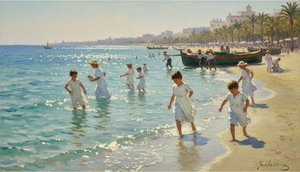
Joaquín Sorolla y Bastida: Meister des Lichts – Ein spanischer Impressionist im Fokus
Entdecken Sie das faszinierende Werk von Joaquín Sorolla y Bastida, dem Meister des spanischen Impressionismus! Erfahren Sie mehr über seine Technik, sein Leben und seine ikonischen Gemälde. Jetzt lesen!
Entdecken Sie Kunstwerke, die nach Themen, Stilen und Merkmalen sortiert sind.