

Gezeigt: · Inklusive Rahmen:
 Vorschau anzeigen
 Versenden
 Teilen
 Details anzeigen
 Leitfaden

 Herunterladen
 Ähnliche Objekte
 Röntgenaufnahme
 Diashow
 Fragen & Antworten
 Statistiken

€ 239
Handgefertigte Ölreproduktion
Handgemaltes Ölgemälde auf Leinwand in Ihrer Wunschgröße und mit Rahmen, auf Bestellung von unseren Künstlern angefertigt. ( Zum Druck wechseln Zum digitalen Bild wechseln)
Größe
·Standardformat
individuell anpassbar
CM
INCH
Wählen Sie aus unseren vordefinierten Formaten, die den ursprünglichen Proportionen des Kunstwerks entsprechen.
Größen werden geladen...

Breite
Höhe
Geben Sie die Breite und die Höhe an, die Sie für Ihren Rahmen oder Ihre Wand benötigen. Da dieses Werk handgemalt ist, kann der Künstler bei einer anderen Form etwas mehr um das Bild herum malen oder etwas abschneiden – Sie entscheiden. Wir senden Ihnen ein digitales Mockup zur Freigabe, bevor mit dem Malen begonnen wird. Das auf dieser Seite gezeigte Bild stellt nicht das tatsächliche Ergebnis dar – dies tut nur das Mockup.
 Mehr erfahren
Abschließen
·
Weißer Rand €1

verlaufende Kanten €1

Umrandung €1

P118B €10

P118H €10

P118W €10

P438Z €10

P508JH €12

P508YH €12

P805H €10

P805Z €10

P919BZ €10

P919G €10

P919XJ €10

P959ZH €10

P968JZ €12

W106C €8

W218G €10

W218JH €8

W218Y €10

W307PJ €10

W316G €10

W316PJ €8

W316Y €10

W398PJ €8

W4111J €10

W500HY €15

W500JH €15

W692G €12

W849H €8

W940BG €15

W953PJ €8

H24-GOLD €30

H24-SILVER €30

H36-GOLD €45

H36-SILVER €45
Versand in einer Schutzröhre, bereit für die Rahmung durch Ihren Rahmenmacher.
Extras
optionalWas sind die Extras enthalten?
Beispiele für Anpassungsmöglichkeiten: Gesicht durch Kundenfoto ersetzen; Haustier hinzufügen (z. B. Katze durch Hund ersetzen); Versteckte Botschaft im Hintergrund einfügen; Hintergrundlandschaft oder Elemente ändern.
Nach der Bestellung wird das Team von TopImpressionists.com den Kunden per E-Mail kontaktieren, um Anweisungen einzuholen und eine Vorschau des Entwurfs bereitzustellen
Nach der Bestellung wird das Team von TopImpressionists.com den Kunden per E-Mail kontaktieren, um Anweisungen einzuholen und eine Vorschau des Entwurfs bereitzustellen
Weltweiter Versand () in nur 3 bis 4 Wochen statt der üblichen 5 Wochen. (5 November). Keine Kompromisse bei der Qualität.
Schutzlackierung
Beschriftung
Details der gravierten Bronzetafel
This elegant plaque features the artist's name and the title of the artwork, finely engraved for a timeless presentation.
It is made from bronze with a refined, elegant finish. The text is precisely laser-engraved for a sharp and permanent result. Measuring 9x2 cm, the plaque is compact yet easy to read. It's built to be durable and scratch-resistant, offering a professional, museum-quality look. Mounting is simple thanks to the included adhesive backing.
Details zur Acrylglas-Plakette (transparent)
The plaque includes essential engraved details such as the artist's name, the title of the artwork, the date it was created, the type of media used-like oil on canvas or watercolor-a brief description of the piece, and a QR code that links to the complete artwork information.
It is crafted from clear acrylic, offering a sleek, modern appearance. The text is UV-engraved in black to ensure strong visual contrast. With a size of 10x15 cm, it ensures optimal readability. It comes equipped with two metal hooks for secure wall mounting. The plaque is designed to be weather-resistant, making it suitable for various environments, and it includes interactive features that work seamlessly with smartphone scanning.
Details zur schwarzen Acryltafel
This elegant plaque includes engraved information such as the artist's name, the title of the artwork, the date it was created, the type of media used (like oil on canvas or watercolor), a short description of the artwork, and a QR code for quick access to more information.
The plaque itself is made from refined black acrylic with a premium finish. The text is laser-engraved in white for high contrast and readability. Its size is 10x15 cm, designed to be easy to read. It comes with two metal hooks for professional mounting. The design is sleek and fits any interior style. It is also weather-resistant and durable, with built-in digital integration for mobile compatibility.
Die Glasoption ist nur für Größen unter 110 cm verfügbar.
 Die Glasoption ist nur für Größen unter 110 cm verfügbar.
- Kostenloser weltweiter Expressversand
- Hochwertige Leinenleinwand
- Umfassender Versicherungsschutz beim Versand
- Zollgebühren-Rückerstattungsgarantie
- Garantie für exakte Farbtreue
- 100 Tage Rückgaberecht (nur bei Mängeln)
- 100% Geld-zurück-Garantie
- Mengenrabatt verfügbar


Beschreibung des Sammlerstücks
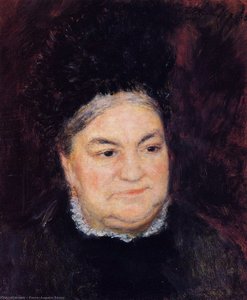
Renoirs 'Spiegelung' fängt die Essenz des Impressionismus ein: Licht, Farbe und eine melancholische Atmosphäre. Entdecken Sie dieses Meisterwerk und tauchen Sie ein in die Welt von Pierre-Auguste Renoir.
Künstlerbiografie
Erkunden Sie die lebendige Welt von Pierre-Auguste Renoir (1841–1919), einem führenden Impressionistenmaler, der für seine leuchtenden Porträts, Szenen des Pariser Lebens und weibliche Schönheit bekannt ist. Entdecken Sie sein Erbe und die künstlerischen Beiträge seiner Familie.
Über das Gemälde
Pierre-Auguste Renoir’s “Reflection”: A Moment of Gentle Nostalgia
Pierre-Auguste Renoir's "Reflection," painted in 1877, isn’t merely a portrait; it’s an exquisite distillation of Impressionist philosophy – a fleeting capture of light, emotion, and the quiet beauty of everyday life. This captivating work, housed within private collections today, invites us into a serene Parisian moment, a subtle dance between observation and interpretation. The painting immediately draws the eye to a woman, her features partially obscured by shadow, gazing off-camera with an enigmatic expression. Her posture suggests contemplation, perhaps a wistful memory or a quiet anticipation; the viewer is invited to project their own emotions onto this silent observer.
Renoir’s masterful use of color is central to the painting's allure. The vibrant red ribbon adorning her hat acts as a focal point, injecting a spark of warmth and energy into the otherwise muted palette. This bold hue contrasts beautifully with the deep black of her hat, creating a dynamic visual interplay that immediately grabs attention. The careful layering of brushstrokes – visible yet blended seamlessly – contributes to the painting’s soft, atmospheric quality, characteristic of Impressionism's pursuit of capturing the ephemeral effects of light and color. The background, featuring a simple chair, isn’t merely decorative; it provides depth and context, grounding the scene in a domestic setting and enhancing the sense of intimacy.
The Language of Light: An Impressionist Innovation
“Reflection” exemplifies Renoir's revolutionary approach to light – a cornerstone of the Impressionist movement. Rather than striving for photographic realism, he sought to depict how light *feels*, its transient qualities and shifting reflections. As discussed in numerous art historical analyses, including those available on platforms like WikiArt, traditional painting techniques focused heavily on precise shading and modeling to create the illusion of three-dimensionality. Renoir, however, deliberately avoided these methods, opting instead for broken brushstrokes applied in short, vibrant dabs. This technique allowed him to capture the way light scatters and refracts, creating a shimmering effect that mimics the natural world.
The painting’s luminosity isn't achieved through meticulous detail but rather through the skillful manipulation of color and texture. Notice how Renoir uses subtle variations in tone to suggest form and volume, relying on the viewer’s eye to complete the image. This approach was a radical departure from academic conventions and paved the way for future generations of artists to explore new ways of representing light and space. The painting's overall impression is one of warmth and tranquility, as if bathed in the golden light of late afternoon.
Renoir’s Legacy: A Bridge Between Tradition and Modernity
Pierre-Auguste Renoir stands as a pivotal figure in the transition from Realism to Impressionism. His early works, influenced by artists like Rubens and Watteau, demonstrated an appreciation for beauty and sensuality – qualities that would remain central to his artistic vision throughout his career. However, he was also deeply impacted by the emerging Realist styles of Courbet and Manet, particularly their depictions of modern life and rejection of idealized forms. Renoir’s willingness to experiment with new techniques and subject matter ultimately led him to become a leading voice in the Impressionist movement.
His influence extended far beyond his own time. Artists like Paul Cézanne, who followed in the footsteps of Renoir, were profoundly affected by his innovative use of color and brushstrokes. Cézanne’s later works, such as “The Obstpfluckerin,” demonstrate a clear debt to Renoir's emphasis on capturing the fleeting effects of light and color. Exploring Renoir’s work alongside that of other Impressionists – including Monet and Sisley – provides a deeper understanding of the movement’s core principles and its lasting impact on the history of art. For those seeking further insight, reproductions are available at Museu Rhode Island School of Design Museum of Art.
A Moment Preserved: Reflection and its Enduring Appeal
"Reflection" is more than just a painting; it’s an invitation to pause, reflect, and connect with the beauty of a simple moment. The enigmatic expression of the woman in the portrait invites speculation and encourages viewers to project their own emotions onto the scene. The soft colors, delicate brushstrokes, and masterful use of light create a sense of nostalgia and tranquility – qualities that continue to resonate with audiences today. High-quality reproductions of this iconic work are available through TopImpressionists.com, allowing you to bring this exquisite Impressionist masterpiece into your home or office.
Fragen & Antworten
Welche Druckgröße von "Spiegelung" von Pierre-Auguste Renoir passt in den empfohlenen Raum?
Für einen Wohnbereich wird für „Spiegelung“ ein Druckformat von Formattyp empfohlen.
Kann ich "Spiegelung" genauer untersuchen?
„Spiegelung“ kann auf der Röntgenblick-Seite des Kunstwerks Schicht für Schicht untersucht werden – ein Viewer, inspiriert von der Leuchttisch eines Restaurators, mit elf optischen Ebenen des Bildes.
Wie intensiv sind die Farben in "Spiegelung" von Pierre-Auguste Renoir?
Die Farben in "Spiegelung" von Pierre-Auguste Renoir besitzen eine Monochrom Intensität.
Kurzinfos und Kunst-Quiz
Über Pierre-Auguste Renoir

Pierre-Auguste Renoir
1841 - 1919, Frankreich
Künstlerbiografie
frühes Leben und Karriere
pierre-auguste renoir, ein prägender französischer Künstler, wurde am 25. Februar 1841 in Limoges, Frankreich, geboren. Er spielte eine entscheidende Rolle bei der Gestaltung des Impressionismus und war bekannt für sein lebendiges Licht und seine gesättigten Farben. Renoirs Werk feierte Schönheit, insbesondere weibliche Sinnlichkeit, und platzierte ihn in einer Linie von Künstlern, die von Rubens bis Watteau reicht.Künstlerisches Erbe
Renoirs Vermächtnis erstreckte sich über seine Leinwand hinaus, da er der Patriarche einer Familie war, in der Kunst in verschiedenen Formen blühte. Seine Kinder, pierre renoir (1885–1952), Filmemacher jean renoir (1894–1979) und Keramikkünstler claude renoir (1901–1969), leisteten alle bedeutende Beiträge in ihren jeweiligen Bereichen. Sein Enkel, Filmemacher claude renoir (1913–1993), vertiefte das künstlerische Erbe der Familie weiter.Bekannte Werke und Museen
* Dance at Bougival, ein bemerkenswertes Gemälde von Renoir, zeigt seine Meisterschaft beim Festhalten der Essenz des Impressionismus. * Das Musée des Collettes, das sich in Cagnes-sur-Mer, Frankreich, befindet, ist ein Muss für Kunstliebhaber. Dieses Museum, das einst das Zuhause von Pierre-Auguste Renoir war, dient als Zeugnis seines Lebens und Werks und beherbergt fünfzehn seiner Gemälde. * Das Musée Maurice Denis, ein weiteres verstecktes Juwel in Frankreich, präsentiert eine beeindruckende Sammlung französischer Postimpressionistischer Gemälde aus dem späten 19. und frühen 20. Jahrhundert.Renoirs Kunst mit TopImpressionists entdecken
- Entdecken Sie den Charme des Musée des Collettes (Frankreich) und seiner Impressionistenkunst bei TopImpressionists: [https://TopImpressionists.com/@@/a@d3aupf](https://TopImpressionists.com/@@/a@d3aupf)
- Erkunden Sie die Wunder des Musée Maurice Denis (Frankreich) mit TopImpressionists: /de/art/show/art-d3aue3-de/
- Ansehen Sie sich Renoirs Gemälde, einschließlich Dance at Bougival, bei TopImpressionists: [https://TopImpressionists.com/@/pierre-auguste renoir](https://TopImpressionists.com/@/pierre-auguste%20renoir)
Kurzinfos zu Pierre-Auguste Renoir
- Beeinflusste Künstler:
- Rubens
- Watteau
- Bemerkenswerte Werke:
- Tanz im Moulin de la Galette
- Bootsfahrt-Mittagessen
- Nach dem Bad
- Tanz in Bougival
- Geburtsdatum: 25. Februar 1841
- Geburtsort: Limoges, Frankreich
- Künstlerischer Stil: Impressionismus
- Nationalität: Französisch
- Todatum: 3. Dezember 1919
- Vollständiger Name: Pierre-Auguste Renoir
- Von Künstlern Beeinflusst:
- Camille Pissarro
- Édouard Manet
Ähnliche Kunstwerke




Entdecken Sie Kunstwerke, die nach Themen, Stilen und Merkmalen sortiert sind.


Pierre-Auguste Renoir
Spiegelung
() ·
Inklusive Rahmen: · Handgemalt mit Öl auf Leinen
Gesamtbetrag