Vorschau anzeigen
 Versenden
 Teilen
 Details anzeigen
 Leitfaden

 Herunterladen
 Ähnliche Objekte
 Röntgenaufnahme
 Diashow
 Statistiken
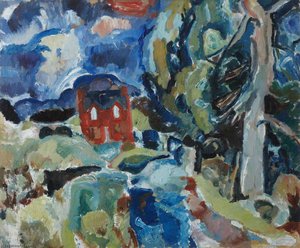
Beech Tree Reflections
 Oil On Canvas
- WallArt
 1930
1930- Modern
 59.0 x 74.0 cm
 Royal Scottish Academy of Art – Architektur
Experience the tranquil beauty of Sir William George Gillies' Beech Tree Reflections, a 1930 masterpiece of Scottish Colourism that captures dappled light and serene waters, perfect for your private collection.
 Weiterlesen
Erkunden Sie W.G. Gillies' schottische Landschaften und Stillleben. Entdecken Sie seine kubistischen Einflüsse, die Verbindungen zur 1922er Gruppe, das Erbe der Edinburgh College of Art und seinen tiefgreifenden Einfluss auf die Kunst des 20. Jahrhunderts.
Die auf dieser Seite dargestellten Kunstwerke sind urheberrechtlich geschützt, was bedeutet, dass wir keine identische Reproduktion rechtmäßig erstellen oder verkaufen dürfen. Dieser Schutz wird durch internationale Abkommen wie die Berner Übereinkunft und durch nationale Gesetze, einschließlich derer, die von den US-Urheberrecht – Titel 17.
Als respektvolle und rechtlich einwandfreie Alternative bieten wir individuelle, handgemalte Kunstwerke an, die vom Original inspiriert sind. Unsere geschickten und professionellen Künstler studieren sorgfältig den Stil, die Stimmung und das künstlerische Wesen des Originals, um ein neues, einzigartiges Werk zu schaffen, das dasselbe Gefühl hervorruft – während es zugleich eine eigenständige Originalschöpfung bleibt.
Diese Methode entspricht vollumfänglich den Urheberrechtsbestimmungen, da sie keine Kopie oder Vervielfältigung des geschützten Kunstwerks darstellt. Stattdessen handelt es sich um eine kreative Neuinterpretation – ein neues Gemälde, das vom Original inspiriert, aber nicht identisch mit ihm ist.
Handgefertigte Ölreproduktion
Handgemaltes Ölgemälde auf Leinwand in Ihrer Wunschgröße und mit Rahmen, auf Bestellung von unseren Künstlern angefertigt. ( Zum Druck wechseln Zum digitalen Bild wechseln)




P118B €10

P118H €10

P118W €10

P438Z €10

P508JH €12

P508YH €12

P805H €10

P805Z €10

P919BZ €10

P919G €10

P919XJ €10

P959ZH €10

P968JZ €12

W106C €8

W218G €10

W218JH €8

W218Y €10

W307PJ €10

W316G €10

W316PJ €8

W316Y €10

W398PJ €8

W4111J €10

W500HY €15

W500JH €15

W692G €12

W849H €8

W940BG €15

W953PJ €8




Standardformat
individuell anpassbar
CM
INCH
Wählen Sie aus unseren vordefinierten Formaten, die den ursprünglichen Proportionen des Kunstwerks entsprechen.
Loading sizes...

Breite
Höhe
Geben Sie die Breite und die Höhe an, die Sie für Ihren Rahmen oder Ihre Wand benötigen. Da dieses Werk handgemalt ist, kann der Künstler bei einer anderen Form etwas mehr um das Bild herum malen oder etwas abschneiden – Sie entscheiden. Wir senden Ihnen ein digitales Mockup zur Freigabe, bevor mit dem Malen begonnen wird. Das auf dieser Seite gezeigte Bild stellt nicht das tatsächliche Ergebnis dar – dies tut nur das Mockup.
Beispiele für Anpassungsmöglichkeiten: Gesicht durch Kundenfoto ersetzen; Haustier hinzufügen (z. B. Katze durch Hund ersetzen); eine versteckte Nachricht im Hintergrund einfügen; Hintergrundlandschaft oder -elemente ändern.
Nach der Bestellung wird das TopImpressionists.com-Team dem Kunden Anweisungen per E-Mail zusenden und eine Mockup-Vorschau bereitstellen.
Nach der Bestellung wird das TopImpressionists.com-Team dem Kunden Anweisungen per E-Mail zusenden und eine Mockup-Vorschau bereitstellen.
Weltweiter Versand () in nur 3 bis 4 Wochen statt der üblichen 5 Wochen. (27 Oktober). Keine Kompromisse bei der Qualität.

Kostenloser weltweiter Expressversand

Hochwertige Leinenleinwand

Umfassender Versicherungsschutz beim Versand

Zollgebühren-Rückerstattungsgarantie

Garantie für exakte Farbtreue

100 Tage Rückgaberecht (nur bei Mängeln)

100% Geld-zurück-Garantie

Mengenrabatt verfügbar
 Die Glasoption ist nur für Größen unter 110 cm verfügbar.

Beech Tree Reflections
Art der Reproduktion
Format der Reproduktion
-


Endpreis
€ 237
A Symphony of Reflection: Exploring Sir William George Gillies’ Beech Tree Reflections
Sir William George Gillies (1898–1973), a pivotal figure in Scottish Colourism, gifted us with “Beech Tree Reflections,” a masterpiece born from the crucible of artistic experimentation and deeply rooted in the landscape traditions of his homeland. Painted circa 1930, this artwork transcends mere depiction; it embodies a profound meditation on nature’s beauty and tranquility, achieved through masterful technique and infused with subtle symbolic resonance.The Landscape Visionary: Gillies' Artistic Influences
Gillies’ artistic journey began in earnest at the Edinburgh College of Art, where he honed his skills under the tutelage of André Lhote, absorbing the revolutionary ideas of Cubism – particularly those championed by Picasso and Braque. This initial foray into abstraction instilled a foundational understanding of geometric forms and fragmented perspectives that would inform his subsequent explorations. However, it was a transformative encounter with Paul Klee’s work in 1934 that truly ignited Gillies' imagination. Klee’s embrace of childlike spontaneity and vibrant colour palettes profoundly impacted Gillies’ approach to composition, encouraging him to prioritize emotional expression alongside formal considerations.A Cézanne Echo: Composition and Technique
“Beech Tree Reflections” exemplifies Gillies’ unwavering commitment to Cézanne’s influence – a cornerstone of Scottish Colourism. Like Cézanne's celebrated landscapes, the painting prioritizes solidity and depth through careful layering of pigment and meticulous attention to tonal variations. The artist skillfully captures the dappled light filtering through the beech tree canopy onto the still waters below, creating an illusionistic surface that convincingly simulates natural textures. Notice the subtle brushstrokes—delicate yet purposeful—that contribute to the overall sense of atmosphere and convey a palpable feeling of serenity. The muted palette – predominantly greens and browns – reinforces this mood, mirroring the understated grandeur of the Scottish Highlands.Symbolism Within Tranquility: Interpreting Visual Elements
Beyond its technical prowess, “Beech Tree Reflections” speaks volumes about symbolic meaning. Beech trees themselves hold significance in Celtic folklore, representing resilience, protection, and connection to the spiritual realm. Their drooping branches mirror the melancholic beauty of autumn, hinting at themes of impermanence and acceptance. The mirrored reflection of the trees adds another layer of complexity, suggesting duality – stillness juxtaposed with movement—and inviting contemplation on the relationship between observer and observed. It’s a painting that encourages viewers to pause, breathe deeply, and appreciate the quiet majesty of the natural world.Legacy and Influence: Gillies' Contribution to Scottish Art
Sir William George Gillies remains an enduring icon of Scottish Colourism, shaping the artistic landscape of his era and inspiring generations of artists. His dedication to capturing the essence of Scottish landscapes—infused with both intellectual rigor and emotional sensitivity—established a precedent for future painters striving to express profound ideas through visual form. “Beech Tree Reflections,” therefore, stands not merely as a beautiful artwork but as a testament to Gillies’ artistic vision and his indelible mark on British art history.Fragen & Antworten
Ist "Beech Tree Reflections" von Sir William George Gillies ein helles oder ein dunkles Kunstwerk?
Was die wahrgenommene Helligkeit betrifft, so ist "Beech Tree Reflections" von Sir William George Gillies bright.
Welchem Künstler wird "Beech Tree Reflections" zugeschrieben?
Der Künstler hinter „Beech Tree Reflections“ ist Sir William George Gillies. Das Werk ist unter dem Namen von Sir William George Gillies katalogisiert.
Wann wurde "Beech Tree Reflections" geschaffen?
"Beech Tree Reflections" von Sir William George Gillies entstand im Jahr 1930.
Künstlerbiografie
Sir William George Gillies: Ein Leben in der schottischen Kunst
Frühes Leben und Ausbildung
- Geboren: Haddington, East Lothian, Vereinigtes Königreich, 1898.
- Gillies begann sein Studium an der Edinburgh College of Art, wurde aber durch seinen Dienst im Ersten Weltkrieg bei den Royal Engineers unterbrochen.
- Nach dem Krieg kehrte er zurück und setzte seine Ausbildung am Edinburgh College of Art fort, schloss sie ab und arbeitete anschließend über 40 Jahre als engagierter Lehrer dort.
Künstlerische Entwicklung und Einflüsse
- Gillies’ künstlerischer Weg begann mit einer Erkundung des Kubismus, nachdem er unter André Lhote in Paris (1923) studiert hatte und Italien (1924) bereist hatte.
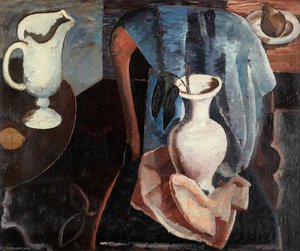
- Frühe Werke wie „Two Pots, Saucer and Fruit“ (1933) zeigen diese Einflüsse und präsentieren eine Cézanne-inspirierte Anordnung mit den unaufdringlichen Farbpaletten von Braque und Picasso.
- Ein entscheidender Moment kam 1934, als er die Werke von Paul Klee entdeckte und sich dadurch inspirieren ließ, eine imaginative Verwendung von Farbe und kindliche Qualitäten in seinen Kompositionen einzusetzen.
- Er entwickelte allmählich einen eigenen Stil, der in schottischen Landschaftsbildern und Stillleben Traditionen verwurzelt ist.
Die 1922er Gruppe und kollaborativer Geist
- Im Jahr 1922 gründete Gillies zusammen mit anderen Künstlern wie William Crozier, William Geissler und William MacTaggart die „1922er Gruppe“.
- Diese Ausstellungsgruppe bot einer Plattform für aufstrebende schottische Künstler, um ihre Werke über ein Jahrzehnt im New Gallery in Edinburgh auszustellen.
- Die Gruppe förderte ein Gefühl von Gemeinschaft und Innovation innerhalb der schottischen Kunstszene.
Themen und Gegenstände
- Landschaften: Gillies ist bekannt für seine Darstellungen der Lothian-, Fife- und Borderregionen Schottlands. Er erfasste den Charakter dieser Landschaften mit einem feinfühligen Blick.
- Stillleben: Stillleben waren ein weiteres wichtiges Thema, oft mit Keramiken, die von seiner jüngeren Schwester Emma Smith Gillies geschaffen wurden, deren frühes Ableben 1936 ihn tief betraf, dargestellt.
- Porträts: Obwohl er in seiner frühen Karriere mit Porträts experimentierte, blieben Landschaften und Stillleben seine Hauptthemen.
Wichtige Leistungen und Anerkennung
- Gillies war von 1959 bis zu seinem Ruhestand im Jahr 1966 Direktor der Edinburgh College of Art.
- Seine produktive Arbeit und sein Engagement für die Lehre hatten einen tiefgreifenden Einfluss auf Generationen schottischer Maler.
- Er wurde zum Royal Academician (RA) ernannt, was eine bedeutende Anerkennung in der Kunstwelt darstellte.
Historische Bedeutung und Vermächtnis
- Sir William George Gillies gilt als einer der wichtigsten schottischen Maler des 20. Jahrhunderts.
- Seine Werke verbinden den frühen Modernismus mit einer eigenständigen schottischen künstlerischen Identität.
- Vermächtnis: Sein Einfluss erstreckt sich über seine Gemälde hinaus und prägt die Richtung der schottischen Kunst durch sein Unterrichten und Mentoring.
- Er starb 1973 und hinterließ ein reiches Œuvre, das bis heute für seine Schönheit, Sensibilität und zeitlose Relevanz gefeiert wird.

Sir William George Gillies
1898 - 1973 , Vereinigtes Königreich
Kurzinfos
- Artistic Movement Or Style: Kubismus
- Artists Or Movements Influenced By This Artist: ['Scottish Colourists']
- Artists Who Influenced This Artist:
- André Lhote
- Paul Klee
- Cézanne
- Braque
- Picasso
- Date Of Birth: 1898
- Full Name: Sir William George Gillies
- Nationality: Schottisch
- Notable Artworks:
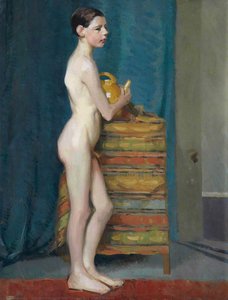
- Young Boy with a Teapot
- Mediterranean Landscape mit Überdachung
- Stillleben – Gelbes Krug und gestreifte Leinwand
- Place Of Birth: Haddington, Vereinigtes Königreich
Ähnliche Artikel

Marianne North: Die 25 schönsten Blumenmalereien der viktorianischen Reisenden | TopImpressionists
Entdecken Sie die 25 schönsten Werke der viktorianischen Blumenmalerin Marianne North! Erleben Sie ihre exotischen Reisebilder & botanischen Illustrationen. Hochwertige Kunst Reproduktionen für Ihr Zuhause auf TopImpressionists.com.

George Paul Chalmers: Rediscovering the Angus Rembrandt & Scottish Colourist Roots
Explore the captivating world of George Paul Chalmers (1833-1878), a pivotal Scottish painter. Discover his landscapes, portraits & connection to the Aesthetic Movement and Colourists. Learn about this 'Angus Rembrandt's' legacy with TopImpressionists.

Arboreal Echoes: A Historical & Artistic Exploration of Trees in Painting
Explore the rich history of trees in painting! Discover symbolism, Romantic masterpieces by Caspar David Friedrich & beyond. A curated journey for art enthusiasts.

Arboreal Echoes: A Historical & Artistic Exploration of Trees in Painting
Explore the rich history of trees in painting! Discover symbolism, Romantic masterpieces by Caspar David Friedrich & beyond. A curated journey for art enthusiasts.

John Duncan Fergusson: Pionier der schottischen Moderne und die lebendige Farbe des Post-Impressionismus
Entdecken Sie das faszinierende Werk von John Duncan Fergusson, einem Pionier der schottischen Moderne! Erfahren Sie mehr über die Scottish Colourists, seinen einzigartigen Stil und sein bleibendes Vermächtnis. Jetzt lesen!
Entdecken Sie Kunstwerke, die nach Themen, Stilen und Merkmalen sortiert sind.