In echtem Maßstab anzeigen
 Versenden als Grußkarte
 Teilen
 Details anzeigen
 Leitfaden öffnen

 Herunterladen
 Ähnliche Objekte
 Röntgenaufnahme
 Diashow
 Besucherstatistiken
Path through Trees
 Acrylic
- WallArt
- Post-Impressionistic Landscape
 112.0 x 114.0 cm
 Royal Scottish Academy of Art – Architektur
Explore the serene landscapes and evocative still lifes of Sir William George Gillies RA RSA PRSW, a Scottish Colourist celebrated for capturing the beauty of Lothian and Fife with masterful Impressionistic brushstrokes.
 Mehr anzeigen
Erkunden Sie W.G. Gillies' schottische Landschaften und Stillleben. Entdecken Sie seine kubistischen Einflüsse, die Verbindungen zur 1922er Gruppe, das Erbe der Edinburgh College of Art und seinen tiefgreifenden Einfluss auf die Kunst des 20. Jahrhunderts.
Die auf dieser Seite dargestellten Kunstwerke sind urheberrechtlich geschützt, was bedeutet, dass wir keine identische Reproduktion rechtmäßig erstellen oder verkaufen dürfen. Dieser Schutz wird durch internationale Abkommen wie die Berner Übereinkunft und durch nationale Gesetze, einschließlich derer, die von den ... festgelegt wurden US-Urheberrecht – Titel 17.
Diese Methode entspricht vollumfänglich den Urheberrechtsbestimmungen, da sie keine Kopie oder Vervielfältigung des geschützten Kunstwerks darstellt. Stattdessen handelt es sich um eine kreative Neuinterpretation – ein neues Gemälde, das vom Original inspiriert, aber nicht identisch mit ihm ist.
Giclée / Kunstdruck
Giclée- oder Leinwanddruck in Museumsqualität mit schneller Produktion und flexiblen Veredelungsoptionen. ( Handgemalte Reproduktion kaufen Zum digitalen Bild wechseln)




P118B €10

P118H €10

P118W €10

P438Z €10

P508JH €12

P508YH €12

P805H €10

P805Z €10

P919BZ €10

P919G €10

P919XJ €10

P959ZH €10

P968JZ €12

W106C €8

W218G €10

W218JH €8

W218Y €10

W307PJ €10

W316G €10

W316PJ €8

W316Y €10

W398PJ €8

W4111J €10

W500HY €15

W500JH €15

W692G €12

W849H €8

W940BG €15

W953PJ €8




Standardformat
individuell anpassbar
CM
INCH
Wählen Sie aus unseren vordefinierten Formaten, die den ursprünglichen Proportionen des Kunstwerks entsprechen.
Loading sizes...

Breite
Höhe
Geben Sie die Breite und die Höhe an, die Sie benötigen, damit der Druck perfekt in Ihren Rahmen oder an Ihre Wand passt. Ein Druck kann nur beschnitten werden und niemals größer als das Originalbild gemacht werden; daher verliert ein Format mit einer anderen Proportion einen Teil des Bildes. Wir senden Ihnen ein digitales Mockup zur Freigabe, bevor wir den Druck ausführen. Das auf dieser Seite gezeigte Bild zeigt nicht den tatsächlichen Beschnitt – dies ist nur im Mockup ersichtlich.
Weltweiter Versand () innerhalb von 2 Wochen statt der üblichen 4/5 Wochen. (25 Oktober)

Kostenloser weltweiter Expressversand

Hochwertige Leinenleinwand

Vollständiger Versicherungsschutz beim Versand

Zollgebühren-Rückerstattungsgarantie

Garantie für exakte Farbtreue

100-tägiges Rückgaberecht (nur bei Mängeln)

100% Geld-zurück-Garantie

Angebot für Mengenrabatt
 Die Glasoption ist nur für Größen unter 110 cm verfügbar.

Path through Trees
Giclée / Kunstdruck
Format der Reproduktion
-


Gesamtpreis
€ 61
A Journey Through Light and Texture: Exploring Gillies’ “Path through Trees”
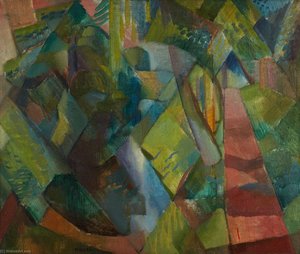
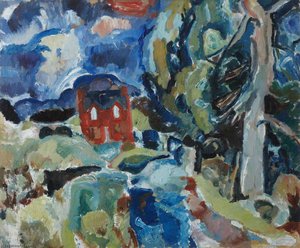
The painting "Path through Trees" by Sir William George Gillies stands as a testament to the enduring allure of Impressionism blended with a distinctly Scottish sensibility. Executed sometime before 1973, this piece captures not merely a visual representation of woodland scenery but delves into a deeper exploration of mood and atmosphere—a hallmark of Gillies’ artistic vision. Measuring 112 x 114 cm, the canvas invites contemplation as much as it pleases the eye with its harmonious blend of color and texture.The Impressionistic Embrace: Style and Technique
Gillies' stylistic choices firmly situate “Path through Trees” within the broader context of early 20th-century art movements. While undeniably influenced by Cubism’s geometric fragmentation – evident in his formative studies under André Lhote – Gillies swiftly moved beyond rigid formalism, prioritizing instead the expressive qualities of color and light. Characteristic Impressionistic brushstrokes dominate the composition, layering pigment onto the canvas with loose, visible marks that convey a palpable sense of spontaneity. Unlike meticulously rendered landscapes of earlier eras, Gillies eschewed detailed botanical accuracy; rather, he sought to distill the essence of the forest into its dominant hues—warm yellows and browns punctuated by subtle blues in the sky and foliage. This technique prioritizes capturing fleeting moments of illumination and shadow, mirroring the artist’s fascination with observing nature directly.Scottish Roots: Historical Context and Inspiration
Gillies' artistic development was profoundly shaped by his upbringing in Haddington, Scotland, where he absorbed the rugged beauty of the Lothian countryside. The painting reflects this connection to place, conveying a feeling of quiet contemplation and reverence for the natural world—a sentiment echoed throughout Gillies’ oeuvre. His encounter with Paul Klee proved particularly influential, prompting him to embrace a more imaginative approach to color palettes and compositional arrangements. Klee's playful use of childlike spontaneity resonated deeply with Gillies, encouraging him to infuse his paintings with an element of wonder and emotional resonance.Symbolism Within the Frame: Layers of Meaning
Beyond its aesthetic appeal, “Path through Trees” possesses symbolic depth. The dominant tree trunk serves as a focal point, representing resilience and strength—qualities associated with Scottish folklore and tradition. The dappled sunlight filtering through the branches symbolizes hope and renewal, mirroring the cyclical rhythms of nature. Furthermore, the fallen leaves at the base of the trunks subtly evoke themes of mortality and transformation, reminding viewers that beauty exists alongside impermanence. Gillies’ masterful manipulation of color and texture contributes to this layered interpretation, inviting contemplation on broader philosophical concepts.Emotional Resonance: A Tranquil Vista
Ultimately, “Path through Trees” succeeds in transporting the viewer into a serene woodland setting. The painting's subdued palette and expressive brushstrokes evoke feelings of peace and tranquility—a deliberate aim reflecting Gillies’ desire to capture not just what he saw but how he felt when observing the natural world. It is precisely this emotive quality, combined with Gillies’ skillful technique and stylistic innovation, that ensures “Path through Trees” continues to captivate audiences today, serving as an enduring emblem of Impressionistic beauty and Scottish artistic heritage.Fragen & Antworten
Wo kann ich eine handgemalte Reproduktion von "Path through Trees" von Sir William George Gillies kaufen?
Eine handgemalte Reproduktion von "Path through Trees" von Sir William George Gillies können Sie direkt auf der entsprechenden Handgemalte Reproduktion-Seite bestellen: eine handgemalte Ölreproduktion auf Leinenleinwand, auf Bestellung angefertigt.
Wie stehen die Farben von "Path through Trees" zueinander?
Die Farbharmonie von „Path through Trees“ wird als Balanced Harmony beschrieben.
Welcher Strömung und welcher Epoche ist "Path through Trees" von Sir William George Gillies zuzuordnen?
"Path through Trees" von Sir William George Gillies lässt sich der Post-Impressionistic Landscape-Strömung innerhalb der Moderne-Ära seines Schöpfers zuordnen.
Ähnliche Kunstwerke


Biografie des Künstlers
Sir William George Gillies: Ein Leben in der schottischen Kunst
Frühes Leben und Ausbildung
- Geboren: Haddington, East Lothian, Vereinigtes Königreich, 1898.
- Gillies begann sein Studium an der Edinburgh College of Art, wurde aber durch seinen Dienst im Ersten Weltkrieg bei den Royal Engineers unterbrochen.
- Nach dem Krieg kehrte er zurück und setzte seine Ausbildung am Edinburgh College of Art fort, schloss sie ab und arbeitete anschließend über 40 Jahre als engagierter Lehrer dort.
Künstlerische Entwicklung und Einflüsse
- Gillies’ künstlerischer Weg begann mit einer Erkundung des Kubismus, nachdem er unter André Lhote in Paris (1923) studiert hatte und Italien (1924) bereist hatte.
- Frühe Werke wie „Two Pots, Saucer and Fruit“ (1933) zeigen diese Einflüsse und präsentieren eine Cézanne-inspirierte Anordnung mit den unaufdringlichen Farbpaletten von Braque und Picasso.
- Ein entscheidender Moment kam 1934, als er die Werke von Paul Klee entdeckte und sich dadurch inspirieren ließ, eine imaginative Verwendung von Farbe und kindliche Qualitäten in seinen Kompositionen einzusetzen.
- Er entwickelte allmählich einen eigenen Stil, der in schottischen Landschaftsbildern und Stillleben Traditionen verwurzelt ist.
Die 1922er Gruppe und kollaborativer Geist
- Im Jahr 1922 gründete Gillies zusammen mit anderen Künstlern wie William Crozier, William Geissler und William MacTaggart die „1922er Gruppe“.
- Diese Ausstellungsgruppe bot einer Plattform für aufstrebende schottische Künstler, um ihre Werke über ein Jahrzehnt im New Gallery in Edinburgh auszustellen.
- Die Gruppe förderte ein Gefühl von Gemeinschaft und Innovation innerhalb der schottischen Kunstszene.
Themen und Gegenstände
- Landschaften: Gillies ist bekannt für seine Darstellungen der Lothian-, Fife- und Borderregionen Schottlands. Er erfasste den Charakter dieser Landschaften mit einem feinfühligen Blick.
- Stillleben: Stillleben waren ein weiteres wichtiges Thema, oft mit Keramiken, die von seiner jüngeren Schwester Emma Smith Gillies geschaffen wurden, deren frühes Ableben 1936 ihn tief betraf, dargestellt.
- Porträts: Obwohl er in seiner frühen Karriere mit Porträts experimentierte, blieben Landschaften und Stillleben seine Hauptthemen.
Wichtige Leistungen und Anerkennung
- Gillies war von 1959 bis zu seinem Ruhestand im Jahr 1966 Direktor der Edinburgh College of Art.
- Seine produktive Arbeit und sein Engagement für die Lehre hatten einen tiefgreifenden Einfluss auf Generationen schottischer Maler.
- Er wurde zum Royal Academician (RA) ernannt, was eine bedeutende Anerkennung in der Kunstwelt darstellte.
Historische Bedeutung und Vermächtnis
- Sir William George Gillies gilt als einer der wichtigsten schottischen Maler des 20. Jahrhunderts.
- Seine Werke verbinden den frühen Modernismus mit einer eigenständigen schottischen künstlerischen Identität.
- Vermächtnis: Sein Einfluss erstreckt sich über seine Gemälde hinaus und prägt die Richtung der schottischen Kunst durch sein Unterrichten und Mentoring.
- Er starb 1973 und hinterließ ein reiches Œuvre, das bis heute für seine Schönheit, Sensibilität und zeitlose Relevanz gefeiert wird.

Sir William George Gillies
1898 - 1973 , Vereinigtes Königreich
Eckdaten zum Künstler
- Artistic Movement Or Style: Kubismus
- Artists Or Movements Influenced By This Artist: ['Scottish Colourists']
- Artists Who Influenced This Artist:
- André Lhote
- Paul Klee
- Cézanne
- Braque
- Picasso
- Date Of Birth: 1898
- Full Name: Sir William George Gillies
- Nationality: Schottisch
- Notable Artworks:
- Young Boy with a Teapot
- Mediterranean Landscape mit Überdachung
- Stillleben – Gelbes Krug und gestreifte Leinwand
- Place Of Birth: Haddington, Vereinigtes Königreich
Verwandte Artikel

Beyond the Light: Discovering the Soul and Emotional Depth of Post-Impressionism
Embark on a cultural journey through Post-Impressionism. Discover the profound emotional depth of masters like Van Gogh and Cézanne, exploring how they moved beyond light to capture the very soul of human experience through vibrant color and symbolic form.

Beyond the Light: Capturing Raw Emotion and Subjective Vision in Post-Impressionist Landscapes
Explore the profound emotional depth of Post-Impressionist landscapes. Discover how masters like Van Gogh moved beyond light to capture raw human feeling through vibrant color and expressive texture in this expert art history retrospective.
Entdecken Sie Kunstwerke, die nach Themen, Stilen und Merkmalen sortiert sind.