Vorschau anzeigen
 Versenden
 Teilen
 Details anzeigen
 Leitfaden

 Herunterladen
 Ähnliche Objekte
 Röntgenaufnahme
 Diashow
 Statistiken
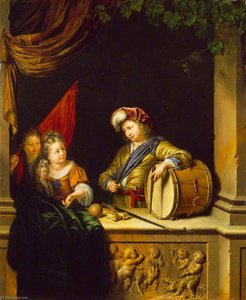
Kinderspiele
 Öl
Öl- Wandkunst
- Niederländischer Barock
 1702
1702- – Frühe Neuzeit
 34.0 x 28.0 cm
 Wallace Collection
Entdecken Sie Willem van Mieris' Meisterwerk Kinderspiele mit zwei Kindern und Trommel. Erleben Sie pure barocke Lebensfreude!
 Weiterlesen
Willem van Mieris (1662-1747) war ein niederländischer Fijnschilder, bekannt für elegante Genreszenen und Porträts der Oberschicht. Als Meister des Details führte er die Leipziger Tradition mit seinem Vater fort.
Giclée / Kunstdruck
Giclée- oder Leinwanddruck in Museumsqualität mit schneller Produktion und flexiblen Veredelungsoptionen. ( Handgemalte Reproduktion bestellen Zum digitalen Bild wechseln)




P118B €10

P118H €10

P118W €10

P438Z €10

P508JH €12

P508YH €12

P805H €10

P805Z €10

P919BZ €10

P919G €10

P919XJ €10

P959ZH €10

P968JZ €12

W106C €8

W218G €10

W218JH €8

W218Y €10

W307PJ €10

W316G €10

W316PJ €8

W316Y €10

W398PJ €8

W4111J €10

W500HY €15

W500JH €15

W692G €12

W849H €8

W940BG €15

W953PJ €8




Standardformat
individuell anpassbar
CM
INCH
Wählen Sie aus unseren vordefinierten Formaten, die den ursprünglichen Proportionen des Kunstwerks entsprechen.
Loading sizes...

Breite
Höhe
Geben Sie die benötigte Breite und Höhe an, damit der Druck perfekt in Ihren Rahmen oder an Ihre Wand passt. Ein Druck kann nur beschnitten, aber niemals größer als das Originalbild angefertigt werden; daher verliert ein Format mit anderen Proportionen einen Teil des Bildes. Wir senden Ihnen ein digitales Mockup zur Freigabe, bevor wir den Druck ausführen. Das auf dieser Seite gezeigte Bild zeigt nicht den tatsächlichen Beschnitt – dies ist nur im Mockup ersichtlich.
Weltweiter Versand () innerhalb von 2 Wochen statt der üblichen 4/5 Wochen. (27 Oktober)

Kostenloser weltweiter Expressversand

Hochwertige Leinenleinwand

Umfassender Versicherungsschutz beim Versand

Zollgebühren-Rückerstattungsgarantie

Garantie für exakte Farbtreue

100 Tage Rückgaberecht (nur bei Mängeln)

100% Geld-zurück-Garantie

Mengenrabatt verfügbar
 Die Glasoption ist nur für Größen unter 110 cm verfügbar.

Kinderspiele
Giclée / Kunstdruck
Format der Reproduktion
-


Endpreis
€ 61
Eine Symphonie kindlicher Unschuld
In der stillen, leuchtenden Welt von Willem van Mieris’ „Kinderspiele“ werden wir eingeladen, einen in der Zeit eingefrorenen Moment zu betreten, in dem sich das Jahr 1702 so präsent anfühlt wie der Atem der dargestellten Figuren. Dieses exquisite Meisterwerk, ein Markenzeichen der Leipziger fijnschilders-Bewegung, tut weit mehr, als nur eine Spielszene zu dokumentieren; es fängt die reine Essenz jugendlicher Ausgelassenheit ein, verwoben mit einer tiefgründigen, stillen Kontemplation. Während wir die beiden jungen Jungen im Zentrum der Komposition betrachten, erzeugen ihr lebhaftes Gespräch und ihre konzentrierte Aufmerksamkeit auf eine gemeinsame Trommel einen rhythmischen Puls, der durch die gesamte Leinwand schlägt. Der Künstler orchestriert meisterhaft ein soziales Tableau, indem er das zentrale Duo mit weiteren Figuren umgibt – einem Mann zur Linken und einem weiteren zur Rechten –, deren Anwesenheit auf ein größeres Geflecht aus familiärer Harmonie und gemeinschaftlicher Verbundenheit hindeutert.
Jedes Element innerhalb dieser zarten Szene ist mit einer tieferen Bedeutungsebene durchdrungen, die darauf ausgelegt ist, mit dem kulturellen Empfinden der niederländischen Barockära zu resonieren. Nahe dem Herzen der Komposition liegt ein Apfel, ein Motiv, das van Mieris häufig verwendete, um sowohl die Unschuld als auch den aufblühenden Wohlstand eines wohlgeordneten Lebens zu symbolisieren. Diese subtile symbolische Note, gepaart mit der diskreten Platzierung einer Schale in der unteren Ecke, verankert das Gemälde in einer Realität, die zugleich greifbar und allegorisch ist. Für den anspruchsvollen Sammler oder Innenarchitekten stellt diese Tiefe sicher, dass das Kunstwerk nicht nur als dekoratives Element dient, sondern als Gesprächsstück, das zu endlosen Ebenen der Interpretation einlädt.
Die Meisterschaft des Feinmalers
„Kinderspiele“ zu betrachten bedeutet, den Gipfel technischer Virtuosität zu bezeugen. Van Mieris war ein wahrer Meister der fijnschilder-Technik, eines Stils, der durch eine fast obsessive Hingabe an kleinste Details und eine polierte, glatte Oberfläche definiert ist, welche die Pinselstriche des Künstlers verbirgt. Durch seine Beherrschung des Chiaroscuro formt er Licht und Schatten, um den Texturen der Szene Leben einzuhauchen; man kann das Gewicht des schweren Draperies, die Glätte der Haut und die raue Maserung der Holztrommel fast spüren. Seine Fähigkeit, tonale Abstufungen zu manipulieren, erzeugt ein Gefühl von dreidimensionaler Tiefe, das den Betrachter in das Bild hineinzieht und die kleine, 34 x 28 cm große Leinwand wie ein Fenster zu einer weiten, atmenden Welt wirken lässt.
Dieser akribische Ansatz des Realismus dient ebenso einem emotionalen wie einem technischen Zweck. Die Präzision, mit der van Mieris den ausdrucksstarken Blick eines Kindes oder die subtile Falte eines seidenen Ärmels einfängt, beschwört ein Gefühl von Nostalgie und Ehrfurcht vor der Vergänglichkeit der Zeit herauf. Für all jene, die einen Raum mit Kunst schmücken möchten, die Ruhe und Staunen inspiriert, bietet diese Reproduktion eine unvergleichliche Gelegenheit, ein Fragment der Eleganz des Goldenen Zeitalters der Niederlande zu besitzen. Es ist ein Werk, das eine anspruchsvolle, leuchtende Energie in jeden Raum bringt und die Brücke zwischen historischer Grandiosität und zeitgenössischer ästhetischer Wertschätzung schlägt.
Fragen & Antworten
Welche Stimmung und welche Emotion vermittelt "Kinderspiele" von Willem Van Mieris?
"Kinderspiele" von Willem Van Mieris vermittelt ein Ruhig Gefühl innerhalb einer insgesamt Elegant Stimmung.
Welche Farbe prägt die Komposition von "Kinderspiele" von Willem Van Mieris?
Phthalogrün (#261414) ist die dominierende Farbe von "Kinderspiele" von Willem Van Mieris.
Wie intensiv sind die Farben von "Kinderspiele" von Willem Van Mieris?
Die Farbsättigung von „Kinderspiele“ ist Ausgewogen. Die Intensität beschreibt, wie kräftig die Farben wirken.
Künstlerbiografie
Willem van Mieris (1662 - 1747): The Master of Elegant Detail
Willem van Mieris (1662-1747) stands as a pivotal figure in the Leiden fijnschilders’ movement, embodying the culmination of Dutch Baroque artistic ideals. Born in Leiden on June 3rd, 1662, he descended from a lineage steeped in artistic tradition—his father, Frans van Mieris the Elder (1635-1681), was himself a celebrated genre painter who had established a formidable reputation for capturing the nuances of upper-class society. This familial legacy profoundly shaped Willem’s formative years and instilled within him an unwavering dedication to upholding his father's esteemed position as Leiden’s foremost fijnschilder—a commitment that would define his entire artistic career.- Early Training & Influences:
- Frans van Mieris the Elder’s profound impact on Willem’s technique and aesthetic sensibilities cannot be overstated. Guided by the tutelage of his father, Willem honed his skills under the watchful eye of Gerrit Dou (1613-1675), a master of chiaroscuro and meticulous observation—a stylistic approach that would become synonymous with Leiden fijnschilders.
The Leiden Tradition & Pieter Post’s Vision
Willem van Mieris's artistic trajectory was inextricably linked to the broader intellectual currents of his time. The influence of Pieter Post (1659-1734), a Dutch art theoretician and humanist, proved particularly transformative. Post championed the notion that genre painters should transcend mere representation—rather, they ought to elevate their subjects through classical ideals of beauty and proportion. This conviction spurred Willem to meticulously analyze sculptural masterpieces from antiquity, incorporating their compositional principles into his paintings.A Career Defined by Patronage & Artistic Innovation
Willem’s professional life unfolded amidst a landscape of considerable artistic patronage—he secured commissions from prominent figures such as Madam Oortmans and Pieter de la Court van der Voort, cementing his reputation as one of Leiden's most sought-after artists. Notably, he served as Dean of the Guild of Saint Luke in 1693, demonstrating not only his artistic prowess but also his engagement with the intellectual and social fabric of Leiden.Style & Technique: The Pursuit of Perfection
Willem van Mieris’s distinctive style—characterized by an unparalleled attention to detail and a masterful command of chiaroscuro—represented the apex of Leiden fijnschilders' artistic ambition. Like his father, Willem meticulously studied the works of Gerrit Dou, adopting his technique and stylistic approach. He skillfully rendered textures and surfaces with remarkable accuracy, capturing subtle nuances that breathed life into his subjects. Furthermore, he frequently employed classical poses borrowed from sculptures by Francis van Bossuit—a deliberate gesture aimed at elevating genre painting to the level of monumental art.Legacy & Historical Significance
Willem van Mieris’s oeuvre comprises a vast collection of genre scenes and portraits, reflecting the tastes and sensibilities of his era. His paintings offer invaluable insights into Dutch society during the Baroque period—depicting opulent interiors, refined costumes, and psychologically astute portrayals of human character. Willem's enduring influence extends beyond his artistic achievements; he established Leiden’s Drawing Academy alongside Jacob Toorenvliet and Carel de Moor, fostering a new generation of artists committed to upholding the Leiden tradition—a legacy that continues to resonate within Dutch art history today.
Willem Van Mieris
1662 - 1747 , Niederlande
Kurzinfos
- Artistic Movement Or Style: Fijnschilders
- Artists Or Movements Influenced By This Artist: ['Antike Skulptur']
- Artists Who Influenced This Artist:
- Gerard Dou
- Frans van Mieris der Ältere
- Date Of Birth: Leiden, Niederlande (1662)
- Date Of Death: 1747
- Full Name: Willem van Mieris
- Nationality: Niederländisch
- Notable Artworks:
- Die Kartoffelesser
- Allegorie der Vergänglichkeit
- Place Of Birth: Leiden
Ähnliche Artikel

Mastering Light & Shadow: A Journey Through the Dutch Golden Age's Luminous Legacy
Embark on a cultural journey through the Dutch Golden Age. Explore the masterful interplay of light and shadow in 17th-century masterpieces, from Rembrandt to Vermeer, and discover how this era of profound realism continues to inspire fine art collectors today.

Mastering Light and Shadow: The Chiaroscuro Revolution of Dutch Baroque Art
Explore the dramatic world of Dutch Baroque art. Discover how masters used chiaroscuro to revolutionize light and shadow, creating timeless psychological depth and texture in every canvas. A journey through the Golden Age for true art enthusiasts.

Golden Light & Dutch Skies: The Timeless Magic of Dutch Golden Age Landscapes
Discover the breathtaking beauty of Dutch Golden Age landscapes. Explore the mastery of light, chiaroscuro, and 17th-century realism through an expert art history lens, celebrating the enduring legacy of the Dutch Masters for discerning collectors and art lovers.
Entdecken Sie Kunstwerke, die nach Themen, Stilen und Merkmalen sortiert sind.