Preview
 Send
Send Share
Share
 Details
 Guide
Guide

 Download
 Similars
 X-Ray
X-Ray Diaporama
 Stats
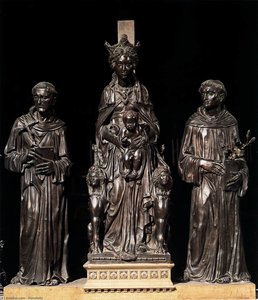
StatsCantoria (detail)


Witness Donatello's Cantoria – a breathtaking marble relief from Florence’s Duomo! Explore the dynamic artistry & intricate details of this Renaissance masterpiece, sculpted by master Donatello.
 Read More
Donatello (1386-1466): Florentine sculptor of the Early Renaissance. Pioneer of freestanding nude sculpture like 'David,' known for expressive realism, classical influence & innovative techniques. Explore his masterpieces and legacy.
Giclée / Art Print
Museum-quality giclée or canvas print with fast production and flexible finish options. ( Buy Hand Made Painting Switch to Digital Image)




P118B $10

P118H $10

P118W $10

P438Z $10

P508JH $12

P508YH $12

P805H $10

P805Z $10

P919BZ $10

P919G $10

P919XJ $10

P959ZH $10

P968JZ $12

W106C $8

W218G $10

W218JH $8

W218Y $10

W307PJ $10

W316G $10

W316PJ $8

W316Y $10

W398PJ $8

W4111J $10

W500HY $15

W500JH $15

W692G $12

W849H $8

W940BG $15

W953PJ $8




Standard
custom
CM
INCH
Pick from our preset sizes that match the artwork's original proportions.
Loading sizes...

width
height
Type the width and the height you need, to fit your frame or your wall. A print can only be cut, never made bigger than the picture, so a size with a different shape loses a part of the image. We send you a digital mockup to approve before we print anything. The picture shown on this page does not show the real cut — only the mockup does.
Worldwide Delivery () in 2 weeks instead of standard 4/5 weeks. (26 October)

Free Worldwide Express Shipping

High-Quality Linen Canvas

Full Shipping Insurance

Customs Tax Refund Guarantee

True Color Matching Guarantee

100-Day Return Policy (Defects Only)

100% Money-Back Guarantee

Bulk Discount Offer
 Glass option is only available in size under 110 CM

Cantoria (detail)
Giclée / Art Print
Reproduction Size
-


Total Price
$ 70
The Echoes of Florence: Donatello’s Cantoria
Donatello's "Cantoria," a breathtaking detail from the larger marble relief adorning the south sacristy doors of the Duomo in Florence, isn’t merely a sculpture; it’s a vibrant snapshot of Renaissance exuberance and spiritual aspiration. Crafted between 1433 and 1439 during a pivotal moment in Florentine art history, this fragment captures the dynamism of a celestial choir – angels dancing with an almost ecstatic joy, their forms rendered with a masterful blend of classical restraint and intensely expressive emotion. The sheer scale of the original work—a monumental frieze spanning nearly sixty feet—is immediately apparent even in this detailed section, hinting at the grandeur and ambition of Cosimo de’ Medici, who commissioned it as a testament to his patronage of the arts.
The technique employed is nothing short of revolutionary for its time. Donatello masterfully utilized a complex layering of materials: gleaming white marble forms the foundation, punctuated by strategically placed glass paste – a shimmering, iridescent substance that catches and refracts light with astonishing effect – and lavish inlays of gold. These elements aren’t simply decorative; they contribute to an overall sense of ethereal beauty, elevating the scene beyond mere representation and into the realm of pure visual delight. The subtle gradations of color achieved through the manipulation of these materials create a remarkable depth and luminosity, drawing the viewer into the heart of this animated tableau.
A Symphony of Movement and Symbolism
What immediately strikes the eye is the sheer energy contained within the figures. Donatello abandons the static formality often associated with early Renaissance sculpture, opting instead for a dynamic choreography of movement. The angels aren’t posed; they *dance*, their limbs outstretched in graceful arcs, their faces alight with expressions ranging from joyous laughter to rapturous contemplation. This deliberate embrace of motion reflects the humanist ideals that were gaining momentum during this period – a shift towards celebrating earthly experience and human potential. The composition itself is carefully balanced, creating a sense of visual harmony while simultaneously conveying a feeling of unrestrained vitality.
Beyond the purely aesthetic, “Cantoria” is rich in symbolic meaning. The angels themselves represent the heavenly choir, singing praises to God. Their gestures – holding instruments, raising their hands in adoration – are direct references to biblical texts and musical traditions. The swirling patterns of their movement evoke a sense of divine harmony and the interconnectedness of all things. The inclusion of children amongst the angelic figures suggests innocence, purity, and the promise of eternal life—a potent message for a society grappling with questions of faith and morality.
Contextualizing a Florentine Masterpiece
To fully appreciate “Cantoria,” it’s crucial to understand its historical context. Donatello was a pivotal figure in the transition from the Gothic to the Renaissance style, rejecting the elongated figures and stylized poses of his predecessors in favor of a more naturalistic and emotionally charged approach. His work profoundly influenced subsequent generations of artists, including Michelangelo and Raphael. The Cantoria itself was intended for the Duomo’s sacristy doors, a space dedicated to prayer and reflection – a fitting setting for such a visually arresting and spiritually evocative artwork.
The commission by Cosimo de' Medici underscores the importance of patronage in shaping Florentine art during this era. The Medici family were avid collectors and supporters of the arts, playing a key role in fostering an environment where creativity could flourish. “Cantoria” stands as a testament to their commitment to beauty, innovation, and the celebration of human achievement – a legacy that continues to resonate today.
A Timeless Vision
Even in this detailed fragment, “Cantoria” retains its power to captivate and inspire. Donatello’s masterful use of light, color, and movement creates an immersive experience for the viewer, transporting them to the heart of Renaissance Florence. The sculpture's enduring appeal lies not only in its technical brilliance but also in its profound exploration of human emotion and spiritual aspiration – a timeless vision that continues to resonate with audiences centuries later. Reproductions offer a remarkable opportunity to bring this extraordinary artwork into your home or office, allowing you to experience the beauty and energy of Donatello’s masterpiece firsthand.
Questions & Answers
Where should a reproduction of "Cantoria (detail)" by Donatello be hung?
The landscape format of "Cantoria (detail)" by Donatello is recommended for a living room. Format and space together guide the placement of a reproduction.
What kind of piece is "Cantoria (detail)"?
"Cantoria (detail)" by Donatello is classified as wall art. The category describes the kind of artwork the original is.
What color saturation does "Cantoria (detail)" by Donatello have?
The colors of "Cantoria (detail)" by Donatello have a muted saturation. Saturation describes how vivid or muted the colors are.
Artist Biography
early life and career
donato di niccolò di betto bardi, known as donatello, was born in florence, italy around 1386. he studied classical sculpture, which heavily influenced his development of an early renaissance style. this new approach to art and culture would eventually become the hallmark of the florentine renaissance.key works and innovations
donatello's most famous work, david, was the first freestanding nude male sculpture since antiquity. commissioned by the medici family, it showcased his innovative style and technical expertise. other notable works include:- st. louis of toulouse (now in the museum of the basilica di santa croce), which featured a classical frame designed by donatello.
- the sacrifice of isaac, created for the campanile of santa maria del fiore in florence, characterized by strong portrait details.
- crucifix (1425) for santa croce, which portrayed christ in a moment of agony.
artistic style and legacy
donatello's style can be divided into broad phases, beginning with the development of expressiveness and classical monumentality. his work was not immediately accepted by the community but eventually became the most popular, influencing other italian courts and european artists. key art movements:personal life and working style
donatello was known for being amiable and well-liked, but poor at the business side of his career. he tended to accept more commissions than he could handle, often completing works late or handing them over to other sculptors. notable artworks and artists:- leonardo da vinci: annunciation (detail)
- amico aspertini: statua di pan/leone che azzanna un cavallo
- michelangelo buonarroti: tondo pitt
museums and art collections:
- museo della collegiata (empoli, italy): a hidden gem of the renaissance, featuring works by francesco botticini and raffaello botticini.
- the early italian renaissance art movement

Donatello
1386 - 1466 , Italy
Quick Facts
- Full Name: Donatello di Niccolò
- Nationality: Italian
- Date Of Birth: 1386
- Date Of Death: 1466
- Place Of Birth: Florence, Italy
- Notable Artworks:
- David
- St. Louis of Toulouse
- Sacrifice of Isaac
- Crucifix
- Artistic Movement Or Style: Early Renaissance
- Artists Who Influenced This Artist: ['Classical sculpture']
- Artists Or Movements Influenced By This Artist:
- Italian Renaissance
- Early Renaissance
- Florentine Renaissance
Related Articles

The Eternal Beauty of Marble: A Guide to Sculpting Light, Stone, and the Soul of Art History
Explore the sublime artistry of marble sculpture. From Greek antiquity to the masters of light, discover how stone captures the eternal essence of human beauty and emotion through expert craftsmanship and historical mastery.
Explore artworks organized by themes, styles, and characteristics.