Send
Send Share
Share
 Details
 Guide
Guide

 Download
 Similars
 Diaporama
 Stats
StatsPulpit (on the right)
 Bronze
- Sculpture
- Renaissance Humanism
 1465
1465- Renaissance
 123.0 x 292.0 cm
 San Lorenzo
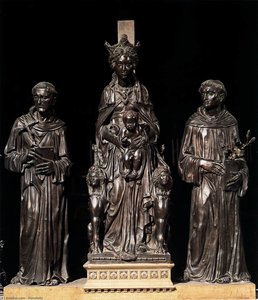
Donatello’s Resurrection Pulpit, completed in 1465 AD, stands as his final artistic achievement. Collaborating with Bertoldo and Bellano, it showcases the artist's signature style—characterized by elongated figures and refined craftsmanship—depicting pivotal biblical narratives like Christ’s Ascension and Pentecost.
 Read More
Donatello (1386-1466): Florentine sculptor of the Early Renaissance. Pioneer of freestanding nude sculpture like 'David,' known for expressive realism, classical influence & innovative techniques. Explore his masterpieces and legacy.
Hand Made Oil Reproduction
Hand-painted oil on canvas in your size and frame, made to order by our artists. ( Switch to Print Switch to Digital Image)




































Standard
custom
CM
INCH
Pick from our preset sizes that match the artwork's original proportions.
Loading sizes...

width
height
Type the width and the height you need, to fit your frame or your wall. This is hand-painted, so for a size with a different shape the artist can paint a bit more around the picture, or cut a bit — you choose. We send you a digital mockup to approve before the painting starts. The picture shown on this page does not show the real result — only the mockup does.
Examples of what can be changed: Replace face with customer photo; Add pet (e.g., replace cat with dog); Include hidden message in background; Change background landscape or elements.
After order, TopImpressionists.com team will email client for instructions and provide a mockup preview
After order, TopImpressionists.com team will email client for instructions and provide a mockup preview
Worldwide Delivery () in 3/4 weeks instead of standard 5 weeks. (21 October). No compromise on quality.

Free Worldwide Express Shipping

High-Quality Linen Canvas

Full Shipping Insurance

Customs Tax Refund Guarantee

True Color Matching Guarantee

100-Day Return Policy (Defects Only)

100% Money-Back Guarantee

Bulk Discount Offer
 Glass option is only available in size under 110 CM

Pulpit (on the right)
Reproduction Medium
Reproduction Size
-


Total Price
$ 269
A Final Masterpiece of Bronze and Spirit
In the hallowed, sun-drenched silence of the Basilica of San Lorenzo in Florence, there exists a sculptural marvel that captures the very essence of a soul nearing its earthly end. Donatello’s Resurrection Pulpit, specifically the right-hand structure completed in 1465, is far more than a liturgical platform; it is a profound meditation on the cycle of life, death, and rebirth. As one of the artist's final monumental achievements, this work serves as a poignant testament to a lifetime spent redefining the boundaries of sculpture. The pulpit does not merely sit within its sacred space; it commands it, offering a breathtaking synthesis of classical grandeur and an almost raw, human vulnerability that continues to stir the hearts of all who behold it.
The artistry on display is a masterclass in the lost-wax casting technique, a meticulous process where molten bronze is poured into intricate molds to capture every minute detail. Working alongside his talented pupils, Bertoldo and Bellano, Donatello achieved a level of surface texture that feels alive. The polished bronze surfaces catch the flickering candlelight of the basilica, creating a dynamic interplay of light and shadow that breathes movement into the static metal. This technical brilliance allows for an extraordinary depth of relief, where figures seem to emerge from the very substance of the pulpit, pulling the viewer into a tactile, three-dimensional narrative of divine intervention.
The Human Face of the Divine
While many Renaissance sculptors sought to present an idealized, untouchable perfection, Donatello’s genius lay in his commitment to psychological realism. In this pulpit, the transition from Gothic tradition to the Florentine Renaissance is palpable. The figures are not distant icons; they are imbued with a heavy, palpable emotion. One can sense the weight of sorrow, the tension of anticipation, and the quiet awe of the resurrection through subtle facial expressions and the deliberate, expressive gestures of the hands. This focus on the human condition aligns perfectly with the burgeoning humanist movement of the 15th century, which sought to find the divine within the nuances of human experience.
The symbolism embedded within the intricate carvings invites a deeper, more contemplative engagement. The pulpit acts as a bridge between the earthly and the celestial, utilizing classical proportions—inspired by the architectural innovations of Brunelleschi—to ground the spiritual subject matter in a sense of physical permanence. For the collector or the lover of fine art, owning a reproduction of such a piece is not merely about decorating a space; it is about introducing an element of historical gravity and intellectual depth into an interior. It provides a focal point that encourages reflection, making it an ideal centerpiece for those seeking to surround themselves with works that possess both aesthetic beauty and a profound, enduring narrative.
To bring a high-quality reproduction of this masterpiece into one's home is to invite the spirit of the Renaissance into the modern era. Whether placed in a curated gallery setting or as a sophisticated accent in a thoughtfully designed study, the pulpit’s complex textures and emotive power serve as a constant reminder of the enduring power of artistic vision. It remains a timeless icon of Florence, a sculptural poem written in bronze that continues to resonate with the universal themes of hope and transformation.
Questions & Answers
How popular is "Pulpit (on the right)" within Renaissance Humanism?
Within the Renaissance Humanism movement, "Pulpit (on the right)" has an iconic popularity level.
What is the overall mood of "Pulpit (on the right)" by Donatello?
"Pulpit (on the right)" has an elegant atmosphere.
Where is "Pulpit (on the right)" by Donatello on display today?
You can see the original "Pulpit (on the right)" at the San Lorenzo, Florence, Italy.
Artist Biography
early life and career
donato di niccolò di betto bardi, known as donatello, was born in florence, italy around 1386. he studied classical sculpture, which heavily influenced his development of an early renaissance style. this new approach to art and culture would eventually become the hallmark of the florentine renaissance.key works and innovations
donatello's most famous work, david, was the first freestanding nude male sculpture since antiquity. commissioned by the medici family, it showcased his innovative style and technical expertise. other notable works include:- st. louis of toulouse (now in the museum of the basilica di santa croce), which featured a classical frame designed by donatello.
- the sacrifice of isaac, created for the campanile of santa maria del fiore in florence, characterized by strong portrait details.
- crucifix (1425) for santa croce, which portrayed christ in a moment of agony.
artistic style and legacy
donatello's style can be divided into broad phases, beginning with the development of expressiveness and classical monumentality. his work was not immediately accepted by the community but eventually became the most popular, influencing other italian courts and european artists. key art movements:personal life and working style
donatello was known for being amiable and well-liked, but poor at the business side of his career. he tended to accept more commissions than he could handle, often completing works late or handing them over to other sculptors. notable artworks and artists:- leonardo da vinci: annunciation (detail)
- amico aspertini: statua di pan/leone che azzanna un cavallo
- michelangelo buonarroti: tondo pitt
museums and art collections:
- museo della collegiata (empoli, italy): a hidden gem of the renaissance, featuring works by francesco botticini and raffaello botticini.
- the early italian renaissance art movement

Donatello
1386 - 1466 , Italy
Quick Facts
- Full Name: Donatello di Niccolò
- Nationality: Italian
- Date Of Birth: 1386
- Date Of Death: 1466
- Place Of Birth: Florence, Italy
- Notable Artworks:
- David
- St. Louis of Toulouse
- Sacrifice of Isaac
- Crucifix
- Artistic Movement Or Style: Early Renaissance
- Artists Who Influenced This Artist: ['Classical sculpture']
- Artists Or Movements Influenced By This Artist:
- Italian Renaissance
- Early Renaissance
- Florentine Renaissance
Related Articles

The Eternal Beauty of Marble: A Guide to Sculpting Light, Stone, and the Soul of Art History
Explore the sublime artistry of marble sculpture. From Greek antiquity to the masters of light, discover how stone captures the eternal essence of human beauty and emotion through expert craftsmanship and historical mastery.
Explore artworks organized by themes, styles, and characteristics.