Preview
 Send
Send Share
Share
 Details
 Guide
Guide

 Download
 Similars
 X-Ray
X-Ray Diaporama
 Stats
StatsSalem Harbor


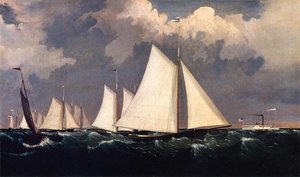
Admire Fitz Henry Lane’s "Salem Harbor" (1853), a luminous maritime masterpiece capturing Salem's beauty. Explore Luminism & classic New England art.
 Read More
Fitz Henry Lane (1804-1865): Master of Luminism! Explore his serene New England coastal scenes & maritime art, capturing light's beauty with stunning detail.
Giclée / Art Print
Museum-quality giclée or canvas print with fast production and flexible finish options. ( Buy Hand Made Painting Switch to Digital Image)




P118B $10

P118H $10

P118W $10

P438Z $10

P508JH $12

P508YH $12

P805H $10

P805Z $10

P919BZ $10

P919G $10

P919XJ $10

P959ZH $10

P968JZ $12

W106C $8

W218G $10

W218JH $8

W218Y $10

W307PJ $10

W316G $10

W316PJ $8

W316Y $10

W398PJ $8

W4111J $10

W500HY $15

W500JH $15

W692G $12

W849H $8

W940BG $15

W953PJ $8




Standard
custom
CM
INCH
Pick from our preset sizes that match the artwork's original proportions.
Loading sizes...

width
height
Type the width and the height you need, to fit your frame or your wall. A print can only be cut, never made bigger than the picture, so a size with a different shape loses a part of the image. We send you a digital mockup to approve before we print anything. The picture shown on this page does not show the real cut — only the mockup does.
Worldwide Delivery () in 2 weeks instead of standard 4/5 weeks. (28 October)

Free Worldwide Express Shipping

High-Quality Linen Canvas

Full Shipping Insurance

Customs Tax Refund Guarantee

True Color Matching Guarantee

100-Day Return Policy (Defects Only)

100% Money-Back Guarantee

Bulk Discount Offer
 Glass option is only available in size under 110 CM

Salem Harbor
Giclée / Art Print
Reproduction Size
-


Total Price
$ 70
Fitz Henry Lane’s Salem Harbor: A Window Into Luminism's Tranquil Beauty
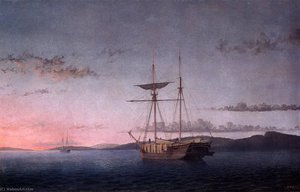
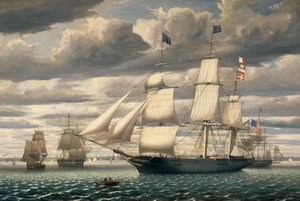
Salem Harbor, painted by Fitz Henry Lane in 1853, stands as an enduring testament to Luminism—a movement that championed atmospheric light and serene landscapes—and embodies the spirit of early 19th-century New England. More than just a depiction of a harbor scene, it’s a carefully crafted meditation on stillness, observation, and the sublime grandeur of nature. Lane's masterful use of color and brushwork transports viewers back to a time when artists sought to capture not merely what they saw but how it *felt*.- Subject Matter: The painting portrays Salem Harbor during daylight hours, showcasing several sailing vessels navigating the waters off Massachusetts’ coast. Notably prominent is a large schooner dominating the composition, anchoring near the shore and bathed in diffused sunlight.
- Style & Technique: Lane adhered rigorously to Luminist principles. He employed broad, unbroken brushstrokes—often applied thinly—to create an illusion of depth and luminosity. The artist skillfully blended colors to achieve subtle gradations of tone, mimicking the effects of atmospheric haze and emphasizing the ethereal quality of light filtering through the clouds.
- Historical Context: Painted during a period of significant industrial expansion in America, Salem Harbor represents a deliberate counterpoint to the burgeoning urban landscape. Lane’s decision to depict a tranquil seascape reflects a broader artistic preoccupation with capturing idealized visions of rural life and unspoiled wilderness—a reaction against the prevailing Romantic fascination with dramatic emotion and turbulent landscapes.
- Discover more about Fitz Henry Lane’s life and artistic journey here.
- Explore other Luminist masterpieces on TopImpressionists.com.
Questions & Answers
Which artist and which style stand behind "Salem Harbor"?
"Salem Harbor" was created by Fitz Henry Lane in the Luminism style. Artist and movement identify the work's tradition.
Is there a factsheet about "Salem Harbor" by Fitz Henry Lane for students?
The guide to "Salem Harbor" is the artwork's Guide page - a printable factsheet showing the artwork with its caption, credit line and identity table (artist, dates, medium, original size, collection).
Where in the home does a reproduction of "Salem Harbor" fit well?
The recommended space for "Salem Harbor" by Fitz Henry Lane is a living room. The suggestion can of course be adapted to your interior.


Artist Biography
Early Life and Circumstances
- Born: December 19, 1804, Gloucester, Massachusetts
- Died: August 14, 1865, Gloucester, Massachusetts
- Full Name: Nathaniel Rogers Lane (legally changed to Fitz Henry Lane in 1832)
- Movement: Luminism
Artistic Development and Training
- Lithography Experience: Worked as a lithographer at Pendleton’s Lithography Shop in Boston from 1832 to 1847.
- Early Works: Watercolor "Burning of the Packet Ship 'Boston'" demonstrates developing skill but less refined style than later works.
Style and Major Works: The Luminist Master
Lane is recognized as a leading figure in the Luminist movement, characterized by its emphasis on capturing atmospheric effects, particularly light reflecting on water. His paintings are known for their clarity, precision, and serene depiction of coastal scenes.- Key Characteristics of Lane's Style:
- Atmospheric Perspective: Masterful use of aerial perspective to create a sense of depth and distance.
- Detailed Observation: Meticulous attention to detail in depicting ships, buildings, and landscapes.
- Luminous Light Effects: Capturing the subtle nuances of light and its reflection on water with remarkable accuracy.
- Notable Works:
- "Entrance to Somes Sound from Southwest Harbor" (1852) – exemplifies his ability to capture the tranquility of coastal landscapes.
- "The Fort and Ten Pound Island, Gloucester, Massachusetts" (1847) - showcases a detailed depiction of local landmarks.
- “Lumber Schooners at Evening on Penobscot Bay” (1860) – demonstrates his skill in portraying dramatic lighting conditions.
- "Camden Mountains from the South Entrance to the Harbor" (1859) - captures a picturesque coastal scene with striking clarity.
- “Merchant Brig under Reefed Topsails” (1863)
- “Light House at Camden, Maine” (1851)
- “The Westen Shore with Norman's Woe” (1862)
Legacy and Historical Significance
Fitz Henry Lane’s work gained recognition during his lifetime, though his reputation has grown significantly in the 20th and 21st centuries. He is now considered one of the most important American Luminist painters, celebrated for his unique ability to capture the beauty and tranquility of New England's coastal landscapes. Lane’s paintings offer a valuable historical record of maritime life in 19th-century Gloucester and other coastal communities. His meticulous attention to detail and masterful use of light continue to inspire artists and captivate audiences today, solidifying his place as a significant figure in American art history.
Fitz Henry Lane
1804 - 1865 , United States of America
Quick Facts
- Full Name: Nathaniel Rogers Lane (Fitz Henry Lane)
- Nationality: American
- Date Of Birth: 1804
- Date Of Death: 1865
- Place Of Birth: Goucester, United States of America
- Notable Artworks:
- Entrance to Somes Sound
- The Fort and Ten Pound Island
- Lumber Schooners at Evening
- Camden Mountains from the South
- Merchant Brig under Reefed Topsails
- Light House at Camden, Maine
- The Westen Shore with Norman's Woe
- Artistic Movement Or Style: Luminism
Related Articles

Robert W. Salmon: Navigating the Currents of Maritime Painting & American Realism
Explore the captivating maritime paintings of Robert W. Salmon, a pioneer of American Luminism. Discover his Boston Harbor scenes, legacy, and collecting guide at TopImpressionists.

Henri Matisse's Masterpieces: Explore 25 Iconic Paintings & Art Decor Ideas
Journey through Henri Matisse's 25 most iconic paintings! Explore Fauvism, vibrant colors & the stories behind masterpieces like 'The Dance'. Find museum-quality art reproductions and curated decor ideas to elevate your space. Discover all masterpieces on TopImpressionists.com.

The Allure of the Horizon: A Comprehensive Exploration of Seascape Art Through History & Emotion
Explore the captivating world of seascape art! Discover its history, key artists & movements – from Dutch Masters to Impressionism. Expert insights for collectors and enthusiasts at TopImpressionists.

Fauvism's Boldest Visions: 10 Masterpieces That Revolutionized Modern Art | TopImpressionists
Explore 10 Fauvist masterpieces by Matisse, Derain & Vlaminck that ignited Modern Art! Discover bold colors, expressionist landscapes & the history of this revolutionary movement. Find museum-quality prints at TopImpressionists.com.

Fitz Henry Lane: Luminosity, Landscape & the American Maritime Tradition – A Collector’s Insight
Explore the luminous world of Fitz Henry Lane, a master of American maritime painting & Luminism. Discover his legacy, techniques, and investment potential for discerning art collectors. Expert insights at TopImpressionists.
Explore artworks organized by themes, styles, and characteristics.