

 Preview
 Send
Send Share
Share
 Details
 Guide
Guide

 Download
 Similars
 X-Ray
X-Ray Diaporama
 Q&A
Q&A Stats
StatsUntitled (343)

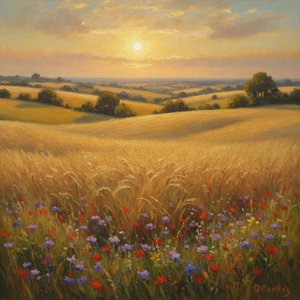
Explore 'Untitled (343)' by genaro lahuerta – a vibrant impressionistic painting of rural life. Discover its details, style & symbolic themes in this unique artwork.
Discover genaro lahuerta’s captivating Amazonian art! Explore vibrant landscapes & wildlife paintings from Valencia, Spain (1905-1985). A unique artistic legacy.
 Read More
The artwork displayed on this page is protected by copyright law, which means we cannot legally create or sell an identical reproduction. This protection is enforced under international agreements such as the Berne Convention and by national laws, including those outlined by the U.S. Copyright Law - Title 17.
This method fully complies with copyright regulations because it does not involve copying or duplicating the protected artwork. Instead, it is a creative reinterpretation - a new painting that is influenced by the original but not identical to it.
Giclée / Art Print
Museum-quality giclée or canvas print with fast production and flexible finish options. ( Buy Hand Made Painting Switch to Digital Image)




































Standard
custom
CM
INCH
Pick from our preset sizes that match the artwork's original proportions.
Loading sizes...

width
height
Type the width and the height you need, to fit your frame or your wall. A print can only be cut, never made bigger than the picture, so a size with a different shape loses a part of the image. We send you a digital mockup to approve before we print anything. The picture shown on this page does not show the real cut — only the mockup does.
Worldwide Delivery () in 2 weeks instead of standard 4/5 weeks. (3 November)

Free Worldwide Express Shipping

High-Quality Linen Canvas

Full Shipping Insurance

Customs Tax Refund Guarantee

True Color Matching Guarantee

100-Day Return Policy (Defects Only)

100% Money-Back Guarantee

Bulk Discount Offer
 Glass option is only available in size under 110 CM

Untitled (343)
Giclée / Art Print
Reproduction Size
-


Total Price
$ 70
Related Artworks


Artist Biography
A Valencian Vision: The Luminous Legacy of Genaro Lahuerta
Emerging from the vibrant, sun-drenched landscapes of Valencia, Spain, Genaro Lahuerta (1905–1985) stands as a profound witness to the shifting tides of twentieth-century European art. His life and work represent a masterful confluence of tradition and avant-garde experimentation, rooted deeply in the Mediterranean soil. Born at the dawn of a new century, Lahuerta’s artistic journey began within the disciplined halls of the San Carlos School of Fine Arts, where he cultivated a technical rigor that would serve as the foundation for his later, more expressive explorations. His early years were marked by an insatiable curiosity, leading him beyond the borders of Spain to study the diverse light and textures of Europe, including transformative travels to Morocco that expanded his chromatic vocabulary and introduced a sense of exoticism and atmospheric depth to his burgeoning style.
As his career progressed, Lahuerta’s work became a dialogue between the seen and the felt. While his early exhibitions in Barcelona established him as a rising talent, it was his deep connection to the Valencian countryside that truly defined his soul. He possessed an uncanny ability to capture the essence of Mediterranean light, employing thick, vigorous brushstrokes reminiscent of Joaquín Sorolla to breathe life into landscapes and still-life compositions. His palette, often imbued with luminous, radiant tones, sought not just to replicate nature but to evoke its very vitality. Yet, beneath this impressionistic surface lay a complex intellectual structure; Lahuerta skillfully integrated the geometric precision of Cubism and the raw emotionality of Expressionism, creating works that felt both structurally sound and emotionally resonant.
The Crucible of Conflict and the Evolution of Symbol
The trajectory of Lahuerta’s artistry was irrevocably altered by the shadows of the Spanish Civil War. This period of profound historical upheaval acted as a catalyst for a significant stylistic metamorphosis, pushing the artist toward a more introspective and somber aesthetic. The anxieties of an era in turmoil found expression in his canvases through a deliberate blending of form and feeling. He began to utilize Cubist fragmentation to mirror the fractured reality of post-war life, while simultaneously drawing upon the monumental stillness of the Italian Renaissance—specifically the compositional clarity of Piero della Francesca. This synthesis resulted in a unique brand of symbolic grandeur, where even a simple portrait or a quiet landscape could carry the weight of existential reflection.
Throughout his later years, Lahuerta’s repertoire expanded to include diverse subjects that showcased his versatility as a master of light and form:
- Portraiture and Figure Drawing: Works that captured the psychological depth and dignity of the human subject.
- Landscape Painting: Evocative depictions of the Valencian countryside and Mediterranean vistas characterized by atmospheric charm.
- Still-Life and Floral Compositions: Intimate studies of nature that utilized texture and color to create sensory experiences.
- Watercolor Explorations: Delicate, nostalgic scenes, such as his maritime subjects, which offered a softer counterpoint to his more robust oil paintings.
An Enduring Artistic Significance
The historical significance of Genaro Lahuerta lies in his ability to bridge the gap between the classical and the modern. He did not merely follow trends; he absorbed them, filtering the radical innovations of the early twentieth century through a lens of Spanish tradition and Mediterranean light. His dedication to portraying the human figure and the natural world with both technical mastery and symbolic depth ensures his place in the canon of Spanish masters. Today, his work continues to resonate with collectors and scholars alike, offering a window into a period of intense cultural transformation. To encounter a Lahuerta painting is to experience a profound sense of place and time—a testament to an artist who found beauty in the light of his homeland and meaning in the shadows of history.

Genaro Lahuerta
1905 - 1985 , Spain
Quick Facts
- Artistic Movement Or Style: Sorollaesque Landscape
- Artists Or Movements Influenced By This Artist:
- Cubism
- Fauves
- Artists Who Influenced This Artist: ['Joaquín Sorolla']
- Date Of Birth: 1905
- Date Of Death: 1985
- Full Name: Genaro Lahuerta
- Nationality: Spanish
- Notable Artworks:
- Untitled (757)
- Untitled (343)
- Place Of Birth: Valencia, Spain
Related Articles

The Timeless Charm of Oil on Board: Reimagining Texture and Light through the Impressionist Lens
Discover the profound intimacy of oil on panel. Explore how Impressionist masters used rigid supports to capture light, texture, and impasto depth through exquisite, handmade oil reproductions for discerning collectors.

The Beauty of Impermanence: Capturing Decay through Impressionist Eyes
Explore the profound beauty of impermanence through Impressionist and Post-Impressionist eyes. Discover how masters like Monet and Van Gogh captured fleeting light and the poetic essence of nature's transitions in our deep dive into art history and emotional landscapes.
Golden Fields & Sun-Drenched Meadows: Capturing the Soul of Impressionist Landscapes
Immerse yourself in the luminous world of Impressionist landscapes. Discover how masters like Monet and Gauguin captured ephemeral light through plein air painting, and learn to bring the soul of sun-drenched meadows into your home with exquisite, hand-painted oil reproductions.

Capturing the Soul: The Most Emotionally Moving Impressionist and Post-Impressionist Masterpieces
Discover the profound emotional depth of Impressionist and Post-Impressionist masterpieces. Explore how legends like Monet, Van Gogh, and Gauguin captured light and soul through evocative landscapes and vibrant brushwork for a timeless connection to art history.

Beyond the Light: Capturing Raw Emotion and Subjective Vision in Post-Impressionist Landscapes
Explore the profound emotional depth of Post-Impressionist landscapes. Discover how masters like Van Gogh moved beyond light to capture raw human feeling through vibrant color and expressive texture in this expert art history retrospective.
Explore artworks organized by themes, styles, and characteristics.


