

Shown: · With its frame:
 Preview
 Send
Send Share
Share
 Details
 Guide
Guide

 Download
 Similars
 X-Ray
X-Ray Diaporama
 Q&A
Q&A Stats
Stats
- 20.0 x 27.0 cm


$ 394
Hand Made Oil Reproduction
Hand-painted oil on canvas in your size and frame, made to order by our artists. ( Switch to Print Switch to Digital Image)
Size
·Standard
custom
CM
INCH
Pick from our preset sizes that match the artwork's original proportions.
Loading sizes...

width
height
Type the width and the height you need, to fit your frame or your wall. This is hand-painted, so for a size with a different shape the artist can paint a bit more around the picture, or cut a bit — you choose. We send you a digital mockup to approve before the painting starts. The picture shown on this page does not show the real result — only the mockup does.
 Read more
Finish
·
White $1

Blurside $1

Extended $1

P118B $10

P118H $10

P118W $10

P438Z $10

P508JH $12

P508YH $12

P805H $10

P805Z $10

P919BZ $10

P919G $10

P919XJ $10

P959ZH $10

P968JZ $12

W106C $8

W218G $10

W218JH $8

W218Y $10

W307PJ $10

W316G $10

W316PJ $8

W316Y $10

W398PJ $8

W4111J $10

W500HY $15

W500JH $15

W692G $12

W849H $8

W940BG $15

W953PJ $8

H24-GOLD $30

H24-SILVER $30

H36-GOLD $45

H36-SILVER $45
Shipped in a protective tube, ready for your own framer.
Above 105 cm the frame is shipped as a kit for a professional framer — read the details.
Extras
optionalWhat do the extras include?
Examples of what can be changed: Replace face with customer photo; Add pet (e.g., replace cat with dog); Include hidden message in background; Change background landscape or elements.
After order, TopImpressionists.com team will email client for instructions and provide a mockup preview
After order, TopImpressionists.com team will email client for instructions and provide a mockup preview
Worldwide Delivery () in 3/4 weeks instead of standard 5 weeks. (31 October). No compromise on quality.
Protective Varnish
Nameplate
Engraved Bronze Plaque Details
This elegant plaque features the artist's name and the title of the artwork, finely engraved for a timeless presentation.
It is made from bronze with a refined, elegant finish. The text is precisely laser-engraved for a sharp and permanent result. Measuring 9x2 cm, the plaque is compact yet easy to read. It's built to be durable and scratch-resistant, offering a professional, museum-quality look. Mounting is simple thanks to the included adhesive backing.
Transparent Acrylic Plaque Details
The plaque includes essential engraved details such as the artist's name, the title of the artwork, the date it was created, the type of media used-like oil on canvas or watercolor-a brief description of the piece, and a QR code that links to the complete artwork information.
It is crafted from clear acrylic, offering a sleek, modern appearance. The text is UV-engraved in black to ensure strong visual contrast. With a size of 10x15 cm, it ensures optimal readability. It comes equipped with two metal hooks for secure wall mounting. The plaque is designed to be weather-resistant, making it suitable for various environments, and it includes interactive features that work seamlessly with smartphone scanning.
Black Acrylic Plaque Details
This elegant plaque includes engraved information such as the artist's name, the title of the artwork, the date it was created, the type of media used (like oil on canvas or watercolor), a short description of the artwork, and a QR code for quick access to more information.
The plaque itself is made from refined black acrylic with a premium finish. The text is laser-engraved in white for high contrast and readability. Its size is 10x15 cm, designed to be easy to read. It comes with two metal hooks for professional mounting. The design is sleek and fits any interior style. It is also weather-resistant and durable, with built-in digital integration for mobile compatibility.
Glass option is only available in size under 110 CM
 Glass option is only available in size under 110 CM
- Free Worldwide Express Shipping
- High-Quality Linen Canvas
- Full Shipping Insurance
- Customs Tax Refund Guarantee
- True Color Matching Guarantee
- 100-Day Return Policy (Defects Only)
- 100% Money-Back Guarantee
- Bulk Discount Offer


Collectible Description
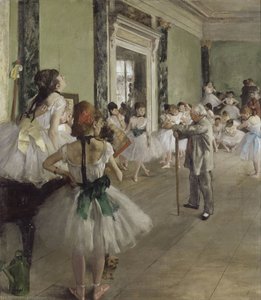
Experience Degas's 'The Dancing Class,' capturing a ballet rehearsal with dynamic movement and a nostalgic atmosphere. A masterpiece of Impressionist realism!
Artist Biography
Edgar Degas: A revolutionary French artist known for his captivating ballet dancers, Parisian scenes, and innovative techniques—a true master of modern art.
About the painting
The Dancing Class: A Glimpse into Parisian Ballet Life
Edgar Degas's "The Dancing Class," painted around 1870, offers an intimate and captivating portrayal of ballet practice in Paris. This early work, predating the artist’s access to backstage areas at the Opéra, depicts dancers posing within his studio. It stands as a foundational piece in Degas’s extensive exploration of the ballet world, a theme that would dominate much of his career. The painting's significance lies not only in its artistic merit but also in its historical context – capturing a moment of transition and burgeoning modernity in Parisian society.
Subject Matter and Composition
The scene unfolds within a modestly furnished ballet studio, filled with the everyday objects that define such a space: chairs, tables, a mirror, and a hatbox. A piano sits prominently, suggesting the presence of an accompanist, though they are not depicted. Approximately two dozen ballerinas populate the room, engaged in various activities – tying their shoes, stretching, practicing their steps, or simply observing. Degas masterfully captures a sense of dynamic movement and candid observation. The composition isn't staged; it feels like a snapshot of real life, reflecting the Impressionist desire to portray fleeting moments.
Impressionistic Technique and Style
“The Dancing Class” exemplifies Degas’s evolving style, foreshadowing his later mastery of pastels while still rooted in oil painting on canvas. The color palette is dominated by warm browns and ochres, creating a muted, nostalgic atmosphere that evokes the dim lighting of a rehearsal room. Visible brushstrokes add texture and contribute to the overall impressionistic feel. Degas’s use of lines defines forms without rigid precision, allowing for a sense of spontaneity and movement. While perspective isn't meticulously rendered, layering and tonal variations create depth, drawing the viewer into the scene. The painting showcases a departure from traditional academic art, embracing a more modern approach to capturing reality.
Historical Context and Symbolism
Painted in 1870, "The Dancing Class" reflects a period of significant social change in Paris. Ballet was experiencing a resurgence in popularity, becoming both a source of entertainment and a symbol of Parisian elegance. Degas’s choice to depict this world—not the glamorous performances but the rigorous training behind them—was innovative for his time. The painting subtly explores themes of dedication, discipline, and the pursuit of artistic excellence. It also offers a glimpse into the lives of young women striving for success in a demanding profession. Degas himself later expressed a degree of ambivalence about his ballet paintings, noting that he had painted so many without direct backstage access that he felt "a little ashamed of it," highlighting his commitment to capturing authentic moments even under challenging circumstances.
Emotional Impact and Legacy
“The Dancing Class” evokes a sense of quiet intimacy and nostalgic charm. The muted colors, the candid poses of the dancers, and the glimpse into their everyday lives create an emotional resonance that transcends mere representation. It’s a painting that invites contemplation on themes of perseverance, beauty, and the dedication required to achieve artistic mastery. As one of Degas's earliest depictions of ballet, "The Dancing Class" laid the groundwork for his extensive body of work exploring this captivating subject, solidifying his place as a pivotal figure in Impressionist art.
Questions & Answers
Where can I find artworks similar to "The Dancing Class" by Edgar Degas?
Works similar to "The Dancing Class" are listed on the artwork's Similars page.
What national origin stands behind the Impressionism of "The Dancing Class"?
"The Dancing Class" was created by Edgar Degas, born in France, within the Impressionism movement. The artist's origin links the work to Impressionism as practiced by artists from France.
What placement suits the format of "The Dancing Class" by Edgar Degas?
The landscape format of "The Dancing Class" by Edgar Degas is recommended for a living room. Format and space together guide the placement of a reproduction.
Quick facts and art quiz
About Edgar Degas

Edgar Degas
1834 - 1917, France
Artist Biography
A Life Immersed in Movement
Born Hilaire-Germain-Edgar De Gas in Paris, 1834, Edgar Degas was an artist of fascinating contradictions. While often grouped with the Impressionists—Monet, Renoir, and others who revolutionized painting in the late 19th century—he actively resisted that label, identifying instead as a realist. This commitment stemmed from his meticulous observation of the world around him and a dedication to portraying it with unflinching honesty. Degas’s early life was comfortably bourgeois; his father was a banker, and his mother hailed from a Creole family in New Orleans. This background afforded him access to education and artistic training, though he often chafed against academic constraints. He initially enrolled at the Lycée Louis-le-Grand, but his true education began when he started copying works in the Louvre, honing his skills and igniting a lifelong passion for classical art. However, Degas’s path wasn't one of strict adherence to tradition; it was marked by constant questioning and reevaluation of artistic norms. He possessed an independent spirit that would define his entire career.
Beyond Impressionism: A Unique Artistic Vision
While contemporaries like Monet chased the fleeting effects of light outdoors, Degas largely worked within the confines of his studio, meticulously constructing scenes from observation and memory. His subject matter was decidedly modern—a departure from the historical or mythological themes favored by many academic painters. He found inspiration in the everyday lives of Parisians: laundresses, cabaret singers, milliners, and, most famously, dancers. It is this fascination with ballet that defines much of his oeuvre. Degas didn’t simply paint beautiful ballerinas; he captured the grueling reality of their profession—the endless rehearsals, the physical strain, the fleeting moments of grace amidst a world of hard work. His compositions are often unconventional, cropping figures in unexpected ways and utilizing asymmetrical arrangements that create a sense of dynamism and immediacy. He was a master of capturing movement, not through blurred lines or hazy effects, but through precise observation and careful rendering of form. Dancer, A Group of Dancers, and Women Combing Their Hair are prime examples of this dedication to portraying the human figure in motion and revealing the complexities of modern life. He wasn’t interested in superficial beauty; he sought to reveal the truth beneath the surface.
Influences and Artistic Development
Degas’s artistic journey was shaped by a diverse range of influences. His early training emphasized classical principles, particularly the work of Jean-Auguste-Dominique Ingres, whose emphasis on draftsmanship and precise form left a lasting impression. However, Degas also admired the Realists, such as Gustave Courbet, who challenged academic conventions and championed the depiction of contemporary life. A pivotal moment in his development came through his association with Camille Pissarro, a leading Impressionist who introduced him to other artists and encouraged him to experiment with new techniques. He was captivated by Japanese prints—Ukiyo-e—which influenced his use of asymmetrical compositions, flattened perspectives, and bold patterns. He also embraced photography, recognizing its potential as a tool for studying movement and capturing fleeting moments in time. This willingness to incorporate diverse influences into his work is what sets Degas apart and contributes to the unique character of his art. He wasn’t afraid to borrow from different sources, synthesizing them into something entirely new.
Legacy and Lasting Impact
Edgar Degas died in Paris in 1917, leaving behind a body of work that continues to captivate and inspire audiences today. His innovative approach to composition, his masterful draftsmanship, and his unflinching portrayal of modern life have had a profound impact on the course of art history. He paved the way for future generations of artists who sought to break free from traditional conventions and explore new ways of representing the world around them. His influence can be seen in the work of Pablo Picasso and Henri Matisse, among others. Museums worldwide—including the Musée d'Orsay and the Musée de l’Orangerie in Paris—house significant collections of his paintings, pastels, sculptures, and prints, ensuring that his legacy will endure for generations to come. Degas wasn’t merely a painter of dancers or racehorses; he was a keen observer of human nature, a master of form and movement, and a true innovator who redefined the possibilities of art.
- A Master of Line: Degas's exceptional draftsmanship set him apart.
- Modern Life as Subject: He focused on contemporary Parisian scenes, breaking from tradition.
- Influence on Future Artists: His work profoundly impacted Picasso and Matisse.
Quick facts about Edgar Degas
- Artistic Movement Or Style: Impressionism, Realism
- Artists Or Movements Influenced By This Artist:
- Picasso
- Matisse
- Artists Who Influenced This Artist:
- Ingres
- Courbet
- Pissarro
- Date Of Birth: 1834
- Date Of Death: 1917
- Full Name: Hilaire-Germain-Edgar De Gas
- Nationality: French
- Notable Artworks:
- Dancer and Tambourine
- The Ballet Class
- Degas in a Green Jacket
- The Collector
- Women Combing Their Hair
- Place Of Birth: Paris, France
Related Artworks




Explore artworks organized by themes, styles, and characteristics.


Edgar Degas
The Dancing Class
() ·
With its frame: · Hand-painted in oil on linen
Total