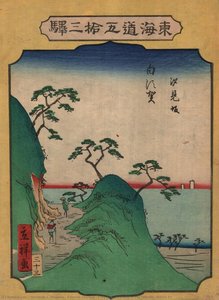
A Window into the Edo Period: The Bustle of Station 5
In the delicate dance of lines and colors that defines the ukiyo-e tradition, Processional Tōkaidō, station 5 emerges as a breathtaking portal to a vanished world. This exquisite woodblock print, created in 1863, captures a moment of profound historical transition. As viewers gaze upon the streetscape before the Zōjō-ji Temple in Shiba, they are not merely observing a landscape, but participating in a grand, ceremonial movement. The scene is alive with the rhythmic energy of the Edo period; travelers and locals navigate a bustling thoroughfare where the presence of a horse and the traditional attire of the figures suggest a society governed by ritual and order. For the collector or interior designer, this piece offers more than just decoration; it provides a window into the soul of old Japan, bringing a sense of historical depth and narrative richness to any curated space.
The artistry behind this work is a testament to the collaborative mastery of Hiroshige II and the publisher Tsuruya Kiemon. While the series draws inspiration from the legendary landscapes of Hiroshige I, this specific station showcases a sophisticated command of composition and atmosphere. The technique relies on the precise layering of pigments during the printing process, allowing for subtle gradations in color that evoke the soft light of a passing day. The architecture of the surrounding buildings provides a structured, rhythmic backdrop to the organic movement of the crowd, creating a balanced tension between the permanence of the temple grounds and the fleeting nature of the travelers' journey. This interplay of stability and motion is what gives the print its enduring emotional resonance.
Beyond its aesthetic beauty, the work carries a heavy weight of political symbolism. Created during a time when the Shogunate was teetering on the brink of collapse, the Processional Tōkaidō series served as a powerful piece of visual propaganda. By documenting the journey of Shōgun Iemochi to Kyoto, the artists and publishers sought to reinforce the legitimacy of the old regime through the depiction of grand, orderly processions. Every figure in the street and every architectural detail of the Zōjō-ji Temple contributes to a narrative of continuity and strength. To possess a high-quality reproduction of this print is to hold a fragment of a pivotal moment in human history—a time when art was used to capture the heartbeat of a nation in flux.
For those looking to elevate an interior with pieces that spark conversation, this artwork offers unparalleled versatility. Its palette of earthy tones and soft blues integrates seamlessly into both classical and contemporary settings, providing a focal point that is both calming and intellectually stimulating. Whether placed in a quiet study or as part of a larger gallery wall, Processional Tōkaidō, station 5 invites the observer to slow down, to wander through the streets of old Tokyo, and to contemplate the beautiful, transient nature of life itself.



 Preview
 Switch to Print
 Send
Send Share
Share
 Details

 Download
 Similars
 X-Ray
X-Ray Diaporama


 Read More






































 Glass option is only available in size under 110 CM