Origins and History of the Museum
The Pushkin State Museum began its existence in 1912. It was established by Professor Ivan Tsvetaev as an arm of Moscow University. At its inception, the institution held a different name, serving as the Alexander III Museum to honor Emperor Alexander III. This early period focused on providing students with access to the history of art through various means, including the study of ancient statuary.
The identity of the institution underwent several transformations as the political landscape of the Russian Federation shifted. In 1932, the name was changed to the State Museum of Fine Arts. Later, in 1937, to mark the centenary of the death of Alexander Pushkin, the museum was renamed in his honor. This final designation has remained, linking the institution to the literary history of the nation while it continues to house its vast collection.
The Building and its Neoclassical Architecture
Located on Volkhonka street, directly opposite the Cathedral of Christ the Saviour, the structure presents a deliberate presence in the Moscow landscape. Conceived by the architect Roman Klein, the building follows a Neoclassical style that seeks to embody the weight of the collection it houses. Its form resembles a classical temple, characterized by a monumental Ionic colonnade that establishes a sense of order and permanence. The design reflects a specific intent to create a space that feels both ancient and intellectually significant.
The construction of this edifice began in 1898 and continued until 1912. While Klein provided the visionary architectural concept, the structural integrity of the building was bolstered by the engineering of Ivan Rerberg. This collaboration between architectural vision and structural genius resulted in a building that functions as a physical extension of the history contained within its walls. The heavy, stone-like quality of the Neoclassical facade provides a quiet, steady backdrop for the art it protects.
Ancient and Classical Art Collections
The museum holds approximately 700,000 artworks, spanning a vast chronology that begins with the artifacts of Ancient Egypt and Greece. These original pieces exist alongside a significant collection of made-to-scale casts and copies of world-renowned masterpieces. Such reproductions allow for a close study of the forms and proportions found in the Greek and Roman traditions. The presence of these casts provides a physical context for the development of classical aesthetics.
Beyond the classical era, the holdings include Byzantine mosaics and icons. These works are part of a broader assembly of original paintings, sculptures, drawings, and examples of decorative and applied art. The collection also encompasses archaeological and animalistic objects, which offer a tangible connection to the material life of past civilizations. Each object remains a distinct presence within the museum's extensive holdings.
Impressionist and Post-Impressionist Art
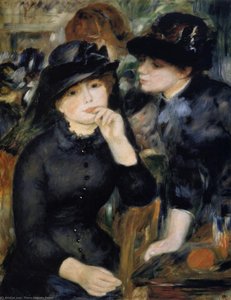
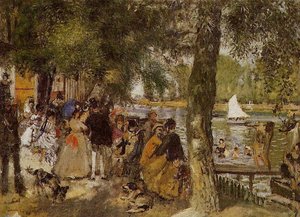
The collection of French art from the 19th and 20th centuries held here is among the most significant outside of France. It offers a profound encounter with the shift toward subjective experience, where light and color take precedence over objective form. The presence of works by Claude Monet, Pierre-Auguste Renoir, and Edgar Degas allows for a direct observation of the movement that redefined visual perception. These paintings do not merely represent scenes; they capture the fleeting qualities of light as it interacts with the environment.
Beyond the initial Impressionist movement, the holdings extend into the expressive language of Post-Impressionism. The museum contains significant works by Vincent van Gogh and Paul Gauguin, alongside pieces by Henri Matisse and Pablo Picasso. The inclusion of artists such as Dufrénoy further expands the breadth of this era. Standing before these canvases, one senses the evolution of brushwork and the use of color to convey psychological depth and emotion.
- The Red Vineyard, about 1888 - Vincent Willem Van Gogh
- Night Cafe in Arles (Madame Ginoux), 1888 - Eugène Henri Paul Gauguin
- Girls in Black, 1880 - Pierre-Auguste Renoir
- La Grenouillere, 1869 - Pierre-Auguste Renoir
Masterpieces of the Collection
The presence of certain works within these walls commands a specific kind of attention. One finds themselves standing before Rembrandt van Rijn’s 1634 work, The Incredulity of St. Thomas, where the tension of the moment is held in a quiet, heavy stillness. Nearby, the light shifts toward the expressive brushwork of Vincent Willem Van Gogh. His The Red Vineyard [1888] offers a profound encounter with color, much like La Vigne Rouge, a piece noted for being the only painting the artist sold during his lifetime.
The collection moves through the evolution of modern perception with significant weight. Pablo Picasso’s 1910 Portrait of Ambroise Vollard presents a face transformed by the early movements of the twentieth century. In the Impressionist spaces, the atmosphere changes again. Claude Monet’s Boulevard des Capucines captures the movement of a city in flux, while Edgar Degas’s The Blue Dancers offers a study of form and light that remains central to the museum's holdings.
- The Incredulity of St. Thomas, 1634
- The Red Vineyard, 1888
- Portrait of Ambroise Vollard, 1910
- Boulevard des Capucines
- The Blue Dancers
Major Acquisitions and Restitutions
The foundation of the collection began with a deliberate strategy of acquiring meticulously reproduced Italian Primitives. These early holdings, including works by Giotto di Bondone, Piero della Francesca, and Masaccio, were intended to introduce the revolutionary techniques of the Medieval and Renaissance eras to the local audience. This early commitment established a bedrock for the museum's understanding of European art history.
The scope of the holdings expanded significantly following the revolution, when thousands of works were transferred from the Hermitage collections in Saint Petersburg. These acquisitions brought a vast array of Western art into the museum's care. The collection also contains significant archaeological treasures, including gold looted from the ancient city of Troy. Such items arrived in the collection following the Second World War, when the museum became a repository for various works brought from Germany.
The museum continues to engage with the complexities of art history through the repatriation and movement of significant pieces. Recent efforts have focused on the return of artworks previously held in Hermitage collections, ensuring that these pieces remain part of a continuous dialogue between different eras and collections.
Exhibitions and Research
The museum maintains a continuous dialogue between its permanent holdings and the public through landmark exhibitions. These presentations often illuminate the depth of the collection, offering a closer look at the works held within the galleries. Past initiatives, such as the Moscow-Paris exhibition, have highlighted the connections between different artistic traditions and the museum's specific holdings. Beyond the visual arts, the institution functions as a cultural center through the hosting of the Sviatoslav Richter's December Nights musical festival, which brings a different dimension to the museum's atmosphere.
Scientific and research activities form the foundation of the museum's institutional life. This scholarly work supports the preservation and understanding of the extensive collection, which spans from ancient civilizations to the modern era. The research efforts extend to the study of the museum's diverse holdings, including archaeological finds and the complex history of how various collections were assembled. This academic rigor ensures that the objects, from Byzantine mosaics to the works of the Impressionists, are understood within their proper historical contexts.