


 Ver en contexto
 Enviar
 Compartir
 Detalles
 Guía
Guía

 Descargar
 Similares
 Radiografía
 Presentación de diapositivas
 Estadísticas
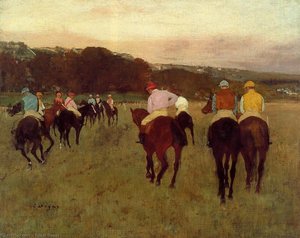
Caballos de carrera


Descubra la obra maestra Racehorses de Edgar Degas, un icónico cuadro impresionista que captura movimiento y elegancia con colores vibrantes y gran detalle. Explore su historia y significado en TopImpressionists.
 Ver más
Edgar Degas: un revolucionario pintor francés, famoso por sus cautivadoras bailarinas, escenas parisinas e innovadoras técnicas. Un verdadero maestro del arte moderno.
Reproducción al óleo hecha a mano
Óleo sobre lienzo pintado a mano en el tamaño y marco de su elección, realizado por encargo por nuestros artistas. ( Cambiar a impresiones Cambiar a imagen digital)




P118B €10

P118H €10

P118W €10

P438Z €10

P508JH €12

P508YH €12

P805H €10

P805Z €10

P919BZ €10

P919G €10

P919XJ €10

P959ZH €10

P968JZ €12

W106C €8

W218G €10

W218JH €8

W218Y €10

W307PJ €10

W316G €10

W316PJ €8

W316Y €10

W398PJ €8

W4111J €10

W500HY €15

W500JH €15

W692G €12

W849H €8

W940BG €15

W953PJ €8




Tamaño estándar
a medida
CM
INCH
Elija entre nuestros tamaños predefinidos que respetan las proporciones originales de la obra.
Loading sizes...

ancho
altura
Indique el ancho y el alto que necesite para adaptarse a su marco o pared. Al tratarse de una obra pintada a mano, si requiere un tamaño con una proporción distinta, el artista puede pintar un poco más alrededor de la imagen o recortarla ligeramente; usted elige. Le enviaremos una maqueta digital para su aprobación antes de comenzar la pintura. La imagen que se muestra en esta página no refleja el resultado real; solo la maqueta lo hace.
Ejemplos de lo que se puede personalizar: Reemplace el rostro con una foto del cliente; Agregue una mascota (por ejemplo, cambie un gato por un perro); Incluya un mensaje oculto en el fondo; Cambie el paisaje o los elementos del fondo.
Tras realizar el pedido, el equipo de TopImpressionists.com enviará un correo electrónico al cliente para solicitar instrucciones y proporcionarle una vista previa del boceto.
Tras realizar el pedido, el equipo de TopImpressionists.com enviará un correo electrónico al cliente para solicitar instrucciones y proporcionarle una vista previa del boceto.
Envío a todo el mundo () en 3-4 semanas en lugar de las 5 semanas estándar. (25 octubre). Sin comprometer la calidad.

Envío exprés gratuito a todo el mundo

Lienzo de lino de alta calidad

Seguro de envío total

Garantía de reembolso de aranceles aduaneros

Garantía de fidelidad cromática exacta

Política de devolución de 100 días (solo por defectos)

Garantía de devolución del 100% del dinero

Descuento por cantidad
 La opción de vidrio solo está disponible en tamaños inferiores a 110 cm.

Caballos de carrera
Técnica de reproducción
Dimensiones de la reproducción
-


Precio total final
€ 236
The Pulse of the Turf: Degas’s Mastery of Motion
In the heart of 1884, Edgar Degas captured a moment that transcends the mere spectacle of sport, offering instead a profound meditation on vitality and the fleeting nature of time. “Racehorses” is not simply a depiction of a sporting event; it is a rhythmic symphony of muscle, speed, and light. As the jockeys surge across the verdant expanse of the countryside, the viewer is pulled into a world where the boundaries between man and beast blur under the shared intensity of the race. Degas, a master of observing the unscripted moments of modern life, utilizes the landscape not just as a backdrop, but as a stage for an epic display of kinetic energy. The presence of two birds soaring serenely above the fray provides a poignant contrast, a touch of celestial stillness that emphasizes the earthbound thunder of the galloping hooves.
To gaze upon this work is to experience the very essence of Impressionism through a lens of rigorous realism. While many of his contemporaries sought to dissolve form into light, Degas maintained a steadfast devotion to anatomical precision. In “Racehorses,” one can trace the deliberate tension in the horses' limbs and the focused posture of the riders, a testament to his deep study of movement. His technique involves a sophisticated use of broken brushstrokes, applying thin, luminous layers of oil paint that allow light to dance across the textured surfaces of the horses' coats and the lush, grassy terrain. This method creates a palpable sense of depth, guiding the eye from the immediate foreground through a middleground of action into a soft, atmospheric distance.
A Fusion of Traditions and Modernity
The brilliance of this piece lies in its unexpected synthesis of diverse artistic influences. Degas was deeply moved by the Ukiyo-e woodblock prints of Japan, which championed bold outlines and unconventional perspectives. In “Racehorses,” we see the echoes of this Eastern aesthetic in the way he manipulates space and composition, creating a sense of immediacy that feels almost photographic. Yet, beneath this modern arrangement lies a foundation of classical training. His ability to render the subtle shifts in shadow and the rich, earthy palette of the landscape speaks to a lifetime spent studying the masters of the Louvre. This duality—the tension between the structured and the spontaneous—is what gives the painting its enduring emotional resonance.
For the discerning collector or interior designer, “Racehorses” offers more than just aesthetic beauty; it brings an atmosphere of adventure and unbridled freedom into a space. The painting serves as a window into a bygone era of elegance and excitement, making it a commanding centerpiece for any curated collection. Whether placed in a sunlit gallery or a sophisticated study, the work’s vibrant energy and masterful execution invite continuous contemplation. It is an invitation to pause and witness the breathtaking beauty of life caught in mid-motion, a timeless tribute to the spirit of the race.
Preguntas y respuestas
¿Qué lugar ocupa "Caballos de carrera" dentro de la obra de Hilaire-Germain-Edgar Degas?
"Caballos de carrera" comparte con otras obras de Hilaire-Germain-Edgar Degas su estilo Movimiento Impresionista y sus temas recurrentes: observación clásica, tradición del ballet, movimiento moderno, precisión anatómica, escena de carreras de caballos.
¿Cómo se describe la paleta de colores de "Caballos de carrera" de Hilaire-Germain-Edgar Degas?
La paleta de "Caballos de carrera" de Hilaire-Germain-Edgar Degas se describe como Oscuros. Es una descripción concisa de los colores de la obra.
¿Quién es el autor y en qué fecha se creó "Caballos de carrera"?
"Caballos de carrera" fue creada por Hilaire-Germain-Edgar Degas en 1884.
Obras relacionadas




Biografía del artista
Edgar Degas
Hilaire-Germain-Edgar De Gas, más conocido como Edgar Degas (París, 19 de julio de 1834 – París, 27 de septiembre de 1917), fue un pintor francés considerado uno de los fundadores del impresionismo. Aunque él mismo rechazaba el nombre y prefería llamarlo realismo o arte realista, Degas fue uno de los grandes dibujantes de la historia por su magistral captación de las sensaciones de vida y movimiento, especialmente en sus obras de bailarinas, carreras de caballos y desnudos. Sus retratos son muy apreciados por la complejidad psicológica y sensación de verdad que transmiten.Early Life and Artistic Training
Degas nació en París el 19 de julio de 1834, hijo del banquero francés Augustin De Gas y Célestine Musson De Gas, hija de una familia criolla de Nueva Orleans. Desde temprana edad mostró interés por el dibujo y la pintura, influenciado por el estilo clásico de Jean-Auguste Dominique Ingres, cuyo consejo marcó profundamente su trayectoria artística: «Dibuje líneas y más líneas, joven, tomadas de la realidad y de la memoria, así se convertirá en un buen artista». Su formación inicial fue sólida gracias al apoyo económico familiar y a acceso privilegiado a instituciones educativas como el Lycée Louis-le-Grand. Sin embargo, rechazó las rígidas normas académicas buscando una libertad creativa que le permitiría explorar nuevas vías expresivas. Comenzó su estudio de arte en París con apenas doce años, donde comenzó a copiar obras maestras del Museo Louvre, una práctica esencial para perfeccionar sus habilidades y desarrollar un profundo conocimiento del arte occidental clásico. Esta etapa fue fundamental para establecer los principios básicos de su estilo artístico posterior.Impressionism and Beyond
Aunque muchos artistas contemporáneos como Monet buscaban capturar la belleza efímera de la luz al aire libre, Degas se mantuvo principalmente en el estudio, construyendo escenas desde observación y memoria. Esta decisión estratégica le permitió enfocarse en detalles minuciosos y lograr una precisión excepcional en la representación del movimiento humano y animal. Su interés por el mundo moderno fue evidente desde sus primeros trabajos, donde abordó temas como carreras de caballos y bailarinas con una mirada innovadora que desafió las convenciones tradicionales de la pintura académica. Aunque rechazaba la etiqueta impresionista, Degas recibió una fuerte influencia de artistas como Camille Pissarro y Gustave Courbet, quienes promovieron el uso del dibujo como herramienta esencial para comprender la realidad y transmitir emociones auténticas. Además, fue fascinado por el arte japonés (Ukiyo-e), cuyo lenguaje visual aportó elementos clave a su composición y perspectiva características. Esta apertura intelectual le permitió enriquecer su estilo artístico y crear obras originales que reflejan una visión compleja del mundo contemporáneo.Notable Works and Artistic Achievements
Degas produjo una obra prolífica que abarca diversas disciplinas artísticas, incluyendo pintura, escultura y grabado. Entre sus obras más emblemáticas destacan: *La familia Bellelli*, considerada una de las primeras manifestaciones del estilo impresionista; *El bailarín en el escenario*, donde capturó magistralmente la dinámica del movimiento artístico; *Las mujeres cepillando cabello*, que refleja la vida cotidiana parisina con sensibilidad y precisión; *Los caballos en la pista*, obra maestra de representación del movimiento animal; y numerosos retratos que exploran la psicología humana con una profundidad sorprendente. Su habilidad para dibujar fue excepcional, especialmente en la creación de estudios detallados sobre figuras humanas y animales en movimiento, como demuestra su serie de bailarinas y sus dibujos de caballos durante las carreras. Estos trabajos son testimonio de su dominio técnico y de su capacidad para transmitir emociones y sensaciones reales al espectador. Además, Degas fue reconocido por su innovación artística y por su compromiso con nuevas técnicas expresivas, como el uso del pastel y la fotografía.Legacy and Influence
Edgar Degas falleció en París el 27 de septiembre de 1917, dejando un legado artístico que sigue inspirando artistas contemporáneos y generando admiración entre historiadores del arte. Su estilo realista combinado con elementos impresionistas marcó una nueva etapa en la historia del arte occidental, desafiando las normas académicas establecidas hasta entonces y abriendo camino a generaciones posteriores de artistas que buscaban explorar nuevas formas de expresión. Su influencia puede verse en obras maestras creadas por artistas como Pablo Picasso y Henri Matisse, quienes reconocieron el impacto profundo de Degas en su propio estilo artístico. Más allá de sus logros individuales, Degas contribuyó significativamente al desarrollo del arte moderno y consolidó la imagen del pintor francés como uno de los más importantes del siglo XIX. Su obra sigue siendo estudiada y apreciada por expertos y aficionados alrededor del mundo, asegurando que su nombre permanezca grabado en la historia del arte universal.
Hilaire-Germain-Edgar Degas
1834 - 1917 , Francia
Datos clave
- Artistic Movement Or Style: Impresionismo, Realismo
- Artists Who Influenced This Artist:
- Jean Auguste Dominique Ingres
- Camille Pissarro
- Date Of Birth: 1834
- Full Name: Hilaire-Germain-Edgar De Gas
- Nationality: Francés
- Notable Artworks:
- Dancers climbing the stairs
- Semiramis building Babylon
- Women Combing Their Hair
- A Group of Dancers
- Place Of Birth: Paris, France
Artículos relacionados

Los 10 Maestros Impresionistas que Revolucionaron el Arte | TopImpressionists
Descubre los 10 cuadros impresionistas más influyentes de Monet, Renoir y Degas. Explora la historia, técnica y colores vibrantes del impresionismo. Encuentra reproducciones de arte exclusivas en TopImpressionists.com.

Los 10 Maestros del Impresionismo: Obras que Revolucionaron el Arte y la Decoración
Descubre los 10 cuadros más emblemáticos del Impresionismo con Monet, Renoir y Degas. Explora la historia, técnica y belleza de estas obras maestras. Reproducciones de arte en para decorar tu hogar con estilo.

Edgar Degas: Capturing Modern Life – A Study of Movement, Observation, and the Parisian Belle Époque
Explore the captivating world of Edgar Degas! Discover his innovative techniques, iconic ballet paintings, and unique portrayal of Parisian life in this insightful art history study.

Impresionismo: 10 Obras Maestras que Capturan la Luz y el Momento
Descubre 10 obras maestras del impresionismo de Monet, Renoir y Degas. Explora la luz, el color y las historias detrás de estos icónicos cuadros. Reproducciones de arte en TopImpressionists.com para decorar tu hogar con estilo.

The Noble Steed on Canvas: A Historical & Artistic Exploration of Horse Painting Across Cultures
Explore the rich history of horse painting! Discover masterpieces from Stubbs to Munnings & learn about symbolism, techniques & artists. Find museum-quality reproductions at TopImpressionists.
Explore obras de arte organizadas por temas, estilos y características.


