

 Ver en contexto
 Enviar
 Compartir
 Detalles
 Guía
Guía

 Descargar
 Similares
 Radiografía
 Presentación de diapositivas
 Preguntas y respuestas
 Estadísticas
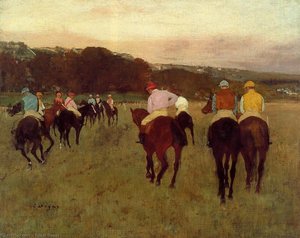
Caballos de carrera


Descubra la obra maestra Racehorses de Edgar Degas, un icónico cuadro impresionista que captura movimiento y elegancia con colores vibrantes y gran detalle. Explore su historia y significado en TopImpressionists.
 Ver más
Un maestro del movimiento famoso por sus icónicas bailarinas. Descubra hoy las cautivadoras obras de Edgar Degas.
Giclée / Impresión de arte
Impresiones giclée o en lienzo de calidad de museo con producción rápida y opciones de acabado flexibles. ( Comprar pintura hecha a mano Cambiar a imagen digital)




P118B €10

P118H €10

P118W €10

P438Z €10

P508JH €12

P508YH €12

P805H €10

P805Z €10

P919BZ €10

P919G €10

P919XJ €10

P959ZH €10

P968JZ €12

W106C €8

W218G €10

W218JH €8

W218Y €10

W307PJ €10

W316G €10

W316PJ €8

W316Y €10

W398PJ €8

W4111J €10

W500HY €15

W500JH €15

W692G €12

W849H €8

W940BG €15

W953PJ €8




Tamaño estándar
a medida
CM
INCH
Elija entre nuestros tamaños predefinidos que respetan las proporciones originales de la obra.
Loading sizes...

ancho
altura
Introduzca el ancho y el alto que necesite para adaptarse a su marco o pared. Una impresión solo puede recortarse, nunca hacerse más grande que la imagen original, por lo que un tamaño con una forma distinta perderá parte de la obra. Le enviaremos una maqueta digital para su aprobación antes de realizar cualquier impresión. La imagen que se muestra en esta página no refleja el recorte real; solo la maqueta lo hace.
Envío a todo el mundo () en 2 semanas en lugar de las 4/5 semanas estándar. (10 noviembre)

Envío exprés gratuito a todo el mundo

Lienzo de lino de alta calidad

Seguro de envío total

Garantía de reembolso de aranceles aduaneros

Garantía de fidelidad cromática exacta

Política de devolución de 100 días (solo por defectos)

Garantía de devolución del 100% del dinero

Descuento por cantidad
 La opción de vidrio solo está disponible en tamaños inferiores a 110 cm.

Caballos de carrera
Giclée / Impresión de arte
Dimensiones de la reproducción
-


Precio total final
€ 62
El pulso de la pista: La maestría del movimiento en Degas
En pleno corazón de 1884, Edgar Degas capturó un instante que trasciende el mero espectáculo deportivo, ofreciendo, en su lugar, una profunda meditación sobre la vitalidad y la naturaleza fugaz del tiempo. “Caballos de carrera” no es simplemente la representación de un evento deportivo; es una sinfonía rítmica de músculo, velocidad y luz. Mientras los jinetes avanzan con ímpetu a través de la verde extensión de la campiña, el espectador es arrastrado hacia un mundo donde las fronteras entre el hombre y la bestia se desdibujan bajo la intensidad compartida de la carrera. Degas, maestro en la observación de los momentos espontáneos de la vida moderna, utiliza el paisaje no solo como un telón de fondo, sino como un escenario para una exhibición épica de energía cinética. La presencia de dos aves que planean serenamente sobre el fragor de la contienda proporciona un contraste conmovedor, un toque de quietud celestial que enfatiza el trueno terrenal de los cascos al galopar.
Contemplar esta obra es experimentar la esencia misma del Impresionismo a través de una lente de riguroso realismo. Mientras muchos de sus contemporáneos buscaban disolver la forma en la luz, Degas mantuvo una devoción inquebrantable por la precisión anatómica. En “Caballos de carrera”, se puede rastrear la tensión deliberada en las extremidades de los caballos y la postura concentrada de los jinetes, testimonio de su profundo estudio del movimiento. Su técnica implica un uso sofisticado de pinceladas fragmentadas, aplicando capas finas y luminosas de óleo que permiten que la luz baile sobre las superficies texturadas del pelaje de los caballos y el exuberante terreno herbáceo. Este método crea una sensación palpable de profundidad, guiando la mirada desde el primer plano inmediato, pasando por un plano medio de acción, hacia una distancia suave y atmosférica.
Una fusión de tradiciones y modernidad
La brillantez de esta pieza reside en su inesperada síntesis de diversas influencias artísticas. Degas se sintió profundamente conmovido por las xilografías Ukiyo-e de Japón, que defendían los contornos audaces y las perspectivas poco convencionales. En “Caballos de carrera”, vemos los ecos de esta estética oriental en la forma en que manipula el espacio y la composición, creando una sensación de inmediatez que se siente casi fotográfica. Sin embargo, bajo este arreglo moderno subyace una base de formación clásica. Su capacidad para representar los sutiles cambios en las sombras y la rica paleta terrosa del paisaje habla de una vida dedicada al estudio de los maestros del Louvre. Esta dualidad —la tensión entre lo estructurado y lo espontáneo— es lo que otorga a la pintura su perdurable resonancia emocional.
Para el coleccionista exigente o el diseñador de interiores, “Caballos de carrera” ofrece más que simple belleza estética; aporta una atmósfera de aventura y libertad desenfrenada a cualquier espacio. La pintura sirve como una ventana a una era pasada de elegancia y emoción, convirtiéndose en una pieza central imponente para cualquier colección curada. Ya sea colocada en una galería bañada por el sol o en un estudio sofisticado, la energía vibrante y la ejecución magistral de la obra invitan a la contemplación continua. Es una invitación a detenerse y presenciar la belleza sobrecogedora de la vida capturada en pleno movimiento, un tributo atemporal al espíritu de la carrera.
Preguntas y respuestas
¿Qué tipo de pieza es "Caballos de carrera"?
En el catálogo, "Caballos de carrera" de Edgar Degas está clasificado como Arte de pared. Esta categoría permite localizar obras similares.
¿Qué tono emocional transmite el estilo Movimiento Impresionista de "Caballos de carrera"?
La emoción Serenidad de "Caballos de carrera" acompaña a su estilo Movimiento Impresionista.
¿De qué manera se relacionan los colores de "Caballos de carrera" de Edgar Degas con su carga emocional?
La paleta Tonos oscuros de "Caballos de carrera" de Edgar Degas armoniza con su tono emocional Serenidad. El color es una de las formas en que una obra transmite sentimiento.
Obras relacionadas




Biografía del artista
La vida de Edgar Degas
París, 1834. Un niño nace en el seno de una familia de una riqueza moderada, hijo de Hilaire-Germain-Edgar De Gas. El nombre que eventualmente simplificaría a Edgar Degas marca el comienzo de una vida definida por la tensión entre las expectativas sociales y la obsesión artística. Crece inmerso en la sofisticada atmósfera de la capital francesa, un escenario que más tarde servirá como telón de fondo para sus observaciones de la vida moderna.
Los años transcurren en un torbellino de estudios e intereses cambiantes. Se aleja del entorno estructurado de su crianza para adentrarse en la crudeza de los espacios laborales de la ciudad. No busca la luz solar del aire libre, prefiriendo la luz controlada y artificial del estudio y el teatro. Su mirada se posa en las bailarinas, las lavanderas y los caballos de carreras de París, capturando el desgaste físico del trabajo y los movimientos fugaces del escenario. Se mantiene como un hombre de contradicciones, resistiéndose a menudo a las etiquetas que sus contemporáneos le imponen, insistiendo, en cambio, en su identidad como realista.
El final llega en París el 27 de septiembre de 1917. Deja tras de sí un vasto cuerpo de obra que abarca muchas décadas, que incluye:
- Procession on a road near Florence (hacia 1860)
- The Dancing Class (1874)
- The Absinthe Drinker (1876)
- The Tub (hacia 1886)
- Three Dancers in Red Costume (1896)
Primeros años, familia y formación
París, 1834. Hijo de un banquero y de Célestine Musson De Gas, una criolla de Nueva Orleans, Luisiana, Hilaire-Germain-Edgar De Gas se adentra en un mundo de estabilidad burguesa. A los once años, es inscrito en el Lycée Louis-le-Grand. El camino académico parece trazado; sin embargo, la mirada del joven comienza a desviarse hacia las salas de el Louvre. Para 1853, tras haberse graduado en el Lycée con un baccalauréat en literatura, decide ignorar las expectativas de su padre de seguir una carrera en el derecho. En su lugar, se registra como copista en el Museo del Louvre, dedicando sus horas a trazar las líneas de los grandes maestros.
Su formación se intensifica en la École des Beaux-Arts de París. Atraviesa el rigor de la instrucción clásica, perfeccionando una precisión que definiría su obra posterior. En 1855, ocurre un encuentro que dejará una huella imborrable en su desarrollo: conoce a Jean-Auguste-Dominique Ingres. Este encuentro consolida en él un respeto profundo por el dibujo y la importancia de la línea, incluso cuando comienza a inclinarse hacia los temas modernos que, finalmente, definirían su carrera.
Técnica y Estilo Artístico
Edgar Degas rechaza la etiqueta de impresionista. Prefiere el término "realista", una elección que dicta todo su enfoque ante el lienzo. Evita el paisaje al aire libre y las pinceladas sueltas y vibrantes que tanto favorecían sus contemporáneos; en su lugar, se retira al entorno controlado del estudio. Es aquí donde domina la forma humana a través de un dibujo riguroso. Posee una maestría técnica excepcional para la representación del movimiento, convirtiéndose en un dibujante sublime. No espera a que el sol ilumine a su sujeto; construye sus escenas mediante un estudio minucioso con lápiz o pastel, una preparación que le permite congelar un instante fugaz de movimiento con una precisión anatómica asombrosa.
La luz en una composición de Edgar Degas rara vez es natural. Utiliza la iluminación artificial para enfatizar las figuras, creando una sensación de teatralidad y profundidad. Un método notable es el contre-jour, donde sitúa a su sujeto en la sombra mientras el fondo permanece intensamente iluminado. Esta técnica aísla la figura, proyectándola hacia adelante desde su entorno. El resultado es una tensión palpable entre el sujeto y el espacio que habita, revelando a menudo el esfuerzo físico o la realidad silenciosa y sin posados de la vida moderna.
- The Dance Class (1874)
- Interior (1868–1869)
- Madame de Rutte
Obras Clave y Temáticas
El escenario y la caballeriza dominan su universo visual. Más de la mitad de su producción se centra en las bailarinas, capturándolas en sus momentos de ensayo y actuación. Edgar Degas transita entre la gracia de una pirueta y el esfuerzo físico de la clase de danza. Más allá del teatro, dirige su mirada hacia la velocidad de las pistas de carreras, documentando tanto a los caballos como a los jockeys que los montan. Estos sujetos no son meramente decorativos; constituyen profundos estudios sobre la tensión y el movimiento.
Su alcance se extiende hacia lo privado y lo psicológico. Produce retratos que revelan una compleja vida interior, utilizando a menudo ángulos poco convencionales para aislar a sus sujetos. Este enfoque en la forma humana no se limita al óleo sobre lienzo; su maestría se despliega a través de una gran variedad de medios, incluyendo grabados, dibujos y esculturas de cera. Su capacidad para representar la figura humana es evidente en sus numerosos estudios de mujeres, centrándose frecuentemente en el cuerpo en momentos íntimos y sin observación.
- La clase de danza, hacia 1874
- La clase de danza, 1874
- La clase de ballet, 1874–1876
- Interior, 1868–1869
- Escena de la carrera de obstáculos: El jockey caído, 1866
Legado e Impacto Duradero
El cambio de paradigma en el arte de finales del siglo XIX encuentra en Edgar Degas a una figura central. Aunque se resistió a ser etiquetado, su presencia fue fundamental para establecer los cimientos del Impresionismo. Se alejó de los rígidos temas históricos de la academia para elegir, en su lugar, documentar la crudeza y la gracia de la vida moderna parisina. Esta ruptura con la tradición allanó el camino para que las futuras generaciones de artistas exploraran la realidad sin barnices de la condición humana.
Su influencia se extiende mucho más allá del círculo impresionista original. Las innovaciones estructurales y las composiciones poco convencionales que desarrolló dejaron una huella imborrable en la trayectoria del arte moderno. Específicamente, su enfoque de la forma y el movimiento puede apreciarse en las obras tardías de Pablo Picasso y Henri Matisse. Edgar Degas enseñó al mundo del arte a observar la realidad a través de ángulos asimétricos y encuadres inesperados, transformando los momentos privados y fugaces de una bailarina o una lavandera en estudios permanentes del movimiento.
- La clase de danza
- La clase de ballet
- Interior
Dónde ver sus obras hoy en día
Los rastros de la mirada observadora de Edgar Degas permanecen dispersos por las instituciones más importantes, preservados en las silenciosas salas de París y más allá de sus fronteras. En Francia, el Musée d'Orsay alberga colecciones significativas de su obra, capturando ese movimiento que él dedicó toda una vida a estudiar. El Museo del Louvre también custodia su arte, mientras que la Bibliothèque Nationale de France en París mantiene sus obras dentro de sus archivos. Estas colecciones ofrecen una mirada directa a la precisión técnica y al estudio de la forma que definieron su carrera.
Al otro lado del Atlántico, el alcance de su visión se extiende hasta los Estados Unidos. El Metropolitan Museum of Art en Nueva York posee sus pinturas, proporcionando una ventana a la vida moderna que él retrató con tanto escrutinio. En Filadelfia, el Philadelphia Museum of Art contiene sus obras, asegurando que su influencia siga siendo accesible para el público internacional. Estos sitios actúan como anclajes físicos de su legado, donde las líneas y la luz que él dominó siguen siendo visibles para el ojo moderno.
- The Dance Class (1874)
- Interior (1868–1869)
- The Tub 1 (1886)
- Dancers in Pink (1885)

Edgar Degas
1834 - 1917 , Francia
Datos clave
- Artistas O Movimientos Influenciados Por Este Artista:
- Pablo Picasso
- Henri Matisse
- Artistas Que Influyeron En Este Artista:
- Jean-Auguste-Dominique Ingres
- Gustave Courbet
- Fecha De Muerte: 1917
- Fecha De Nacimiento: 1834
- Lugar De Nacimiento: París, Francia
- Movimiento O Estilo Artístico: Realismo
- Nacionalidad: Francés
- Nombre Completo: Hilaire-Germain-Edgar Degas
- Obras Notables:
- Bailarina
- Un grupo de bailarinas
- Mujeres peinándose
Artículos relacionados

The Noble Steed on Canvas: A Historical & Artistic Exploration of Horse Painting Across Cultures
Explore the rich history of horse painting! Discover masterpieces from Stubbs to Munnings & learn about symbolism, techniques & artists. Find museum-quality reproductions at TopImpressionists.

Impresionismo: 10 Obras Maestras que Capturan la Luz y el Momento
Descubre 10 obras maestras del impresionismo de Monet, Renoir y Degas. Explora la luz, el color y las historias detrás de estos icónicos cuadros. Reproducciones de arte en TopImpressionists.com para decorar tu hogar con estilo.

Los 10 Maestros del Impresionismo: Obras que Revolucionaron el Arte y la Decoración
Descubre los 10 cuadros más emblemáticos del Impresionismo con Monet, Renoir y Degas. Explora la historia, técnica y belleza de estas obras maestras. Reproducciones de arte en para decorar tu hogar con estilo.

Edgar Degas: Capturing Modern Life – A Study of Movement, Observation, and the Parisian Belle Époque
Explore the captivating world of Edgar Degas! Discover his innovative techniques, iconic ballet paintings, and unique portrayal of Parisian life in this insightful art history study.

Los 10 Maestros Impresionistas que Revolucionaron el Arte | TopImpressionists
Descubre los 10 cuadros impresionistas más influyentes de Monet, Renoir y Degas. Explora la historia, técnica y colores vibrantes del impresionismo. Encuentra reproducciones de arte exclusivas en TopImpressionists.com.
Explore obras de arte organizadas por temas, estilos y características.


