


 Vista previa
 Compartir
 Compartir
 Ver detalles
 Guía
Guía

 Descargar
 Ver artículos similares
 Radiografía
 Presentación de diapositivas
 Estadísticas
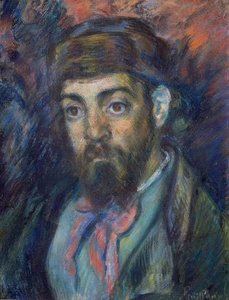
Autoportrait
 Óleo sobre lienzo
- Arte de pared
- Impressionist Painting
 1899
1899 Instituto de Arte Sterling y Francine Clark
Una obra maestra impresionista de Pierre-Auguste Renoir que captura la esencia del artista en un retrato íntimo y expresivo. Admira su habilidad técnica y belleza artística en el Museo d'Orsay.
 Leer más
Explore el vibrante mundo de Pierre-Auguste Renoir (1841-1919), un destacado pintor impresionista celebrado por sus luminosas retratos, escenas de la vida parisina y la belleza femenina. Descubre su legado y las contribuciones artísticas de su familia.
Reproducción al óleo hecha a mano
Óleo sobre lienzo pintado a mano en el tamaño y marco de su elección, realizado por encargo por nuestros artistas. ( Cambiar a formato impreso Ver versión en imagen digital)




P118B €10

P118H €10

P118W €10

P438Z €10

P508JH €12

P508YH €12

P805H €10

P805Z €10

P919BZ €10

P919G €10

P919XJ €10

P959ZH €10

P968JZ €12

W106C €8

W218G €10

W218JH €8

W218Y €10

W307PJ €10

W316G €10

W316PJ €8

W316Y €10

W398PJ €8

W4111J €10

W500HY €15

W500JH €15

W692G €12

W849H €8

W940BG €15

W953PJ €8




Estándar
personalizado
CM
INCH
Elija entre nuestros tamaños predefinidos que respetan las proporciones originales de la obra.
Loading sizes...

ancho
altura
Escriba el ancho y el alto que necesite para adaptarse a su marco o a su pared. Al ser una obra pintada a mano, para un tamaño con una forma distinta, el artista puede pintar un poco más alrededor de la imagen o recortar un poco; usted elige. Le enviaremos una maqueta digital para su aprobación antes de comenzar la pintura. La imagen que se muestra en esta página no refleja el resultado real; solo la maqueta lo hace.
Ejemplos de lo que se puede personalizar: Reemplace el rostro con una foto del cliente; Agregue una mascota (por ejemplo, cambie un gato por un perro); Incluya un mensaje oculto en el fondo; Cambie el paisaje o los elementos del fondo.
Tras realizar el pedido, el equipo de TopImpressionists.com enviará un correo electrónico al cliente para solicitar instrucciones y proporcionarle una vista previa del boceto.
Tras realizar el pedido, el equipo de TopImpressionists.com enviará un correo electrónico al cliente para solicitar instrucciones y proporcionarle una vista previa del boceto.
Envío a todo el mundo () en 3-4 semanas en lugar de las 5 semanas estándar. (25 octubre). Sin comprometer la calidad.

Envío exprés gratuito a todo el mundo

Lienzo de lino de alta calidad

Seguro de envío completo

Garantía de reembolso de impuestos aduaneros

Garantía de fidelidad cromática exacta

Política de devolución de 100 días (solo por defectos)

Garantía de devolución del 100% del dinero

Oferta por volumen
 La opción de vidrio solo está disponible en tamaños inferiores a 110 cm.

Autoportrait
Técnica de reproducción
Tamaño de la reproducción
-


Precio total
€ 236
Self Portrait
Pierre-Auguste Renoir, one of the most celebrated artists of the Impressionist movement, left an indelible mark on the world of art. Among his numerous works, his self-portraits stand out for their introspective and personal nature. The Self-Portrait created in 1899 is a masterpiece that not only showcases Renoir’s skill as a painter but also provides a glimpse into his personality. It's a quiet contemplation captured on canvas, reflecting the artist's evolving understanding of himself amidst the vibrant energy of Parisian life.The Painting
This oil on canvas painting, currently housed at the Sterling and Francine Clark Art Institute in Williamstown, United States, depicts Renoir with remarkable detail. He wears a hat—a symbol of sophistication and status—and sports a beard that speaks to his age and experience. His serious expression draws the viewer’s gaze inward, inviting reflection on themes of identity and artistic vision. The subject is dressed in a shirt and tie, conveying a sense of formality appropriate for the time, while a jacket adds an extra layer of texture and visual interest. The background features a muted yellow wall—a deliberate choice by Renoir—which contrasts subtly with the darker tones of his clothing and face, creating a balanced composition that emphasizes the central figure.Artistic Significance
Renoir’s Self-Portrait is significant not merely for its technical prowess but also for its contribution to Impressionist aesthetics. Like Monet and Sisley, Renoir sought to capture fleeting moments of light and color, prioritizing sensory experience over precise representation. The brushstrokes are loose and blended—characteristic of the Impressionist style—creating an ethereal quality that softens edges and imbues the image with atmosphere. Renoir’s masterful use of pigment—particularly yellows and reds—creates a luminous effect that captures the warmth of sunlight filtering through the Parisian air. This painting exemplifies the movement's commitment to portraying the beauty of everyday life, elevating it to the level of artistic contemplation.Contextualizing Renoir
To fully appreciate Renoir’s work, one must consider its place within the broader context of Impressionism and the intellectual currents of late 19th-century France. He was a contemporary of Claude Monet, who famously documented the changing seasons at Giverny with his monumental Water Lilies series. However, Renoir's artistic focus differed slightly; he excelled in depicting scenes of leisure and social gatherings—such as Party in the Country at Berneval—capturing the joie de vivre of Parisian society. His influence extended beyond Impressionism itself, inspiring artists like Camille Pissarro who embraced Neo-Impressionist techniques—specifically Pointillisme—to achieve similar effects of luminosity and color vibrancy. Renoir’s legacy continues to resonate today, reminding us of the power of art to convey emotion and capture the essence of human experience.Conclusion
Pierre-Auguste Renoir's Self-Portrait remains a poignant testament to his artistic genius and personal introspection. It is more than just a depiction of an individual; it’s a distillation of Impressionist ideals—a celebration of light, color, and fleeting moments—that continues to captivate viewers centuries later. For those seeking inspiration or desiring to adorn their homes with a piece of art history, exploring Renoir's oeuvre offers a rich tapestry of visual delights and intellectual stimulation. Consider commissioning a high-quality reproduction from TopImpressionists.com – allowing you to experience the beauty of this iconic artwork firsthand.Preguntas y respuestas
¿Los colores de "Autoportrait" de Pierre-Auguste Renoir son intensos o tenues?
El color de "Autoportrait" presenta una saturación de Suave equilibrado y una intensidad de Equilibrado.
¿Qué color predomina en la composición de "Autoportrait" de Pierre-Auguste Renoir?
El color dominante de "Autoportrait" de Pierre-Auguste Renoir es Verde ftalocianina (#1e121c).
¿Qué alias o nombres alternativos tiene Pierre-Auguste Renoir?
Otros nombres registrados para Pierre-Auguste Renoir, creador de "Autoportrait", incluyen Auguste Renoir, Renoir.
Obras relacionadas



Biografía del artista
vida temprana y carrera
pierre-auguste renoir, un artista francés fundamental, nació el 25 de febrero de 1841 en Limoges, Francia. Jugó un papel crucial a la hora de dar forma al movimiento impresionista, conocido por su luz vibrante y sus colores saturados. La obra de Renoir celebraba la belleza, particularmente la sensualidad femenina, colocándolo en una línea de artistas que se extendía desde Rubens hasta Watteau.legado artístico
El legado de Renoir se extendió más allá de su lienzo, como patriarca de una familia donde el arte florecía en diversas formas. Sus hijos, pierre renoir (1885–1952), el cineasta jean renoir (1894–1979) y el artista ceramista claude renoir (1901–1969), cada uno hizo contribuciones significativas en sus campos. Su nieto, el cineasta claude renoir (1913–1993), avanzó aún más la herencia artística de la familia.obras notables y museos
* dance at bougival, una pintura notable de Renoir, muestra su dominio para capturar la esencia del arte impresionista. * El musée des collettes, ubicado en Cagnes-sur-Mer, Francia, es un destino imprescindible para los amantes del arte. Este museo, que fue la casa de Pierre-Auguste Renoir, sirve como testimonio de su vida y obra, alberga quince de sus pinturas. * El musée maurice denis, otra joya oculta en Francia, presenta una impresionante colección de pinturas postimpresionistas franceses de finales del siglo XIX y principios del siglo XX.explora el arte de Renoir con TopImpressionists
- Descubre el encanto del musée des collettes (Francia) y su arte impresionista en TopImpressionists: [https://TopImpressionists.com/@@/a@d3aupf](https://TopImpressionists.com/@@/a@d3aupf)
- Explora las maravillas del musée maurice denis (Francia) con TopImpressionists: /es/art/show/art-d3aue3-es/
- Visualiza las pinturas de Renoir, incluyendo dance at bougival, en TopImpressionists: [https://TopImpressionists.com/@/pierre-auguste renoir](https://TopImpressionists.com/@/pierre-auguste%20renoir)

Pierre-Auguste Renoir
1841 - 1919 , Francia
Datos clave
- Artistas Que Influyeron:
- Rubens
- Watteau
- Camille Pissarro
- Édouard Manet
- Fecha De Fallecimiento: 3 de diciembre de 1919
- Fecha De Nacimiento: 25 de febrero de 1841
- Lugar De Nacimiento: Limoges, Francia
- Movimiento Artístico: Impresionismo
- Nacionalidad: Francés
- Nombre Completo: Pierre-Auguste Renoir
- Obras Notables:
- Baile en Bougival
- Almuerzo de la fiesta de remo
- Los grandes bañistas
- Dos hermanas
- Jóvenes tocando el piano
Artículos relacionados

Renoir: Las 25 Obras Maestras del Impresionismo para Decorar tu Hogar con Arte
Descubre las 25 obras maestras de Renoir, el rey del impresionismo. Explora su técnica, historia y significado en cada pintura. Encuentra reproducciones de arte de alta calidad para decorar tu hogar con TopImpressionists.com.

Los 10 Maestros del Paisaje Impresionista: Obras que Cambiaron la Historia del Arte
Descubre los 10 lienzos impresionistas que revolucionaron el arte. Monet, Renoir y más… Explora la historia, técnica y belleza de cada obra maestra. Encuentra reproducciones de alta calidad para tu hogar en TopImpressionists.com.

Los 10 Maestros del Impresionismo: Obras que Revolucionaron el Arte y la Decoración
Descubre los 10 cuadros más emblemáticos del Impresionismo con Monet, Renoir y Degas. Explora la historia, técnica y belleza de estas obras maestras. Reproducciones de arte en para decorar tu hogar con estilo.

Los 10 Maestros Impresionistas que Revolucionaron el Arte | TopImpressionists
Descubre los 10 cuadros impresionistas más influyentes de Monet, Renoir y Degas. Explora la historia, técnica y belleza de este movimiento artístico. Reproducciones de arte en TopImpressionists.com para decorar tu hogar con estilo.

Los 10 Maestros Impresionistas que Revolucionaron el Arte | TopImpressionists
Descubre los 10 cuadros impresionistas más influyentes de Monet, Renoir y Degas. Explora la historia, técnica y colores vibrantes del impresionismo. Encuentra reproducciones de arte exclusivas en TopImpressionists.com.
Explore obras de arte organizadas por temas, estilos y características.


