

 Envoyer
 Partager
 Détails de l'œuvre
 Guide
Guide

 Télécharger l'image
 Articles similaires
 Diaporama
 Q&A
Q&A Statistiques
Symphony - diptych

- 64.0 x 62.0 cm


A mesmerizing blue ceramic diptych by Portuguese master Cecília de Sousa featuring rhythmic geometric patterns and fluid lines that invite you to experience the profound harmony of this 1989 modernist masterpiece.
 Lire la suite
Découvrez l'art céramique de Cecilia de Souza – une maître portugaise du XXe siècle. Explorez ses pièces uniques et évocatrices ainsi que ses contributions à la technologie de la céramique.
L’œuvre d'art présentée sur cette page est protégée par le droit d'auteur, ce qui signifie que nous ne pouvons légalement créer ou vendre de reproduction identique. Cette protection est appliquée en vertu d'accords internationaux tels que la Convention de Berne et par les lois nationales, notamment celles énoncées par le Loi américaine sur le droit d'auteur - Titre 17.
Cette méthode est pleinement conforme aux réglementations sur le droit d'auteur car elle ne repose pas sur la copie ou la duplication de l'œuvre protégée. Il s'agit plutôt d'une réinterprétation créative — une nouvelle peinture qui s'inspire de l'original sans pour autant lui être identique.
Giclées et impressions d'art
Impressions giclées ou sur toile de qualité musée, avec une production rapide et des finitions au choix. ( Commander la reproduction peinte à la main Passer au format numérique)




































Format standard
sur mesure
CM
INCH
Choisissez parmi nos formats prédéfinis qui respectent les proportions originales de l’œuvre.
Loading sizes...

largeur
hauteur
Saisissez la largeur et la hauteur souhaitées pour qu'elles s'adaptent à votre cadre ou à votre mur. Une impression peut être recadrée, mais jamais agrandie au-delà de l'image originale ; ainsi, un format de forme différente entraînera la perte d'une partie de l'image. Nous vous envoyons une maquette numérique pour approbation avant toute impression. L'image présentée sur cette page ne montre pas le recadrage réel — seule la maquette le permet.
Livraison dans le monde entier () en 2 semaines au lieu des 4/5 semaines habituelles. (3 novembre)

Livraison express gratuite dans le monde entier

Toile de lin de qualité supérieure

Assurance transport complète

Garantie de remboursement des droits de douane

Garantie de fidélité des couleurs

Politique de retour de 100 jours (uniquement en cas de défaut)

Garantie de remboursement à 100%

Offre de tarifs dégressifs
 L'option verre n'est disponible que pour les dimensions inférieures à 110 cm.

Symphony - diptych
Giclées et impressions d'art
Format de la reproduction
-


Prix total
€ 61
A Dance of Form and Fragment: The Soul of Symphony
In the quiet dialogue between structure and dissolution, Symphony - diptych emerges as a profound meditation on balance. Created in 1989 by the esteemed Portuguese master Cecília de Sousa, this work transcends its medium to offer a visual rhythm that resonates with the very essence of musical composition. The piece is not merely a painting but a dualistic exploration of space, where the left panel presents a disciplined arrangement of four squares anchored above a bar, suggesting an architectural or industrial order. As the eye travels across the divide to the right half, this rigid geometry begins to dematerialize, surrendering its solid form to a series of quick, parallel lines that evoke a sense of motion and ephemeral grace.
The emotional impact of the work lies in this delicate tension between the known and the unknown. There is a palpable sense of movement, as if the viewer is witnessing a moment of transformation where matter turns into spirit. For the collector or interior designer, this diptych offers a sophisticated focal point that brings a contemplative depth to any space. It invites the observer to linger on the interplay of blue tones and the rhythmic patterns of circles, creating an atmosphere of serene complexity that can anchor a modern gallery wall or provide a soulful counterpoint to minimalist decor.
The Alchemy of Clay and Pigment
To understand the visual language of Symphony, one must look toward the artist's deep-rooted connection to the earth. Cecília de Sousa’s mastery was forged in the heat of the kiln and the tactile reality of ceramic technology. Having worked intimately with industrial equipment at the legendary Fábrica Viúca Lamego, she brought a unique, structural sensibility to her two-dimensional works. This piece serves as a brilliant translation of ceramic principles onto canvas, utilizing the judicious application of oxides and pigments to achieve a depth that feels almost sculptural.
The technique employed here is a masterclass in controlled abstraction. The deep, evocative blues create an oceanic sense of depth, while the black borders provide a sharp, definitive frame that contains the swirling energy within. The use of circular motifs adds a layer of intricate texture, breaking the linear momentum with soft, rhythmic interruptions. This interplay of heavy, grounded elements and light, sweeping strokes mirrors the artist's lifelong pursuit: finding the poetic potential within the industrial and the permanent within the transient.
A Legacy of Modernist Harmony
Born in Lisbon in 1937, de Sousa was a central figure in the post-war modernist movement in Portugal. Her education under masters like Manuel Cargaleiro instilled in her a respect for the transformative power of materials. In Symphony - diptych, we see the culmination of decades of experimentation with form and surface. The work stands as a testament to a period when Portuguese art was finding its unique voice—one that blended traditional craftsmanship with the avant-garde spirit of abstraction.
For those seeking to acquire a high-quality reproduction of this masterpiece, it represents an opportunity to possess a fragment of ceramic history reimagined through fine art. Whether placed in a contemporary residence or a professional studio, the diptych acts as a bridge between the tactile world of clay and the ethereal world of pure thought, making it an enduring choice for those who value art that speaks to both the intellect and the heart.
Questions et réponses
Comment le mouvement et l'époque se rencontrent-ils dans «Symphony - diptych» de Cecília De Sousa ?
Dans «Symphony - diptych» de Cecília De Sousa, le mouvement Contemporary Art rencontre l'époque Époque moderne.
Quelle palette de couleurs est utilisée dans «Symphony - diptych» de Cecília De Sousa ?
Les couleurs de "Symphony - diptych" forment une palette Dark. Cette classification décrit les familles de couleurs dominantes.
Quels sont les droits de reproduction pour « Symphony - diptych » au Musée National des Azulejos ?
L'original « Symphony - diptych » se trouve au Musée National des Azulejos, et l'œuvre est toujours protégé par le droit d'auteur.
Biographie de l'artiste
Un héritage forgé dans l'argile : l'univers céramique de Cecília de Sousa
Cecília de Sousa, née à Lisbonne en 1937, s'impose comme une figure incontournable du paysage de la céramique portugaise du XXe siècle. Bien plus qu'une simple praticienne d'un art ancestral, elle est une artiste qui a profondément façonné sa trajectoire, repoussant les limites et insufflant à l'argile une puissance expressive unique. Son voyage commence à l'École António Arroio de Lisbonne, où elle découvre le potentiel transformateur des matériaux céramiques sous la direction de Manuel Cargaleulaire, une influence majeure de ses débuts. Cette formation fondamentale fut enrichie par des études aux côtés de Lino António, préparant le terrain pour une carrière dédiée à l'exploration des profondeurs de ce médium.Influences précoces et développement artistique
La période de l'après-guerre au Portugal fut marquée par un intérêt croissant pour le modernisme, et de Sousa se trouva au cœur de ce ferment créatif. Ses premiers travaux étaient intimement liés au paysage architectural de Lisbonne, collaborant avec divers architectes sur des projets intégrant des éléments céramiques à la conception même des édifices. Cette exposition précoce lui a inculqué une compréhension de la céramique non pas comme de simples objets décoratifs, mais comme des composantes intégrales de concepts spatiaux plus vastes. Cependant, la vision artistique de de Sousa a rapidement transcendé les applications fonctionnelles. Elle entama une exploration soutenue de la matière elle-même — ses textures, ses couleurs et sa plasticité inhérente. Son passage à la manufacture de céramique Viúva Lamego s'avéra particulièrement formateur, lui apportant une connaissance intime des technologies céramiques et inspirant une série d'œuvres qui dialoguent directement avec les processus industriels qu'elle y a observés. Cette période marqua un tournant vers un langage artistique plus personnel, caractérisé par des nuances subtiles et des formes évocatrices.Le langage de la forme et de la textureReconnaissance et impact durable
Tout au long de sa carrière, Cecília de Sousa a marqué de sa présence les expositions et biennales nationales et internationales. Ces plateformes ont non seulement mis en lumière ses accomplissements artistiques, mais ont également facilité des échanges précieux avec d'autres artistes et praticiens, élargissant sa perspective et enrichissant son processus créatif. Ses contributions dépassent le domaine des œuvres individuelles ; elle est reconnue pour son dévouement à l'avancement de la technologie céramique et à la promotion d'une compréhension plus profonde de cet art. Aujourd'hui, le travail de de Sousa est représenté dans de nombreuses collections et institutions, tant au Portugal qu'à l'étranger, consolidant sa position parmi les céramistes les plus importants du XXe siècle. Son héritage réside non seulement dans la beauté et l'originalité de ses créations, mais aussi dans son engagement inébranlable à explorer les possibilités infinies de l'argile — un témoignage de la puissance durable de la vision artistique et de la maîtrise technique. Son œuvre continue d'inspirer une nouvelle génération de céramistes, garantissant que son influence se fera sentir pendant encore de nombreuses années.Un dialogue continu avec l'argile
L'art de Cecília de Sousa ne consiste pas simplement à créer des objets ; il s'agit d'établir un dialogue — une conversation entre l'artiste, la matière et le spectateur. Ses pièces invitent à la contemplation, nous incitant à considérer la beauté inhérente à l'imperfection, la force pérenne de la tradition et le potentiel transformateur de la créativité humaine. Alors qu'elle poursuit son voyage artistique, de Sousa demeure une force vitale dans le monde de la céramique, repoussant les frontières et défiant les notions conventionnelles de forme et d'expression.
Cecília De Sousa
1937 - , Portugal
L'essentiel de l'artiste
- Artistic Movement Or Style: Art céramique
- Date Of Birth: 1937
- Full Name: Cecília de Souza
- Nationality: Portugais
- Notable Artworks: ['Sans titre']
- Place Of Birth: Lisbonne, Portugal
Articles connexes

Abstraction Géométrique : Les 10 Chefs-d'œuvre qui ont Marqué l'Histoire de l'Art
Plongez au cœur de l'abstraction géométrique avec TopImpressionists.com ! Découvrez les 10 œuvres majeures de Mondrian, Malevitch et Kandinsky qui ont révolutionné l'art moderne. Inspirez votre décoration intérieure avec des reproductions de tableaux exceptionnelles. Explorez la collection en ligne !

L'Art de la Machine : Les 25 Chefs-d'œuvre Incontournables de Fernand Léger
Explorez les 25 chefs-d'œuvre de Fernand Léger et l'énergie du Tubisme. Découvrez nos reproductions d'exception sur TopImpressionists.com.

L'Éclat de la Terre : Guide de l'Art Céramique pour le Collectionneur d'Exception
Explorez l'histoire et la chimie de la céramique d'exception. Maîtrisez les secrets des émaux et des grands maîtres dès maintenant.
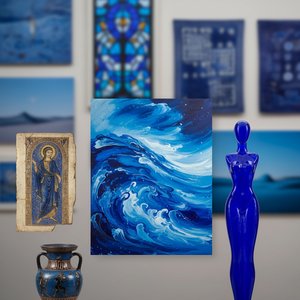
The Allure of Azure: Exploring the Symbolic & Aesthetic Depths of Blue in Art History
Explore the rich history of blue in art! Discover its symbolism, from ancient pigments to modern masterpieces by Kandinsky & Seurat. Uncover the psychological impact and cultural meanings behind this captivating hue.

Les 10 Chefs-d'œuvre Dominés par le Bleu Ardoise : Art, Histoire & Décor
Plongez dans l'univers fascinant des 10 plus beaux tableaux dominés par le bleu ardoise. Découvrez l'histoire, les artistes et les techniques de ces chefs-d'œuvre impressionnistes et contemporains. Inspirez votre décoration intérieure avec !