Aperçu en situation
 Envoyer
 Partager
 Détails de l'œuvre
 Guide
Guide

 Télécharger l'image
 Articles similaires
 Radiographie
 Diaporama
 Questions et réponses
 Statistiques
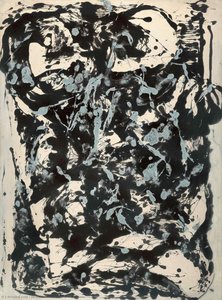
Circumcision Janvier

- 1423.0 x 168.0 cm


Explorez "Circumcision Janvier" de Jackson Pollock : une œuvre majeure de l'expressionnisme abstrait, vibrante et pleine d'énergie. Découvrez la technique du dripping et l'impact durable de ce maître américain.
 Lire la suite
Pionnier de l'expressionnisme abstrait célèbre pour sa technique de dripping. Découvrez l'énergie brute de ses toiles iconiques dès maintenant.
Giclées et impressions d'art
Impressions giclées ou sur toile de qualité musée, avec une production rapide et des finitions au choix. ( Commander la reproduction peinte à la main Passer au format numérique)




P118B €10

P118H €10

P118W €10

P438Z €10

P508JH €12

P508YH €12

P805H €10

P805Z €10

P919BZ €10

P919G €10

P919XJ €10

P959ZH €10

P968JZ €12

W106C €8

W218G €10

W218JH €8

W218Y €10

W307PJ €10

W316G €10

W316PJ €8

W316Y €10

W398PJ €8

W4111J €10

W500HY €15

W500JH €15

W692G €12

W849H €8

W940BG €15

W953PJ €8




Format standard
sur mesure
CM
INCH
Choisissez parmi nos formats prédéfinis qui respectent les proportions originales de l’œuvre.
Loading sizes...

largeur
hauteur
Saisissez la largeur et la hauteur souhaitées pour qu'elles s'adaptent à votre cadre ou à votre mur. Une impression peut être recadrée, mais jamais agrandie au-delà de l'image originale ; ainsi, un format de forme différente entraînera la perte d'une partie de l'image. Nous vous envoyons une maquette numérique pour approbation avant toute impression. L'image présentée sur cette page ne montre pas le recadrage réel — seule la maquette le permet.
Livraison dans le monde entier () en 2 semaines au lieu des 4/5 semaines habituelles. (10 novembre)

Livraison express gratuite dans le monde entier

Toile de lin de qualité supérieure

Assurance transport complète

Garantie de remboursement des droits de douane

Garantie de fidélité des couleurs

Politique de retour de 100 jours (uniquement en cas de défaut)

Garantie de remboursement à 100%

Offre de tarifs dégressifs
 L'option verre n'est disponible que pour les dimensions inférieures à 110 cm.

Circumcision Janvier
Giclées et impressions d'art
Format de la reproduction
-


Prix total
€ 63
Circumcision January : Une Exploration Approfondie de l'Expressionnisme Abstrait de Pollock
Jackson Pollock, une figure majeure du XXe siècle, est indissociable de l’expressionnisme abstrait. Sa peinture, Circumcision January, illustre son approche novatrice et continue de captiver les spectateurs par son énergie dynamique et son langage visuel complexe. Cet article explore les subtilités de cette œuvre significative au sein du parcours artistique plus large de Pollock.
Le Paysage Visuel : Composition et Couleurs
Circumcision January, créée en 1946, est une œuvre monumentale mesurant un impressionnant 1423 x 168 cm. Sa taille imposante attire l'attention et immerge le spectateur dans l’univers abstrait de Pollock. La toile explose d'une palette vibrante – rouge, jaune, bleu, vert et blanc – entrelacées dans une danse apparemment chaotique mais méticuleusement orchestrée. La peinture représente un groupe de figures, certaines debout, d'autres assises ou allongées, contribuant à un sentiment palpable de mouvement et d’interaction. Bien que les formes soient abstraites, elles suggèrent une narration, éveillant la curiosité quant à la scène qui se déroule devant nous.
La Technique Révolutionnaire de Pollock : La Peinture au Goutte à l'Œuvre
L'héritage de Jackson Pollock est indissociablement lié à sa technique innovante de peinture au goutte. Abandonnant la peinture traditionnelle sur chevalet, il disposait ses toiles à plat sur le sol et laissait couler, verser et éclabousser de la peinture sur la surface. Cette méthode permettait une liberté de mouvement et de geste unique, lui permettant de créer des réseaux complexes de couleurs et de textures qui défient la représentation conventionnelle. Dans Circumcision January, la fluidité et les formes organiques sont une conséquence directe de cette technique, démontrant la maîtrise de Pollock sur le hasard et le contrôle.
Contexte de Circumcision January : Expressionnisme Abstrait et Au-Delà
Le milieu du XXe siècle a été témoin de l'essor de l'expressionnisme abstrait, un mouvement qui cherchait à se libérer de l'art figuratif traditionnel. Des artistes comme Pollock, Mark Rothko et Clyfford Still ont mené cette révolution, privilégiant l’expression émotionnelle et l’expérience subjective par rapport à la représentation réaliste. Circumcision January est un exemple parfait de la puissance de l'expressionnisme abstrait à évoquer des émotions profondes et à construire des récits visuels complexes sans recourir à des formes figuratives. L’influence de cette peinture s’étend bien au-delà du mouvement lui-même, inspirant d’innombrables artistes contemporains qui continuent d’explorer les frontières de l'abstraction.
Résonance Émotionnelle et Héritage Durable
Circumcision January est plus qu'une simple peinture ; c’est une expérience immersive qui attire le spectateur dans le processus artistique de Pollock et au cœur de l’expressionnisme abstrait. Ses couleurs vibrantes, sa composition dynamique et son sujet énigmatique créent un voyage visuel captivant qui continue d'inspirer les passionnés d'art du monde entier. L'œuvre témoigne de l'esprit innovant de Pollock et de son impact profond sur l’histoire de l’art moderne.
Informations sur l'Artiste
Jackson Pollock : Un Révolutionnaire de l'Expressionnisme Abstrait
Première Vie et Influences
- Né Paul Jackson Pollock le 28 janvier 1912 à Cody, Wyoming.
- Sa vie précoce a été marquée par des déménagements fréquents en raison du travail de son père en tant que géomètre. Cette instabilité a peut-être contribué à son esprit artistique agité.
- Pollock a étudié au Manual Arts High School à Los Angeles, puis à l'Université de New York et à la Art Students League, où il a appris les techniques traditionnelles de peinture.
- Influences Clés : Il a été initialement influencé par des peintres régionalistes comme Thomas Hart Benton et David Alfaro Siqueiros, ainsi que par le Surréalisme et l'art amérindien.
Développement Artistique & Style
- Les premiers travaux de Pollock reflétaient l’influence de ses professeurs, présentant des scènes représentatives dans un style régionaliste.
- Dans les années 1930, il a expérimenté divers styles, notamment le social r
Liens Utiles
- Jackson Pollock : Découvrez Jackson Pollock (1912-1956), un expressionniste abstrait révolutionnaire et pionnier de la peinture au goutte
- Paul Jackson Pollock : Explorez l'art révolutionnaire de Jackson Pollock (1912-1956), un pionnier de l'expressionnisme abstrait et de la peinture au goutte
Contenu Utile
- Jackson Pollock : Découvrez Jackson Pollock (1912-1956), un expressionniste abstrait révolutionnaire et pionnier de la peinture au goutte
- Paul Jackson Pollock : Explorez l'art révolutionnaire de Jackson Pollock (1912-1956), un pionnier de l'expressionnisme abstrait et de la peinture au goutte
- Jackson Pollock | Circumcision - Guggenheim Museum : Apprenez à connaître ce chef-d'œuvre de Jackson Pollock dans la Collection en ligne du Guggenheim
- Circumcision | Work of art - Peggy Guggenheim Collection : Jackson Pollock
- Circumcision Jackson Pollock Painting - The History of Art : Découvrez la peinture de Jackson Pollock, "Circumcision"
Questions et réponses
Qui est l'artiste derrière « Circumcision Janvier » ?
L'artiste à l'origine de « Circumcision Janvier » est Jackson Pollock. L'œuvre est répertoriée sous le nom de Jackson Pollock.
Puis-je voir une vue aux rayons X de «Circumcision Janvier» de Jackson Pollock ?
« Circumcision Janvier » peut être examiné couche par couche sur la page Radiographie de l'œuvre, un visionneur inspiré d'un banc lumineux de restaurateur proposant onze lectures optiques de l'image.
En quelle année "Circumcision Janvier" a-t-il été réalisé ?
«Circumcision Janvier» de Jackson Pollock a été créé en 1946.
Biographie de l'artiste
Jeunesse, famille et formation
L'histoire de Paul Jackson Pollock commence dans les paysages sauvages de Cody, dans le Wyoming, où il est né le 28 janvier 1912. Dernier de cinq frères, il est le fils de Stella May McClure et de LeRoy Pollock. Son père exerçait le métier d'arpenteur, une profession exigeant des déplacements constants à travers l'immensité de l'Ouest américain. Cette existence nomade a marqué les premières années du jeune garçon par des déménagements fréquents, une instabilité qui semblait faire écho aux horizons changeants du travail de son père. Ces premiers voyages à travers l'Ouest lui ont offert une rencontre directe et brute avec le monde naturel et la résonance spirituelle de l'art amérindien, des impressions qui allaient s'imprégner silencieusement dans son subconscient bien avant qu'il ne tienne un pinceau.
En grandissant, sa quête d'appartenance l'a porté vers l'énergie urbaine de la côte. Il s'est inscrit à la Manual Arts High School de Los Angeles, cherchant une structure formelle pour ses impulsions naissantes. Cependant, la véritable maîtrise de son geste ne s'est opérée que bien plus tard, lors de son installation à New York. C'est là, à l'Art Students League, qu'il a entamé une période d'étude longue et transformative. De 1929 à 1942, il a travaillé sous la direction de Thomas Hart Benton. Tandis que Benton mettait l'accent sur les compositions rythmiques et la dimension narrative de la vie américaine, le jeune étudiant commençait déjà à dériver vers ses propres vérités intérieures, plus abstraites.
Le développement d'une technique unique
Dès 1947, un changement profond s'est emparé de sa manière d'aborder la toile. S'éloignant de l'usage traditionnel du chevalet, il choisit plutôt de poser ses toiles directement sur le sol. Cette mutation lui permettait de se tenir au-dessus de son œuvre, devenant ainsi une partie intégrante de l'acte créatif lui-même. Il ne se contentait plus d'appliquer la peinture ; il la laissait goutter, l'éclaboussait et la projetait depuis les hauteurs, laissant le liquide s'écouler selon des motifs imprévisibles. Cette méthode a transformé l'acte de peindre en une véritable performance physique, où la gravité et le geste dictaient la forme finale.
Ses outils étaient aussi peu conventionnels que ses méthodes. Il utilisait des bâtons, des couteaux et même des seringues pour manipuler ce médium fluide. Parfois, il employait des truelles ou de la peinture liquide pour obtenir des textures spécifiques. Il griffait souvent la surface ou utilisait des objets insolites pour bâtir une épaisse croûte de peinture, conférant à l'œuvre une qualité tactile et sculpturale. Ce processus relevait moins d'un travail de pinceau contrôlé que d'une libération d'énergie rythmique, presque primale, sur la surface de la toile.
Œuvres Clés et Expressions Artistiques
À mesure qu'il s'affranchissait des contraintes du chevalet, ses toiles ont commencé à refléter un engagement plus viscéral avec la matière. En 1943, il a produit Mural, une œuvre monumentale mesurant 2,4 par 6,1 m, qui témoignait de sa capacité à dompter une surface immense. Durant cette période, ses explorations de l'inconscient et l'acte même de peindre l'ont mené à des œuvres telles que Eyes in the Heat, créée vers 1946. Ces pièces n'étaient pas de simples images, mais les traces d'une présence physique, où le mouvement de tout son corps dictait l'emplacement de chaque éclaboussure et de chaque flaque de couleur.
Les années qui suivirent virent l'artiste perfectionner ces compositions rythmiques et "all-over" qui allaient définir sa réputation. Il cherchait à créer un sentiment d'espace infini, où aucun point unique ne dominait les autres. Cette approche est manifeste dans Number 1, 1949, une œuvre capturant un jaillissement d'énergie brute, ainsi que dans Lavender Mist, Number 1, 1950, qui demeure une pièce maîtresse de sa production. Dans ces œuvres, l'interaction entre le contrôle et le hasard crée un équilibre délicat, comme si la peinture était libérée plutôt qu'appliquée.
Ses expériences ultérieures ont continué de repousser les limites de la manipulation de la peinture sur une surface horizontale. Il utilisait souvent des bâtons, des couteaux, ou même les boîtes de peinture elles-mêmes pour projeter le pigment, créant ainsi des réseaux complexes de lignes. Cette méthode est clairement visible dans Blue Poles, Number 11, 1952 et dans l'énergique Convergence. À travers ces œuvres, il a atteint un état où la peinture semblait posséder sa propre vie, émergeant d'une immersion profonde dans sa propre imagination.
Mécènes, atelier et commandes
Le cours de sa carrière fut façonné tant par les nécessités publiques que par la générosité de quelques soutiens vitaux. Entre 1938 et 1942, il trouva un emploi stable en tant que peintre pour le WPA Federal Art Project, une période qui insuffla un rythme nécessaire à sa pratique en pleine évolution. Cette stabilité fit place à une alliance plus personnelle et transformatrice lorsque Peggy Guggenheim lui proposa un contrat de galerie en juillet 1943. Son soutien s'avéra bien plus que professionnel ; en 1945, elle lui accorda une avance de 2 000 dollars pour l'aider à s'installer, un geste qui entremêla profondément sa vie privée et sa survie artistique.
Sa vie créative finit par trouver son centre à East Hampton, New York. Là, au sein de la Pollock-Krasner House and Studio, il vécut et travailla aux côtés de son épouse, Lee Krasner. L'atelier était un lieu de mouvement physique intense, où les frontières entre l'artiste et la toile se dissolvaient. Il s'éloigna souvent du chevalet traditionnel, préférant poser ses toiles à même le sol pour interagir avec la peinture sous tous les angles. Cet espace de travail n'était pas une simple pièce de production, mais le théâtre d'une énergie profonde et tourmentée, là où s'opéraient ses expériences les plus radicales.
Les dernières années et la mort
La vie personnelle de l'artiste était profondément entrelacée avec ses luttes créatives. En 1945, il épousa l'artiste Lee Krasner, une union qui marqua sa vie par une présence essentielle durant ses années les plus transformatrices. Pourtant, sous la surface de son ascension professionnelle, une ombre persistante demeurait. Il fut confronté à une dépendance à l'alcool tout au long de son existence, un combat qui compliqua souvent son quotidien et sa capacité à affronter les pressions de sa célébrité grandissante.
Cette turbulence, tant intérieure qu'extérieure, connut une fin tragique à East Hampton, New York, aux États-Unis. Le 11 août 1956, à l'âge de 44 ans, sa vie fut brutalement fauchée par un accident soudain et violent. Alors qu'il conduisait, il fut impliqué dans une collision impliquant un seul véhicule, causée par l'alcool. L'accident s'avéra fatal, laissant derrière lui un héritage aussi tumultueux que la peinture qu'il projetait avec fureur sur ses toiles.
Héritage et influence sur l'art moderne
Les ondes de choc provoquées par ses méthodes radicales ont largement dépassé les murs de son atelier d'East Hampton. En brisant le lien traditionnel entre le pinceau et le chevalet, il est devenu une figure centrale du mouvement de l'expressionnisme abstrait, un basculement qui a fondamentalement altéré la trajectoire de la créativité américaine. Sa présence a contribué à consolider la position de New York comme centre mondial de l'art moderne, déplaçant le cœur de l'avant-garde de la domination européenne. Il fut l'un des premiers peintres américains à être reconnu comme l'égal des grands maîtres européens du XXe siècle, prouvant qu'un langage nouveau et viscéral pouvait émerger du sol des États-Unis.
Son influence a agi comme un catalyseur pour de nombreux mouvements artistiques ultérieurs qui ont suivi son sillage. Sa manière d'interagir avec la toile — la traitant comme une arène pour l'action physique plutôt que comme une simple surface de représentation — a ouvert des portes à ceux qui cherchaient à exprimer l'inconscient par le geste. Cette emphase sur le processus de création lui-même a laissé une empreinte indélébile dans l'histoire de l'art moderne, garantissant que la spontanéité et l'imprévu occupent à jamais une place dans l'arsenal de l'artiste.
- Number 1, 1949
- Blue Poles: Number 11, 1952
- Convergence
- Autumn Rhythm. Number 30, 1950
Où admirer ses œuvres aujourd'hui
Pour contempler les traces physiques de son mouvement, il faut se rendre dans les grandes institutions qui ont su préserver son énergie radicale. À New York, le Museum of Modern Art abrite plusieurs de ses toiles, permettant aux spectateurs de se tenir face à ces compositions tentaculaires et décentrées qui ont défini son époque. La National Gallery of Art, à Washington D.C., conserve également ses œuvres, offrant un espace pour observer les réseaux complexes de couleurs qu'il parvenait à créer grâce à ses méthodes uniques. De l'autre côté de l'Atlantique, la Tate Gallery à Londres maintient sa présence vivante au sein de ses collections, veillant à ce que son influence rayonne bien au-delà des rivages américains.
Pour ceux qui recherchent une connexion plus intime avec son processus créatif, la Pollock-Krasner House and Studio à East Hampton offre un sentiment de lieu profond et authentique. Ce site, classé monument historique national, était l'espace où il vivait et travaillait avec son épouse, Lee Krasner. La propriété demeure un lien vital avec son existence, préservant l'environnement qui a nourri sa transition des formes traditionnelles vers les méthodes spontanées au sol qui ont bouleversé le cours de la peinture moderne. Déambuler dans ces lieux permet de saisir l'échelle et la réalité physique de sa lutte créatrice.
- Number 1, 1949
- Blue Poles: Number 11, 1952
- Mural (1943)
- Convergence

Jackson Pollock
1912 - 1956 , États-Unis
L'essentiel de l'artiste
- Artistic Movement Or Style: Expressionnisme abstrait
- Artists Or Movements Influenced By This Artist:
- Color Field painting
- Expressionnisme abstrait
- Artists Who Influenced This Artist:
- Thomas Hart Benton
- José Clemente Orozco
- David Alfaro Siqueiros
- Date Of Birth: 1912
- Date Of Death: 1956
- Full Name: Paul Jackson Pollock
- Nationality: Américain
- Notable Artworks:
- Number 1, 1950 (Lavender Mist)
- One: Number 31, 1950
- Blue Poles: Number 11, 1952
- Convergence
- Place Of Birth: Cody, États-Unis d'Amérique
Articles connexes

The Soul of Color: A Journey into the Emotional Resonance of Lyrical Abstraction
Embark on a cultural journey through Lyrical Abstraction. Explore how masters like Kandinsky used color and motion to translate emotion into visual poetry. Discover the profound beauty of abstract expressionism and learn to curate emotional resonance in your own art collection.

Beyond the Visible: A Journey into the Soul of Abstract Art
Embark on a profound exploration of Abstract Art's emotional depth. From the rupture of Abstract Expressionism to the purity of geometric forms, discover how masters transcend reality to capture the human soul through color, texture, and movement.
Explorez des œuvres d'art classées par thèmes, styles et caractéristiques.