


 Előnézet
 Megosztás
 Megosztás
 Részletek
 Útmutató

 Letöltés
 Hasonló darabok
 X-ray felvétel
 Diavetítés
 Statisztika
Sulky Boy


Explore George Benjamin Luks’ ‘Sulky Boy,’ a captivating 1908 oil painting showcasing youthful innocence & Ashcan realism. Discover its brushstrokes, symbolism, and unique style.
 Tovább olvasom
Luks George Benjamin (1867-1933): Az Ashcan School egyik vezető alakja, az amerikai urbanizmus szívritmusát ábrázolja a realista stílusban. Fedezze fel a lenyűgöző műveit!
Giclée / Műnyomat
Múzeumi minőségű giclée vagy vászonnyomat, gyors gyártással és rugalmas finomítási lehetőségekkel. ( Kézzel festett másolat vásárlása Áttérés digitális képre)




P118B Ft10

P118H Ft10

P118W Ft10

P438Z Ft10

P508JH Ft12

P508YH Ft12

P805H Ft10

P805Z Ft10

P919BZ Ft10

P919G Ft10

P919XJ Ft10

P959ZH Ft10

P968JZ Ft12

W106C Ft8

W218G Ft10

W218JH Ft8

W218Y Ft10

W307PJ Ft10

W316G Ft10

W316PJ Ft8

W316Y Ft10

W398PJ Ft8

W4111J Ft10

W500HY Ft15

W500JH Ft15

W692G Ft12

W849H Ft8

W940BG Ft15

W953PJ Ft8




Standard méret
egyedi
CM
INCH
Válasszon előre meghatározott méreteink közül, amelyek megfelelnek a műalkotás eredeti arányainak.
Loading sizes...

szélesség
magasság
Írja be a keretének vagy a falának megfelelő szélességet és magasságot. A nyomatot csak le lehet vágni, soha nem tehető nagyobbá, mint az eredeti kép, így egy eltérő alakú méretnél a kép egy része elveszik. Mielőtt bármit kinyatintanánk, küldünk egy digitális próbamodellt jóváhagyásra. Az oldalon látható kép nem tartalmazza a valós levágást — ezt csak a próbamodell mutatja meg.
Világszerte történő kiszállítás területére mindössze 2 hét alatt, a szokásos 4-5 hét helyett. (23 október)

Ingyenes globális expressz szállítás

Prémium minőségű len vászon

Teljes körű szállítási biztosítás

Vámvisszatérítési Garancia

Tökéletes színarányosság garancia

100 napos visszaküldési garancia (csak gyártási hibás termékek esetén)

100% pénzvisszatérítési garancia

Több darab vásárlásakor kedvezmény
 Az üvegkeretes opció csak 110 cm alatti méretben érhető el

Sulky Boy
Giclée / Műnyomat
Reprodukció méretei
-


Összesített ár
Ft 22050
A Moment Frozen in Time: The Soul of Sulky Boy
In the quiet intimacy of George Benjamin Luks’s 1908 masterpiece, Sulky Boy, we are invited into a private, domestic sanctuary where time seems to decelerate. The painting presents a poignant portrait of a young boy, seated at a table, his expression heavy with the unmistakable, brooding weight of childhood melancholy. This is not a staged, formal portrait intended for grandeur, but rather a tender observation of a fleeting emotional state. Luks, a master of capturing the unvarnximished truth of human character, utilizes a centered composition that draws the viewer directly into the child's orbit. The boy occupies the heart of the frame, his youthful form framed by the deep, shadowy recesses of a dark brown background, creating an atmosphere of profound introspection and quietude.
The scene is anchored by a vibrant foreground, where a table draped in a rich, blue tablecloth provides a cool contrast to the warmth of the subject. Upon this surface, a bountiful arrangement of fruit—oranges, apples, and pears—rests in a bowl, their rounded forms adding a sense of organic vitality to the composition. The boy holds a single red apple, a gesture that bridges the gap between the still life and the living subject. Through these elements, Luks weaves a subtle symbolic narrative; while the fruit serves as a classic emblem of abundance, nourishment, and the sweetness of life, the child’s sulky demeanor provides a poignant counterpoint, reminding us of the complex, often turbulent emotions that exist even within the innocence of youth.
The Mastery of American Realism and Impressionistic Light
Technically, Sulky Boy is a triumph of the American Realist tradition infused with an impressionistic sensibility. Luks does not rely on razor-sharp precision to define his subject; instead, he employs a loose, energetic application of oil paint that breathes life into the canvas. Visible brushstrokes dance across the surface, creating a tactile texture that suggests the weight of the fabric and the skin of the fruit. This painterly approach allows light to play a transformative role within the work. A soft, diffused illumination washes over the boy’s face, highlighting the subtle contours of his features and casting gentle shadows that lend depth to his pensive expression.
The artist’s technique involves a sophisticated layering of pigments, building up form through tonal variations rather than rigid outlines. This creates a sense of atmospheric depth, where the objects on the table seem to recede naturally into the dark, mysterious background. For the discerning collector or interior designer, this painting offers more than just visual beauty; it offers a profound emotional resonance. The interplay between the heavy, textured brushwork and the delicate subject matter makes it an extraordinary piece for any curated collection. Whether placed in a quiet study or as a focal point in a sophisticated living space, Sulky Boy commands attention through its ability to evoke nostalgia, empathy, and a deep appreciation for the quiet, beautiful struggles of the human experience.
Gyakran Ismételt Kérdések
Milyen színeket használ a "Sulky Boy"?
A "Sulky Boy" színei egy Earthy palettát alkotnak. Ez a besorolás a domináns színek családjait írja le.
Használhatom az augmented reality technológiát, hogy megtekintsem a „Sulky Boy”, Luks György Benjamin alkotása művet a saját szobámban?
A „Sulky Boy”, Luks György Benjamin alkotása AR előnézet oldala kiterjesztett valóságot használ, hogy az alkotást egy kompatibilis eszközön, az Ön saját környezetében is megmutassa.
Szabadon reprodukálható-e a/az „Sulky Boy”, Luks György Benjamin alkotása képe?
A „Sulky Boy”, Luks György Benjamin alkotása a joghallgatói schützenesség körébe tartozik – a szerzői jog lejártt státuszú mű. Ez a jogi státusz határozza meg, hogy a mű képmásolata hogyan reproduzható.


A művész életrajza
A Life Forged in the Crucible of American Realism
George Benjamin Luks, a name synonymous with the gritty energy and unvarnished truth of early 20th-century America, was more than just a painter; he was a chronicler of an era. Born in Williamsport, Pennsylvania, in 1867 to immigrant parents – his father a Polish physician, his mother a German musician – Luks’s upbringing instilled within him a deep empathy for the struggles and triumphs of everyday people. This sensitivity would become the defining characteristic of his artistic vision. His early life was anything but conventional; before dedicating himself to canvas and brush, he and his brother trod the boards as vaudeville performers, honing an observational skill and understanding of human character that would later prove invaluable. It was a world of fleeting moments, exaggerated gestures, and raw emotion – a training ground for capturing the essence of life itself. This period instilled in him a love for performance and spectacle, elements subtly woven into the dynamic compositions of his paintings.From European Studies to the Ashcan School
Luks’s formal artistic education began at the Pennsylvania Academy of the Fine Arts, but it was his subsequent travels to Europe that truly shaped his aesthetic sensibilities. He immersed himself in the works of the Old Masters – Velázquez and Hals particularly resonated with him – absorbing their mastery of light, shadow, and characterization. However, he wasn’t merely imitating; he was synthesizing these influences into something uniquely his own. Upon returning to America, Luks found work as a newspaper illustrator, first in Philadelphia and then in New York City. This experience proved pivotal. It exposed him to the bustling streets, diverse populations, and stark realities of urban life – subjects that would dominate his artistic output for years to come. He connected with a circle of like-minded artists—Robert Henri, John Sloan, William Glackens—who shared a rejection of academic conventions and a desire to depict the world as they saw it, honestly and without pretense. This collective spirit gave rise to what became known as the Ashcan School, a movement that challenged the prevailing artistic norms and celebrated the beauty in the mundane.Capturing the Pulse of Urban Life
Luks’s paintings are characterized by their vigorous brushwork, bold compositions, and unflinching portrayal of urban life. He didn't shy away from depicting the poverty, hardship, and social inequalities that plagued early 20th-century America. His subjects were often drawn from the streets of New York City – cab drivers, street performers, laborers, and ordinary people going about their daily lives. The Cabby, for example, is a powerful depiction of a working man, his face etched with weariness but radiating a quiet dignity. Similarly, Sulky Boy captures the vulnerability and introspection of youth with remarkable sensitivity. Luks’s technique was as distinctive as his subject matter. He employed a thick impasto style, applying paint liberally to the canvas, creating a textured surface that seemed to vibrate with energy. His use of color was often muted, reflecting the grimy realities of urban life, but punctuated by flashes of brilliance that drew the viewer's eye. His works weren’t romanticized; they were raw and honest reflections of a challenging world.A Voice for the Underrepresented and Lasting Legacy
As a member of “The Eight,” Luks played a crucial role in challenging the established art world and paving the way for American modernism. The group’s independent exhibition in 1908 was a watershed moment, sparking controversy but also garnering attention for their innovative approach to painting. Luks wasn't simply interested in documenting reality; he sought to convey its emotional weight, its inherent drama. He wanted his paintings to be felt as much as seen. Beyond his artistic achievements, Luks was also a passionate advocate for American art and artists. He taught at the Art Students League, inspiring generations of young painters to embrace their own unique voices and perspectives. His influence can be seen in the work of countless subsequent artists who sought to capture the spirit of the urban experience. George Benjamin Luks died in 1933, leaving behind a body of work that continues to resonate with viewers today. His paintings are not merely historical documents; they are powerful testaments to the human condition, reminders of the struggles and triumphs of those whose stories might otherwise have been forgotten. He remains a vital figure in American art history, a champion of realism, and a voice for the underrepresented.Key Works and Notable Achievements
Luks’s oeuvre is remarkably diverse, encompassing portraits, genre scenes, and historical subjects. Some of his most celebrated works include:- The Cabby (1907): A seminal work capturing the weariness and dignity of a New York cab driver.
- Sulky Boy (1905): A poignant portrayal of a young boy struggling with poverty and hardship.
- Coal Mining Town (1903): A dramatic depiction of the harsh realities faced by coal miners.
- The Spielers (1905): A dynamic scene capturing the energy and excitement of a street game.
- Numerous portraits, including those of prominent figures in American society.
Influences and Artistic Style
Luks's artistic style was a complex synthesis of various influences. He drew inspiration from the Old Masters, particularly Velázquez and Hals, for his mastery of light and characterization. However, he also embraced the principles of Impressionism and Post-Impressionism, incorporating vibrant colors and loose brushwork into his paintings. His work is characterized by its dynamic energy, bold compositions, and unflinching realism. He was a keen observer of human behavior, capturing the nuances of emotion and social interaction with remarkable skill. His style can be described as a blend of realism, symbolism, and theatricality – reflecting his background in vaudeville and his interest in storytelling.
Luks György Benjamin
1867 - 1933 , Egyesült Államok
Gyors információk
- Artistic Movement Or Style: Ashcan School, Realizmus
- Artists Or Movements Influenced By This Artist: ['Amerikai Modernizmus']
- Artists Who Influenced This Artist:
- Velázquez
- Hals
- Manet
- Date Of Birth: 1867
- Date Of Death: 1933
- Full Name: George Benjamin Luks
- Nationality: Amerikai
- Notable Artworks:
- A Cabbi
- Sulky Boy
- Place Of Birth: Williamsport, USA
Kapcsolódó cikkek

Capturing the Light: A Journey Through the Soul of American Impressionism and the Hudson River School
Explore the luminous beauty of American Impressionism and the Hudson River School. Discover a curated journey through light, landscape, and history, celebrating the enduring legacy of masters through exquisite, hand-painted oil reproductions for the discerning art lover.

The Unvarnished Truth: A Cultural Journey Through the Soul of American Realism
Explore the profound beauty of American Realism. From the Ashcan School's urban grit to intimate portraits, discover how artists captured the authentic soul of a nation through unvarnished truth and masterful observation.
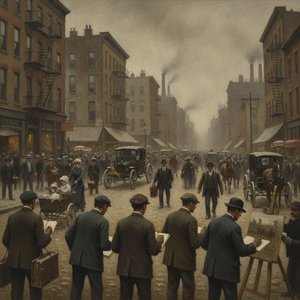
The Ashcan School: Capturing the Raw, Unfiltered Soul of Urban Life through American Realism
Discover the raw beauty of the Ashcan School. Explore how masters like Bellows and Henri captured the gritty, vibrant soul of early 20th-century New York through profound American Realism and evocative urban landscapes.
Fedezze fel a műalkotásokat témák, stílusok és jellemzők szerint csoportosítva.
