


 Előnézet
 Megosztás
 Megosztás
 Részletek
 Útmutató

 Letöltés
 Hasonló darabok
 X-ray felvétel
 Diavetítés
 Statisztika
Fruit Vendő


Jerome Myers (1867-1940) amerikai realista művésze volt, aki az Ashcan Szkólához kötődött és nagyban befolyásolta az amerikai városi élet megközelítése. Évtizedei alatt új tájakra költözött és egyetemi tanulmányokat végzett George de Forest Brush irányításával.
 Tovább olvasom
Jerome Myers (1867-1940): Az Ashcan Számra ismert művész szívélyes ábrázolása NYC életéből és az új bevándorlók közösségeiből. Kulcszám szerepe volt az 1913 Armory Show rendezvénysébé, amely előmutatta Európa modern művészetét Amerikának.
==== Hungarian Meta Description ====:
Jerome Myers (1867-1940): Az Ashcan Számra ismert művész szívélyes ábrázolása NYC életéből és az új bevándorlók közösségei
Kézzel készített olajfestmény reprodukció
Kézzel festett olajvastú vászon, az Ön által választott méretben és keretben, művészeink készítik meglévőre. ( Váltás nyomtatványra Áttérés digitális képre)




P118B Ft10

P118H Ft10

P118W Ft10

P438Z Ft10

P508JH Ft12

P508YH Ft12

P805H Ft10

P805Z Ft10

P919BZ Ft10

P919G Ft10

P919XJ Ft10

P959ZH Ft10

P968JZ Ft12

W106C Ft8

W218G Ft10

W218JH Ft8

W218Y Ft10

W307PJ Ft10

W316G Ft10

W316PJ Ft8

W316Y Ft10

W398PJ Ft8

W4111J Ft10

W500HY Ft15

W500JH Ft15

W692G Ft12

W849H Ft8

W940BG Ft15

W953PJ Ft8




Standard méret
egyedi
CM
INCH
Válasszon előre meghatározott méreteink közül, amelyek megfelelnek a műalkotás eredeti arányainak.
Loading sizes...

szélesség
magasság
Írja be a kívánt szélességet és magasságot, hogy illeszkedjen a keretéhez vagy a falához. Mivel ez kézzel festett alkotás, egy eltérő formájú méret esetén a művész akár festhet is valamivel többet a kép körül, vagy korolathat is belőle — az Ön döntésének megfelelően. A festés megkezdése előtt küldünk egy digitális tervezetet jóváhagyásra. Az oldalon látható kép nem tartalmazza a végeredményt — csak a tervezet mutatja meg a valódi eredményt.
Példák arra, mit lehet módosítani: az arc kicserélése az ügyfél fotójára; háziállat hozzáadása (pl. macska helyett kutya); rejtett üzenet elhelyezése a háttérben; a háttér tájának vagy elemeinek megváltoztatása.
A rendelést követően a TopImpressionists.com csapata e-mailt küld az ügyfélnek az instrukciókért, és biztosít egy előnézeti képet (mockup).
A rendelést követően a TopImpressionists.com csapata e-mailt küld az ügyfélnek az instrukciókért, és biztosít egy előnézeti képet (mockup).
Világszerte elérhető szállítás () 3-4 hét alatt a szokásos 5 hét helyett. (25 október). A minőség nem kérdőjelezhető.

Ingyenes globális expressz szállítás

Prémium minőségű len vászon

Teljes körű szállítási biztosítás

Vámvisszatérítési Garancia

Tökéletes színarányosság garancia

100 napos visszaküldési garancia (csak gyártási hibás termékek esetén)

100% pénzvisszatérítési garancia

Több darab vásárlásakor kedvezmény
 Az üvegkeretes opció csak 110 cm alatti méretben érhető el

Fruit Vendő
Reprodukciós technika
Reprodukció méretei
-


Összesített ár
Ft 86095
Jerome Myers: A Visionary of Urban Realism
Jerome Myers (1867-1940) stands as a pivotal figure in American art history, particularly within the Ashcan School movement. Born in Petersburg, Virginia, his life’s journey—marked by itinerant experiences shaped by his father's absences—fueled an artistic sensibility deeply attuned to the struggles and resilience of marginalized communities. This formative upbringing instilled within him a profound empathy for the everyday realities of ordinary people, a perspective that would permeate his prolific output.
Myers’s artistic trajectory began with diverse pursuits – acting and scene painting honed his skills in visual storytelling and dramatic composition—providing invaluable groundwork for his formal training at Cooper Union followed by eight years at the Art Students League under George de Forest Brush. However, it was New York City itself that truly captivated him; specifically, the Lower East Side’s vibrant immigrant neighborhoods became the crucible of his artistic vision.
The Ashcan School and Its Aesthetic
Myers's commitment to portraying urban life with unflinching honesty aligns perfectly with the ethos of the Ashcan School. Rejecting idealized landscapes and academic conventions, these artists sought to capture the gritty textures and emotional complexities of American cities—particularly during the Progressive Era. Myers’s canvases eschewed romantic embellishment in favor of direct observation and meticulous detail, prioritizing capturing the palpable atmosphere of his surroundings.
Fruit Vendor: A Portrait of Resilience
“Fruit Vendor,” painted circa 1920, exemplifies this stylistic approach. The monochrome palette—characteristic of Ashcan School artists—emphasizes form and texture, mirroring the starkness of urban life. Myers’s masterful technique utilizes broad brushstrokes to convey movement and dynamism, capturing the bustling energy of a busy marketplace.
The composition centers on a woman standing beside a fruit cart laden with apples – a deliberate choice reflecting Myers's fascination with immigrant communities and their daily struggles. Surrounding her are figures engaged in conversation and commerce, creating a tableau that speaks volumes about social interaction and economic hardship. The inclusion of a horse adds to the scene’s visual richness and reinforces its connection to the rural past juxtaposed against the burgeoning urban landscape.
Symbolism and Emotional Impact
Beyond mere depiction, “Fruit Vendor” carries symbolic weight. Myers's unwavering gaze at the human condition—particularly the dignity of labor and perseverance—resonates with humanist ideals prevalent during his time. The painting’s subdued tones evoke a sense of melancholy yet simultaneously convey hope – mirroring the spirit of resilience found within those navigating challenging circumstances.
Myers’s enduring legacy lies in his ability to transform observation into art, capturing not just what he saw but also what he felt. “Fruit Vendor,” like countless other works documenting the realities of American life, remains a testament to his artistic vision and its profound impact on the Ashcan School movement.
Gyakran Ismételt Kérdések
Mely művész és mely stílus áll a "Fruit Vendő" mögött?
Jerome Myers a American Realism irányzatban alkototta meg a "Fruit Vendő" című művét.
Hol vásárolhatom meg „Fruit Vendő”, Jerome Myers alkotása digitális képét?
A „Fruit Vendő”, Jerome Myers alkotása digitális fájljának megvásárlása érdekében magas felbontású digitális kép letöltés a következő oldalon: Digitális kép.
Ki készítette a(t) "Fruit Vendő"-t, és melyik évben?
A "Fruit Vendő" alkotását Jerome Myers készítette 1920 évben.
Hasonló műalkotások




A művész életrajza
A Life Etched in Urban Reality
Jerome Myers, born March 20, 1867, in Petersburg, Virginia, was more than just a painter; he was a chronicler of the American urban experience at a pivotal moment in its history. His life story, marked by early hardship and constant relocation due to his father’s absences, deeply informed his artistic vision. This itinerant upbringing instilled within him an acute sensitivity to the struggles and resilience of those living on the margins – a theme that would become central to his oeuvre. His brother, Gustavus Myers, forged a path as a journalist and activist, further cementing a family commitment to social observation and reform. Before fully dedicating himself to art, Myers tasted life as an actor and scene painter, experiences which undoubtedly honed his understanding of visual storytelling and dramatic composition. This practical foundation served him well when he formally pursued artistic training at Cooper Union for a year, followed by eight years at the Art Students League under the tutelage of George de Forest Brush. However, it wasn’t the established art centers of Europe that truly captured Myers' imagination; rather, it was the teeming streets and vibrant life of New York City’s Lower East Side that became his enduring muse. A brief sojourn to Paris in 1896 paled in comparison to the raw energy and compelling narratives unfolding within his own city.The Ashcan School and a Unique Artistic Voice
Myers emerged as a key figure associated with the Ashcan School, a group of artists who bravely turned their attention away from traditional academic subjects and towards the gritty realities of urban life. However, Myers wasn’t simply replicating what he saw; he was interpreting it through a deeply empathetic lens. He deliberately chose to depict the everyday lives of new immigrants – not as objects of pity or sociological study, but as individuals possessing inherent dignity and beauty. Over a thousand drawings, paintings, etchings, and watercolors bear witness to his dedication, documenting their routines, struggles, and moments of joy outside the confines of tenement walls. He famously articulated his artistic philosophy by stating that where others saw ugliness and degradation, he perceived “poetry and beauty.” This wasn’t mere romanticism; it was a profound belief in the inherent worth of every human experience, regardless of circumstance. His work stands apart within the Ashcan School not for its shock value – though it certainly challenged conventional artistic norms – but for its quiet compassion and unwavering focus on the humanity of his subjects. He wasn’t interested in grand narratives or sweeping statements; he was captivated by the small moments that revealed the essence of a life lived fully, even amidst hardship.Early Influences and Artistic Training
Myers' formative years instilled within him a deep appreciation for observation and social justice. His father’s frequent absences necessitated constant relocation, exposing him to diverse communities and fostering an understanding of displacement and resilience – experiences that would profoundly shape his artistic sensibility. Recognizing the importance of formal training, Myers enrolled at Cooper Union for a year before continuing his studies at the Art Students League under George de Forest Brush, gaining invaluable technical skills and exposure to influential artistic ideas. Brush’s guidance encouraged Myers to explore Impressionistic techniques and capture fleeting moments of light and color, establishing a stylistic foundation that would characterize much of his subsequent work.The Lower East Side: A Constant Inspiration
Myers' artistic vision was irrevocably anchored in the Lower East Side of New York City. This vibrant neighborhood, teeming with immigrants from Europe and elsewhere, became the epicenter of his creative endeavors. He meticulously documented scenes of daily life – bustling marketplaces, crowded tenements, lively street celebrations – portraying them not as subjects for pity or academic analysis but as embodiments of human dignity and beauty. His artistic approach was marked by a deliberate rejection of idealized representations; instead, he sought to capture the raw emotion and palpable energy of urban existence.A Catalyst for Modernism: The Armory Show
Myers’ involvement in organizing the 1913 Armory Show represents a pivotal moment in American art history. This exhibition served as an unprecedented introduction to European modernist movements – Cubism, Fauvism, and Expressionism – challenging established aesthetic conventions and sparking debate about the future of artistic expression. Myers championed these innovative ideas, demonstrating a willingness to embrace experimentation and reject conservative values—a stance that solidified his position as a pioneer of American Modernism.Selected Works
- Recreation Pier: This oil painting beautifully captures urban life and childhood innocence with Impressionistic brushstrokes and warm tones, offering a unique glimpse into American art history.
- Street Shrine: A vibrant 1931 oil painting depicting a nighttime religious procession, showcasing dynamic composition, impasto texture, and an evocative style.
- The Italian Procession: A Post-Impressionist scene of a bustling parade, capturing the energy of NYC life with thick impasto and expressive color.

Jerome Myers
1867 - 1940 , Egyesült Államok
Gyors információk
- Artistic Movement Or Style: Ashcan School, Realizmus
- Artists Or Movements Influenced By This Artist: ['Amerikai Realizmus']
- Artists Who Influenced This Artist: ['George de Forest Brush']
- Date Of Birth: 1867
- Date Of Death: 1940
- Full Name: Jerome Myers
- Nationality: Amerikai
- Notable Artworks:
- Recreation Pier
- Street Shrine
- Italian Procession
- Place Of Birth: Petersburg, USA
Kapcsolódó cikkek

The Unvarnished Truth: A Cultural Journey Through the Soul of American Realism
Explore the profound beauty of American Realism. From the Ashcan School's urban grit to intimate portraits, discover how artists captured the authentic soul of a nation through unvarnished truth and masterful observation.
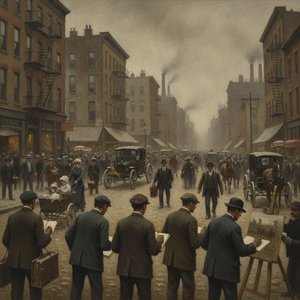
The Ashcan School: Capturing the Raw, Unfiltered Soul of Urban Life through American Realism
Discover the raw beauty of the Ashcan School. Explore how masters like Bellows and Henri captured the gritty, vibrant soul of early 20th-century New York through profound American Realism and evocative urban landscapes.
Fedezze fel a műalkotásokat témák, stílusok és jellemzők szerint csoportosítva.
