

 Megtekintés
 Küldés
 Megosztás
 Részletek
 Útmutató

 Letöltés
 Hasonló darabok
 X-ray felvétel
 Diavetítés
 Kérdések és válaszok
 Statisztika
Blue poles (Number 11)

- 212.0 x 488.0 cm


Experience Jackson Pollock's iconic Blue Poles (Number 11), a vibrant abstract expressionist masterpiece from 1952! This dynamic canvas explodes with color and energy, showcasing Pollock’s revolutionary drip technique. Own a piece of art history – discover this stunning reproduction today.
 Összes részlet megjelenítése
Paul Jackson Pollock (1912-1956) amerikai festő, az absztrakt expresszionizmus egyik alapítója. Drip technológiája, a képek spontán, dinamikus alkotásai, melyek a művész mozgását és érzelmeit tükrözik. #Pollock #AbsztraktExpresszionizmus
Giclée / Műnyomat
Múzeumi minőségű giclée vagy vászonnyomat, gyors gyártással és rugalmas finomítási lehetőségekkel. ( Kézzel festett másolat rendelése Áttérés digitális képre)




P118B Ft10

P118H Ft10

P118W Ft10

P438Z Ft10

P508JH Ft12

P508YH Ft12

P805H Ft10

P805Z Ft10

P919BZ Ft10

P919G Ft10

P919XJ Ft10

P959ZH Ft10

P968JZ Ft12

W106C Ft8

W218G Ft10

W218JH Ft8

W218Y Ft10

W307PJ Ft10

W316G Ft10

W316PJ Ft8

W316Y Ft10

W398PJ Ft8

W4111J Ft10

W500HY Ft15

W500JH Ft15

W692G Ft12

W849H Ft8

W940BG Ft15

W953PJ Ft8




Standard méret
egyedi méretű
CM
INCH
Válasszon előre meghatározott méreteink közül, amelyek megfelelnek a műalkotás eredeti arányainak.
Loading sizes...

szélesség
magasság
Írja be a keretének vagy a falának megfelelő szélességet és magasságot. A nyomatot csak le lehet vágni, soha nem tehető nagyobbá, mint az eredeti kép, így egy eltérő alakú méretnél a kép egy része elveszik. Mielőtt bármit kinyatintanánk, küldünk egy digitális próbamodellt jóváhagyásra. Az oldalon látható kép nem tartalmazza a valós levágást — ezt csak a próbamodell mutatja meg.
Világszerte történő kiszállítás területére mindössze 2 hét alatt, a szokásos 4-5 hét helyett. (7 november)

Ingyenes globális expressz szállítás

Prémium minőségű len vászon

Teljes körű szállítási biztosítás

Vámvisszatérítési Garancia

Hiteles színarányosság garancia

100 napos visszaküldési lehetőség (csak hibás termékek esetén)

100% pénzvisszatérítési garancia

Több darab vásárlásakor kedvezmény
 Az üvegkeretes opció csak 110 cm alatti méretben érhető el

Blue poles (Number 11)
Giclée / Műnyomat
Reprodukció mérete
-


Összesített ár
Ft 22811
A Symphony in Blue: Unpacking Jackson Pollock's "Blue Poles (Number 11)"
Jackson Pollock’s “Blue Poles (Number 11),” completed in 1952, isn’t merely a painting; it’s an explosion of controlled chaos, a visceral embodiment of the abstract expressionist movement. Measuring a monumental 212 x 488 cm, this work immediately commands attention with its vibrant palette and dynamic composition. Created during a pivotal moment in Pollock's career, “Blue Poles” represents a radical departure from representational art, embracing instead the raw energy and emotional intensity of the artist’s hand – or rather, his brush, stick, and even metal tools – directly onto the canvas.
- The Technique: Action Painting Pollock's method, dubbed “action painting,” involved dripping, pouring, and flinging paint onto the canvas laid horizontally on the floor. This process wasn’t about meticulous brushstrokes but about channeling emotion and movement through physical action. The use of commercially produced enamel and aluminum paints – applied with a remarkable lack of concern for traditional form – contributes to the work's shimmering surface and bold color saturation.
- Color as Emotion The dominant ultramarine blue, punctuated by cadmium yellow, reddish orange, white, and black, isn’t simply decorative; it’s deliberately employed to evoke specific emotional responses. The interplay of these colors creates a sense of tension and release, mirroring the artist's own internal state during its creation.
A Historical Moment: Scandal and Recognition
"Blue Poles (Number 11)" arrived at a time when the art world was undergoing a dramatic shift. Its creation coincided with a period of intense debate surrounding modern art, particularly in Australia where the painting’s purchase by the National Gallery sparked a significant political and media controversy. The price paid – $2 million at the time – was unprecedented, reflecting both the growing recognition of Pollock's genius and the conservative backlash against abstract expressionism. This event cemented "Blue Poles" as more than just a work of art; it became a cultural touchstone.
- The National Gallery Purchase The 1973 acquisition by the National Gallery of Australia remains one of the most significant events in Australian art history, demonstrating a commitment to supporting and celebrating groundbreaking artistic talent.
- A Reflection of the Times The controversy surrounding the purchase highlighted broader anxieties about cultural change and the perceived elitism of the art world.
Decoding the Composition: Rhythm and Chaos
The seemingly random arrangement of color within “Blue Poles” is, in fact, meticulously constructed. Pollock’s rhythmic actions – the repeated drips, splatters, and flicks – generate a powerful sense of movement across the canvas. While appearing chaotic at first glance, closer inspection reveals an underlying structure of lines and shapes that create a dynamic tension between order and disorder. The painting's scale—a substantial 212 x 488 cm—further amplifies this effect, enveloping the viewer in its immersive field of color and energy.
- The Power of Rhythm Pollock’s technique demonstrates a mastery of rhythm, creating visual movement that is both captivating and unsettling.
- A Dialogue Between Chaos and Control The painting embodies a fascinating dialogue between chaos and control, reflecting the artist's desire to express his inner world through a highly disciplined process.
Recreating Pollock’s Vision: TopImpressionists’s Hand-Painted Reproduction
At TopImpressionists, we understand the profound impact of Pollock’s work and are committed to offering meticulously crafted oil painting reproductions that capture the essence of “Blue Poles (Number 11).” Our team of skilled artists utilizes traditional techniques and premium materials – mirroring Pollock's original process as closely as possible – to faithfully recreate this iconic masterpiece. Each reproduction is a testament to our dedication to artistic excellence, ensuring you experience the raw power and emotional depth of Pollock’s vision in your own space.
Kérdések és válaszok
Általánosságban inkább világos vagy sötét a "Blue poles (Number 11)"?
A „Blue poles (Number 11)”, Jackson Pollock alkotása fényerősége balanced, luminanciája pedig Gentle Luminance.
Mely művészeti irány része a „Blue poles (Number 11)”, Jackson Pollock alkotása?
A "Blue poles (Number 11)" a Abstract Expressionism egyik alkotása. A művészeti irány meghatározza azt a művészeti hagyományt, amelybe a mű beágyazódik.
Melyik helyiségben javasolt a(z) "Blue poles (Number 11)" kihelyezését a színei alapján?
A Earthy színei miatt a "Blue poles (Number 11)" mű egy Living Room számára javasolt.
A művész életrajza
Early Life and the Seeds of Innovation
Paul Jackson Pollock, born in Cody, Wyoming, in 1912, was a restless spirit from the outset. His early life was marked by frequent relocation as his father pursued work as a land surveyor across the vast landscapes of the American West. This itinerant existence instilled in young Pollock a deep connection to the natural world and an exposure to diverse cultures, particularly through encounters with Native American art during those surveying trips – impressions that would subtly permeate his artistic vision later in life. Though he never explicitly imitated Indigenous styles, the raw energy and spiritual resonance of these early experiences undoubtedly left their mark. Pollock’s formal artistic training began at the Manual Arts High School in Los Angeles, followed by studies at the Art Students League of New York under the tutelage of Thomas Hart Benton. Benton, a prominent figure in the Regionalist movement, emphasized rhythmic composition and narrative themes rooted in American life. While Pollock initially absorbed these lessons, his inherent inclination leaned toward more abstract explorations. He was also profoundly impacted by Mexican muralists like José Clemente Orozco, whose powerful depictions of social struggle resonated deeply with him. These early influences laid a foundation, but it was the burgeoning world of Surrealism that truly unlocked Pollock’s artistic potential.The Birth of Action Painting and a Revolutionary Technique
The 1930s saw Pollock experimenting with various techniques, seeking alternatives to traditional brushwork. He began pouring paint, exploring its fluidity and unpredictable nature. However, it was around 1947 that his artistic trajectory underwent a radical transformation. Abandoning the easel altogether, Pollock laid canvases directly on the floor, initiating what would become known as his “drip technique.” He then proceeded to drip, splash, and fling paint onto the canvas from above, orchestrating a dynamic dance between artist, medium, and surface. This wasn’t merely about applying paint; it was about embodying the act of creation itself. Pollock's canvases became arenas for physical expression, capturing the immediacy of his gestures and emotions. The resulting paintings are characterized by their “all-over” composition – a lack of central focus that invites the viewer to explore the entire surface as a unified field of energy. Intricate networks of lines and colors intertwine, creating a visual complexity that is both captivating and challenging. He employed unconventional tools—sticks, knives, even syringes—to manipulate the paint in unpredictable ways, further emphasizing the spontaneous nature of his process.- He mixed unconventional materials into the paint, such as sand and tar.
- His technique was a direct rejection of traditional brushwork and compositional rules.
Influence and Development
Pollock’s artistic journey wasn't solely defined by his groundbreaking drip technique. He drew inspiration from diverse sources, including the works of European modernists like Piet Mondrian and Wassily Kandinsky, as well as the vibrant murals of Mexican artists such as Diego Rivera. The influence of Surrealism is also evident in his early work, particularly his exploration of subconscious imagery and dreamlike landscapes. His time at the Art Students League under Thomas Hart Benton provided a crucial grounding in traditional painting techniques, which he later subverted to create his own unique style. His marriage to Lee Krasner was pivotal; she not only provided emotional support but also encouraged his artistic experimentation and helped him navigate the complexities of the New York art scene.Iconic Works and Lasting Legacy
Pollock’s most celebrated works—such as Number 1, 1950 (Lavender Mist), One: Number 31, 1950, Blue Poles: Number 11, 1952, and *Convergence*—are testaments to his revolutionary technique. These paintings are not simply images; they are records of a performance, imbued with the artist’s physical presence and emotional intensity. The dynamic energy that emanates from these canvases is palpable, drawing viewers into a world of pure abstraction. Key Works:- Lavender Mist (1950)
- One: Number 31 (1950)
- Blue Poles (1952)
- Convergence (1956)

Jackson Pollock
1912 - 1956 , Egyesült Államok
Rövid információk
- Artistic Movement Or Style: Absztrakt expresszionizmus
- Artists Or Movements Influenced By This Artist: ['Surrealizmus']
- Artists Who Influenced This Artist: ['Thomas Hart Benton']
- Date Of Birth: 1912. jan 28.
- Date Of Death: 1956. aug 11.
- Full Name: Paul Jackson Pollock
- Nationality: Amerikai
- Notable Artworks:
- Number 1, 1950
- Blue Poles
- Convergence
- Place Of Birth: Cody, Wyoming
Kapcsolódó cikkek

Absztrakt Expresszionizmus Mesterei: 10 alkotás, ami meghatározta a művészetet | TopImpressionists.com
Fedezze fel a 10 legikonikusabb absztrakt expresszionista alkotást! Ismerje meg Jackson Pollock, Mark Rothko és más mesterek történetét. Művészeti reprodukciók prémium minőségben – TopImpressionists.com.

A kék árnyalatai: 10 ikonikus festmény a Slate Blue szín jegyében | TopImpressionists.com
Fedezze fel a 10 legikonikusabb festményt, melyeket a Slate Blue szín ural! Monet, Renoir és más mesterek művei inspirálnak. Vászonképek eladás, otthon dekoráció tippek a TopImpressionists.com-on. Explore the full collection online!
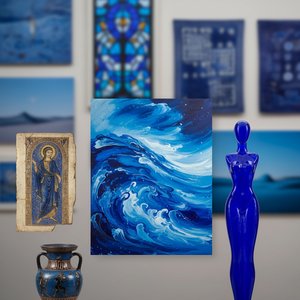
The Allure of Azure: Exploring the Symbolic & Aesthetic Depths of Blue in Art History
Explore the rich history of blue in art! Discover its symbolism, from ancient pigments to modern masterpieces by Kandinsky & Seurat. Uncover the psychological impact and cultural meanings behind this captivating hue.

Geometrikus Absztrakció Mesterei: 10 Alapvető Műalkotás a Lakberendezéshez
Fedezze fel a geometrikus absztrakció 10 legikonikusabb műalkotását! Kandinsky, Mondrian és más mesterek festményeinek története inspirálja otthona dekorációját. Múzeumi minőségű reprodukciók a TopImpressionists.com-on – fedezze fel online!

Kandinsky Mesterművei: 25 Lenyűgöző Festmény a Modern Művészet Gyöngyszemeiből | TopImpressionists
Fedezze fel Wassily Kandinsky 25 legikonikusabb művét! Merüljön el az absztrakt művészet világában, ismerje meg a színek és formák lenyűgöző történetét. Prémium minőségű reprodukciók és inspiráló dekorötletek a TopImpressionists.com-on.
Fedezze fel a műalkotásokat témák, stílusok és jellemzők szerint csoportosítva.


