


 Anteprima in scala reale
 Invia
Invia Condividi
 Dettagli opera
 Guida
Guida

 Scarica
 Simili
 Radiografia
 Slideshow
 Statistiche
Alone
 Oil On Canvas
- WallArt
- Post-Impressionist Movement
 1893
1893- 19th Century
 50.0 x 73.0 cm
Paul Gauguin’s "Alone," a captivating Post-Impressionist painting from 1893, depicts a serene woman resting in a warm yellow field, showcasing the artist's signature cloisonnism style. Discover this iconic artwork and bring its tranquil beauty into your space.
 Espandi i dettagli
Esplora l'arte vibrante di Paul Gauguin (1848-1903), un pioniere dell'arte Post-Impressionista, del Simbolismo e della Sintesi. Scopri i dipinti iconici tahitiani e la sua influenza sull'arte moderna. #Gauguin
Riproduzione a olio fatta a mano
Olio su tela dipinto a mano nelle tue dimensioni e con la tua cornice, realizzato su ordinazione dai nostri artisti. ( Passa alle stampe Passa all'immagine digitale)




P118B €10

P118H €10

P118W €10

P438Z €10

P508JH €12

P508YH €12

P805H €10

P805Z €10

P919BZ €10

P919G €10

P919XJ €10

P959ZH €10

P968JZ €12

W106C €8

W218G €10

W218JH €8

W218Y €10

W307PJ €10

W316G €10

W316PJ €8

W316Y €10

W398PJ €8

W4111J €10

W500HY €15

W500JH €15

W692G €12

W849H €8

W940BG €15

W953PJ €8




Formato standard
su misura
CM
INCH
Scegli tra le nostre dimensioni predefinite, che rispettano le proporzioni originali dell'opera d'arte.
Loading sizes...

larghezza
altezza
Inserisci la larghezza e l'altezza desiderate, per adattarle alla tua cornice o alla tua parete. Trattandosi di un'opera dipinta a mano, in caso di dimensioni con un formato differente, l'artista può estendere leggermente il dipinto oltre i bordi dell'immagine o ritagliare una piccola parte — la scelta spetta a te. Ti invieremo un mockup digitale da approvare prima che la realizzazione abbia inizio. L'immagine mostrata in questa pagina non rappresenta il risultato finale — solo il mockup lo fa.
Esempi di ciò che può essere modificato: sostituire il volto con una foto del cliente; aggiungere un animale domestico (ad esempio, sostituire un gatto con un cane); inserire un messaggio nascosto nello sfondo; cambiare il paesaggio o gli elementi dello sfondo.
Dopo l'ordine, il team di TopImpressionists.com contatterà il cliente via e-mail per ricevere le istruzioni e fornirà un'anteprima del mockup
Dopo l'ordine, il team di TopImpressionists.com contatterà il cliente via e-mail per ricevere le istruzioni e fornirà un'anteprima del mockup
Consegna in tutto il mondo () in 3/4 settimane anziché nelle normali 5 settimane. (26 Ottobre). Nessun compromesso sulla qualità.

Spedizione espressa gratuita in tutto il mondo

Tela in lino di alta qualità

Assicurazione completa sulla spedizione

Garanzia di rimborso dei dazi doganali

Garanzia di fedeltà cromatica assoluta

Politica di reso entro 100 giorni (solo per difetti di fabbricazione)

Garanzia di rimborso al 100%

Offerta per acquisti multipli
 L'opzione vetro è disponibile solo per dimensioni inferiori a 110 cm

Alone
Tecnica di riproduzione
Dimensioni riproduzione
-


Prezzo finale calcolato
€ 236
Alone: A Portrait of Quietude by Paul Gauguin
Paul Gauguin’s “Alone,” painted in 1893, is more than just a depiction of a woman resting; it's an immersive exploration of solitude and the profound stillness that can be found within. Measuring a modest 50 x 73 cm, this oil-on-canvas work invites viewers into a world of contemplative serenity, a hallmark of Gauguin’s mature style and a poignant reflection of his own increasingly isolated existence.
- Subject Matter: The central figure, a woman lying prone with her head cradled in her arm, exudes an immediate sense of peace. Her relaxed posture suggests either slumber or deep contemplation – the ambiguity adds to the painting’s evocative power. Scattered around her are other figures, smaller and less defined, contributing to the overall impression of isolation rather than distracting from the primary theme.
- Style & Technique: Gauguin masterfully employs the style of Cloisonnism, characterized by bold outlines and flattened planes of color. This technique, reminiscent of stained glass, creates a striking visual impact, emphasizing the geometric forms and contributing to the painting’s tranquil atmosphere. The use of warm yellow in the background field further enhances this sense of calm and adds depth to the composition.
- Historical Context: “Alone” emerged during a pivotal moment in Gauguin's artistic journey, firmly rooted within the Post-Impressionist movement. Influenced by artists like Van Gogh and Bernard, he sought to move beyond mere representation, aiming instead to capture subjective emotions and spiritual truths. The painting’s themes of isolation resonate with the anxieties and uncertainties of the late 19th century, a period marked by rapid social change and increasing urbanization.
Decoding Symbolism: A Journey Within
Beyond its surface beauty, “Alone” is rich in symbolic potential. The woman’s posture immediately evokes feelings of vulnerability and introspection. Her placement on the ground suggests a surrender to the moment, a willingness to embrace solitude rather than resist it. The expansive yellow field surrounding her isn't merely a backdrop; it represents an open space, a realm of possibility, perhaps even a metaphor for the unconscious mind. The smaller figures, though indistinct, could symbolize fleeting memories or the echoes of past experiences – reminders of connections that have faded into the background.
- Color Palette: Gauguin’s deliberate use of warm yellows and earthy tones contributes significantly to the painting's emotional impact. Yellow, often associated with optimism and enlightenment, is tempered by the muted colors, creating a sense of both hope and melancholy.
- Compositional Elements: The diagonal lines created by the woman’s body and the horizon line contribute to the dynamic feel of the composition, preventing it from feeling static or lifeless. This careful arrangement guides the viewer's eye and reinforces the painting's central theme of movement – not physical movement, but rather the internal journey of contemplation.
Gauguin’s Legacy: A Timeless Exploration
"Alone" stands as a testament to Gauguin’s profound understanding of human emotion and his ability to translate complex feelings onto canvas. It's a painting that invites viewers to pause, reflect, and consider the beauty and significance of solitude. Its influence can be seen in countless works of art that followed, solidifying Gauguin’s place as one of the most important artists of the modern era.
A hand-painted reproduction of “Alone” offers a unique opportunity to bring this iconic artwork into your home or office. Each reproduction is meticulously crafted by skilled artisans, ensuring exceptional detail and color accuracy. Whether you are an art collector, interior designer, or simply someone who appreciates beauty, this stunning piece will undoubtedly become a cherished addition to your collection.
Domande e risposte
Quali sono la tecnica e le dimensioni dell'originale "Alone" di Eugène Henri Paul Gauguin?
La tecnica di "Alone" di Eugène Henri Paul Gauguin è Oil On Canvas e le sue dimensioni sono 50 x 73 cm.
Qual è l'atmosfera generale di "Alone" di Eugène Henri Paul Gauguin?
"Alone" emana un'atmosfera Calm.
In che modo lo stile di "Alone" si relaziona all'epoca del suo autore?
In "Alone" di Eugène Henri Paul Gauguin, il movimento Post-Impressionist Movement incontra l'epoca XIX secolo.
Opere simili





Biografia dell'artista
Eugène Henri Paul Gauguin: Una Vita di Colore e Simbolismo
Primi Anni di Vita e Sfondo
- Nato il 7 giugno 1848 a Parigi, Francia, Eugène Henri Paul Gauguin è stata una figura complessa plasmata da un'educazione insolita.
- Suo padre era un giornalista e sua madre proveniva da una famiglia con radici peruviane – sua nonna, Flora Tristan, era una pioniera femminista e scrittrice socialista.
- Nel 1850 la famiglia si trasferì in Perù, dove Gauguin trascorse quattro anni formativi immerso in una cultura diversa. Questa esperienza avrebbe influenzato profondamente la sua arte in seguito.
- Tornato in Francia dopo la morte del padre, Gauguin ricevette un'istruzione formale ma alla fine scelse una carriera da agente di cambio.
Da Agente di Cambio a Artista
- Gauguin iniziò a dipingere come hobby nel suo tempo libero, inizialmente influenzato dagli Impressionisti.
- Una crisi finanziaria del 1882 lo spinse ad abbandonare la sua carriera d'imprenditore e a dedicarsi completamente all'arte.
- Studiò con Camille Pissarro, che incoraggiò il suo sviluppo artistico e lo introdusse ad altri pittori d’avanguardia.
Sviluppo Artistico e Influenze
- Il lavoro giovanile di Gauguin rifletteva le tecniche impressioniste, ma presto cercò uno stile più espressivo e simbolico.
- Sperimentò con colori audaci, forme piatte e composizioni semplificate, allontanandosi dal naturalismo dell'impressionismo.
- I suoi viaggi in Brittania, Martinica e, infine, a Tahiti furono cruciali per plasmare la sua visione artistica. Cercava un modo di vita più “primitivo”, credendo che offrisse una maggiore autenticità spirituale.
- È stato influenzato dai stampe giapponesi (Japonismo) e dall'arte medievale, che hanno contribuito alla sua estetica distintiva.
Periodo Tahitiano e Opere Principali
- Gauguin arrivò a Tahiti nel 1891, cercando rifugio dalla civiltà europea e ispirazione dalla cultura polinesiana.
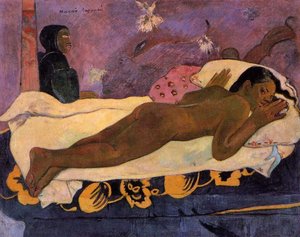
- Questo periodo ha segnato l'apice della sua creatività artistica, producendo dipinti iconici come “Vahine no te miti”, “Manao Tupapau” (Osservato dallo Spirito dei Morti) e “Il Giorno degli Dei”.
- Le sue opere tahitiane sono caratterizzate da colori vivaci, soggetti esotici e un senso di mistero e spiritualità.
- Spesso raffigurava donne polinesiane, paesaggi e credenze religiose, interpretandoli attraverso il suo stesso sguardo simbolico.
Vita Successiva e Difficoltà
- Gauguin ha affrontato difficoltà finanziarie e problemi di salute durante il suo tempo a Tahiti e successivamente nelle isole Marchesi.
- Nonostante queste sfide, continuò a dipingere abbondantemente, esplorando temi di vita, morte e spiritualità.
- È morto l'8 maggio 1903 sull'isola di Hiva Oa nelle isole Marchesi.
Eredità e Significato Storico
- Il lavoro di Gauguin è stato in gran parte non riconosciuto durante la sua vita, ma ha ottenuto un riconoscimento postumo dopo la sua morte.
- È ora considerato una figura chiave nello sviluppo dell'arte moderna, colmando il divario tra Impressionismo e Simbolismo.
- Il suo uso del colore, delle forme semplificate e dell'immaginario simbolico ha influenzato numerosi artisti, tra cui Pablo Picasso, Henri Matisse e i Fauves.
- L'esplorazione di culture “primitive” da parte sua e il suo rifiuto delle convenzioni artistiche occidentali continuano ad essere dibattuti e reinterpretati oggi.
- Rimane una figura controversa a causa di aspetti della sua vita privata, ma i suoi contributi artistici sono innegabili.

Eugène Henri Paul Gauguin
1848 - 1903 , Francia
Dettagli rapidi
- Artistic Movement Or Style: Post-Impressionismo, Simbolismo
- Artists Or Movements Influenced By This Artist:
- Pablo Picasso
- Henri Matisse
- Artists Who Influenced This Artist: ['Camille Pissarro']
- Date Of Birth: 7 giugno 1848
- Date Of Death: 8 maggio 1903
- Full Name: Eugène Henri Paul Gauguin
- Nationality: Francese
- Notable Artworks:
- Vahine no te miti
- Manao Tupapau
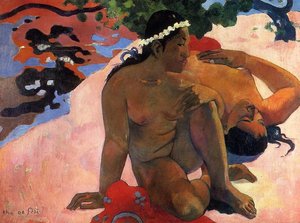
- Due Donne sulla Spiaggia
- Place Of Birth: Parigi, Francia
Articoli correlati

The Enduring Legacy of Printmaking: Techniques, Themes & Artistic Innovation Across Centuries
Explore the rich history of printmaking with TopImpressionists. Discover techniques from intaglio to lithography, learn about collecting valuable prints & find museum-quality reproductions. Expert insights for art enthusiasts and collectors.

Giclée Prints: Archival Quality & Aesthetic Nuances for the Discerning Collector
Explore the world of giclée prints with TopImpressionists. Learn about archival quality, aesthetic nuances & investment potential. Expert guidance for discerning art collectors seeking museum-quality reproductions and lasting value.

The Enduring Legacy of Fine Art Prints: Technique, History & Aesthetic Impact
Explore the rich history & techniques of fine art prints. Discover investment potential, assess authenticity, and learn how to preserve your collection with expert guidance. Trusted insights for discerning collectors.

Echoes of Time: Exploring the Enduring Appeal & Historical Context of Vintage Art Prints
Explore the captivating world of vintage art prints! Discover their history, collecting tips & enduring appeal. Expert insights on chromolithography and building a legacy collection with TopImpressionists.
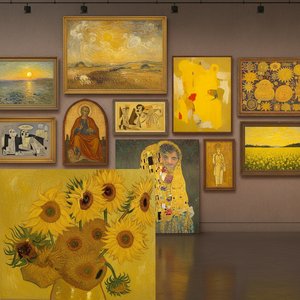
I 10 Dipinti Più Famosi Inondati di Giallo Cromatico: Arte e Decorazioni Raffinate
Esplora i 10 dipinti più iconici dominati dal giallo cromatico! Van Gogh, Monet e altri maestri celebrano questo colore vibrante. Scopri storie, tecniche e acquista stampe di alta qualità su TopImpressionists.com.
Esplora le opere d'arte organizzate per temi, stili e caratteristiche.


