

Shown: · With its frame:
 Anteprima in scala reale
 Invia
Invia Condividi
 Dettagli opera
 Guida
Guida

 Scarica
 Simili
 Radiografia
 Slideshow
 Q&A
Q&A Statistiche
 Olio su tela
- Opere da parete
- High Renaissance
 1510
1510 52.0 x 43.0 cm
 Herzog Anton Ulrich Museum
€ 237
Riproduzione a olio fatta a mano
Olio su tela dipinto a mano nelle tue dimensioni e con la tua cornice, realizzato su ordinazione dai nostri artisti. ( Passa alle stampe Passa all'immagine digitale)
Size
·Formato standard
su misura
CM
INCH
Scegli tra le nostre dimensioni predefinite, che rispettano le proporzioni originali dell'opera d'arte.
Loading sizes...

larghezza
altezza
Inserisci la larghezza e l'altezza desiderate, per adattarle alla tua cornice o alla tua parete. Trattandosi di un'opera dipinta a mano, in caso di dimensioni con un formato differente, l'artista può estendere leggermente il dipinto oltre i bordi dell'immagine o ritagliare una piccola parte — la scelta spetta a te. Ti invieremo un mockup digitale da approvare prima che la realizzazione abbia inizio. L'immagine mostrata in questa pagina non rappresenta il risultato finale — solo il mockup lo fa.
 Scopri di più
Finish
·
White €1

Blurside €1

Extended €1

P118B €10

P118H €10

P118W €10

P438Z €10

P508JH €12

P508YH €12

P805H €10

P805Z €10

P919BZ €10

P919G €10

P919XJ €10

P959ZH €10

P968JZ €12

W106C €8

W218G €10

W218JH €8

W218Y €10

W307PJ €10

W316G €10

W316PJ €8

W316Y €10

W398PJ €8

W4111J €10

W500HY €15

W500JH €15

W692G €12

W849H €8

W940BG €15

W953PJ €8

H24-GOLD €30

H24-SILVER €30

H36-GOLD €45

H36-SILVER €45
Shipped in a protective tube, ready for your own framer.
Above 105 cm the frame is shipped as a kit for a professional framer — read the details.
Extras
optionalWhat do the extras include?
Examples of what can be changed: Replace face with customer photo; Add pet (e.g., replace cat with dog); Include hidden message in background; Change background landscape or elements.
After order, TopImpressionists.com team will email client for instructions and provide a mockup preview
After order, TopImpressionists.com team will email client for instructions and provide a mockup preview
Consegna in tutto il mondo () in 3/4 settimane anziché nelle normali 5 settimane. (30 Ottobre). Nessun compromesso sulla qualità.
Vernice protettiva
Didascalia
Dettagli della targhetta in bronzo inciso
This elegant plaque features the artist's name and the title of the artwork, finely engraved for a timeless presentation.
It is made from bronze with a refined, elegant finish. The text is precisely laser-engraved for a sharp and permanent result. Measuring 9x2 cm, the plaque is compact yet easy to read. It's built to be durable and scratch-resistant, offering a professional, museum-quality look. Mounting is simple thanks to the included adhesive backing.
Dettagli della targhetta in acrilico trasparente
The plaque includes essential engraved details such as the artist's name, the title of the artwork, the date it was created, the type of media used-like oil on canvas or watercolor-a brief description of the piece, and a QR code that links to the complete artwork information.
It is crafted from clear acrylic, offering a sleek, modern appearance. The text is UV-engraved in black to ensure strong visual contrast. With a size of 10x15 cm, it ensures optimal readability. It comes equipped with two metal hooks for secure wall mounting. The plaque is designed to be weather-resistant, making it suitable for various environments, and it includes interactive features that work seamlessly with smartphone scanning.
Dettagli della targhetta in acrilico nero
This elegant plaque includes engraved information such as the artist's name, the title of the artwork, the date it was created, the type of media used (like oil on canvas or watercolor), a short description of the artwork, and a QR code for quick access to more information.
The plaque itself is made from refined black acrylic with a premium finish. The text is laser-engraved in white for high contrast and readability. Its size is 10x15 cm, designed to be easy to read. It comes with two metal hooks for professional mounting. The design is sleek and fits any interior style. It is also weather-resistant and durable, with built-in digital integration for mobile compatibility.
L'opzione vetro è disponibile solo per dimensioni inferiori a 110 cm
 L'opzione vetro è disponibile solo per dimensioni inferiori a 110 cm
- Spedizione espressa gratuita in tutto il mondo
- Tela in lino di alta qualità
- Assicurazione completa sulla spedizione
- Garanzia di rimborso dei dazi doganali
- Garanzia di fedeltà cromatica assoluta
- Politica di reso entro 100 giorni (solo per difetti di fabbricazione)
- Garanzia di rimborso al 100%
- Offerta per acquisti multipli


Descrizione del reperto
Scopri l'intimista Autoritratto di Giorgione, un capolavoro rinascimentale che celebra l'innovazione artistica veneziana e la maestria del colore e dell'atmosfera.
Biografia dell'artista
Scopri Giorgione (1477/8-1510), un pittore veneziano chiave del Rinascimento alto. Esplora le sue opere liriche ed enigmatiche che enfatizzano colore e atmosfera, come 'La Tempesta' e 'Il Concerto pastorale'. Fondatore della Scuola Veneta, influenzando Tiziano e oltre.
About the painting
Giorgione: An Enigma Wrapped in Color – Exploring ‘Self-Portrait as David’
Giorgio Barbarelli da Castelfranco, universally known as Giorgione, remains one of the most elusive figures within the constellation of Renaissance art. Born around 1477 or 1478 in Castel Franco Veneto—the precise year continues to fuel scholarly debate—his tragically curtailed life, concluding circa 1510 at the age of thirty-two or thirty-three, belies an artistic legacy that persists across centuries. Unlike many contemporaries whose biographies unfold with relative clarity, Giorgione’s story is shrouded in obscurity, pieced together from fragmentary archival records and interpretations often imbued with romantic idealism—primarily thanks to Giorgio Vasari’s influential artist monographs.
His formative years were spent in Venice, a city pulsating with artistic dynamism and underpinned by a profound appreciation for sensual beauty. Evidence suggests he apprenticed under Giovanni Bellini, the undisputed patriarch of Venetian painting, absorbing the established stylistic conventions before embarking on an independent creative journey characterized by daring experimentation. Early commissions reveal a meticulous attention to detail and a masterful grasp of perspective—traits that would undoubtedly have been honed during his formative years.
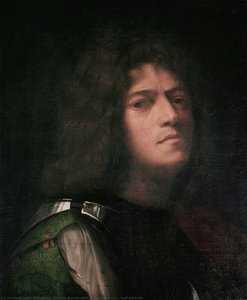
The Herzog Anton Ulrich Museum in Braunschweig houses Giorgione’s “Self-Portrait as David,” a painting whose attribution has undergone considerable revision in recent decades. Initially considered an autograph work, the prevailing consensus now posits that Titian completed it after Giorgione's untimely demise—a decision debated fiercely by art historians.
Style and Technique: Giorgione’s artistic vision transcends mere representation; he sought to capture not just what was seen but also what was felt. His distinctive style embodies the principles of Venetian Mannerism, prioritizing expressive emotion over strict adherence to classical ideals. The painting utilizes a masterful sfumato technique—developed by Leonardo da Vinci—characterized by subtle gradations of color and tone that create an ethereal luminescence and imbue the image with atmospheric depth. Visible brushstrokes contribute to textural richness, conveying both physicality and psychological nuance.
Historical Context: Giorgione’s oeuvre emerged during a pivotal moment in Renaissance art history—the transition from High Renaissance grandeur to Mannerist introspection. The painting reflects the anxieties of its time, grappling with questions of identity and mortality amidst the burgeoning humanist spirit. It stands as testament to Venice's role as a crucible of artistic innovation, where artists pushed boundaries and challenged conventions.
Symbolism and Emotional Impact: “Self-Portrait as David” transcends a simple depiction of the artist; it functions as an allegorical meditation on heroism and self-awareness. The inclusion of Goliath’s severed head—a motif borrowed from biblical tradition—represents triumph over adversity and embodies Giorgione's ambition to elevate his own image beyond mere portraiture. The melancholic gaze directed off to the side conveys a profound contemplation of existence, inviting viewers to engage in an emotional dialogue with the artwork.
Dimensions & Medium: Executed in oil on canvas, “Self-Portrait as David” measures 52 x 43 cm. Its muted palette—dominated by earthy tones—contrasts dramatically with the radiant metal emblem adorning the sitter’s shoulder, highlighting Giorgione's artistic prowess and emphasizing the painting's symbolic significance.
Provenance: Currently residing at the Herzog Anton Ulrich Museum in Braunschweig, Germany—a repository of Renaissance treasures—this masterpiece exemplifies the enduring power of art to inspire awe and provoke contemplation. Its meticulous craftsmanship and evocative imagery continue to captivate audiences worldwide.
Domande e risposte
Quale emozione trasmette "Autoritratto" di Giorgione?
L'atmosfera che traspare da "Autoritratto" di Giorgione è Elegante, e il suo tono emotivo è Malinconico.
Qual è il formato di "Autoritratto"?
"Autoritratto" di Giorgione ha un formato Orientamento verticale. Il formato descrive le proporzioni della composizione.
Qual è la dimensione di stampa consigliata per "Autoritratto"?
Per "Autoritratto", si consiglia un formato di stampa Grande formato. Sono disponibili altri formati con le stesse proporzioni.
Quick facts and art quiz
About Giorgione

Giorgione
1477 - 1510, Italia
Biografia dell'artista
un breve ma brillante carriera nel Rinascimento alto
giorgione (1477/78 o 1473/74 – 1510), un illustre pittore del Rinascimento alto della scuola veneziana, ha lasciato un segno indelebile nel mondo dell'arte nonostante la sua breve carriera e il numero limitato di opere confermate. I suoi dipinti sono lodati per le loro qualità liriche ed enigmatiche, con solo pochi che vengono definitivamente attribuiti a lui.contributo allo stile pittorico veneziano
Il contributo di Giorgione, insieme al leggendario Tiziano, ha gettato le basi per lo stile pittorico veneziano, distinto per l'enfasi sul colore e sull'atmosfera rispetto all'approccio guidato dalla linea dell'arte fiorentina. Questo approccio innovativo ha aperto la strada alle future generazioni di artisti.opere notevoli e il loro significato
- ritratto di un gentiluomo veneziano (76 x 64 cm, Rinascimento alto, olio su tela): un capolavoro che mostra la maestria di Giorgione nel catturare l'essenza dei suoi soggetti.
- concerto pastorale (fête champêtre) (110 x 138 cm, musée du louvre, Parigi, Francia, Rinascimento alto, olio su tela): dimostra la capacità di Giorgione di evocare emozioni attraverso il suo lavoro.
- Giuditta (1504) (olio su tela, trasferito da pannello, 144 x 68 cm, Hermitage, San Pietroburgo): un dipinto precoce dell'artista, inizialmente attribuito a Raffaello, che mostra la crescita e l'esperimentazione di Giorgione.
eredità e influenza
Giorgione rimane una figura enigmatica nella storia dell'arte, con la sua vita e le sue opere avvolte nel mistero, aumentando l'intrigo e la profondità della sua eredità artistica. La sua influenza può essere vista nelle opere di artisti successivi, che hanno costruito sulle fondamenta che ha posto nella scuola veneziana. Esplora altre opere di Giorgione su TopImpressionists: * Giorgione (giorgio barbarelli da castelfranco) * ritratto di un gentiluomo veneziano * concerto pastorale (fête champêtre) Scopri il movimento artistico della pittura veneziana su TopImpressionists: * il movimento artistico della pittura venezianaQuick facts about Giorgione
- Artisti Influenti:
- Giovanni Bellini
- Mantegna
- Artisti Influenzati: ['Tiziano']
- Data Di Nascita: 1477/78 o 1473/74
- Luogo Di Nascita: Castel Franco Veneto, Italia
- Movimento Artistico: Rinascimento alto, Scuola Veneta
- Nazionalità: Italiana
- Nome Completo: Giorgione (Giorgio Barbarelli)
- Opere Notevoli:
- La Tempesta
- Concerto pastorale
- Venere addormentata
- Giuditta
- Ritratto di un gentiluomo
Esplora le opere d'arte organizzate per temi, stili e caratteristiche.






Giorgione
Autoritratto
() ·
With its frame: · Hand-painted in oil on linen
Total