Atelier — Spedizione gratuita in tutto il mondo — Consegna in 2–6 settimane
Da foto a dipinto Lista dei desideri Carrello
Anteprima in scala realeAnteprima in scala reale Anteprima in ARAnteprima in AR Passa alla stampa Passa alla stampaPassa alla versione dipinta a mano Passa alla versione dipinta a mano CondividiCondividi
DettagliDettagli Aggiungi ai preferiti Aggiungi ai preferiti Scarica immagineScarica immagine Articoli similiArticoli simili RadiografiaRadiografia SlideshowSlideshow

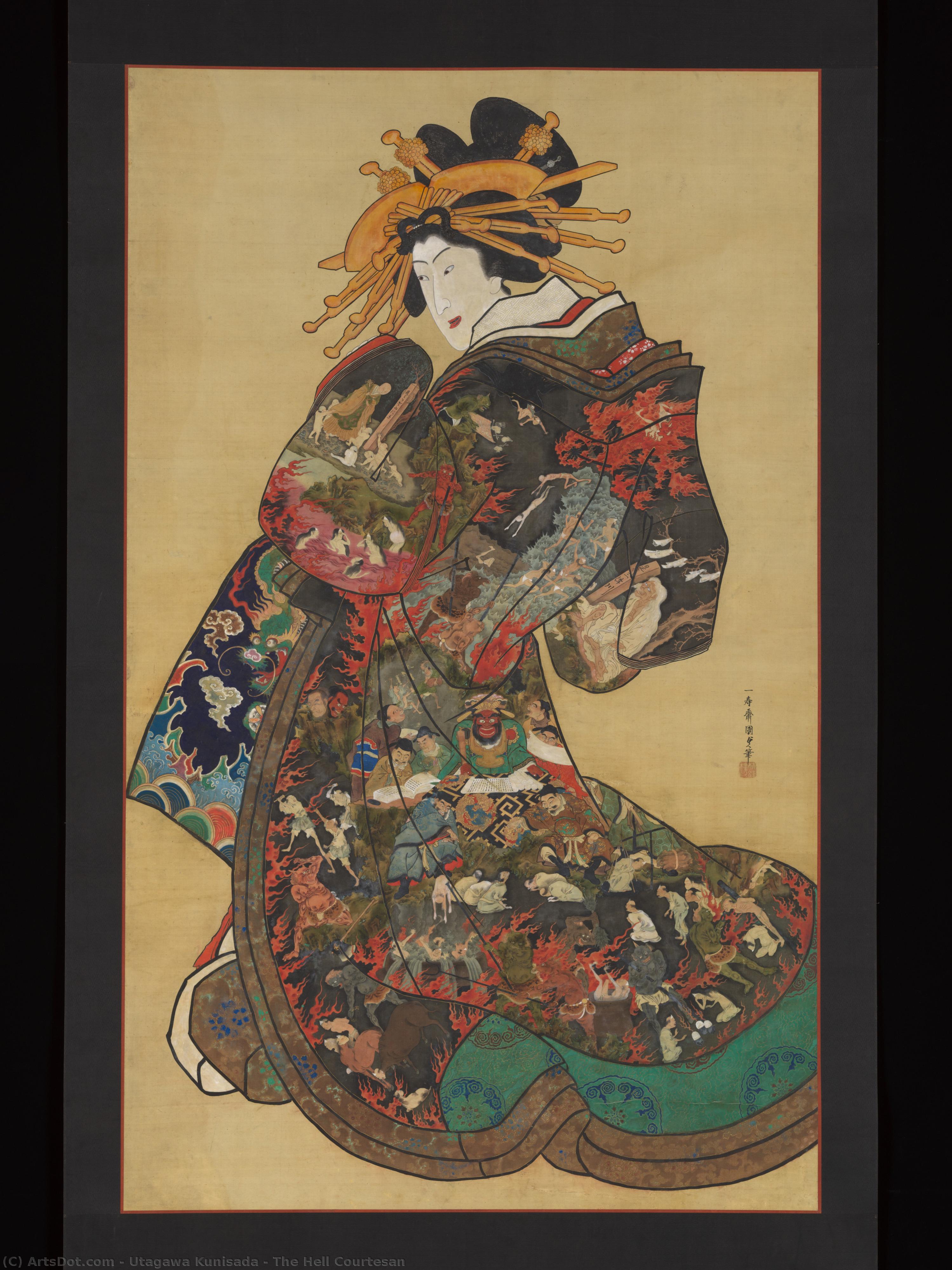
The Hell Courtesan

  • Data di creazione1850
  • Dimensioni165.0 x 101.0 cm

Utagawa Kunisada: maestro del xilografia edo, celebre per i suoi yakusha-e (ritratti di attori), bijin-ga (belle donne) e scene vivaci. Un artista fondamentale del periodo Edo, oggi rivalutato come uno dei più grandi maestri giapponesi.

Acquista un'immagine digitale ad alta risoluzione e ottimizzata, di qualità nettamente superiore all'anteprima online.

Ogni file è meticolosamente preparato dai nostri specialisti interni attraverso l'uso di strumenti avanzati e un sapiente ritocco manuale. Garantiamo che ogni immagine presenti una chiarezza eccezionale, una precisione cromatica impeccabile e dettagli raffinati.

Il file finale viene consegnato via e-mail entro 72 ore, ottimizzato per un uso immediato in contesti professionali, editoriali e di stampa. Si tratta della stessa qualità affidata ai più prestigiosi studi di design, editori e gallerie d'arte.

Immagine Digitale

Scarica un file ad alta risoluzione per uso personale, per la stampa e per progetti creativi. (Passa alla stampa Passa alla stampaPassa alla versione dipinta a mano Passa alla versione dipinta a mano)

Prezzo finale

$9.99

Incluso in ogni acquisto di immagini digitali

Consegna digitale professionale e garantita

Quando scegli TopImpressionists.com, non riceverai solo un'immagine: riceverai un'opera d'arte digitale professionalmente ottimizzata, realizzata con la massima precisione e accompagnata da una garanzia di soddisfazione. Ecco tutto ciò che include il tuo ordine, automaticamente:

shipping_icon
Consegna rapida via email

Riceverai il file dell'immagine digitale ad alta risoluzione via email entro 72 ore dall'ordine, pronto per un uso immediato.

canvas_icon
File digitale potenziato dall'IA

La tua opera d'arte viene ottimizzata professionalmente attraverso l'uso di strumenti avanzati di intelligenza artificiale e una revisione manuale, garantendo il massimo livello di dettaglio, nitidezza e accuratezza cromatica.

insurance_icon
Riconsegna gratuita a vita

Hai eliminato o perso accidentalmente il tuo file? Non preoccuparti: te lo invieremo di nuovo in qualsiasi momento, gratuitamente.

tax_icon
Nessun costo di importazione, mai

Goditi la tua opera d'arte istantaneamente senza costi doganali, dazi o spese di spedizione: i download digitali sono sempre esenti da tasse.

color_icon
Garanzia di fedeltà cromatica

Garantiamo che la tua immagine digitale rifletta i colori originali con la massima fedeltà, grazie all'uso di strumenti professionali e a una gestione accurata del colore.

return_icon
Garanzia soddisfazione 60 giorni

Se non sei soddisfatto della tua immagine digitale, la revisioneremo o ti rimborseremo il 100% entro 60 giorni, senza domande.

guarantee_icon
Garanzia di rimborso al 100%

Non sei soddisfatto? Ricevi un rimborso completo entro 60 giorni dal ricevimento del tuo file digitale, senza dover fornire spiegazioni.

discount_icon
Sconti per ordini multipli

Acquista 3 immagini, risparmia il 10% - Acquista 5, risparmia il 15% - Acquista 10+, risparmia il 20%. Ideale per progetti creativi, gallerie e agenzie.

Descrizione del collezionabile

This dazzling, nearly life-size, portrayal of a courtesan commands our attention because of the sumptuously patterned robes showing gory scenes of the Buddhist hell, presided over by Enma-ō, a wrathful god in Buddhism who judges the dead and presides as the King of Hell. Seated on throne, he is surrounded by seven of his judges while he reviews and records the misdeeds of the recently deceased, some of whom are prostrated in terror before him. Surrounding the central image of King Enma’s court are gory scenes of punishments of hell with demons presiding over sinners being variously tortured, burnt, and boiled.The subject is a woman of medieval times in Japan who worked in the Takasu district of Osaka and who was known as the Hell Courtesan, (Jigoku Dayū). Jigoku, literally “hell,” was also a term referring to unlicensed courtesans, while tayū (read dayū in combination with jigoku) was the term for the highest-ranking courtesan. In this portrayal, the woman’s high status is recognizable through her ornate hair adornments and luxurious, layered garments. Jigoku is said to have achieved redemption through an encounter with the fifteenth-century Zen monk Ikkyū (1394–1481), son of an emperor and forty-seventh abbot of the great Rinzai Zen temple Daitokuji in Kyoto. Although one of most venerable monks in the history of medieval Buddhism, Ikkyū was notorious for pursuing the path of enlightenment while enjoying the sensual pleasures of drink and cavorting with prostitutes. He mocked the hypocrisy of other monks who adopted a holier-than-thou attitude. According to legend, on his first encounter with Jigoku, he composed the opening stanza of a linked verse (renga):Kikishi yorimite osoroshikiJigoku kanaThough I had heardall about “Hell,”seeing the real thing—more daunting still!The Hell Courtesan"s beauty was osoroshiki, which can mean “frightening.” as in the case of the Buddhist hell, or “daunting,” to describe the attractions of this femme fatale. Jigoku, a woman of many talents, immediately improvised the final stanza:Iki-kuru hito moochizarameyawaEven the living who draw nearcannot but fall into the abyss!(Trans. John T. Carpenter)By cleverly alluding to men who are ensnared by the beauty of courtesans, Jigoku revealed herself already enlightened in a worldly sense, and Monk Ikkyū was to direct her on the path to spiritual redemption. The apocryphal story was updated by the popular writer and ukiyo-e artist Santo Kyōden (Kitao Masanobu, 1761–1816) in Stories of drunken enlightenment in Japan (Honchō suibodai zenden), illustrated by Utagawa Toyokuni and published in 1809. This book inspired numerous nineteenth-century paintings of the Hell Courtesan including by prominent artists Kuniyoshi, Kunichika, and at the fin-de-siecle, by Kawanabe Kyōsai. The story was even more widely popularized when the play Ikkyū’s Tale of Hell (Ikkyū jigoku banashi) by the leading Kabuki dramatist, Kawatake Mokuami (1816–1893), was performed at the Ichimura theater in Tokyo in 1865. Actor prints commemorating the play, including one by Kunisada II, circulated widely. In the Kabuki version of events, Ikkyū enters a brothel and meets the courtesan Jigoku. As he dances with women in the brothel Jikoku peeps from behind a screen and to her astonishment sees that Ikkyū’s voluptuous companions have shriveled to their bare bones. The vision of dancing skeletons vanishes when she rejoins the group, but still viewers were reminded of the underlying Buddhist truth that beneath even the most glamorous facade lurks inevitable old age and death. In the play, Jigoku finds enlightenment with this graphic demonstration of human impermanence.

Biografia dell'artista

Utagawa Kunisada: The Maestro of Edo’s Artistic Zenith

Utagawa Kunisada (1786 – 1865), born Sumida Shōgorō IX in Honjo, Japan, stands as arguably the most celebrated ukiyo-e artist of the 19th century. His prolific output and unparalleled commercial success cemented his position as a titan amongst his contemporaries—Hiroshige, Hokusai, and Kuniyoshi—establishing him as the undisputed champion of color woodblock printing during the Edo period (1603–1867). While European collectors initially regarded these masters as inferior to classical ukiyo-e artists, a resurgence of appreciation in the mid-20th century and subsequent scholarly investigations have rightfully elevated Kunisada’s stature, recognizing him as one of the foremost figures in Japanese artistic history.

Early Life and Artistic Training

Kunisada's formative years were marked by familial stability stemming from his father’s modest ferry service business—a circumstance that afforded him a degree of financial security uncommon for artists of his time. His father, himself an amateur poet, instilled in Kunisada a passion for literature and artistic expression. Recognizing his innate talent, Toyokuni I, the dominant figure of the Utagawa school and a renowned Kabuki designer, took Kunisada under his wing as an apprentice, imparting invaluable knowledge of theatrical art and printmaking techniques. This apprenticeship solidified Kunisada’s connection to the Utagawa lineage and established him within a tradition of master-apprentice relationships deeply rooted in Japanese culture—a relationship characterized by mutual respect and collaborative artistic growth. The studio name “kuni-sada,”, derived from Toyokuni I's surname, symbolized this heritage and foreshadowed Kunisada’s own enduring legacy as a leader in the field.

The Flowering of His Artistic Career

Kunisada’s debut prints emerged around 1807, albeit initially appearing as exceptional designs—a testament to his burgeoning skill and Toyokuni I's unwavering guidance. However, it wasn’t until 1809 that Kunisada truly ascended to prominence, earning recognition as “the star attraction” of the Utagawa school and achieving parity with Toyokuni I in terms of book illustration prowess. His early works showcased a masterful blend of observation and imagination, capturing the dynamism of Edo society through meticulously rendered scenes of daily life—from bustling marketplaces to serene landscapes. Simultaneously, he began exploring portraiture, notably actor portraits (yakusha-e), which quickly became immensely popular, establishing Kunisada as a pioneer in this genre. His collaboration with Toyokuni I continued until 1825, fostering stylistic innovation and solidifying his reputation as a visionary artist.

Innovation and Stylistic Evolution

Around 1824–1825, Kunisada embarked on a transformative artistic journey under the tutelage of Hanabusa Itcho and his successor, Hanabusa Ikkei—a period that profoundly influenced his stylistic sensibilities. He adopted the studio name “kochoro,”, combining elements from Itcho’s and Ikkei’s pseudonyms, reflecting this deliberate embrace of new artistic approaches. From 1844 onwards, Kunisada formally adopted Toyokuni I's name ("kunisada becoming toyokuni ii"), signaling a culmination of his artistic journey and reaffirming his connection to the Utagawa tradition. Despite a brief hiatus from Toyoshige’s influence—a puzzling decision considering Toyoshige was Kunisada’s son-in-law and heir apparent—Kunisada remained at the forefront of Edo’s artistic landscape until his death in January 1865, marking the end of an era.

Legacy and Recognition

For decades, Kunisada's work was largely dismissed by European collectors as “decadent,”, overshadowed by the rediscovery of Hiroshige and Kuniyoshi. However, starting in the 1930s and 1970s, respectively, renewed scholarly attention revitalized interest in these artists’ oeuvre—particularly Kunisada—leading to a reassessment that firmly established him as one of Japan's artistic giants. Jan van Doesburg’s seminal overview of Kunisada’s artistic development and Sebastian Izard’s exhaustive study further illuminated his genius, revealing the depth and complexity of his artistic vision. Today, Kunisada is celebrated for his unparalleled mastery of color woodblock printing—a medium he elevated to new heights—and recognized as a pivotal figure in shaping Japanese art history. His enduring influence continues to inspire artists worldwide, ensuring that Utagawa Kunisada’s legacy will endure for generations to come.

Kunisada Utagawa

Kunisada Utagawa

1786 - 1865 , Giappone

In breve

  • Artistic Movement Or Style: Ukiyo-e
  • Artists Who Influenced This Artist: ['Toyokuni I']
  • Date Of Birth: 1786
  • Date Of Death: 1865
  • Full Name: Utagawa Kunisada
  • Nationality: Giapponese
  • Notable Artworks:
    • Memorial Portrait of the Actor Ichikawa Ōmezō I
    • Tokyo Civilization Famous Places: Contests: Ginza Brick Stone
    • Ronins attack on the house of lord Kira (left panel of a triptych)
  • Place Of Birth: Honjo, Giappone
© TopImpressionists.com — Tutti i diritti riservati  ·  100% Dipinto a mano · Soddisfazione garantita · Spedizione gratuita in tutto il mondo
VISA MASTERCARD