

 プリントを購入
 シェアする
シェアする シェアする
シェアする
 ガイドを表示

 ダウンロード
 似ている作品
 スライドショーを表示
 Q&A
Q&A 統計情報
統計情報Salt Cellar

- 26.0 x 33.0 cm


A Gilded Echo of Antiquity
Benvenuto Cellini's Salt Cellar, a shimmering testament to the heights of Renaissance goldsmithing, isn’t merely a container for salt; it’s a miniature cosmos, a meticulously crafted allegory brimming with symbolism and technical brilliance. Completed in 1543 for King Francis I of France, this extraordinary object transcends its functional purpose, becoming a profound meditation on the relationship between earth and sea, divinity and humanity. It's a piece that whispers tales of ambition, artistry, and the intoxicating allure of the Italian Renaissance—a world where beauty was paramount and skill elevated to an almost religious pursuit.
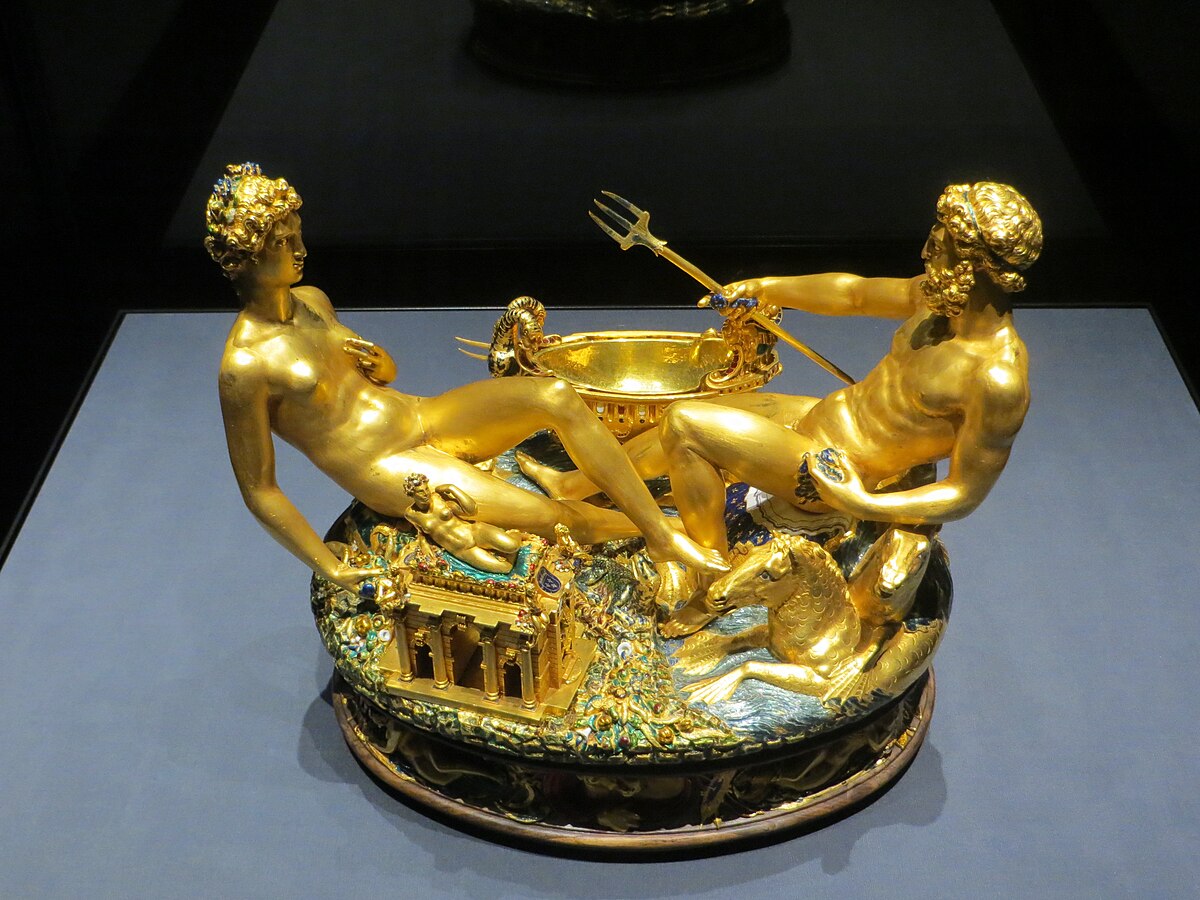
Image of Benvenuto Cellini’s Salt Cellar
The Anatomy of a Masterpiece
Crafted primarily from gold, the Salt Cellar is an astonishing feat of technical mastery. Cellini, renowned for his flamboyant personality and equally impressive skill, eschewed traditional casting methods, instead meticulously hammering the gold into its delicate, flowing form by hand. The base is elegantly fashioned from ebony, providing a striking contrast to the radiant gold, while ivory bearings allow the sculpture to gracefully roll across a banquet table – a deliberate feature designed for display and conversation. But it’s the enameling that truly elevates the piece; intricate scenes depicting figures representing the four seasons and the four winds are painstakingly applied, adding layers of visual complexity and narrative depth. The sheer scale of detail—from the meticulously rendered folds of clothing to the lifelike expressions on the faces of Neptune and Tellus – speaks volumes about Cellini’s dedication and unparalleled skill.
- Material: Gold, Ebony, Ivory, Enamel
- Dimensions: Approximately 10.5 inches (267 mm) tall, 13.1 inches (333 mm) wide
- Technique: Hand-hammered gold, intricate enamel work
A Dialogue with the Divine
The Salt Cellar’s symbolism is as captivating as its aesthetic beauty. At its heart lies a potent allegory of Terra e Mare – Earth and Sea – embodied by the figures of Neptune, god of the ocean, and Tellus, goddess of the earth. These two powerful deities are depicted in an intimate embrace, their legs intertwined, suggesting a harmonious connection between the terrestrial and aquatic realms. The sculpture is further enriched with symbolic details: a small boat carries the salt, representing the flow of commerce and sustenance; a temple dedicated to peppercorns stands alongside Tellus, signifying the pleasures of earthly life. The inclusion of animals—horses, dogs, dolphins—adds another layer of meaning, drawing upon classical iconography and reinforcing the sculpture’s connection to mythology and antiquity.
A Legacy Forged in Ambition
Cellini's autobiography, *Vita*, offers invaluable insight into the creation of this extraordinary piece. He recounts his initial reluctance to accept the commission from Cardinal Ippolito d’Este, dismissing the cardinal’s suggestions with characteristic arrogance and asserting sole credit for the design. The story is rife with anecdotes about Cellini’s daring exploits—including a dramatic escape from bandits while transporting the gold—further cementing his image as a larger-than-life figure of Renaissance Italy. The Salt Cellar, therefore, isn't just an artistic achievement; it’s a reflection of Cellini’s own complex and often contradictory personality – a testament to ambition, skill, and a profound appreciation for beauty. It remains one of the most celebrated examples of Renaissance goldsmithing, captivating viewers with its exquisite detail and enduring symbolism.
Q&A
ベネヴェント・チェリーニ作「Salt Cellar」のコントラストはどの程度強いですか?
ベネヴェント・チェリーニ作「Salt Cellar」は、明部と暗部の間にGentleなコントラストを描き出しています。
ベネヴェント・チェリーニ作「Salt Cellar」において、感情と贈り物のシーンはどのように結びついているのでしょうか?
ベネヴェント・チェリーニ作「Salt Cellar」が持つReflectiveなトーンは、おすすめのギフトシーンである「Anniversary」にぴったりです。
Salt Cellarの制作年である1540年は、ベネヴェント・チェリーニのキャリアにおけるどの時期にあたりますか?
1540年という制作年代から、「Salt Cellar」はベネヴェント・チェリーニのMature Renaissanceに属します。
ベネヴェント・チェリーニ(1500 – 1571)
ベネヴェント・チェリーニ (1500-1571):マニエリスム期の巨匠金細工師・彫刻家。「ペルセウス」や精緻を極めた「チェリーニの塩壺」で知られる。彼の芸術と波乱万丈な生涯を探索しましょう!
Kunsthistorisches Museum(Vienna, Austria)
ハプスブルク家の至宝を所蔵!ラファエル、レンブラント、フェルメールの傑作からエジプト美術まで、ウィーン芸術史美術館で時を超える芸術体験を。🏛️✨ Kunsthistorisches Museum Austria Vienna Kunsthistorisches Museum Egyptian Collection Over 500,000 objects Art and history museum 1891 Gothic 2 What is the primary architectural style of the Kunsthistorisches Museum?
作品詳細
- 作品名: Salt Cellar
- 作家: ベネヴェント・チェリーニ
- 制作年: 1540
- 作品サイズ: 26.0 x 33.0 cm
- 技法: Landscape
- 著作権の状態: パブリックドメイン
- 展示場所: Kunsthistorisches Museum
- 動勢: Mannerist Renaissance
- 技法・素材: Sculpture
- 主要色: Gray
作品詳細
- Notable elements: Neptune & Tellus figures
- Medium: Gold, enamel, ebony, ivory
- Artistic style: Mannerism
- Year: 1543
- Influences: Cellini's autobiography
- Artist: Benvenuto Cellini