

展示内容: · 額縁を含むサイズ:
 シェアする
シェアする シェアする
シェアする
 詳細を見る
詳細を見る ガイドを表示

 ダウンロード
 似ている作品
 スライドショーを表示
 Q&A
Q&A 統計情報
統計情報
- 26.0 x 33.0 cm


¥ 42579
手描き油彩複製画
当社のアーティストが、ご希望のサイズと額縁に合わせてキャンバスに手描きで制作する、オーダーメイドの油彩画です。 ( プリント版に切り替え デジタル画像販売へ切り替え)
サイズ
·標準サイズ
オーダーメイド
CM
INCH
作品のオリジナル比率に合わせた、当店の規定サイズからお選びください。
サイズを読み込み中...

横幅
高さ
フレームや壁のスペースに合わせて、ご希望の幅と高さを入力してください。本作品は手描きのため、異なる比率のサイズをご希望の場合、絵画の周囲を少し広げて描くか、あるいは端を少しカットして調整することが可能です。お客様のご要望に合わせます。制作を開始する前に、仕上がりを確認するためのデジタルモックアップをお送りいたします。このページに表示されている画像は完成品の実物ではなく、あくまでモックアップによるイメージです。
 詳しく読む
詳しく読む仕上げ
·
白の側面仕上げ ¥1

エッジぼかし仕上げ ¥1

回り込み仕上げ ¥1

P118B ¥10

P118H ¥10

P118W ¥10

P438Z ¥10

P508JH ¥12

P508YH ¥12

P805H ¥10

P805Z ¥10

P919BZ ¥10

P919G ¥10

P919XJ ¥10

P959ZH ¥10

P968JZ ¥12

W106C ¥8

W218G ¥10

W218JH ¥8

W218Y ¥10

W307PJ ¥10

W316G ¥10

W316PJ ¥8

W316Y ¥10

W398PJ ¥8

W4111J ¥10

W500HY ¥15

W500JH ¥15

W692G ¥12

W849H ¥8

W940BG ¥15

W953PJ ¥8

H24-GOLD ¥30

H24-SILVER ¥30

H36-GOLD ¥45

H36-SILVER ¥45
保護用の筒に入れてお届けしますので、お客様ご自身でフレーム(額縁)をご用意いただく形となります。
オプションサービス
任意特典の内容について
変更可能な例:顔をお客様の写真に差し替え、ペットの変更(例:猫を犬に変更)、背景に隠しメッセージを追加、背景の風景や要素の変更。
ご注文後、TopImpressionists.com のチームより詳細な手順についてメールをお送りし、仕上がりイメージ(モックアップ)をご提示いたします。
ご注文後、TopImpressionists.com のチームより詳細な手順についてメールをお送りし、仕上がりイメージ(モックアップ)をご提示いたします。
世界中への配送()は、通常の5週間ではなく、3〜4週間でお届けいたします。(9 11月)。品質には一切妥協いたしません。
保護用ワニス
キャプション
刻印入りブロンズプレートの詳細
This elegant plaque features the artist's name and the title of the artwork, finely engraved for a timeless presentation.
It is made from bronze with a refined, elegant finish. The text is precisely laser-engraved for a sharp and permanent result. Measuring 9x2 cm, the plaque is compact yet easy to read. It's built to be durable and scratch-resistant, offering a professional, museum-quality look. Mounting is simple thanks to the included adhesive backing.
透明アクリル銘板の詳細
The plaque includes essential engraved details such as the artist's name, the title of the artwork, the date it was created, the type of media used-like oil on canvas or watercolor-a brief description of the piece, and a QR code that links to the complete artwork information.
It is crafted from clear acrylic, offering a sleek, modern appearance. The text is UV-engraved in black to ensure strong visual contrast. With a size of 10x15 cm, it ensures optimal readability. It comes equipped with two metal hooks for secure wall mounting. The plaque is designed to be weather-resistant, making it suitable for various environments, and it includes interactive features that work seamlessly with smartphone scanning.
黒アクリル製銘板の詳細
This elegant plaque includes engraved information such as the artist's name, the title of the artwork, the date it was created, the type of media used (like oil on canvas or watercolor), a short description of the artwork, and a QR code for quick access to more information.
The plaque itself is made from refined black acrylic with a premium finish. The text is laser-engraved in white for high contrast and readability. Its size is 10x15 cm, designed to be easy to read. It comes with two metal hooks for professional mounting. The design is sleek and fits any interior style. It is also weather-resistant and durable, with built-in digital integration for mobile compatibility.
ガラスオプションは、110cm未満のサイズでのみご利用いただけます。
 ガラスオプションは、110cm未満のサイズでのみご利用いただけます。
- 世界中へ無料エクスプレス配送
- 高品質なリネンキャンバス
- 配送時完全保険付
- 関税・輸入税の払い戻し保証
- 真の色彩再現に関する保証
- 100日間返品保証(製造上の欠陥がある場合のみ)
- 100% 全額返金保証
- まとめ買い割引のご案内


作品解説
Marvel at Benvenuto Cellini's opulent 'Salt Cellar,' a Renaissance masterpiece of gold, enamel, and intricate symbolism—a testament to artistry & luxury from 1543 Vienna.
アーティストの略歴
ベネヴェント・チェリーニ (1500-1571):マニエリスム期の巨匠金細工師・彫刻家。「ペルセウス」や精緻を極めた「チェリーニの塩壺」で知られる。彼の芸術と波乱万丈な生涯を探索しましょう!
作品について
A Gilded Echo of Antiquity
Benvenuto Cellini's Salt Cellar, a shimmering testament to the heights of Renaissance goldsmithing, isn’t merely a container for salt; it’s a miniature cosmos, a meticulously crafted allegory brimming with symbolism and technical brilliance. Completed in 1543 for King Francis I of France, this extraordinary object transcends its functional purpose, becoming a profound meditation on the relationship between earth and sea, divinity and humanity. It's a piece that whispers tales of ambition, artistry, and the intoxicating allure of the Italian Renaissance—a world where beauty was paramount and skill elevated to an almost religious pursuit.
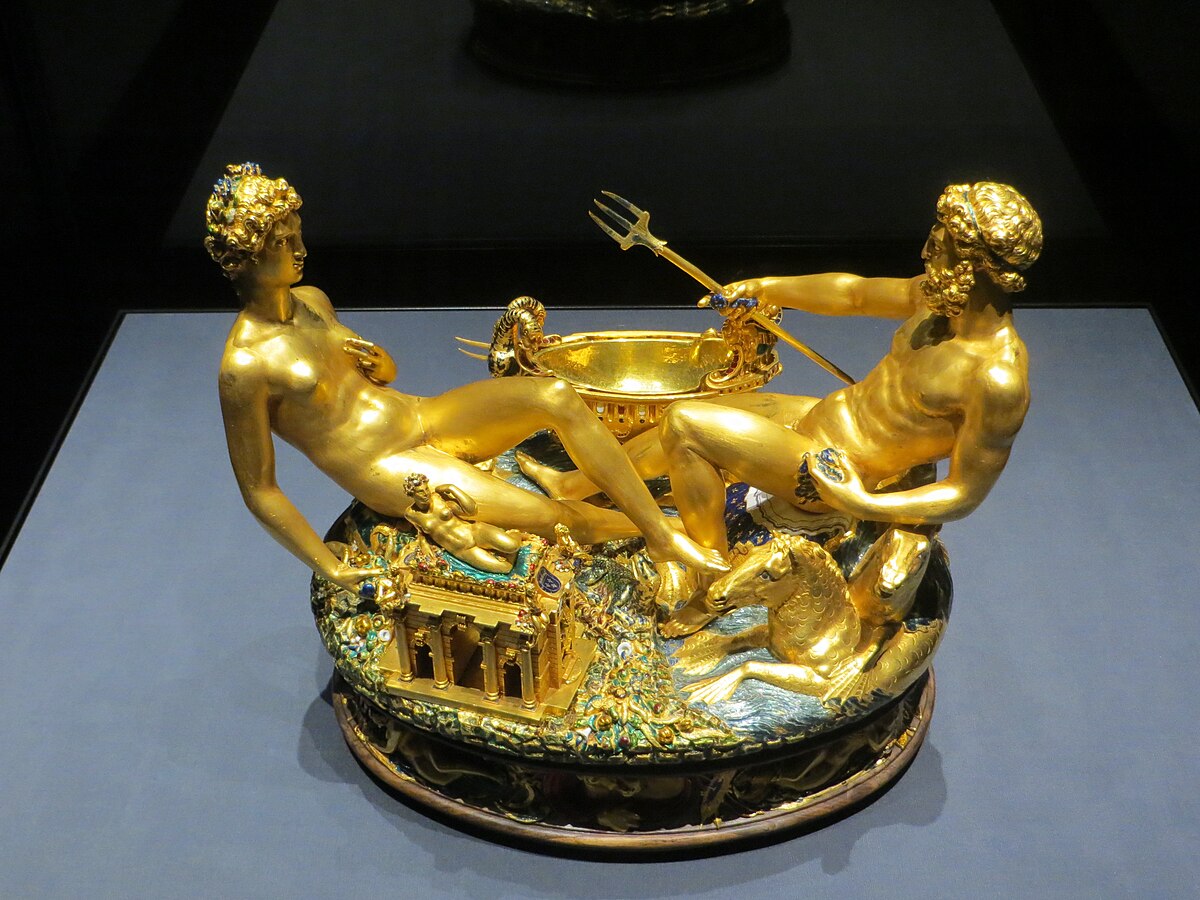
Image of Benvenuto Cellini’s Salt Cellar
The Anatomy of a Masterpiece
Crafted primarily from gold, the Salt Cellar is an astonishing feat of technical mastery. Cellini, renowned for his flamboyant personality and equally impressive skill, eschewed traditional casting methods, instead meticulously hammering the gold into its delicate, flowing form by hand. The base is elegantly fashioned from ebony, providing a striking contrast to the radiant gold, while ivory bearings allow the sculpture to gracefully roll across a banquet table – a deliberate feature designed for display and conversation. But it’s the enameling that truly elevates the piece; intricate scenes depicting figures representing the four seasons and the four winds are painstakingly applied, adding layers of visual complexity and narrative depth. The sheer scale of detail—from the meticulously rendered folds of clothing to the lifelike expressions on the faces of Neptune and Tellus – speaks volumes about Cellini’s dedication and unparalleled skill.
- Material: Gold, Ebony, Ivory, Enamel
- Dimensions: Approximately 10.5 inches (267 mm) tall, 13.1 inches (333 mm) wide
- Technique: Hand-hammered gold, intricate enamel work
A Dialogue with the Divine
The Salt Cellar’s symbolism is as captivating as its aesthetic beauty. At its heart lies a potent allegory of Terra e Mare – Earth and Sea – embodied by the figures of Neptune, god of the ocean, and Tellus, goddess of the earth. These two powerful deities are depicted in an intimate embrace, their legs intertwined, suggesting a harmonious connection between the terrestrial and aquatic realms. The sculpture is further enriched with symbolic details: a small boat carries the salt, representing the flow of commerce and sustenance; a temple dedicated to peppercorns stands alongside Tellus, signifying the pleasures of earthly life. The inclusion of animals—horses, dogs, dolphins—adds another layer of meaning, drawing upon classical iconography and reinforcing the sculpture’s connection to mythology and antiquity.
A Legacy Forged in Ambition
Cellini's autobiography, *Vita*, offers invaluable insight into the creation of this extraordinary piece. He recounts his initial reluctance to accept the commission from Cardinal Ippolito d’Este, dismissing the cardinal’s suggestions with characteristic arrogance and asserting sole credit for the design. The story is rife with anecdotes about Cellini’s daring exploits—including a dramatic escape from bandits while transporting the gold—further cementing his image as a larger-than-life figure of Renaissance Italy. The Salt Cellar, therefore, isn't just an artistic achievement; it’s a reflection of Cellini’s own complex and often contradictory personality – a testament to ambition, skill, and a profound appreciation for beauty. It remains one of the most celebrated examples of Renaissance goldsmithing, captivating viewers with its exquisite detail and enduring symbolism.
Q&A
ベネヴェント・チェリーニ作「Salt Cellar」のコントラストはどの程度強いですか?
ベネヴェント・チェリーニ作「Salt Cellar」は、明部と暗部の間にGentleなコントラストを描き出しています。
ベネヴェント・チェリーニ作「Salt Cellar」において、感情と贈り物のシーンはどのように結びついているのでしょうか?
ベネヴェント・チェリーニ作「Salt Cellar」が持つReflectiveなトーンは、おすすめのギフトシーンである「Anniversary」にぴったりです。
Salt Cellarの制作年である1540年は、ベネヴェント・チェリーニのキャリアにおけるどの時期にあたりますか?
1540年という制作年代から、「Salt Cellar」はベネヴェント・チェリーニのMature Renaissanceに属します。
作品の豆知識とアートクイズ
ベネヴェント・チェリーニについて

ベネヴェント・チェリーニ
1500 - 1571, イタリア
作家プロフィール
ルネサンスの万能の天才、ベンヴェヌート・チェリーニ
16世紀イタリア・フィレンツェに生まれたベンヴェヌート・チェリーニは、単なる芸術家という枠を超え、金細工師、彫刻家、画家、軍人、そして作家として輝かしい足跡を残した稀有な人物です。彼の波乱万丈な生涯と、その才能が凝縮された作品群は、ルネサンス文化の華やかさと同時に、人間の情熱と葛藤を鮮やかに物語っています。チェリーニ自身が綴った自伝は、芸術史における貴重な一次資料であるだけでなく、一人の人間としての生き様を描いた文学作品としても高く評価されています。
幼少期から才能が開花するまで
チェリーニの生家は音楽一家であり、父は楽器職人でした。幼い頃から音楽的な素質を見せましたが、15歳の時、金細工師としての道を志し、アントニオ・ディ・サンドロ(マルコーネ)に弟子入りします。しかし、その若き日のチェリーニは決して平穏な日々を送っていたわけではありません。同年代の仲間との乱闘事件を起こし、フィレンツェから追放されるという苦い経験も経ています。その後、シエナで金細工師フラカストロのもとで修行を重ね、技術を磨き上げていきます。
華麗なる作品群とその様式
チェリーニの作品は、その技巧の高さはもちろんのこと、ダイナミックな構図と写実的な表現が特徴です。特にフランソワ1世のために制作された銀製の塩壺は、彼の代表作として知られています。精緻を極めた装飾と躍動感あふれる人物像は、見る者を圧倒します。また、「ペルセウスとメデューサ」のブロンズ彫刻も、チェリーニの卓越した才能を示す傑作です。古典古代美術やミケランジェロの影響を受けながらも、彼独自の様式を確立し、マニエリスムという時代精神を体現しています。「レーダと白鳥」の金製メダルは、神話の世界を繊細な技術で表現した美しい作品です。
芸術以外にも輝いた才能
チェリーニの活動は芸術だけに留まりません。彼は軍人として要塞防衛戦に参加し、ローマを守るために活躍しました。また、宮廷ではコルネットやフルートを演奏するなど、音楽家としての顔も持ち合わせていました。しかし、彼が後世に名を残すことになったのは、やはり自伝の存在です。
- 「チェリーニ自伝」:この率直で時に誇張された回顧録は、ルネサンス期の芸術、文化、社会に関する貴重な情報源となっています。パトロンとの関係、ライバルとの確執、そして自身の冒険譚など、様々なエピソードを通して、当時の時代背景を生き生きと描き出しています。
自伝は単なる事実の羅列ではなく、チェリーニ自身が自身の才能を誇示し、行動を正当化するために書き上げられた自己像です。その信憑性には疑問も残りますが、ルネサンス期の生活を知る上で欠かせない一次資料として、現在でも多くの研究者に読まれています。
後世への影響と歴史的意義
1571年にフィレンツェで亡くなったベンヴェヌート・チェリーニは、マニエリスムを代表する芸術家の一人として、その名を歴史に刻みました。彼の技術的な卓越性、芸術的な革新性、そして魅力あふれる自伝は、後世の芸術家たちに多大な影響を与え続けています。彼は、多様な分野で才能を発揮し、野心に燃えて個性を追求したルネサンス人の理想を体現しています。彼の作品は、その美しさ、技巧、そしてドラマティックな表現力によって、西洋美術史における重要な位置を占めています。
ベネヴェント・チェリーニについてのクイック・ファクト
- Artistic Movement Or Style: マニエリスム
- Artists Who Influenced This Artist: ['ミケランジェロ']
- Date Of Birth: 1500年11月1日
- Date Of Death: 1571年2月13日
- Full Name: ベネヴェント・チェリーニ
- Nationality: イタリア人
- Notable Artworks (List Of Titles):
- ペルセウス像
- 塩壺
- Place Of Birth (City And Country): フィレンツェ、イタリア


ベネヴェント・チェリーニ
Salt Cellar
() ·
額縁を含むサイズ: · リネンに油彩で手描き
合計