 Voorvertoning
 Verstuur
 Delen
Delen
 Details bekijken
 Gids
Gids

 Download
 Vergelijkbare items
 Röntgenonderzoek
 Diavoorstelling
 Q&A
Q&A Statistieken
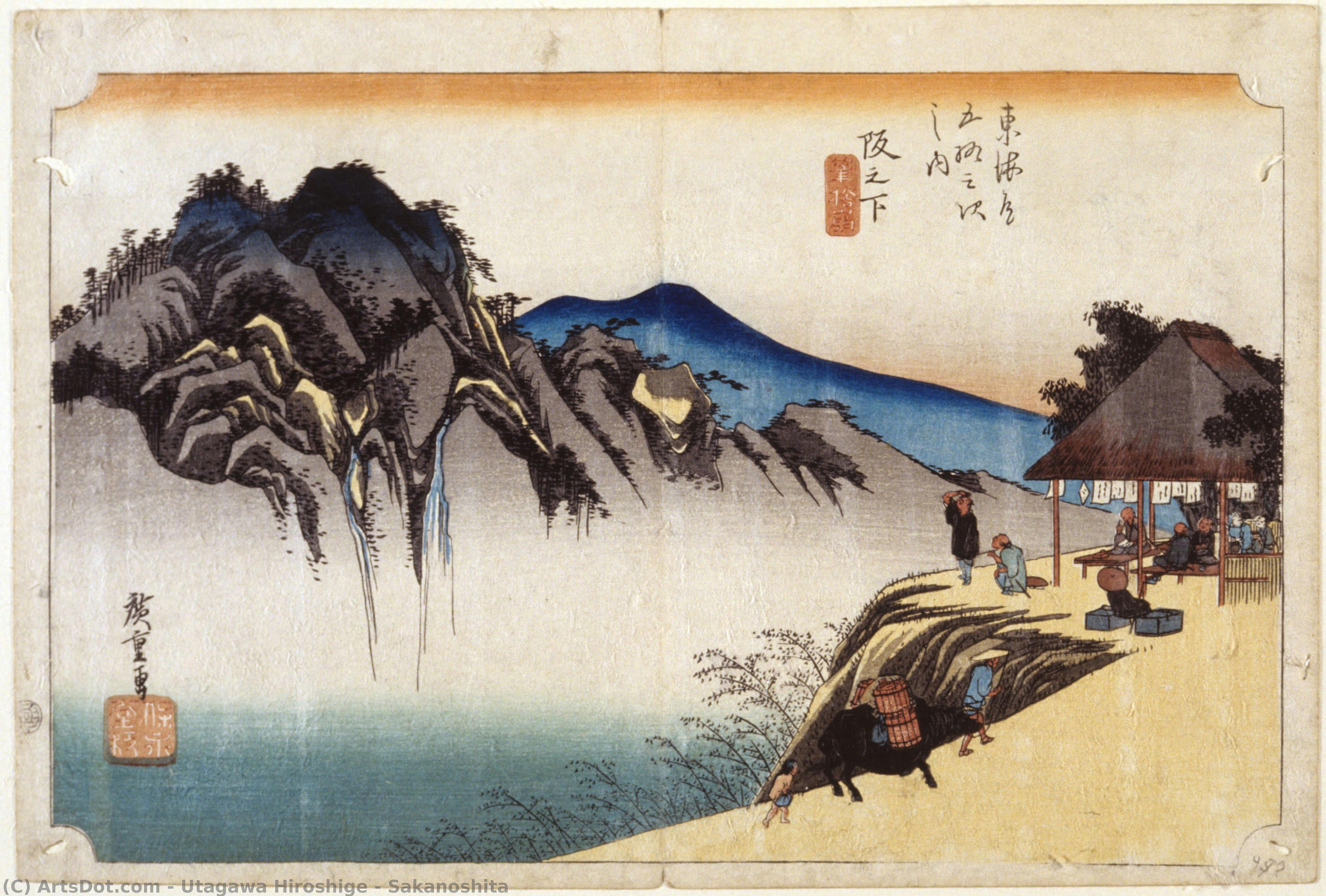
Sakanoshita


Experience Hiroshige's 'Sakanoshita': A stunning ukiyo-e print capturing the rugged beauty of the Tōkaidō road & Fudesute Mountain. Explore Edo Japan's poetic landscapes!
 Lees meer
"meta_description": "Utagawa Hiroshige (1797-1858) was a Japanes master of ukiyo-e prints, famed for his evocative landscapes like 'Fifty-three Stations' and 'One Hundred Famous Views of Edo'. His work profoundly influenced Impressionism & Van Gogh."
Giclée / Kunstafdrukken
Giclée- of canvasafdruk van museumkwaliteit met een snelle productie en flexibele afwerkingsmogelijkheden. ( Bestel handgeschilderde reproductie Schakel over naar digitale afbeeldingen)




P118B €10

P118H €10

P118W €10

P438Z €10

P508JH €12

P508YH €12

P805H €10

P805Z €10

P919BZ €10

P919G €10

P919XJ €10

P959ZH €10

P968JZ €12

W106C €8

W218G €10

W218JH €8

W218Y €10

W307PJ €10

W316G €10

W316PJ €8

W316Y €10

W398PJ €8

W4111J €10

W500HY €15

W500JH €15

W692G €12

W849H €8

W940BG €15

W953PJ €8




Standaardformaat
op maat gemaakt
CM
INCH
Kies uit onze vooraf ingestelde maten die overeenkomen met de originele verhoudingen van het kunstwerk.
Loading sizes...

breedte
hoogte
Voer de gewenste breedte en hoogte in, passend bij uw lijst of muur. Een afdruk kan alleen worden ingekort en nooit groter worden gemaakt dan het origineel; een formaat met andere verhoudingen zal daarom een deel van de afbeelding verliezen. Wij sturen u een digitaal mockup ter goedkeuring voordat we tot drukwerk overgaan. De afbeelding op deze pagina toont niet de werkelijke uitsnede — dit is alleen te zien op het mockup.
Wereldwijde levering () binnen 2 weken in plaats van de standaard 4/5 weken. (1 november)

Gratis wereldwijde expressverzending

Hoogwaardig linnen canvas

Volledige verzendverzekering

Garantie op terugbetaling van invoerrechten

Garantie op exacte kleurweergave

Retourbeleid van 100 dagen (alleen bij defecten)

100% Geld-terug-garantie

Korting bij meerdere afnames
 De optie voor glas is alleen beschikbaar bij een formaat kleiner dan 110 cm.

Sakanoshita
Giclée / Kunstafdrukken
Afmetingen reproductie
-


Eindtotaal
€ 62
A Poetic Glimpse of Edo Japan: Exploring Utagawa Hiroshige's "Sakanoshita"
Utagawa Hiroshige’s “Sakanoshita,” part of his renowned series The Fifty-three Stations of the Tōkaidō, offers more than just a scenic view; it provides a window into the heart of Edo period Japan. This evocative woodblock print captures a moment in time along one of the nation's most vital trade routes, transforming a practical thoroughfare into a landscape imbued with profound beauty and subtle narrative. The scene unfolds near Sakanoshita, a particularly challenging stretch of the Tōkaidō road known for its steep inclines and rugged terrain – a reality reflected in Hiroshige’s masterful depiction.
The Journey and the Landscape: Context and Technique
Completed during the Edo period (1603-1868), a time of relative peace and prosperity under the Tokugawa shogunate, “Sakanoshita” reflects a burgeoning interest in travel and landscape art. The Tōkaidō itself was more than just a road; it was a lifeline connecting Edo, the political heart of Japan, with Kyoto, its former imperial capital. Hiroshige’s series documented this journey, not merely as a geographical record but as an exploration of the emotional and aesthetic experiences encountered along the way. The print exemplifies ukiyo-e, meaning "pictures of the floating world," a genre that celebrated everyday life, landscapes, and popular culture. Hiroshige's approach within this tradition was particularly poetic, moving beyond simple representation to capture atmosphere and feeling. His technique involved meticulous carving on woodblocks by skilled artisans, followed by multiple layers of color printing—a process demanding precision and artistry. The subtle gradations of blue and green, achieved through the skillful application of bokashi (color gradation), create a sense of depth and distance that draws the viewer into the scene.
Symbolism in Stone and Shadow: A Narrative Unfolds
Beyond its visual appeal, “Sakanoshita” is rich with symbolic meaning. The towering presence of Fudesute-yama, or "Brush-Discarding Mountain," dominates the composition. Legend has it that a frustrated painter, unable to capture the mountain's beauty, threw his brush away in despair – a poignant reminder of the limitations of human artistry and the overwhelming power of nature. The travelers depicted on the winding path represent the constant flow of life along the Tōkaidō—merchants, pilgrims, government officials—all engaged in their own journeys. Their small size relative to the landscape emphasizes humanity’s place within a vast and timeless world. Even the dog accompanying one of the figures adds a touch of domesticity and companionship amidst the ruggedness of the terrain. The overall impression is not merely of a scenic view but of a microcosm of Edo period society, interwoven with the grandeur of the natural world.
An Enduring Legacy: Emotion and Influence
Hiroshige’s “Sakanoshita” resonates deeply because it transcends mere representation; it evokes a feeling—a sense of quiet contemplation, perhaps tinged with melancholy. The atmospheric perspective, the subtle color palette, and the carefully composed arrangement of elements all contribute to an emotional richness that continues to captivate viewers today. The print’s influence extended far beyond Japan, profoundly impacting Western artists like Vincent van Gogh and Claude Monet, who were captivated by its innovative compositions and poetic sensibility. It stands as a testament to Hiroshige's genius—a master of capturing the fleeting beauty of the natural world and transforming it into an enduring work of art.
Veelgestelde vragen
Zijn de kleuren van "Sakanoshita" door Hiroshige verzadigd of gedempt?
Het kleurenpalet van "Sakanoshita" heeft een verzadiging van Subtle Color.
Welke kleur domineert de compositie van "Sakanoshita" door Hiroshige?
Putty (#e6ddc9) is de dominante kleur van "Sakanoshita" door Hiroshige.
Waar kan ik een handgeschilderde reproductie van "Sakanoshita" door Hiroshige kopen?
U kunt een met de hand geschilderde reproductie van "Sakanoshita" door Hiroshige rechtstreeks bestellen op de Handgeschilderde reproductie pagina: een met de hand geschilderde olieverfreproductie op linnen canvas, op bestelling vervaardigd.
Biografie kunstenaar
A Poetic Vision of Edo Japan: The Life and Art of Utagawa Hiroshige
Utagawa Hiroshige, geboren als Andō Tokutarō in 1797 in de bruisende stad Edo (het moderne Tokio), staat als een cruciale figuur in de wereld van *ukiyo-e*, of “afbeeldingen van de drijvende wereld.” Hoewel diep geworteld in de tradities van Japanse houtsnipkunst, overstond Hiroshige het simpele nabootsen, door zijn landschappen te verzegelen met een poëtische gevoeligheid die resoneren deed zowel binnen Japan als later, over de hele wereld. Zijn leven ontviel tijdens een periode van relatieve vrede en welvaart onder het Tokugawa-shogunaat, maar ook één gemarkeerd door toenemende sociale veranderingen en uiteindelijk westernisatie – krachten die uiteindelijk bijdroegen aan de achteruitgang van *ukiyo-e*, hoewel ze tegelijkertijd zijn blijvende nalatenschap versterkten. In eerste instantie was hij bestemd voor een meer conventionele weg binnen een samurai-familie—zijn vader diende als brandwacht—Hiroshige’s artistieke neigingen leidden hem naar de leerling van Utagawa Toyohiro, een meester van de Utagawa school. Dit bleek een cruciale wending, die hem afstuurde van populaire afbeeldingen van hoerenshows en acteurs, die door velen in de *ukiyo-e*-wereld werden geprezen, naar een focus op landschap, een genre waar hij uiteindelijk zijn eigen stijl zou herdefiniëren.Van Genre Scènes tot Evocative Landschappen
Hiroshige’s vroege werk volgde de conventies van zijn school, met portretten en scènes uit het dagelijks leven. Echter, zijn omhelzing van landschap was wat hem werkelijk onderscheidde. Hij werd beïnvloed door eerdere meesters zoals Hokusai—waarvan *Drie-en-zestig Uitzichten op Fuji* al publiek interesse wekte—Hiroshige ontwikkelde een unieke stijl gekenmerkt door atmosferische perspectieven, subtiele kleurenpaletten en een diepe gevoeligheid voor de veranderende seizoenen. Hij beschouwde plaatsen niet alleen; hij roepde hun stemming op, vastlegde de essentie van een bepaald moment in de tijd. De serie *De Vijftig-drie Posten van de Tōkaidō* (1833–1834), wellicht zijn meest beroemde prestatie, documenteerde het reisverloop langs de Tōkaidō-weg, de belangrijkste route tussen Edo en Kyoto, niet als een simpele reisgids maar als een reeks evocatieve bijschriften—een plotselinge regenbui in Shono, een verre blik op Fuji uit Kanaya, de drukte in Odawara. Elke prent is doordrenkt van een gevoel van vluchtigheid en rustige schoonheid, die kijkers uitnodigt om mee te reizen met de reizigers. Hij maakte meesterschappelijk *bokashi*, een techniek waarbij meerdere stempels worden gebruikt voor één kleur, waardoor hij subtiele schaduwen en atmosferische effecten kon creëren die moeilijk te repliceren waren. De delicate blauwtinten in zijn afbeeldingen van regen of mist, de warme tinten van herfstblaadwerk—dit was niet toevallig; het waren zorgvuldig overwogen elementen ontworpen om specifieke emoties en zintuigen op te roepen. Naast *bokashi* was Hiroshige bekwam in het gebruik van leegte – *ma*, een concept centraal in Japanse esthetiek, waardoor gebieden in de prent konden “ademen” en de algehele sfeer van sereniteit versterkten. Zijn serie *Eén Honderd Bekende Uitzichten van Edo* (1856–1858) toonde verder zijn meesterschap, waarbij intieme blikken werden geschenkt naar het leven en de landschappen in zijn geliefde stad.Een Meester van Atmosfeer en Techniek
Hiroshige’s technische vaardigheid was net zo opmerkelijk als zijn artistieke visie. Hij was niet alleen geïnteresseerd in nauwkeurige weergave; hij zocht de *gevoel* van een plaats vast te leggen. Zijn gebruik van kleur, hoewel vaak ingetreden vergeleken met dat van sommige van zijn tijdgenoten, was cruciaal om dit effect te bereiken. Hij gebruikte vaak meerdere blokken voor één kleur, waardoor hij subtiele tinten en atmosferische effecten kon creëren die moeilijk te repliceren waren. De delicate washes van blauw in zijn afbeeldingen van regen of mist, de warme tonen van herfstblaadwerk—dit was niet toevallig; het waren zorgvuldig overwogen elementen ontworpen om specifieke emoties en zintuigen op te roepen. Buiten *bokashi* was Hiroshige bekwam in het gebruik van leegte – *ma*, een concept centraal in Japanse esthetiek, waardoor gebieden in de prent konden “ademen” en de algehele sfeer van rust versterkten. Zijn serie *Eén Honderd Bekende Uitzichten van Edo* (1856–1858) toonde verder zijn meesterschap, waarbij intieme blikken werden geschenkt naar het leven en de landschappen in zijn geliefde stad.De Duurzaamheid: Japonisme en Verder
Hoewel de *ukiyo-e*-traditie aan het vervagen begon na Hiroshige’s dood in 1858—een achteruitgang versneld door de Meiji Restauratie en de daaropvolgende toestroom van westerse cultuur—zijn invloed op de kunstwereld bleek buitengewoon duurzaam. In de late negentiende eeuw stroomden Japanse prints naar Europa, wat leidde tot een fenomeen dat bekend staat als *Japonisme*. Kunstenaars zoals Édouard Manet, Claude Monet en Edgar Degas werden gefascineerd door de gedurfde composities, platte perspectieven en onconventionele kleurenschema’s van *ukiyo-e*, die deze elementen integreerden in hun eigen werk. Vincent van Gogh was bijzonder gefascineerd door Hiroshige’s prints, waarbij hij een aantal kopieën maakte, waaronder “Bloeiende Peer in Kameido,” wat zijn diepe bewondering voor de Japanse meester’s gebruik van kleur en compositie demonstreert. Hiroshige’s invloed strekte zich uit tot architectuur, design en zelfs literatuur. Vandaag de dag wordt Utagawa Hiroshige herinnerd niet alleen als een briljante kunstenaar maar ook als een culturele ambassadeur die de kloof tussen Oost en West heeft geslagen, een onuitwisbare stempel op de geschiedenis van de kunst heeft achtergelaten.Bekende Werken
- De Vijftig-drie Posten van de Tōkaidō: Hiroshige’s meest beroemde serie, die het reisverloop langs de belangrijkste route tussen Edo en Kyoto weergeeft.
- Eén Honderd Bekende Uitzichten van Edo: Een boeiend portret van het leven en de landschappen in zijn geliefde stad.
- Invloed op Vincent van Gogh’s Japonaiserie Serie: Inclusief “Bloeiende Peerboom na Hiroshige,” wat Van Gogh’s diepe bewondering voor de Japanse meester’s gebruik van kleur en compositie demonstreert.

Hiroshige
1797 - 1858 , Japan
Belangrijkste feiten
- Artistic Movement Or Style: *Ukiyo-e*
- Artists Or Movements Influenced By This Artist: ['Impressionisten']
- Artists Who Influenced This Artist: ['Hokusai']
- Date Of Birth: 1797
- Date Of Death: 1858
- Full Name: Utagawa Hiroshige
- Nationality: Japanse
- Notable Artworks:
- 53 Halteplaatsen
- 100 Bekende Zichten
- Place Of Birth: Tokyo, Japan
Gerelateerde artikelen

Floating Worlds: The Timeless Elegance and Cultural Magic of Ukiyo-e Art
Embark on a cultural journey through the enchanting world of Ukiyo-e. Discover the history, masters like Hokusai, and the vibrant Edo period aesthetics that continue to inspire art lovers worldwide with their timeless beauty and intricate woodblock craftsmanship.
Ontdek kunstwerken georganiseerd op thema, stijl en kenmerk.