

Shown: · With its frame:
 Forhåndsvisning
 Send
Send Del
Del
 Vis detaljer
 Utskriftsvennlig guide

 Last ned bilde
 Liknende objekter
 Røntgenundersøkelse
 Lysbildefremvisning
 Q&A
Q&A Statistikk


Nkr 2585
Håndlaget oljereproduksjon
Håndmalt olje på lerret i din valgte størrelse og ramme, laget på bestilling av våre kunstnere. ( Bytt til trykk Bytt til digitalt bilde)
Size
·Standardformat
skreddersydd
CM
INCH
Velg mellom våre forhåndsdefinerte størrelser som bevarer kunstverkets opprinnelige proporsjoner.
Loading sizes...

bredde
høyde
Skriv inn ønsket bredde og høyde for å tilpasse bildet til din ramme eller vegg. Siden dette er håndmalt, kan kunstneren male litt mer rundt motivet eller beskjære det noe dersom du velger et annet format — valget er ditt. Vi sender deg en digital mockup til godkjenning før maleriet påbegynnes. Bildet som vises på denne siden representerer ikke det faktiske resultatet — kun mockuppen viser det endelige uttrykket.
 Les mer om dette
Finish
·
White Nkr1

Blurside Nkr1

Extended Nkr1

P118B Nkr10

P118H Nkr10

P118W Nkr10

P438Z Nkr10

P508JH Nkr12

P508YH Nkr12

P805H Nkr10

P805Z Nkr10

P919BZ Nkr10

P919G Nkr10

P919XJ Nkr10

P959ZH Nkr10

P968JZ Nkr12

W106C Nkr8

W218G Nkr10

W218JH Nkr8

W218Y Nkr10

W307PJ Nkr10

W316G Nkr10

W316PJ Nkr8

W316Y Nkr10

W398PJ Nkr8

W4111J Nkr10

W500HY Nkr15

W500JH Nkr15

W692G Nkr12

W849H Nkr8

W940BG Nkr15

W953PJ Nkr8

H24-GOLD Nkr30

H24-SILVER Nkr30

H36-GOLD Nkr45

H36-SILVER Nkr45
Shipped in a protective tube, ready for your own framer.
Above 105 cm the frame is shipped as a kit for a professional framer — read the details.
Extras
optionalWhat do the extras include?
Examples of what can be changed: Replace face with customer photo; Add pet (e.g., replace cat with dog); Include hidden message in background; Change background landscape or elements.
After order, TopImpressionists.com team will email client for instructions and provide a mockup preview
After order, TopImpressionists.com team will email client for instructions and provide a mockup preview
Verdensomspennende levering () på 3–4 uker i stedet for standard 5 uker. (29 October). Ingen kompromisser med kvaliteten.
Beskyttende ferniss
Navneskilt
Detaljer om gravert bronseplate
This elegant plaque features the artist's name and the title of the artwork, finely engraved for a timeless presentation.
It is made from bronze with a refined, elegant finish. The text is precisely laser-engraved for a sharp and permanent result. Measuring 9x2 cm, the plaque is compact yet easy to read. It's built to be durable and scratch-resistant, offering a professional, museum-quality look. Mounting is simple thanks to the included adhesive backing.
Detaljer om gjennomsiktig akrylplate
The plaque includes essential engraved details such as the artist's name, the title of the artwork, the date it was created, the type of media used-like oil on canvas or watercolor-a brief description of the piece, and a QR code that links to the complete artwork information.
It is crafted from clear acrylic, offering a sleek, modern appearance. The text is UV-engraved in black to ensure strong visual contrast. With a size of 10x15 cm, it ensures optimal readability. It comes equipped with two metal hooks for secure wall mounting. The plaque is designed to be weather-resistant, making it suitable for various environments, and it includes interactive features that work seamlessly with smartphone scanning.
Detaljer om plakett i svart akryl
This elegant plaque includes engraved information such as the artist's name, the title of the artwork, the date it was created, the type of media used (like oil on canvas or watercolor), a short description of the artwork, and a QR code for quick access to more information.
The plaque itself is made from refined black acrylic with a premium finish. The text is laser-engraved in white for high contrast and readability. Its size is 10x15 cm, designed to be easy to read. It comes with two metal hooks for professional mounting. The design is sleek and fits any interior style. It is also weather-resistant and durable, with built-in digital integration for mobile compatibility.
Glassalternativet er kun tilgjengelig i størrelser under 110 cm
 Glassalternativet er kun tilgjengelig i størrelser under 110 cm
- Gratis ekspressfrakt over hele verden
- Lerretsduk av lin av høy kvalitet
- Full transportforsikring
- Garanti for refusjon av toll og importavgifter
- Garantert fargegjengivelse
- 100 dagers returrett ved fabrikasjonsfeil
- 100% pengene tilbake-garanti
- Rabatt ved flere kjøp


Beskrivelse av objektet
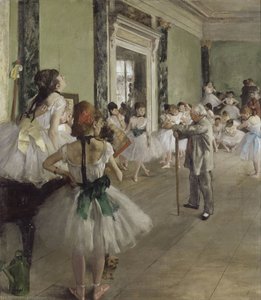
Experience Edgar Degas's 'Dance Class'! This iconic 1871 painting captures ballet rehearsals with stunning detail & movement. Part of the Met’s collection, it showcases Degas’s unique artistic vision.
Om kunstneren
Edgar Degas: En revolusjonerende fransk kunstner kjent for sine fascinerende ballett-dansere, parisianere og innovative teknikker – en ekte mester av moderne kunst.
About the painting
The Captivating World of “Dance Class”
Edgar Degas’s Dance Class, a remarkable oil painting created in 1871 and now residing within the hallowed halls of the Metropolitan Museum of Art, is far more than just a depiction of ballerinas practicing. It's a meticulously observed snapshot of a vibrant microcosm – a ballet studio brimming with youthful energy, quiet anticipation, and the subtle tensions inherent in the pursuit of artistic perfection. Degas, a master of capturing fleeting moments and unconventional subjects, doesn’t offer a grand spectacle; instead, he presents an intimate scene, inviting us to observe the dedication, discipline, and unspoken camaraderie of these young dancers preparing for their performances.
The painting immediately draws the eye with its dynamic composition. Degas eschews traditional, formal arrangements in favor of a horizontal format that emphasizes the space itself – a modestly sized room bathed in diffused light. The arrangement of the dancers is deliberately asymmetrical, creating a sense of movement and suggesting an ongoing process rather than a static pose. Notice how some figures are clustered together, engaged in conversation or instruction, while others stand alone, lost in their own thoughts or focused intently on perfecting a particular step. This deliberate imbalance contributes to the painting’s overall feeling of realism and immediacy.
A Masterclass in Impressionistic Technique
Degas's signature style is powerfully evident in Dance Class. He employs a broken brushstroke technique, applying paint in short, visible dashes that capture the texture of the dancers’ costumes, the worn floorboards, and the subtle play of light and shadow. The color palette is restrained yet remarkably evocative – muted blues, browns, and greys dominate, punctuated by flashes of scarlet in the jackets and emerald green in the ribbons. This deliberate use of color not only reflects the atmosphere of the studio but also subtly emphasizes the dancers’ attire, highlighting their elegance and grace.
Furthermore, Degas's mastery of perspective is remarkable. He skillfully uses atmospheric perspective – a technique where objects appear less distinct and more bluish in the distance – to create a sense of depth within the relatively shallow space. The figures in the background are rendered with softer edges and paler colors, subtly receding into the distance while those closer to the viewer retain greater detail and vibrancy. This careful attention to detail demonstrates Degas’s commitment to accurately portraying his subject matter.
The Ballet Class: A Reflection of Parisian Society
Dance Class offers a fascinating glimpse into the social context of 19th-century Paris, specifically the burgeoning world of ballet. The presence of the piano player, a common fixture in ballet studios at the time, underscores the importance of music in shaping the dancers’ movements and expressions. The watchful instructor, positioned centrally within the composition, represents the rigorous training and discipline required to succeed in this demanding profession. The inclusion of the “stage mothers” observing from the background hints at the social pressures and expectations surrounding ballet performance.
Beyond its depiction of a specific scene, Dance Class speaks to Degas’s broader fascination with movement, beauty, and the human condition. He wasn't simply painting dancers; he was capturing their essence – their grace, their dedication, and their vulnerability. The painting resonates with an emotional depth that transcends mere representation, inviting viewers to contemplate the challenges and rewards of pursuing artistic excellence. It is a testament to Degas’s ability to transform everyday moments into works of enduring beauty and significance.
A Legacy of Impressionism
As part of the Metropolitan Museum of Art's esteemed collection, Dance Class continues to inspire art lovers worldwide. Degas’s innovative approach to subject matter, his masterful technique, and his profound understanding of human emotion have cemented his place as one of the most influential artists of the Impressionist movement. For those seeking a captivating work of art that embodies both technical brilliance and emotional resonance, Dance Class is an unparalleled masterpiece.
Spørsmål og svar
Hvilket museum har det originale verket "Dance Class"?
"Dance Class" av Hilaire-Germain-Edgar Degas er utstilt på Metropolitan Museum of Art, New York, United States of America. Museumsoppføringen refererer til originalverket, ikke til reproduksjoner.
Når og med hvilke materialer ble "Dance Class" laget?
"Dance Class" ble laget i 1871 med Oil On Canvas.
Hvilken fase av Hilaire-Germain-Edgar Degas sin karriere tilhører "Dance Class", basert på datoen?
Med sin datering fra 1871, tilhører "Dance Class" Hilaire-Germain-Edgar Degas sin Mature Period.
Quick facts and art quiz
About Hilaire-Germain-Edgar Degas

Hilaire-Germain-Edgar Degas
1834 - 1917, Frankrike
Om kunstneren
A Life Immersed in Movement
Edgar Degas, født Hilaire-Germain-Edgar De Gas i Paris i 1834, var en kunstner av fascinerende motsetninger. Selv om han ofte ble gruppert sammen med impresjonistene – Monet, Renoir og andre som revolusjonerte maleriet på slutten av det 19. århundre – nektet han aktivt å bli stemplet som sådan, og identifiserte seg heller som en realist. Denne forpliktelsen var knyttet til hans metidige observasjon av verden rundt ham og en dedikasjon til å skildre den med ærlighet. Degas’s tidlige liv var komfortabelt velstående; faren hans var bankier, og moren hans kom fra en kreolsk familie i New Orleans. Denne bakgrunnen ga ham tilgang til utdanning og kunstnerisk opplæring, selv om han ofte misbilliget akademiske restriksjoner. Han meldte seg først inn på Lycée Louis-le-Grand, men sin sanne utdannelse begynte da han begynte å kopiere verk i Louvre, finslipte sine ferdigheter og tente en livslang lidenskap for klassisk kunst. Likevel var Degas’s vei ikke en av streng overholdelse av tradisjon; den var preget av konstant spørsmål og omvurdering av kunstneriske normer. Han besaatte et uavhengig sinn som ville definere hele hans karriere.Beyond Impressionism: A Unique Artistic Vision
Mens samtidige som Monet jaget de flyktige effektene av lys utendørs, arbeidet Degas i stor grad innenfor grensene til sitt atelier, konstruerte scener nøye fra observasjon og minne. Hans motivvalg var definitivt moderne – et avvik fra de historiske eller mytologiske temaene som foretrakk mange akademiske malere. Han fant inspirasjon i hverdagen til parisere: vaskekjerringer, kabaretsangere, hattmakere og, mest berømt, dansere. Det er denne fascinasjonen for ballett som definerer mye av hans verk. Degas malte ikke bare vakre ballerinaser; han fanget den nådeløse virkeligheten av deres yrke – de utallige repetisjonene, den fysiske belastningen, de flyktige øyeblikkene av grasiøsitet midt i en verden av hardt arbeid. Hans komposisjoner er ofte ukonvensjonelle, plasserer figurer på uventede måter og bruker asymmetriske arrangementer for å skape en følelse av dynamikk og umiddelbarhet. Han var en mester i å fange bevegelse, ikke gjennom utviskede linjer eller tåkelagte effekter, men gjennom presis observasjon og nøye gjengivelse av form. *Dancer, A Group of Dancers*, og *Women Combing Their Hair* er eksempler på denne dedikasjonen til å skildre det menneskelige legemet i bevegelse og avsløre kompleksitetene i moderne liv. Han var ikke interessert i overfladisk skjønnhet; han søkte å avsløre sannheten under overflaten.Influenser og Kunstnerisk Utvikling
Degas’s kunstneriske reise ble formet av en rekke forskjellige påvirkninger. Hans tidlige opplæring la vekt på klassiske prinsipper, spesielt arbeidet til Jean-Auguste-Dominique Ingres, hvis vekt på håndverk og presis form etterlot seg et varig inntrykk. Likevel beundret Degas også realistene, som Gustave Courbet, som utfordret akademiske konvensjoner og fremmet skildringen av moderne liv. Et avgjørende øyeblikk i hans utvikling kom gjennom hans tilknytning til Camille Pissarro, en ledende impresjonist som introduserte ham for andre kunstnere og oppmuntret ham til å eksperimentere med nye teknikker. Han ble fascinert av japanske trykk – Ukiyo-e – som påvirket hans bruk av asymmetriske komposisjoner, flate perspektiver og dristige mønstre. Han omfavnet også fotografi, anerkjente dets potensial som et verktøy for å studere bevegelse og fange flyktige øyeblikk i tid. Denne villigheten til å inkorporere forskjellige påvirkninger i sitt arbeid er det som skiller Degas fra andre og bidrar til den unike karakteren av hans kunst. Han var ikke redd for å låne fra forskjellige kilder, syntetiserte dem til noe helt nytt.Hovedverk og Arv
Edgar Degas døde i Paris i 1917, og etterlot seg et verk som fortsatt fanger publikums oppmerksomhet og inspirerer dem i dag. Hans innovative tilnærming til komposisjon, hans mesterskap i håndverk og hans ærlige skildring av moderne liv har hatt en dyptgripende innvirkning på kunsthistorien. Han banet vei for fremtidige generasjoner av kunstnere som søkte å bryte med tradisjonelle konvensjoner og utforske nye måter å representere verden rundt dem. Hans innflytelse kan sees i arbeidet til Pablo Picasso og Henri Matisse, blant andre. Museer over hele verden – inkludert Musée d'Orsay og Musée de l’Orangerie i Paris – huser betydelige samlinger av hans malerier, pasteller, skulpturer og trykk, og sikrer at hans arv vil vare for kommende generasjoner. Degas var ikke bare en maler av dansere eller hesteværinger; han var en skarp observatør av menneskelig natur, en mester i form og bevegelse, og en ekte innovatør som omdefinerte mulighetene for kunst.- En mester i linje: Degas’s ekstraordinære håndverk satte ham fra hverandre.
- Moderne liv som motiv: Han fokuserte på moderne parisiske scener, og brøt med tradisjonen.
- Innflytelse på fremtidige kunstnere: Hans arbeid hadde en dyptgripende innvirkning på Picasso og Matisse.
Quick facts about Hilaire-Germain-Edgar Degas
- Artistic Movement Or Style: Impressionisme, Realisme
- Artists Or Movements Influenced By This Artist:
- Picasso
- Matisse
- Artists Who Influenced This Artist:
- Ingres
- Courbet
- Pissarro
- Date Of Birth: 1834
- Date Of Death: 1917
- Full Name: Hilaire-Germain-Edgar De Gas
- Nationality: Fransk
- Notable Artworks:
- Danser og Tamburin
- Balettklasse
- Degas i grønn jakke
- Samleren
- Place Of Birth: Paris, Frankrike
Lignende kunstverk



Utforsk kunstverk organisert etter temaer, stiler og kjennetegn.


Hilaire-Germain-Edgar Degas
Dance Class
() ·
With its frame: · Hand-painted in oil on linen
Total