

Shown: · With its frame:
 Podgląd w skali 1:1
 Wyślij jako kartkę
 Udostępnij
 Szczegóły dzieła
 Przewodnik

 Pobierz obraz
 Podobne obiekty
 RTG
RTG Pokaz slajdów
 Q&A
Q&A Statystyki


zł 1045
Ręcznie malowana reprodukcja olejowa
Ręcznie malowany obraz olejny na płótnie, wykonany na zamówienie przez naszych artystów w wybranym przez Ciebie wymiarze i oprawie. ( Przełącz na wydania drukowane Przejdź do wersji cyfrowej)
Size
·Standardowy format
personalizowane
CM
INCH
Wybierz spośród naszych standardowych rozmiarów, które zachowują oryginalne proporcje dzieła sztuki.
Loading sizes...

szerokość
wysokość
Wpisz wymaganą szerokość i wysokość, aby obraz pasował do Twojej ramy lub ściany. Ponieważ jest to dzieło malowane ręcznie, w przypadku rozmiaru o innych proporcjach artysta może domalować nieco więcej wokół obrazu lub przyciąć jego fragmenty — wybór należy do Ciebie. Przed rozpoczęciem pracy prześlemy Ci cyfrową wizualizację do zatwierdzenia. Obraz widoczny na tej stronie nie przedstawia rzeczywistego efektu — jedynie wizualizacja oddaje realny rezultat.
 Dowiedz się więcej
Finish
·
White zł1

Blurside zł1

Extended zł1

P118B zł10

P118H zł10

P118W zł10

P438Z zł10

P508JH zł12

P508YH zł12

P805H zł10

P805Z zł10

P919BZ zł10

P919G zł10

P919XJ zł10

P959ZH zł10

P968JZ zł12

W106C zł8

W218G zł10

W218JH zł8

W218Y zł10

W307PJ zł10

W316G zł10

W316PJ zł8

W316Y zł10

W398PJ zł8

W4111J zł10

W500HY zł15

W500JH zł15

W692G zł12

W849H zł8

W940BG zł15

W953PJ zł8

H24-GOLD zł30

H24-SILVER zł30

H36-GOLD zł45

H36-SILVER zł45
Shipped in a protective tube, ready for your own framer.
Above 105 cm the frame is shipped as a kit for a professional framer — read the details.
Extras
optionalWhat do the extras include?
Examples of what can be changed: Replace face with customer photo; Add pet (e.g., replace cat with dog); Include hidden message in background; Change background landscape or elements.
After order, TopImpressionists.com team will email client for instructions and provide a mockup preview
After order, TopImpressionists.com team will email client for instructions and provide a mockup preview
Dostawa na całym świecie () w ciągu 3–4 tygodni zamiast standardowych 5 tygodni. (30 Październik). Bez kompromisów w kwestii jakości.
Lakier ochronny
Etykieta obiektu
Szczegóły grawerowanej brązowej tabliczki
This elegant plaque features the artist's name and the title of the artwork, finely engraved for a timeless presentation.
It is made from bronze with a refined, elegant finish. The text is precisely laser-engraved for a sharp and permanent result. Measuring 9x2 cm, the plaque is compact yet easy to read. It's built to be durable and scratch-resistant, offering a professional, museum-quality look. Mounting is simple thanks to the included adhesive backing.
Szczegóły przezroczystej tabliczki akrylowej
The plaque includes essential engraved details such as the artist's name, the title of the artwork, the date it was created, the type of media used-like oil on canvas or watercolor-a brief description of the piece, and a QR code that links to the complete artwork information.
It is crafted from clear acrylic, offering a sleek, modern appearance. The text is UV-engraved in black to ensure strong visual contrast. With a size of 10x15 cm, it ensures optimal readability. It comes equipped with two metal hooks for secure wall mounting. The plaque is designed to be weather-resistant, making it suitable for various environments, and it includes interactive features that work seamlessly with smartphone scanning.
Szczegóły czarnej tabliczki akrylowej
This elegant plaque includes engraved information such as the artist's name, the title of the artwork, the date it was created, the type of media used (like oil on canvas or watercolor), a short description of the artwork, and a QR code for quick access to more information.
The plaque itself is made from refined black acrylic with a premium finish. The text is laser-engraved in white for high contrast and readability. Its size is 10x15 cm, designed to be easy to read. It comes with two metal hooks for professional mounting. The design is sleek and fits any interior style. It is also weather-resistant and durable, with built-in digital integration for mobile compatibility.
Opcja ze szkłem jest dostępna wyłącznie w rozmiarach poniżej 110 cm
 Opcja ze szkłem jest dostępna wyłącznie w rozmiarach poniżej 110 cm
- Bezpłatna ekspresowa wysyłka na cały świat
- Wysokiej jakości płótno lniane
- Pełne ubezpieczenie przesyłki
- Gwarancja zwrotu należności celnych i podatków importowych
- Gwarancja wiernego odwzorowania kolorów
- 100-dniowa polityka zwrotów (tylko w przypadku wad)
- Gwarancja 100% zwrotu pieniędzy
- Zniżka przy zakupie wielu sztuk


Opis obiektu
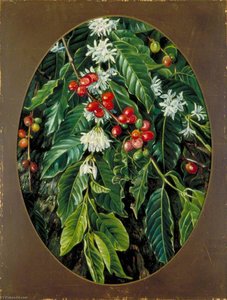
Marianne North’s ‘The Preanger Mountains, Java’ is a captivating oil on board depicting a lush tropical mountain scene. Painted in 1876, this artwork showcases North's meticulous attention to detail and her passion for documenting the natural world. Held at Kew Gardens, it exemplifies Victorian botanical art and offers a glimpse into the artist’s remarkable expeditions.
Biografia artysty
Marianne North (1830-1890) – pionierka sztuki botanicznej i podróżniczka. Jej galeria w Kew Gardens prezentuje ponad 800 malowideł egzotycznej flory, świadectwo jej niezależności i pasji!
About the painting
A Victorian Vision of Tropical Majesty: Marianne North’s “The Preanger Mountains, Java”
Marianne North (1830–1890) wasn't merely an artist; she was a pioneer—a woman who defied societal expectations and embarked on extraordinary expeditions to document the breathtaking beauty of the natural world. Her legacy resides not just in her stunning paintings but also in her unwavering determination to pursue scientific curiosity alongside artistic expression, establishing herself as one of Britain’s foremost botanists and visual artists of her era. “The Preanger Mountains, Java,” completed around 1876, exemplifies this remarkable blend of observation and artistry—a captivating glimpse into a pivotal moment in Victorian exploration and botanical science.A Landscape Steeped in Symbolism
North's depiction transcends a simple topographical representation; it’s infused with symbolic resonance reflecting the prevailing Victorian fascination with exotic landscapes and the burgeoning field of biogeography. The towering Preanger Mountains, rising majestically from the verdant valleys below, symbolize resilience and grandeur—qualities deeply admired during a period marked by imperial ambition and scientific discovery. More subtly, the snow-capped peaks hint at aspirations for purity and transcendence, mirroring the Victorian yearning for spiritual contemplation amidst the dynamism of the natural world. The artist’s meticulous attention to detail – from the delicate textures of mosses and ferns to the subtle gradations of color in the sky – underscores this profound engagement with both visual beauty and intellectual inquiry.Technique and Impressionistic Style
Executed in oil on board, “The Preanger Mountains” showcases North's mastery of impressionistic technique. Unlike academic painting’s emphasis on precise realism, North prioritized capturing fleeting moments of light and atmosphere—a stylistic choice that aligns perfectly with the burgeoning influence of Impressionism on British art. Visible brushstrokes contribute to a sense of movement and immediacy, conveying not just what the eye sees but also how it feels. The artist skillfully employs layering techniques, blending colors to create luminous hues and enhancing tonal variations – methods honed through years of painstaking botanical observation and artistic experimentation. This deliberate approach elevates the painting beyond mere depiction, transforming it into an emotive response to the grandeur of Java’s mountainous terrain.Historical Context: Victorian Exploration and Botanical Art
“The Preanger Mountains” emerged during a period of intense scientific exploration fueled by imperial expansion and underpinned by Darwinian theory. Marianne North's expeditions to Southeast Asia—particularly Java—were driven by a desire to collect specimens for Kew Gardens’ Herbarium, furthering the advancement of botanical knowledge and challenging conventional artistic conventions. Simultaneously, Impressionism was gaining traction in Europe, rejecting traditional academic styles in favor of capturing subjective experience and prioritizing color and light over meticulous detail. North's work embodies this convergence of scientific ambition and artistic innovation—a testament to her pioneering spirit and her unwavering commitment to documenting the wonders of the natural world through a uniquely expressive medium.Emotional Resonance: Tranquility Amidst Adventure
Despite its depiction of challenging terrain, “The Preanger Mountains” exudes an aura of serene tranquility. The muted palette – dominated by greens and blues – fosters a sense of calm contemplation, inviting viewers to immerse themselves in the beauty of Java’s untouched wilderness. The absence of human figures reinforces this impression of unspoiled nature—a deliberate artistic choice that underscores North's reverence for the natural world and her conviction that art could inspire awe and wonder. Ultimately, “The Preanger Mountains” remains a powerful reminder of Victorian idealism – a celebration of scientific discovery intertwined with an appreciation for sublime beauty.Pytania i odpowiedzi
Do którego okresu twórczości Marianne North należy dzieło "The Preanger Mountains, Java"?
"The Preanger Mountains, Java" reprezentuje Mature Period twórczości Marianne North.
Czy istnieje karta informacyjna o „The Preanger Mountains, Java” – Marianne North przeznaczona dla studentów?
Przewodnik po "The Preanger Mountains, Java" to strona Karta informacyjna dla uczniów dzieła sztuki – nadrukowalna karta informacyjna zawierająca opis utworu, informacje o autorstwie oraz tabelę danych (artysta, daty, technika, wymiary oryginału, kolekcja).
Czy można pobrać obraz "The Preanger Mountains, Java"?
Obraz „The Preanger Mountains, Java” – Marianne North można pobrać na stronie Pobierz plik cyfrowy dzieła: wysokiej rozdzielczości cyfrowe zdjęcie do pobrania.
Quick facts and art quiz
About Marianne North

Marianne North
1830 - 1890, Wielka Brytania
Biografia artysty
A Victorian Adventurer in Bloom
Marianne North była duszą niezależną, kobietą, która oddała oczekiwane komforty wiktoriańskiego życia na życie pełne odważnych wypraw i poświęcenia artystycznego. Urodziła się w 1830 roku w rodzinie zamożnej w Hastings, w Anglii, a jej wczesny ścieżka wydawała się przeznaczona dla zajęć muzycznych. Jednak pogorszenie zdrowia delikatnie przekierowało jej pasje ku delikatnemu sztuki malowania kwiatów – zmianie, która nie tylko nie była pocieszeniem, ale gennością niezwykłego istnienia żyjącego w całości na własnych warunkach. Podczas gdy wiele kobiet tego okresu było uwięzionych w salonach i oczekiwaniach społecznych, North podjęła niesamowitą podróż, która przeniosło ją przez kontynenty, przekształcając ją zarówno w znaną artystkę, jak i samodzielną botanikę. Jej historia to świadectwo odporności, niezależności i głębokiego połączenia z naturalnym światem – testament ducha nieprzemarzanego konwenansami.
Od Obserwacji Botanicznej do Globalnej Ekspedycji
Lata po śmierci jej matki w 1855 roku były formujące, wypełnione rozległymi podróżami przez Europę wraz z ojcem. Podróże te wyostrzyły jej umiejętności obserwacyjne i wykształciły ostry wzrok na krajobrazie, wprowadzając w niej pragnienie wędrówek, które wkrótce rozkwitło w czymś znacznie ambitniejszym. Po śmierci ojca w 1869 roku North postanowiła poświęcić się w pełni malowaniu flory odległych ziem – decyzji, która oznaczona była kluczowym momentem w jej życiu. Nie chodziło tylko o uchwycenie piękna; było to akt dokumentacji naukowej, napędzany pragnieniem rejestracji bioróżnorodności świata szybko zmieniającego się pod wpływem kolonializmu i industrializacji. Począwszy od 1871 roku North rozpoczęła serię wypraw trwających prawie piętnaście lat, wędrując przez regiony takie jak Kanada, Jamajka, Brazylia, Japonia, Borneo, Indie, Australię i Nową Zelandię. Podróżowała nie z zespołami naukowymi ani patronatem urzędowym, ale finansowała swoje przygody sama, polegając na fortune swojej rodziny.
Unikalny Styl Artystyczny i Dziedzictwo w Kew Gardens
Styl artystyczny North od razu jest rozpoznawalny ze względu na realizm i jaskrawe palety. Malując głównie olejami – nietypowy wybór dla ilustracji botanicznych w tym czasie – osiągała głębię koloru i faktury, które ożywiały jej tematy. Jej obrazy nie są sterylne ilustracje naukowe; są nasycone poczuciem atmosfery i miejsca, uchwycają nie tylko formę roślin, ale także ich środowisko i uczucie zanurzenia w nim. Nie była to po prostu turystka; stała się częścią krajobrazów, które przedstawiała, wchłaniając ich esencję i przekazując ją przez swoje dzieła sztuki. Skala jej podróży, podjętych niezależnie przez kobietę w okresie, który surowo ograniczał autonomię kobiet, jest sama w sobie świadectwem wyjątkowego charakteru North. W 1882 roku, z wyrozumiałością dla swojej wizji, Marianne ofiarowała swoje prace Muzeum Botanicznemu Królewskiemu w Kew Gardens, wraz z funduszami na budowę specjalnej galerii wystawienniczej. Ta galeria, otwarta tego samego roku, jest jedynym stałym wystawowym dziełem kobiety w Kew Gardens i nadal inspiruje odwiedzających. Wiele obrazów North znajduje się również w Muzeum Brytyjskim, dokumentując florę Indii.
Wyjątkowa Podróżniczka i Botanik
Podczas podróży do Sarawaku na Borneo Marianne North zbliżyła się do lokalnych mieszkańców i zaprzyjaźniła się z Margaret Cameron, znaną fotografką i portrecistką. W 1875 roku, po kilku miesiącach spędzonych na Teneryfie, rozpoczęła podróżokoło świata. Podczas swoich wypraw, które trwały przez dwa lata, malowała florę Kalifornii, Japonii, Borneo, Jawy i Cejlonu. W Kalutarze na Cejlonie Marianne zbliżyła się do lokalnych mieszkańców i zaprzyjaźniła się z Margaret Cameron, znaną fotografką i portrecistką. W latach 1878–1879 przez półtora roku podróżowała po Indiach w poszukiwaniu roślin związanych z hinduską literaturą. Namalowała ponad 200 obrazów przedstawiających rośliny i krajobrazy. W roku 1880, za namową Karola Darwina, udała się do Australii i Nowej Zelandii. W 1884–1885 Marianne podjęła ostatnią podróż do Chile.
Znaczenie i Dziedzictwo
Marianne North była więcej niż tylko artystką; była pionierem, który wyzwał normy społeczne i poszerzył granice tego, co było uważane za akceptowalne dla kobiet w epoce Wiktorii. Jej niezależne podróże, kariera zawodowa i poświęcenie obserwacjom naukowym były wszystkimi tymi wyjątkowymi osiągnięciami dla jej czasu. Odrzuciła oczekiwania, odmówiając małżeństwa i zamiast tego zdecydowała się kształtować własną ścieżkę, napędzaną ciekawością intelektualną i pasją artystyczną. Jej obrazy stanowią cenne zapisy historyczne, dokumentujące florę w krytycznym momencie historii – w okresie szybkiej zmiany środowiskowej i ekspansji kolonialnej. Oferują one wgląd w krajobrazy botaniczne z XIX wieku i dostarczają wizualnego rejestru gatunków, które mogą teraz być zagrożone lub wymarłe. Jej historia nadal rezonuje dzisiaj, inspirując artystów, naukowców i podróżników do realizowania swoich pasji z odwagą i przekonaniem – prawdziwe świadectwo siły niezależnego ducha i miłości do naturalnego świata na całe życie.
Ważne Dzieła
- Foliage, Flowers and Fruit of the Cashew, Tanjore, India: Uwiecznienie piękna tropikalnej rośliny.
- Elephants, Exotic Fish, and Leaf Insect: Pokazuje umiejętność North w uchwytywaniu zarówno flory, jak i fauny w ich naturalnym środowisku.
- Tegoro, Sarawak: Lushowy krajobraz dżungli, który odzwierciedla jej realizm i atmosferę.
- On the Way from Tibet near Nagkunda, North India: Dramatyczne krajobrazy Himalajów z romantycznym realizmem.
- Lake of Ajmere, North West India: Malowidło indyjskich gór i zachodzącego słońca.
Quick facts about Marianne North
- Artistic Movement Or Style: Naturalizm wiktoriański
- Artists Or Movements Influenced By This Artist: ['Hooker']
- Artists Who Influenced This Artist: ['Hooker']
- Date Of Birth: 1830
- Date Of Death: 1890
- Full Name: Marianne North
- Nationality: Brytyjska
- Notable Artworks:
- Tegoro, Sarawak
- Na drodze z Tibetu
- Jezioro Ajmere
- Liście, kwiaty i owoce kokosów
- Place Of Birth: Hastings, UK
Odkryj dzieła sztuki uporządkowane według tematów, stylów i cech charakterystycznych.


Marianne North
The Preanger Mountains, Java
() ·
With its frame: · Hand-painted in oil on linen
Total