


 Visualizar em escala
 Enviar
 Compartilhar
 Ver detalhes
 Guia de Obras do Aluno

 Baixar imagem
 Semelhantes
 Raio X
 Apresentação de slides
 Estatísticas
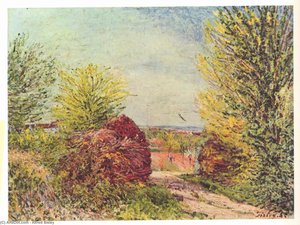
Cornfield
 Oil On Canvas
- WallArt
- Impressionist Landscape Painting
 1873
1873- 19th Century
 50.0 x 73.0 cm
Experience Alfred Sisley’s ‘Cornfield,’ a serene Impressionist landscape capturing rural tranquility in 1873. This hand-painted reproduction evokes the beauty of nature with soft brushstrokes and vivid colors – discover your perfect piece.
 Ver mais
Alfred Sisley: mestre impressionista da serenidade, capturou luz e paisagens francesas com delicadeza e beleza atemporal. Descubra suas obras!
Giclée / Impressão de Arte
Impressão giclée ou em tela de qualidade de museu, com produção rápida e opções flexíveis de acabamento. ( Encomendar reprodução pintada à mão Ver Imagem Digital)




P118B €10

P118H €10

P118W €10

P438Z €10

P508JH €12

P508YH €12

P805H €10

P805Z €10

P919BZ €10

P919G €10

P919XJ €10

P959ZH €10

P968JZ €12

W106C €8

W218G €10

W218JH €8

W218Y €10

W307PJ €10

W316G €10

W316PJ €8

W316Y €10

W398PJ €8

W4111J €10

W500HY €15

W500JH €15

W692G €12

W849H €8

W940BG €15

W953PJ €8




Padrão
sob medida
CM
INCH
Escolha entre os nossos tamanhos pré-definidos que respeitam as proporções originais da obra de arte.
Loading sizes...

largura
altura
Digite a largura e a altura de que necessita, para se ajustar à sua moldura ou à sua parede. Uma impressão só pode ser cortada, nunca ampliada além da imagem original, pelo que um tamanho com uma proporção diferente perderá parte da imagem. Enviamos-lhe uma maquete digital para aprovação antes de imprimirmos qualquer coisa. A imagem apresentada nesta página não mostra o corte real — apenas a maquete o faz.
Entrega mundial () em 2 semanas, em vez das 4/5 semanas padrão. (15 Outubro)

Envio expresso gratuito para todo o mundo

Tela de Linho Premium

Seguro de transporte total

Garantia de Reembolso de Impostos Alfandegários

Garantia de Fidelidade de Cor

Política de Devolução em 100 Dias (Apenas para Defeitos)

Garantia de reembolso de 100%

Desconto para múltiplas unidades
 A opção de vidro está disponível apenas para tamanhos inferiores a 110 cm

Cornfield
Giclée / Impressão de Arte
Dimensões da Reprodução
-


Preço Total
€ 60
A Moment Frozen in Light: Alfred Sisley's "Cornfield"
Alfred Sisley’s “Cornfield,” painted in 1873, isn’t merely a depiction of a rural scene; it’s an exquisite distillation of Impressionist philosophy – a fleeting capture of light and atmosphere that speaks to the very soul of nature. Measuring 50 x 73 cm, this oil on canvas invites us into a world where tranquility reigns supreme, a world rendered with Sisley's signature soft brushstrokes and a masterful understanding of color’s transformative power. The painting immediately draws the eye to the expansive field, dominated by tall grasses that ripple in an unseen breeze, leading the gaze towards a backdrop of gently swaying trees – a classic motif within French landscape art, evoking a sense of timelessness and pastoral beauty.
- Subject Matter: A quintessential rural scene—a cornfield bathed in the diffused light of a cloudy sky.
- Artist: Alfred Sisley, a key figure in the Impressionist movement.
- Date: 1873 – a pivotal year for Impressionism’s development.
Impressionistic Technique and Color
Sisley's genius lies not just in what he depicts but *how* he depicts it. The painting is a testament to the Impressionist obsession with capturing the ephemeral effects of light. Notice how the colors aren’t blended or smoothed; instead, they are applied in short, broken strokes – a technique designed to mimic the way our eyes perceive color and light. The dominant hues—greens, blues, and browns—are subtly modulated, creating an illusion of movement and vibration. This isn't a static representation of a field; it’s a vibrant, living scene, infused with the energy of sunlight filtering through the clouds. The artist skillfully uses complementary colors – the blue sky juxtaposed against the green fields – to heighten visual impact and create a sense of depth.
Historical Context: A New Vision of Landscape
"Cornfield" was created during a period of profound artistic change in France. Following the academic traditions that had dominated art for centuries, artists like Sisley were challenging established norms, seeking to represent their observations of the world directly, without idealization or preconceived notions. The Impressionists weren't interested in painting grand historical scenes or mythological subjects; they wanted to capture everyday life – and in this case, the beauty of the French countryside – with honesty and immediacy. This work reflects a shift towards valuing subjective experience and sensory perception, hallmarks of the burgeoning modern art movement.
Symbolism and Emotional Impact
Beyond its technical brilliance, “Cornfield” possesses a quiet emotional resonance. The inclusion of figures—perhaps farmers tending to their land or simply enjoying the peaceful surroundings—adds a human element to the scene, suggesting themes of labor, community, and connection with nature. The horse, a symbol of rural life and strength, further reinforces this narrative. Ultimately, Sisley’s “Cornfield” is an invitation to pause, to breathe, and to appreciate the simple beauty of the natural world – a timeless message that continues to resonate with viewers today.
Perguntas e Respostas
"Cornfield" de Alfred Sisley é uma obra de arte clara ou escura?
A luminosidade percebida de "Cornfield" de Alfred Sisley é bright. Ela pode ser harmonizada com a iluminação do espaço pretendido.
Quais são as dimensões da obra original "Cornfield" de Alfred Sisley?
A obra original "Cornfield" de Alfred Sisley mede 50 x 73 cm.
Como o meio e o movimento se combinam em "Cornfield"?
"Cornfield" é feita em Oil On Canvas, no estilo Impressionist Landscape Painting.
Obras Relacionadas



Biografia do Artista
A Life Immersed in Light and Landscape
Alfred Sisley, a name often whispered alongside those of Monet, Renoir, and Pissarro, occupies a unique and profoundly beautiful space within the Impressionist movement. Born in Paris on October 30, 1839, to British parents—William Sisley, a silk merchant, and Felicia Sell, a music enthusiast—he carried a dual heritage that subtly informed his artistic vision. Though he would spend nearly his entire life in France, Sisley retained British citizenship, a fact that brought him personal disappointment later in life when applying for French naturalization was refused. His early years were comfortably bourgeois, affording him the opportunity to pursue studies initially intended for a commercial career in London at the age of eighteen. However, the allure of art proved too strong, and he returned to Paris in 1861, embarking on formal training under Swiss artist Marc-Charles-Gabriel Gleyre at the École des Beaux-Arts. It was here, amidst the burgeoning artistic ferment of the era, that Sisley forged crucial friendships with Monet, Renoir, and Bazille—relationships that would profoundly shape his artistic trajectory. These companions shared a rebellious spirit, rejecting the rigid conventions of academic painting in favor of capturing the fleeting effects of light and atmosphere directly from nature.The Quiet Master of Impressionism
Sisley’s dedication to *plein air* painting—working outdoors, directly observing the natural world—was unwavering. Unlike some of his contemporaries who experimented with diverse genres, Sisley remained steadfastly committed to landscape throughout his career. This focused devotion allowed him to refine a distinctive style characterized by tranquility, delicate color palettes, and a subtle rendering of light. His canvases are often awash in pale shades of green, pink, purple, dusty blue, and cream, creating an atmosphere of serene contemplation. While the early works remain largely lost to time, his mature paintings reveal a meticulous observation of nature combined with a poetic sensibility. He wasn’t interested in grand narratives or dramatic gestures; instead, he found beauty in the everyday—in the gentle flow of rivers, the dappled light filtering through trees, and the quiet charm of rural life. His early struggles for recognition were compounded by his father's financial difficulties following the Franco-Prussian War in 1870, forcing Sisley to rely solely on the sale of his art for sustenance—a precarious existence that shadowed much of his career. He was a true Impressionist, but one who often labored in relative obscurity during his lifetime.Rivers, Canals, and the Essence of Place
Recurring themes permeate Sisley’s oeuvre, most notably his fascination with water. River landscapes became a signature subject, exemplified by his series of paintings created during a trip to England in 1874 along the Thames near Molesey. These works, capturing the tranquil beauty of the river and its surroundings, are considered among his finest achievements—a “perfect moment of Impressionism,” as art historian Kenneth Clark described them. He also developed a deep connection with Moret-sur-Loing, where he lived for many years, immortalizing its canals, bridges, and surrounding countryside in numerous canvases. Paintings like "Watermill near Moret," "Barges on the Loing Canal, Spring", and “Fields around the Forest” showcase his ability to imbue ordinary scenes with a sense of poetic grace. He didn’t merely depict these places; he captured their *essence*, conveying not just what they looked like but how they felt—the gentle breeze, the warmth of the sun, the quiet murmur of the water. This sensitivity to atmosphere and mood is perhaps Sisley's most enduring legacy.Influences and a Lasting Legacy
Sisley’s artistic influences were multifaceted. Gleyre’s academic training provided a foundation in technique, while the camaraderie with Monet, Renoir, and Bazille fostered a shared commitment to Impressionist principles. He absorbed their emphasis on capturing fleeting moments of light and atmosphere but developed his own unique voice—one characterized by restraint and subtlety. Though he often labored in relative obscurity during his lifetime, Sisley’s work is now celebrated for its beauty, sensitivity, and unwavering dedication to portraying nature. His influence can be seen in the works of later landscape painters who sought to capture the ephemeral qualities of light and atmosphere with similar nuance. He was a true Impressionist, but one who often labored in relative obscurity during his lifetime.Historical Significance
Sisley’s historical significance extends beyond his technical skill and aesthetic sensibility. His unwavering commitment to *plein air* painting, even in the face of financial hardship and critical indifference, paved the way for future generations of artists who sought to break free from academic conventions and embrace a more direct engagement with nature. His paintings offer a glimpse into a rapidly changing world—a world on the cusp of modernity—and remind us of the enduring power of art to capture the beauty and tranquility that can be found even in the most humble of landscapes. He was, and remains, a master of light, atmosphere, and the quiet poetry of the natural world.- Major Themes: Landscapes, riverscapes, canals, rural life, atmospheric effects.
- Key Characteristics: Delicate color palettes, subtle rendering of light, tranquil mood, *plein air* painting.
- Influences: Marc-Charles-Gabriel Gleyre, Claude Monet, Pierre-Auguste Renoir, Frédéric Bazille, Barbizon school painters.

Alfred Sisley
1839 - 1899 , França
Informações Rápidas
- Artistic Movement Or Style: Impressionismo
- Artists Or Movements Influenced By This Artist: ['Barbizon']
- Artists Who Influenced This Artist:
- Gleyre
- Monet
- Renoir
- Date Of Birth: 1839-10-30
- Date Of Death: 1899-01-29
- Full Name: Alfred Sisley
- Nationality: Britânico-Francês
- Notable Artworks:
- Rio Sena
- Moinho
- Canteiros
- Place Of Birth: Paris, França
Artigos Relacionados

The Soul of Impressionism: Why Oil on Canvas Captures Eternal Light and Timeless Emotion
Discover the enchanting alchemy of Impressionism. Explore how the mastery of oil on canvas, through glazing and impasto, captures eternal light and emotion. Perfect for lovers of Monet and Van Gogh seeking the profound depth of hand-painted fine art.
Capturing Emotion: A Journey Through the Soul of Expressionist Landscapes
Explore the profound emotional depth of Expressionist landscapes. Discover how Post-Impressionist masters moved beyond light to capture the soul through vibrant color and form. A curated journey for true art lovers seeking the beauty of expressive mastery.
Explore obras de arte organizadas por temas, estilos e características.


