

 Náhľad v interiéri
 Odoslať ako digitálnu kartu
 Zdieľať
 Podrobnosti o dielo
 Príručka

 Stiahnuť obraz
 Podobné položky
 RTG skúška
 Prehliadanie diapozoje
 Q&A
Q&A Štatistiky
Study of Four Heads

- 72.0 x 63.0 cm


Experience Gerard David's 'Study of Four Heads,' a captivating Renaissance portrait showcasing human emotion and masterful technique. Own a stunning reproduction of this iconic masterpiece today!
 Zobraziť viac
Gerard David (1460-1523) bol významný fléminský maliar známy svojimi živými farbami, detailnými náboženskými scenami a inovatívnymi krajinami. Jeho diela predstavujú prechod medzi stredovekom a renesansou a ovplyvnili ďalších umelcov.
Giclée / Umenotlač
Giclée tlač alebo plátno múzeálnej kvality s rýchlou výrobou a rôznymi možnosťami povrchovej úpravy. ( Kúpiť ručne maľovaný obraz Prepnúť na digitálny obraz)




P118B €10

P118H €10

P118W €10

P438Z €10

P508JH €12

P508YH €12

P805H €10

P805Z €10

P919BZ €10

P919G €10

P919XJ €10

P959ZH €10

P968JZ €12

W106C €8

W218G €10

W218JH €8

W218Y €10

W307PJ €10

W316G €10

W316PJ €8

W316Y €10

W398PJ €8

W4111J €10

W500HY €15

W500JH €15

W692G €12

W849H €8

W940BG €15

W953PJ €8




Štandardné
na mieru
CM
INCH
Vyberte si z našich preddefinovaných rozmerov, ktoré zodpovedajú pôvodným pomeroḿ diela.
Loading sizes...

šírka
výška
Zadajte šírku a výšku, ktoré potrebujete, aby sa reprodukcia hodila k vášmu rámu alebo stene. Print možno len orezávať, nikdy však nemennú veľkosť zvětšiť oproti pôvodnému obrázku, preto pri inom formáte stráca časť obrazu. Pred samotným vytlačiacím procesom vám pošleme digitálny náhľad na schválenie. Obrázok zobrazený na tejto stránke nezobrazuje reálny rez — len digitálny náhľad ukazuje presný výsledok.
Celosvetová doprava () do 2 týždňov namiesto štandardných 4 až 5 týždňov. (2 november)

Bezplatná expresná doprava po celom svete

Vysokokvalitné lnianske plátno

Kompletné poistenie prepravy

Záruka vrátenia colného poplatku

Záruka presného farebného zhodnutia

100-dená politika vrátenia tovaru (iba pri vadách)

100% záruka vrátenia peňazí

Zľava pri väčšom množstve
 Možnosť skla je dostupná len pri rozmeroch pod 110 cm

Study of Four Heads
Giclée / Umenotlač
Veľkosť reprodukcie
-


Celková cena
€ 61
The Enigmatic Faces: Unveiling Gerard David’s Study of Four Heads
Gerard David's Study of Four Heads, a masterpiece crafted in 1500, isn’t merely a portrait; it’s an intimate exploration of the human condition. Housed within the National Gallery of Canada, this oil painting transcends its simple subject matter to become a profound meditation on emotion, perspective, and the burgeoning humanist ideals of the Northern Renaissance. David, a master of his craft and shrouded in intriguing historical mystery – a figure whose life remains largely undocumented yet whose art speaks volumes – employed a technique that’s both meticulously detailed and remarkably expressive. The painting's power lies not just in its technical brilliance but in its ability to evoke a spectrum of feelings through the subtle shifts in each head’s countenance.
A Symphony of Line and Light: The Artist’s Signature Style
David's distinctive style is immediately recognizable. He was a master of intricate line work, meticulously rendering the textures of skin, hair, and clothing with an almost obsessive attention to detail. His use of shading creates a remarkable sense of depth and volume, lending each head a tangible presence within the frame. The painting’s palette is restrained – primarily dark browns, ochres, and creams – which allows David's masterful manipulation of light and shadow to truly shine. Notice how he uses highlights to accentuate the contours of the faces, drawing the viewer’s eye to the most expressive features. This careful control over line and light is a hallmark of the Early Netherlandish tradition, and David was undoubtedly one of its foremost practitioners.
Deconstructing Emotion: A Study in Contrasts
The genius of Study of Four Heads lies in its ability to convey a range of emotions through subtle variations in expression. The first head, presented in profile, exudes an intensity born from a focused gaze and a strong jawline – a sense of unwavering determination. In stark contrast, the second head, also in profile but facing left, possesses a more contemplative demeanor, with softer features and a gentle expression that suggests serenity. The third head, depicted in a three-quarter view, embodies a heightened state of emotion, marked by furrowed brows and a direct, almost challenging gaze. Finally, the fourth head, shown in a three-quarter view facing right, offers a moment of quiet repose, with closed eyes and a relaxed facial structure – a palpable sense of tranquility. David doesn’t simply depict faces; he captures fleeting moments of human experience, inviting us to contemplate the complexities of emotion.
Historical Context: Bridging Tradition and Renaissance Humanism
Created in 1500, this painting reflects the dynamic artistic landscape of the Northern Renaissance. Gerard David was a pivotal figure who skillfully blended late medieval traditions with the emerging principles of Renaissance humanism. The meticulous detail and realistic portrayal of the heads are reminiscent of earlier Flemish portraiture, while the emphasis on capturing individual expression aligns with the humanist focus on the dignity and complexity of the human being. The painting’s origins – a study for a larger work, likely a panel or altarpiece – further illuminate its significance within the context of Renaissance artistic practice, where preparatory drawings were considered essential tools for artists.
TopImpressionists.com offers a stunning handmade oil painting reproduction of Study of Four Heads, allowing art lovers to own a piece of this remarkable historical and artistic achievement. For more information on Gerard David and his works, please visit our online gallery or explore the resources at Wikipedia.
Otázky a odpovede
Ako sa vzájomne dopĺňajú farby diela „Study of Four Heads“?
Farebná harmónia diela „Study of Four Heads“ je charakterizovaná ako Unified Palette.
Ako sa v díle „Study of Four Heads“ od Gerard David stretávajú umelecký smer a éra?
Dielo „Study of Four Heads“ od Gerard David patrí do smeru Early Netherlandish Painting, v rámci éry Renesancia svojho autora.
Môžem si „Study of Four Heads“ od Gerard David pred kúpou pozrieť na vlastnej stene?
Dielo „Study of Four Heads“ od Gerard David si môžete vyskúšať priamo na vašej stene pomocou rozšírenej reality na kompatibilnom zariadení na stránke Náhľad v AR pre AR náhľad.
Biografia umelca
A Master of Flemish Light: The Enigmatic World of Gerard David
Gerard David, a name that resonates with the brilliance of early Netherlandish painting, remains an artist shrouded in intriguing mystery. Born around 1460 in Oudewater, Netherlands, his life story is pieced together from fragmented archival records and the eloquent testimony of his art. Unlike some contemporaries whose lives are richly documented, David’s personal narrative is sparse, allowing his paintings to speak volumes where biographical details fall silent. What is known suggests a remarkably successful career, likely managing workshops in both Antwerp and Bruges – centers of artistic innovation during the Renaissance. His reputation experienced an ebb in the 17th century, only to be gloriously resurrected by 19th-century art historians who recognized his unique contributions to the Northern Renaissance. He was inducted as a free master into the Corporation of Imagemakers and Saddlers in Bruges in 1484, marking a pivotal moment in his ascent. His later involvement with the Antwerp guild in 1515 further solidifies his standing within the artistic community.Formative Influences and Artistic Development
David’s artistic journey began under influences that shaped the very foundation of his style. Early works reveal a clear debt to painters like Jacob Janszoon, Dieric Bouts, and Geertgen tot Sint Jans – masters who instilled in him a meticulous attention to detail and a sensitivity to religious narrative. It is believed he spent time in Haarlem absorbing these lessons before relocating to Bruges, a vibrant hub of artistic exchange attracting talent from across Europe. Here, David encountered the masterpieces of Jan van Eyck, Rogier van der Weyden, and Hans Memling, absorbing their techniques while forging his own distinct path. He didn’t merely imitate; he synthesized these influences into something uniquely his own – a style characterized by luminous color, serene compositions, and an increasingly sophisticated understanding of landscape. His early paintings demonstrate this evolution, moving from the doll-like figures reminiscent of Haarlem traditions towards more sculptural forms grounded in their environment. This transition is visible in works like *Christ Nailed to the Cross*, where the influence of Bouts’ spatial construction blends with David’s emerging coloristic sensibility. The meticulous detail and realistic portrayal of textures, a hallmark of Van Eyck's work, are subtly incorporated into David’s compositions, while the emotional intensity found in Memling’s paintings informs his depictions of religious scenes.Innovation in Landscape and Religious Narrative
Gerard David’s artistic signature lies in his innovative approach to both landscape and religious subject matter. He wasn’t simply depicting backgrounds; he was creating immersive environments that enhanced the emotional resonance of his scenes. His landscapes are not merely decorative, but integral components of the narrative, often imbued with symbolic meaning. This fascination with natural settings – dense forests, rolling hills, expansive skies – set him apart from many of his contemporaries and foreshadowed the development of landscape painting as an independent genre. Consider *View in a Forest*, outer wing of a triptych; it’s not simply a backdrop but a world unto itself, rendered with meticulous detail and atmospheric perspective. Within his religious works, David demonstrated a remarkable ability to convey both profound spirituality and human emotion. Paintings like *The Marriage of St. Catherine* exemplify this skill. The scene is rendered with exquisite detail, yet it's the subtle expressions on the figures’ faces – their piety, contemplation, or gentle joy – that truly captivate the viewer. He possessed a gift for imbuing his sacred subjects with a sense of quiet dignity and relatable humanity. The *Triptych of the Madonna Enthroned and Saints* in Genoa showcases this mastery, presenting a harmonious composition filled with vibrant color and delicate detail. His *Virgin Among the Virgins*, donated to the Carmelite nuns of Sion at Bruges, is another testament to his skill, featuring a self-portrait within the painting itself – a rare and intimate gesture from an artist of his time. This blending of realism with symbolic representation, combined with a deep understanding of human psychology, distinguished David’s work from that of many of his peers.A Period of Flourishing and Artistic Output
During his active career, spanning roughly from 1484 to 1523, Gerard David produced an impressive body of work, encompassing religious panels, altarpieces, and individual portraits. He established workshops in both Antwerp and Bruges, employing assistants who helped him realize his ambitious visions. His output reflects a remarkable versatility – he mastered the techniques of oil painting, tempera, and fresco, adapting his approach to suit the specific demands of each commission. Notable works from this period include *The Marriage of St. Catherine*, *The Adoration of the Magi*, and numerous depictions of the Virgin Mary with the Child Jesus. These paintings demonstrate a remarkable command of color, composition, and detail, showcasing David’s growing mastery of his craft. He was particularly adept at creating atmospheric effects through the use of light and shadow, lending depth and realism to his scenes. His later works often exhibit a more contemplative mood, reflecting perhaps a shift in his artistic focus as he approached the end of his life.Legacy and Enduring Influence
Though his fame waned for a period after his death in 1523, Gerard David’s influence on subsequent generations of artists is undeniable. His innovative use of color, his masterful handling of light and shadow, and his pioneering approach to landscape all left an indelible mark on the development of Flemish painting. He paved the way for artists who would further explore the expressive potential of natural settings, such as Jacob Patinir and Jacob van Ruisdael.- A Bridge Between Traditions: David successfully bridged the gap between the late medieval tradition and the emerging Renaissance style.
- Influence on Landscape Painting: His detailed and atmospheric landscapes foreshadowed the development of landscape as a distinct genre.
- Masterful Colorist: He was renowned for his vibrant palette and skillful use of color to create emotional impact.
Exploring Further
- TopImpressionists.com: Discover an extensive collection of Gerard David’s paintings, including *The Adoration of the Magi*.
- View in a Forest: Explore this stunning Northern Renaissance landscape painting.
- The Early Netherlandish Art Movement: Delve deeper into the artistic context of David’s work.

Gerard David
1450 - 1523 , Nízka Holandsko
Základné informácie
- Artistic Movement Or Style: Raná flemingská malba
- Artists Or Movements Influenced By This Artist:
- Jan van Eyck
- Rogier van der Weyden
- Artists Who Influenced This Artist:
- Jacob Janszoon
- Dieric Bouts
- Date Of Birth: c. 1460
- Date Of Death: 1523
- Full Name: Gerard David
- Nationality: Holanďan
- Notable Artworks:
- Svadba v Kana
- Madona na dreve
- Zobrazenie lesa
- Place Of Birth: Oudewater, Holandsko
Súvisiace články

Gerard David: Bridging Late Medieval Tradition with Early Renaissance Humanism
Explore the captivating world of Gerard David, a pivotal figure bridging late medieval artistry with the Early Renaissance. Discover his innovative techniques, religious masterpieces, and enduring legacy – a must-read for discerning art collectors.

The Enduring Gaze: Portraiture's Historical & Psychological Evolution
Explore the rich history of portraiture with expert analysis from TopImpressionists. Discover iconic Renaissance masterpieces, symbolism & techniques that shaped identity. Find museum-quality art for your collection.
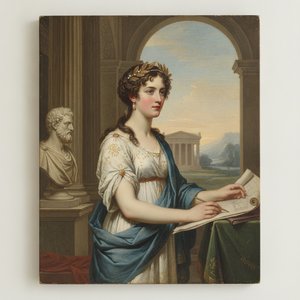
The Revival of Antiquity: Exploring Ideals of Beauty & Power in Neoclassical Portraiture
Explore the captivating world of Neoclassical portraiture! Discover the power & ideals behind masterpieces by David, Girodet & more. Expert analysis, custom reproductions & art appraisal at TopImpressionists.

The Enduring Legacy of Formal Portraiture: Power, Identity & Artistic Exploration
Explore the rich history of formal portraiture & its enduring power to capture identity and shape perception. Discover investment-worthy artworks, expert appraisals, and custom reproduction services at TopImpressionists.

Leonardo da Vinci: Top 25 majstrovských diel pre váš domov | TopImpressionists.sk
Objavte top 25 majstrovských diel Leonarda da Vinci! Prežite príbehy Mona Lisy, Poslednej večere a ďalších renesančných pokladov. Kvalitné reprodukcie obrazov pre váš domov na TopImpressionists.sk. Preskúmajte celú kolekciu online.
Preskúmajte umelecká diela usporiadané podľa tém, štýlov a charakteristík.


