

Zobrazené: · Včetně rámov:
 Náhľad v interiéri
 Odoslať ako digitálnu kartu
 Zdieľať
 Podrobnosti o dielo
 Príručka

 Stiahnuť obraz
 Podobné položky
 RTG skúška
 Prehliadanie diapozoje
 Otázky a odpovede
 Štatistiky
- 23.0 x 17.0 cm


€ 240
Ručne maľovaná olejová reprodukcia
Ručne maľovaný olej na plátne vo vašej zvolenej veľkosti a v ráme, vyrobený na mieru našimi umelcami. ( Prepnúť na tlač Prepnúť na digitálny obraz)
Veľkosť
·Štandardné
na mieru
CM
INCH
Vyberte si z našich preddefinovaných rozmerov, ktoré zodpovedajú pôvodným pomeroḿ diela.
Načítavanie veľkostí...

šírka
výška
Zadajte šírku a výšku, ktoré potrebujete, aby sa dielo hodilo k vášmu rámu alebo stene. Keďže ide o ručnú maľbu, pri rozmeroch s odlišným pomerom strán môže umelec namalovať o niečo viac okolo obrázka alebo ho mierne orezatú — výber patrí vám. Pred začatím maľovania vám pošleme digitálnu ukážku na schválenie. Obrázok zobrazený na tejto stránke nenahrádza reálny výsledok — ten zobrazuje iba digitálna ukážka.
 Zobraziť viac
Dokončenie
·
Biele okraje €1

rozostrené okraje €1

Vytiahnutý okraj €1

P118B €10

P118H €10

P118W €10

P438Z €10

P508JH €12

P508YH €12

P805H €10

P805Z €10

P919BZ €10

P919G €10

P919XJ €10

P959ZH €10

P968JZ €12

W106C €8

W218G €10

W218JH €8

W218Y €10

W307PJ €10

W316G €10

W316PJ €8

W316Y €10

W398PJ €8

W4111J €10

W500HY €15

W500JH €15

W692G €12

W849H €8

W940BG €15

W953PJ €8

H24-GOLD €30

H24-SILVER €30

H36-GOLD €45

H36-SILVER €45
Dodávané v ochrannom tubuse, pripravené na vlastné orezanie a paspartu u vášho kaderníka.
Dodatkové služby
voliteľnéČo si všetko zahŕňajú extra položky?
Príklady toho, čo je možné zmeniť: nahradenie tváre fotkou zákazníka; pridanie domáceho miláčika (napr. nahradenie mačky psom); začlenenie skrytého správy do pozadia; zmena krajiny alebo prvkov v pozadí.
Po objednávke vám tím TopImpressionists.com pošle e-mail s pokynmi a poskytne náhľad návrhu
Po objednávke vám tím TopImpressionists.com pošle e-mail s pokynmi a poskytne náhľad návrhu
Celosvetová doprava () za 3 až 4 týždne namiesto štandardných 5 týždňov. (7 november). Bez kompromisov v kvalite.
Ochranný lak
Popisné označenie
Detaily vygravírovaného bronzového pláka
This elegant plaque features the artist's name and the title of the artwork, finely engraved for a timeless presentation.
It is made from bronze with a refined, elegant finish. The text is precisely laser-engraved for a sharp and permanent result. Measuring 9x2 cm, the plaque is compact yet easy to read. It's built to be durable and scratch-resistant, offering a professional, museum-quality look. Mounting is simple thanks to the included adhesive backing.
Detaily transparentnej akrylovej plăty
The plaque includes essential engraved details such as the artist's name, the title of the artwork, the date it was created, the type of media used-like oil on canvas or watercolor-a brief description of the piece, and a QR code that links to the complete artwork information.
It is crafted from clear acrylic, offering a sleek, modern appearance. The text is UV-engraved in black to ensure strong visual contrast. With a size of 10x15 cm, it ensures optimal readability. It comes equipped with two metal hooks for secure wall mounting. The plaque is designed to be weather-resistant, making it suitable for various environments, and it includes interactive features that work seamlessly with smartphone scanning.
Detaily čiernej akrylovej plăty
This elegant plaque includes engraved information such as the artist's name, the title of the artwork, the date it was created, the type of media used (like oil on canvas or watercolor), a short description of the artwork, and a QR code for quick access to more information.
The plaque itself is made from refined black acrylic with a premium finish. The text is laser-engraved in white for high contrast and readability. Its size is 10x15 cm, designed to be easy to read. It comes with two metal hooks for professional mounting. The design is sleek and fits any interior style. It is also weather-resistant and durable, with built-in digital integration for mobile compatibility.
Možnosť skla je dostupná len pri rozmeroch pod 110 cm
 Možnosť skla je dostupná len pri rozmeroch pod 110 cm
- Bezplatná expresná doprava po celom svete
- Vysokokvalitné lnianske plátno
- Kompletné poistenie prepravy
- Záruka vrátenia colného poplatku
- Záruka presného farebného zhodnutia
- 100-dená politika vrátenia tovaru (iba pri vadách)
- 100% záruka vrátenia peňazí
- Zľava pri väčšom množstve


Popis zberateľského predmetu
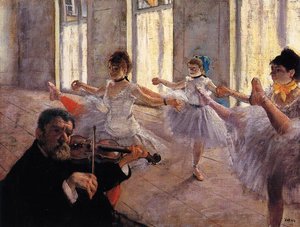
This pastel depicts a ballerina taking a bow, showcasing Degas's masterful observation of movement and form. Inspired by ballet classes and featuring subtle background figures, it exemplifies his distinctive blend of realism and Impressionism.
Biografia umelca
Edgar Degas: Revolučný francúzsky umelec známy svojimi fascinujúcimi obrazmi tanečníčok
O tomto obraze
A Study in Graceful Motion: Exploring Degas’s Dancer Bowing
The bronze sculpture “Dancer Bowing,” created by Hilaire Germain Edgar Degas around 1878, stands as a testament to the artist's unwavering fascination with capturing fleeting moments of movement and emotion. More than just a depiction of dance—though undeniably masterful in its portrayal—the piece embodies a broader philosophical inquiry into the human condition, reflecting Degas’s dual commitment to realism and Impressionism. This juxtaposition is precisely what elevates “Dancer Bowing” beyond mere visual representation; it invites contemplation on themes of vulnerability, grace, and the ephemeral beauty inherent in everyday life.The Artist's Vision: Realism Informed by Observation
Degas rejected the label of Impressionist, preferring to describe his approach as rooted in meticulous observation—a cornerstone of his artistic practice. Unlike Impressionists who sought to capture atmospheric effects primarily through color, Degas focused on anatomical accuracy and precise rendering of form. He spent countless hours studying dancers at the Paris Opera Ballet, painstakingly sketching them from life, capturing not just their posture but also subtle shifts in muscle tension and expression. This dedication to realism wasn’t driven by a desire for photographic likeness; rather, it stemmed from Degas's conviction that true artistic insight could only emerge from an honest engagement with reality. As he famously stated, “I don’t paint what I see; I paint what I feel.”Technique and Material: Bronze as Medium of Expression
The sculpture itself is crafted from bronze—a material chosen deliberately by Degas for its ability to convey both solidity and fluidity. The artist employed a technique known as *lost wax casting*, a process that involves creating a mold from wax, pouring molten metal into the mold, allowing the wax to burn away, and then reheating the remaining metal to solidify it into the final form. This method allowed Degas to achieve remarkable detail while maintaining structural integrity—a crucial consideration given the sculpture’s dynamic pose. The surface finish is subtly textured, enhancing the visual richness of the piece and contributing to its overall expressive quality. Careful polishing reveals the bronze's inherent luster, highlighting its sculptural contours and emphasizing the dancer’s graceful curve.Historical Context: Ballet Reform and Artistic Innovation
“Dancer Bowing” emerged during a period of significant reform within the ballet world—a movement spearheaded by Sergei Diaghilev to revitalize Russian ballet and introduce avant-garde artistic concepts into classical performance. Degas's involvement with Diaghilev’s Ballets Russes marked a pivotal moment in his career, exposing him to new influences and propelling him toward bolder stylistic explorations. The sculpture reflects this broader cultural shift—a willingness to challenge conventions and embrace experimentation as pathways to artistic advancement. It stands alongside other works produced during the Ballets Russes era, demonstrating Degas’s contribution to a movement that sought to redefine ballet's aesthetic boundaries.Symbolism and Emotional Resonance: Capturing the Essence of Performance
Beyond its technical prowess and historical significance, “Dancer Bowing” resonates deeply with viewers on an emotional level. The dancer’s bowed posture—a gesture signifying respect and acknowledgment—suggests a vulnerability that contrasts sharply with the sculpture's muscular form. This duality encapsulates Degas’s artistic preoccupation with portraying human emotion amidst physical constraints. The pose itself embodies grace, poise, and unwavering concentration—qualities associated with the ballet performer’s dedication to craft and artistry. Ultimately, “Dancer Bowing” invites us to contemplate not just the beauty of movement but also the profound capacity for human expression—a timeless theme that continues to captivate audiences today.Otázky a odpovede
Ako môžem získať digitálnu verziu diela „Dancer Bowing“ od Hilaire-Germain-Edgar Degas?
Digitálnu podobu diela „Dancer Bowing“ od Hilaire-Germain-Edgar Degas si môžete zakúpiť na jeho stránke Digitálna fotografia: stiahnutie digitálneho obrázka vo vysokom rozlíšení.
Aké miesto si v dejinách umenia predstavuje „Dancer Bowing“ od Hilaire-Germain-Edgar Degas?
„Dancer Bowing“ od Hilaire-Germain-Edgar Degas patrí do smeru Impressionistic Realism, v rámci obdobia 19th Century. Spolu tvoria miesto tohto diela v dejinách umenia.
Je možné si stiahnuť obraz "Dancer Bowing"?
Digitálnu verziu diela „Dancer Bowing“ od Hilaire-Germain-Edgar Degas si môžete stiahnuť na jeho stránke: Stiahnuť digitálnu verziu: stiahnutie digitálneho obrázka vo vysokom rozlíšení.
Rýchle fakty a umelecký kvíz
O umelcovite Hilaire-Germain-Edgar Degas

Hilaire-Germain-Edgar Degas
1834 - 1917, Francúzsko
Biografia umelca
A Life Immersed in Movement
Edgar Degas, vlastným menom Hilaire Germain De Gas, sa narodil v Paríži v roku 1834 a zomrel v roku 1917. Jeho život bol fascinujúci kontrast – často spájaný s impresionistami, hoci aktívne tento štítok odmietal, preferoval označenie ako realist. Tento záväzok vychádzal z jeho precízneho pozorovania sveta okolo seba a oddanosti zobrazovaniu ho s neoblomnou upřímností. Jeho rané roky boli pohodlné v buržoázskom prostredí; otec bol bankár, matka pochádzala z kreolskej rodiny v New Orleans. Tento pozadie mu poskytlo prístup k vzdelávaniu a umeleckému školeniu, hoci často sa sťažoval na akademické obmedzenia. Počiatok jeho vzdelávania začal, keď začal skopírovať diela v Louvri, kde si osvojil zručnosti a rozpalil vášeň pre klasickú umenie. Avšak Degas cesta nebola striktne založená na tradícii; bola to obmôrdzaná cesta s neustálym spochybňovaním a preskúmaním umeleckých noriem. Vlastnil nezávislý duch, ktorý definoval celý jeho životný cyklus.Beyond Impressionism: A Unique Artistic Vision
Zatiaľ čo súperi ako Monet hľadali mihotavé účinky svetla vonku, Degas väčšinou pracoval v priestoroch svojho štúdia, precízne budoval scény z pozorovaní a spomienok. Jeho témy boli jednoznačne moderné – odstupujúce od historických alebo mytologických motívov, ktoré uprednostňovali akademickí maliari. Hľadal inšpiráciu v dennodennom živote Parížanov: práve tieto ženy sa stali jeho najznámejším témou - švätky, speváčky kabaretu, obláčikárky a samozrejme, tanečníčky. Je táto fascinácia baletom, ktorá definuje veľkú časť jeho diela. Degas však nebol len umelec zobrazujúci krásnych tanečníkov; zachytával krutú realitu ich povolania – nekonečné skúšky, fyzické úsilie, krátke momenty grácie v svete tvrdého práce. Jeho kompozície sú často nezvyčajné, figúrky zobrazované nečakaným spôsobom a využívanie asymetrických usporiadkov, ktoré vytvárajú pocit dynamiky a okamžitosti. Bol majstrom v zachytávaní pohybu, nie cez rozmazané čiary alebo mlhavé efekty, ale pomocou presného pozorovania a starostlivého znázornenia tvaru. *Dancer, A Group of Dancers* a *Women Combing Their Hair* sú príkladmi jeho oddanosti zobrazovaniu ľudského tela v pohybe a odhaľovaní komplexnosti modernej spoločnosti. Nebol spokojný s povrchovou krása; hľadal pravdu pod povrchom.Influencie a umelecký rozvoj
Degas’s umelcký život bol ovplyvnený rôznymi vplyvom. Jeho rané vzdelanie kladlo dôraz na klasické princípy, najmä diela Jean-Auguste-Dominique Ingresa, ktorý zdôrazňoval zručnosť a presné znázornenie. Avšak Degas tiež obdivoval realistov, ako Gustave Courbet, ktorí vyzvali akademické konvencie a prosili o zobrazovanie súčasného života. Kľúčový moment v jeho rozvoji nastal prostredníctvom spriatelia Camille Pissarroa, vedúceho impresionistu, ktorý mu predstavil iných umelcov a povzbudil ho k experimentovaniu s novými technikami. Bol očarený japonskými rytinami – Ukiyo-e – ktoré ovplyvnili jeho použitie asymetrických kompozícií, ploché perspektívy a výrazné vzory. Experimentoval aj s fotografiou, uznával jej potenciál na štúdium pohybu a zachytávanie úsekov v čase. Táto ochota prijímať rôzne vplyvy do svojho diela je to, čo ho odlišuje a prispieva k jedinečnému charakteru jeho umenia. Nebol strachom z inšpirácie z rôznych zdrojov, spájajúc ich do niečoho úplne nového.Hlavné prínosy a historický význam
Edgar Degas zomrel v Paríži v roku 1917, nechávajúc za sebou dielo, ktoré dodnes fascinuje a inšpiruje publikum. Jeho inovatívny prístup k kompozícii, jeho mistrovská zručnosť a neoblomné zobrazovanie modernej spoločnosti mali hlboký dopad na chod umeleckej histórie. Otváril cestu budúcim generáciám umelcov, ktorí hľadali spôsob, ako sa oslobodiť od tradičných konvencií a skúmať nové spôsoby reprezentácie sveta okolo seba. Jeho vplyv je viditeľný v dielaach Pabla Picassa a Henriho Matissa medzi inými. Miestnosti múzea – vrátane Musée d’Orsay a Musée de l’Orangerie v Paríži – uchovávajú významné zbierky jeho maľieb, pastelí, sochy a rytiniek, čím zabezpečujú, že jeho dedičstvo bude trvať ďalšie generácie. Degas nebol len umelec zobrazujúci tanečníkov alebo jazdcov; bol pozorným pozorovateľom ľudskej povahy, majstrom tvaru a pohybu a skutočným inovatérom, ktorý predefinoval možnosti umenia.- Majster línie: Degas’s výnimočná zručnosť v kreslení ho odlišovala.
- Moderný život ako téma: Zamerával sa na súčasný parížsky život a odchýlil sa od tradície.
- Vplyv na budúcich umelcov: Jeho dielo hlboko ovplyvnilo Picassa a Matissa.
Rýchle fakty o umelcovi Hilaire-Germain-Edgar Degas
- Artistic Movement Or Style: Impressionizmus, Realizmus
- Artists Or Movements Influenced By This Artist:
- Picasso
- Matisse
- Artists Who Influenced This Artist:
- Ingres
- Courbet
- Pissarro
- Date Of Birth: 1834
- Date Of Death: 1917
- Full Name: Hilaire-Germain Edgar De Gas
- Nationality: Francúzsky
- Notable Artworks:
- Dancer and Tambourine
- The Ballet Class
- Degas in a Green Jacket
- The Collector
- Women Combing Their Hair
- Place Of Birth: Paríž, Francúzsko
Podobné diela



Preskúmajte umelecká diela usporiadané podľa tém, štýlov a charakteristík.


Hilaire-Germain-Edgar Degas
Dancer Bowing
() ·
Včetně rámov: · Ručne maľované olejom na plátne
Celkom