Lamidi Olonade Fakeye: A Legacy Carved in Yoruba Tradition
Born in Ila Orangun, Nigeria, in 1925, Lamidi Olonade Fakeye’s life was inextricably linked to the rich artistic heritage of his people – the Isedo Quarters of the Inurin compound. From a young age, he inherited a profound connection to sculpture, learning the ancient techniques of wood carving from his father and later receiving tutelage under the esteemed master sculptor George Bamidele Arowoogun. This lineage, spanning five generations of skilled artisans, profoundly shaped his artistic vision and established him as a pivotal figure in the evolution of Nigerian art.
Early life provided the foundation for Fakeye’s exceptional talent. He began carving at just thirteen years old, demonstrating an innate ability to translate symbolic narratives into tangible form. His apprenticeship with Arowoogun honed his skills, exposing him to traditional Yoruba motifs and techniques – a crucial element in understanding the depth of his later work. The choice of wood as his primary medium wasn’t arbitrary; it represented a deep respect for nature and a connection to the spiritual beliefs embedded within Yoruba culture. The selection of specific trees was often imbued with symbolic meaning, reflecting the desired qualities of the sculpture.
A Career Rooted in Cultural Expression
Fakeye's artistic journey gained momentum in 1960 with his first solo exhibition at the British Council in Nigeria, marking a significant step towards recognition. This early exposure paved the way for international acclaim, culminating in an artist-in-residence position at Western Michigan University in Kalamazoo, Michigan, in 1962 – a remarkable achievement for a Nigerian artist at that time. This period allowed him to engage with new artistic perspectives while retaining his commitment to portraying Yoruba themes and cultural values.
Throughout the 1960s and 70s, Fakeye’s career flourished. He was elected president of the Society of Professional Artists of Nigeria in 1964, solidifying his position as a leading voice within the Nigerian art community. His work began to attract international attention, with exhibitions held at the United States Information Service in Nigeria (1964) and later at institutions like the Smithsonian Institution in 1999 – a testament to the growing recognition of his artistic merit on a global scale. He also contributed significantly to the academic world, serving as a faculty member at the University of Ile-Ife from 1978 onward.
Themes and Techniques: The Essence of Yoruba Art
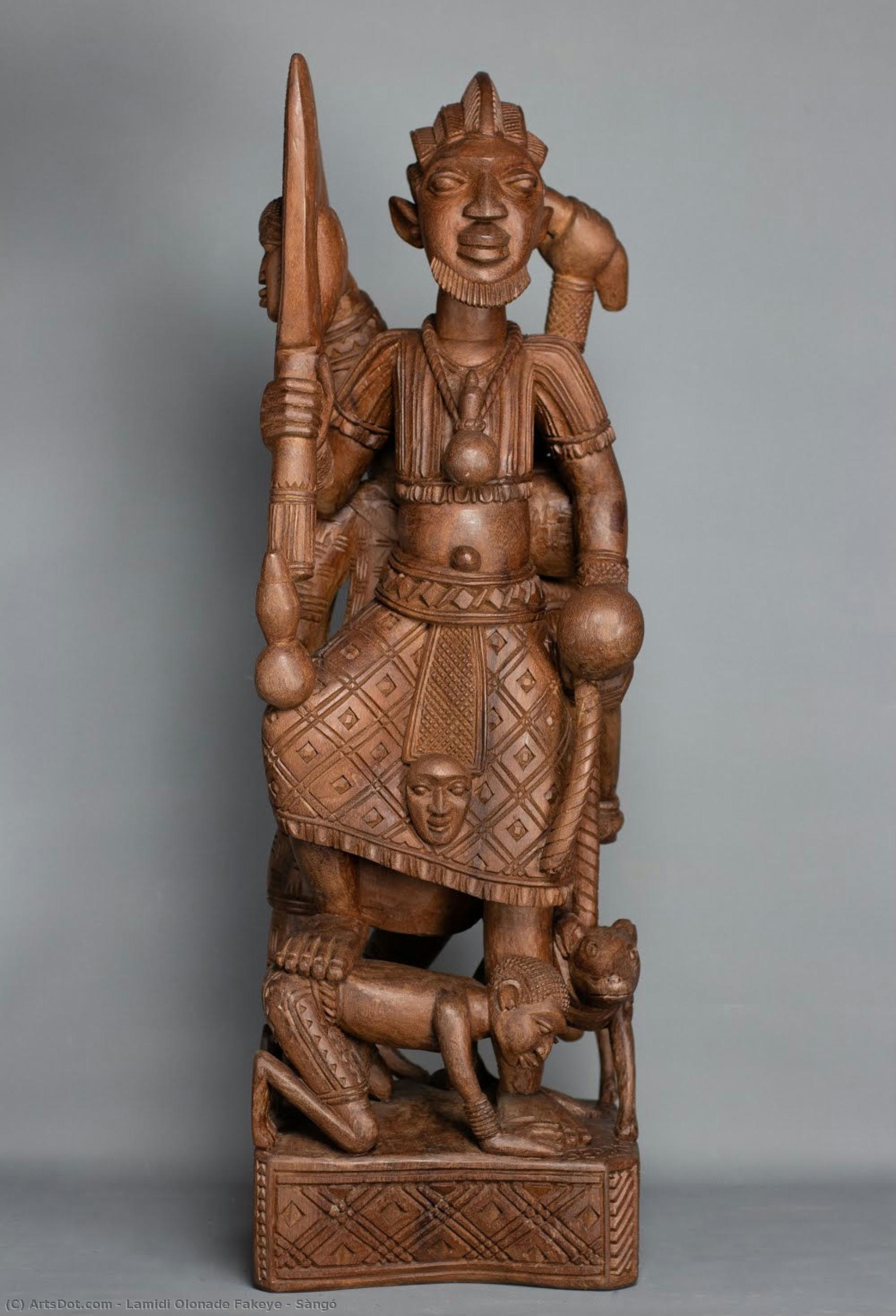
Fakeye’s sculptures are deeply rooted in Yoruba cosmology and mythology. His work frequently depicts ancestral figures, deities (Orishas), and scenes from traditional stories – all rendered with meticulous detail and imbued with symbolic significance. The use of *ighbale*, a distinctive carving technique involving the creation of intricate relief patterns, is particularly characteristic of his style. These patterns aren’t merely decorative; they are believed to hold spiritual power and represent the interconnectedness of the physical and spiritual realms.
Beyond the symbolic, Fakeye's technical mastery is evident in the smooth surfaces, graceful lines, and realistic portrayals of his subjects. He skillfully employed a variety of wood types – often Iroko or Ebony – each chosen for its tonal qualities and durability. His sculptures are not simply representations; they are imbued with life through careful attention to proportion, texture, and the subtle nuances of expression.
Legacy and Enduring Influence
Lamidi Olonade Fakeye’s death in Ile-Ife on December 25, 2009, marked the loss of a truly exceptional artist. However, his legacy continues to resonate through his enduring artwork, now housed by Johfrim Art and Design Studio. His contributions to the development of sculpture in Nigeria are undeniable, and he is remembered as a pivotal figure in preserving and promoting Yoruba artistic traditions. His retrospective exhibition at Hope College in Holland, Michigan, and the Smithsonian Institution further cemented his place within the canon of 20th-century African art.
Furthermore, the influence of Fakeye extends beyond his own creations. His nephew, Lukman Alade Fakeye, continues the family tradition, carrying forward the legacy of masterful wood carving and upholding the artistic values instilled by generations past. Lamidi Olonade Fakeye’s life and work stand as a powerful testament to the enduring power of art to connect individuals to their cultural heritage and to transcend geographical boundaries.


 Náhľad
 Kúpiť ručne maľovaný obraz
 Odoslať
 Zdieľať
 Podrobnosti o dielo

 Stiahnuť
 Podobné diela
 RTG skúška
 Prezentácia

 Zobraziť viac






































 Možnosť skla je dostupná len pri rozmeroch pod 110 cm



