
 Náhľad v interiéri
 Odoslať ako digitálnu kartu
 Zdieľať
 Podrobnosti o dielo
 Príručka

 Stiahnuť obraz
 Podobné položky
 RTG skúška
 Prehliadanie diapozoje
 Q&A
Q&A Štatistiky
The Herald newspaper

- 43.0 x 57.0 cm


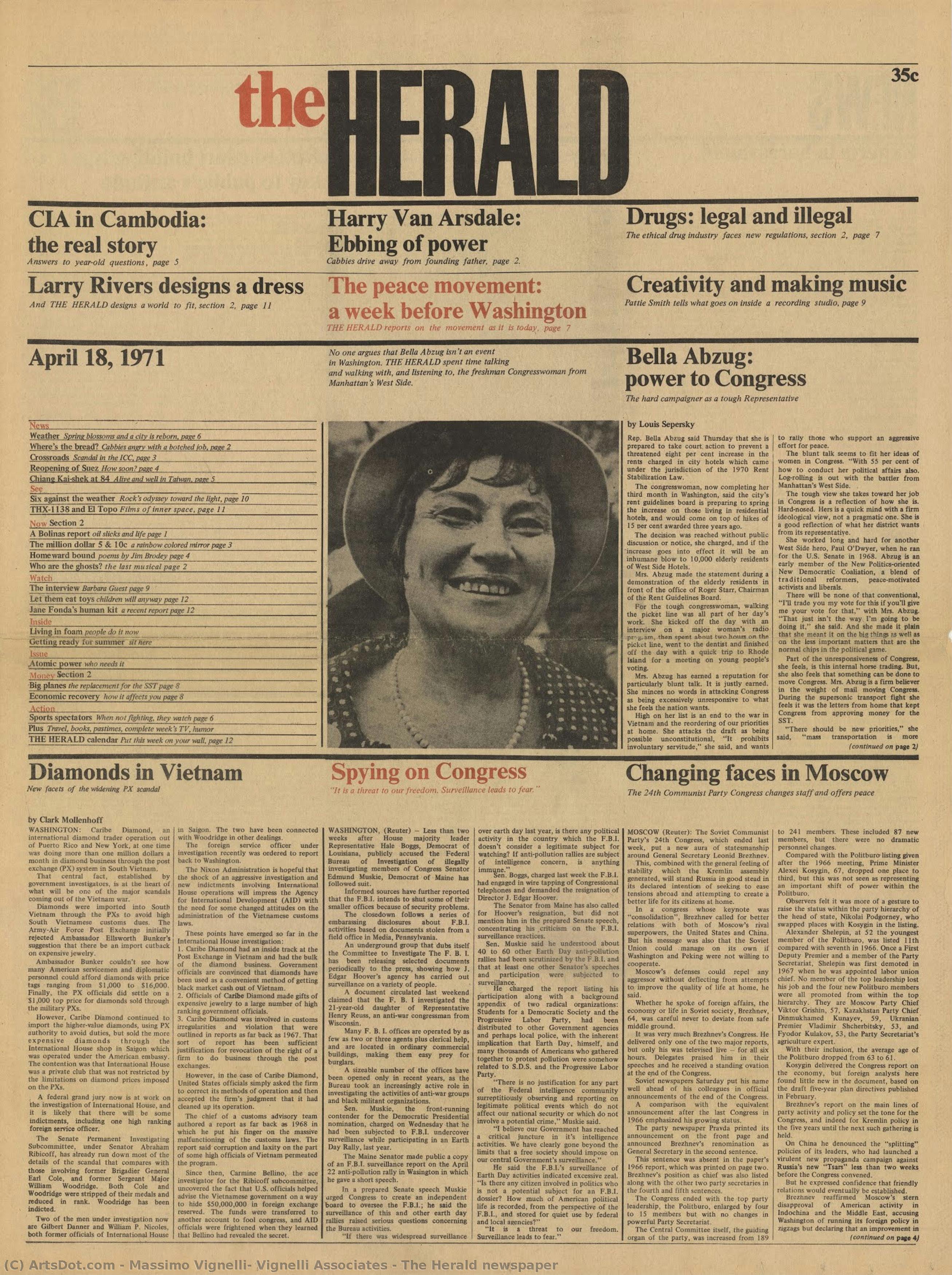
Experience the modernist grid design of The Herald newspaper by Massimo Vignelli (1971), showcasing vintage graphic communication art; discover this iconic piece today.
 Zobraziť viac
Slovenská Meta Popis: Massimo Vignelli (1931-2014) bol taliansky dizajnér a architekt známy najmä svojím ikonickým návrhom mapy metra NYC, minimalistickým štýlom a elegantnými korporátnymi identitami. Jeho diela formujú modernú kultúru.
Umelecké dielo zobrazené na tejto stránke je chránené autorským zákonom, čo znamená, že nemôžeme legálne vytvárať ani predávať jeho identickú reprodukciu. Táto ochrana je vymáhaná na základe medzinárodných dohôd, ako napríklad Bernská konvencia a národnými zákonmi, vrátane tých, ktoré sú stanovené v Autorské právo USA – Title 17. Všetky práva vyhradené.
Táto metóda plne dodržiava autorské práva, pretože nezahŕňa kopírovanie ani duplikovanie chráneného diela. Ide skôr o kreatívnu reinterpretáciu – nový obraz, ktorý je ovplybnený originálom, no nie je s ním identický.
Giclée / Umenotlač
Giclée tlač alebo plátno múzeálnej kvality s rýchlou výrobou a rôznymi možnosťami povrchovej úpravy. ( Kúpiť ručne maľovaný obraz Prepnúť na digitálny obraz)




P118B €10

P118H €10

P118W €10

P438Z €10

P508JH €12

P508YH €12

P805H €10

P805Z €10

P919BZ €10

P919G €10

P919XJ €10

P959ZH €10

P968JZ €12

W106C €8

W218G €10

W218JH €8

W218Y €10

W307PJ €10

W316G €10

W316PJ €8

W316Y €10

W398PJ €8

W4111J €10

W500HY €15

W500JH €15

W692G €12

W849H €8

W940BG €15

W953PJ €8




Štandardné
na mieru
CM
INCH
Vyberte si z našich preddefinovaných rozmerov, ktoré zodpovedajú pôvodným pomeroḿ diela.
Loading sizes...

šírka
výška
Zadajte šírku a výšku, ktoré potrebujete, aby sa reprodukcia hodila k vášmu rámu alebo stene. Print možno len orezávať, nikdy však nemennú veľkosť zvětšiť oproti pôvodnému obrázku, preto pri inom formáte stráca časť obrazu. Pred samotným vytlačiacím procesom vám pošleme digitálny náhľad na schválenie. Obrázok zobrazený na tejto stránke nezobrazuje reálny rez — len digitálny náhľad ukazuje presný výsledok.
Celosvetová doprava () do 2 týždňov namiesto štandardných 4 až 5 týždňov. (1 november)

Bezplatná expresná doprava po celom svete

Vysokokvalitné lnianske plátno

Kompletné poistenie prepravy

Záruka vrátenia colného poplatku

Záruka presného farebného zhodnutia

100-dená politika vrátenia tovaru (iba pri vadách)

100% záruka vrátenia peňazí

Zľava pri väčšom množstve
 Možnosť skla je dostupná len pri rozmeroch pod 110 cm

The Herald newspaper
Giclée / Umenotlač
Veľkosť reprodukcie
-


Celková cena
€ 61
The Grid of Modern Communication: Vignelli's The Herald
To encounter this piece is to step directly into the vibrant, structured chaos of mid-century New York journalism. This reproduction of The Herald newspaper from April 1971, conceived by Massimo Vignelli and his associates, is far more than mere ephemera; it is a meticulously designed artifact of visual communication history. It captures a moment when design principles—simplicity, functionality, and rigorous structure—were being aggressively applied to the seemingly unruly medium of print journalism. The very act of presenting this newspaper front page transforms what might be considered disposable media into a profound study in modernist graphic discipline.
A Masterclass in Structured Design
Vignelli’s genius, always rooted in an almost architectural understanding of space, is on full display here. The description notes the structure: a rigid grid of six columns and sixteen modules per column. This underlying skeleton dictates every element—the placement of headlines like "Diamonds in Vietnam," the accompanying portrait of the smiling woman, and the smaller articles detailing everything from spying congress to changing leaves in Moscow. Vignelli’s commitment to using a single typeface, Times Roman, across various weights and sizes, speaks volumes about his belief in universal legibility. It is a powerful testament to the idea that restraint—the disciplined use of negative space and consistent typography—can generate an overwhelming sense of order and sophistication.
Historical Resonance and Materiality
The year 1971 places this work within a fascinating cultural nexus, post-war modernism grappling with the burgeoning media landscape. While the paper itself ultimately folded due to distribution issues, its surviving design remains potent. For the collector or designer, understanding this context is key. This piece speaks to an era obsessed with efficiency and clarity in information transfer. When considering a reproduction for your space, you are not just acquiring art; you are curating a dialogue about how we consume knowledge—a conversation between the fleeting headline and the enduring power of good design.
Symbolism of the Grid
The grid itself functions as the primary symbolic element. In an age where digital information often feels overwhelming, this physical manifestation of order offers a visual anchor. It symbolizes control, but not oppressive control; rather, it suggests that even complex narratives—the confluence of international events and local interest—can be organized into digestible, beautiful patterns. The interplay between the large, arresting photograph and the tightly packed textual modules creates a dynamic tension, mirroring the very energy of a bustling city like New York in that era.
Bringing Modernist Precision Home
For interior design or gallery display, this piece offers an unparalleled opportunity to inject intellectual rigor into a space. It pairs beautifully with minimalist furniture, mid-century modern accents, or any setting that appreciates the clean lines of 20th-century industrial aesthetics. Owning this reproduction is an homage to Massimo Vignelli’s lifelong dedication to elevating the mundane—the daily newspaper—into something enduringly beautiful and intellectually stimulating.
Otázky a odpovede
K akému umeleckému smeru patrí „The Herald newspaper“?
Uvedený umelecký smer spojený s dielom „The Herald newspaper“ od Massimo Vignelli, Vignelli Associates je Modernism. Táto klasifikácia umiestňuje toto dielo medzi súvisiace umelcov a umelecké diela.
Na čo sa odporúča použiť tlač obrazu „The Herald newspaper"?
Odporúčaným použitím vytlačenej verzie diela „The Herald newspaper“ je Statement.
Aký je pomer strán a aké sú rozmery diela „The Herald newspaper“ od Massimo Vignelli, Vignelli Associates?
Formát diela „The Herald newspaper“ je Portrait a originál meria 43 x 57 cm. Obe informácie sú užitočné pri plánovaní reprodukcie.
Biografia umelca
Život zasadený do formy: Svet Massima Vignelliho
Narodený v Miláne v roku 1931, začal Massimo Vignelli svoju cestu neochvebnou posvätnosťou princípom modernistického dizajnu. Už od mladého veku prejavoval vrodené porozumenie vizuálnej komunikácii, ktoré si začal formálne budovať štúdiom architektúry na Politecnico di Milano a neskôr na Università Iuav di Venezia. Skutočným impulzom pre jeho vášeň k formovaniu sveta prostredníctvom premysleného tvorivého procesu však bola práve etapa apprentíša u uznávaných bratov Castiglioni – pionierov talianskeho priemyselného dizajnu. Táto skorá skúsenosť v sebe vyvetrila hlbokú vieru v funkčnosť, jednoduchosť a silu elegantných riešení každodenných problémov. Vignelli neprojektoval len objekty; on vytváral zážitky, zjednodušoval interakcie a pozvedoval to, čo je obyčajné, do podoby nezabudnuteľnej. Toto formujúce obdobie položilo základy kariére, ktorá by redefinovala vizuálnu kultúru naprieč kontinentmi.Z Talianska do New Yorku: Transatlantická vízia
Vignelliho cesta ho v roku 1966 priviedla do Ameriky, kde sa stal kľúčovou postavou pri zakladaní newyorského zastúpenia spoločnosti Unimark International. Bol to zásadný moment, nielen pre jeho osobný rast, ale aj pre celý svet amerického dizajnu. Spoločnosť Unimark rýchlo získala významné postavenie a Vignelliho prínos – najvýraznejší napríklad v podobe trvalého loga pre American Airlines – upevnil jeho reputáciu majstra korporátnej identity. S narastajúcimi rozbiežnosťami v tvorivej filozofii sa však rozhodol pre samostatnú cestu. V roku apo spolu so svojou manželkou a celoživotnou spolupracovnicou, Lellou Vignelli, založil Vignelli Associates. Toto partnerstvo sa ukázalo ako mimoriadne plodné a stalo sa synonymom pre sofistikované dizajné riešenia v oblasti grafického dizajnu, interiérového dizajnu, produktového dizajnu a architektúry. Etos ich spoločnosti bolo zakorenené v presvedčení, že dobrý dizajn by mal byť prístupný, nadčasový a hlboko užitočný – čo boli princípy, ktoré počas celej svojej kariéry neúnavne obhajovali.Ikony tvorby: Odkaz jasnosti
Vplyv Massima Vignelliho je pevne vtkaný do tkaniny moderného života. Možno najrozpoznateľným jeho úspechom je redesign mapy metra New York City z roku 1972. Hoci bol v čase svojho vzniku kontroverzný kvôli odklonu od prísnej geografickej presnosti, predstavoval odvážne vyjadrenie jasnosti a použiteľnosti. Vignelli uprednostnil čitateľnosť a intuitívnu navigáciu pred doslovným zobrazením, čím vytvoril diagrammatickú mapu, ktorá každodenne vedie milióny cestujúcich. Tento projekt je dokonalým príkladom jeho kľúčovej filozofie: uprednostňovania komunikácie nad všetkým ostatným. Okrem mapy metra zanechali Vignelli Associates nezmazateľnú stopu v mnohých značkách a inštitúciách. Ich práca pre Bloomingdale’s – vrátane ikonickej hnedá papierovej tašky s jednoduchým bielym logom – transformovala nákupný zážitok na vyjadrenie štýlu. Navrhovali nábytok pre Knoll, obaly pre Heller a korporátne identity, ktoré sa okamžite stali rozpoznateľnými symbolmi kvality a inovácie. Jeho Heller Rainbow Dinnerware stojí ako dôkaz jeho minimalistickej estetiky, ktorá v čistých geometrických formách ukazuje živé farby. Plakát Tredicesima Triennale di Milano demonštruje jeho odvážne použitie farieb a tvarov, zatiaľ čo obal Knoll Design dokazuje jeho schopnosť vytvárať pôsobivú vizuálnu komunikáciu pre renomované značky.Trvalý dopad: Za hranice estetiky
Dopad Massima Vignelliho presahuje rámec jednotlivých projektov; on zásadne pretvoril spôsob, akým vnímame samotný dizajn. Bol neúnavným občanom typografickej disciplíny a presvedčivo presadzoval obmedzenú paletu písmov – veriac, že skutočná kreativita nespočíva v nekonečných možnostiach, ale v majstrovskom vykonaní pomocou starostlivo vybraných nástrojov. Jeho kniha, The Vignelli Canon, sa stala manifestom pre dizajnéry, definujúcim jeho princípy jasnosti, jednoduchosti a trvalej elegancie. Nesnažil sa len vytvárať vizuálne príjemné objekty; snažil sa vytvoriť poriadok zo chaosu, komunikovať efektívne a pozdvihnúť ľudskú skúsenosť prostredníctvom premysleného dizajnu. Jeho práca naďalej inšpiruje generácie tvorcov a pripomína im, že skutočná inovácia spočíva v odstránení toho nepotrebného a sústredení sa na to podstatné. Vignelli Center for Design Studies na Rochester Institute of Technology slúži ako trvalá pocta jeho odkazu, uchovávajúc rozsáhle archív jeho práce a podporujúc ďalšie objavovanie jeho revolučných myšlienok. Hoci v roku 2014 odišiel, jeho dizajny zostávajú silne prítomné a formujú náš svet svojou nesmrteľnou eleganciou a neochvebnou oddanosťou jasnosti.
Massimo Vignelli, Vignelli Associates
1931 - 2014 , Taliansko
Základné informácie
- Artistic Movement Or Style: Modernizmus
- Artists Or Movements Influenced By This Artist: ['Minimalizmus']
- Artists Who Influenced This Artist:
- Achille Castiglioni
- Giancarlo De Carlo
- Date Of Birth: 1931
- Full Name: Massimo Vignelli
- Nationality: Talisko
- Notable Artworks:
- Mapa NYC Subway
- Logo American Airlines
- Nábytok Knoll
- Place Of Birth: Miláno
Súvisiace články

TopImpressionists.com F.A.Q.: Discover the Vibrant Beauty of Our Premium Art Poster Prints
Explore the technical excellence of TopImpressionists.com's premium art poster prints. Discover how our 12-color pigment system and archival inks capture the luminous beauty of Impressionist masterpieces with unmatched color fidelity and museum-grade durability for the discerning collector.
Preskúmajte umelecká diela usporiadané podľa tém, štýlov a charakteristík.


