

 Náhľad v interiéri
 Odoslať ako digitálnu kartu
 Zdieľať
 Podrobnosti o dielo
 Príručka

 Stiahnuť obraz
 Podobné položky
 RTG skúška
 Prehliadanie diapozoje
 Štatistiky
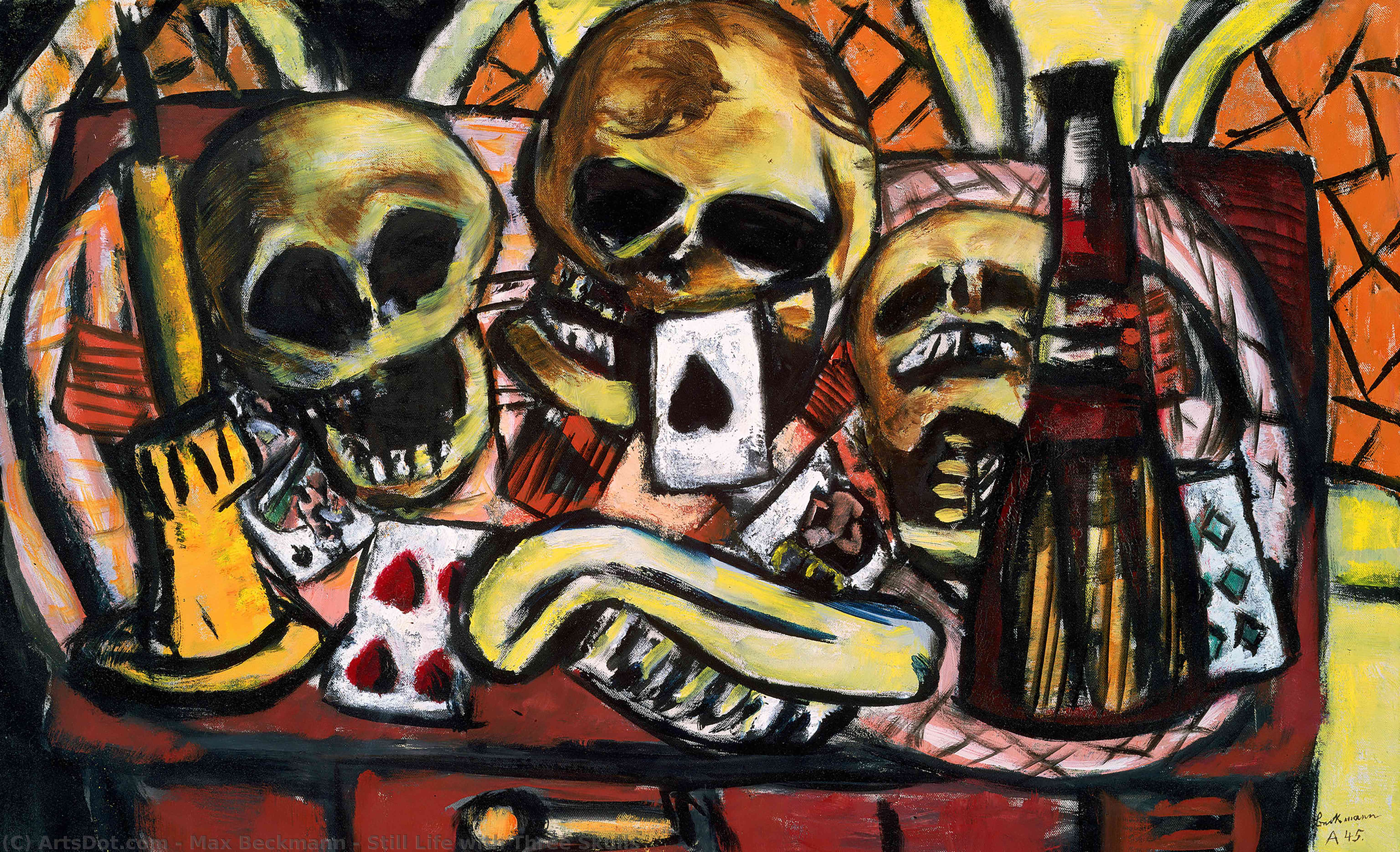
Still Life with Three Skulls


Three haunting skulls and scattered bottles create a profound sense of mortality in this powerful German Expressionist still life by Max Beckmann, inviting you to explore the depths of this evocative masterpiece.
 Zobraziť viac
Európa po dažďovi II – Fantastický obraz Max Ernsta zobrazuje surrealistické krajiny bohatými farbami a komplexnými detailmi. Pozrite si umelecké dielo z roku 1942, ktoré oslňuje svojím významom!
Získajte súbor pripravený na tlač, ktorý ponúka oveľa vyššiu kvalitu než online náhľad. Každý predávaný digitálny obraz pochádza z vysokorozlíseného originálu v našej databáze – zvyčajne s šírkou 5 000 až 15 000 pixelov – takže môžete s istotou tlačiť vo veľkom formáte, strihať detailné výrezy alebo reprodukovať jemné detaily.
Žiadny súbor neopustí naše štúdio bez úprav. Digitálny expert kontroluje farby v porovnaní s originálnym obrazom a v prípade potreby ich opraví, následne nástrojmi na profesionálnu retuš zvyšuje mieru ostrosti a detailov — pričom vždy zostáva verný umeleckému ťahu štetca a štýlu autora. Výsledkom je obraz, ktorý pôsobí ako samotné dielo, nie ako naskenovaný snímok s filtrom.
Schvaľujete ešte pred dokončením: náš expert vám obrazový súbor do 72 hodín pošle e-mailom na kontrolu. Nie ste spokojní? Požiadajte o vylepšenia alebo opravy, prípadne si môžete vyžiadať vrátenie platby, ak kvalita nedosahuje očakávanú úroveň.
Táto kvalita je základom dôvery vydavateľov, dizajnových štúdií, galérií a tlačovníkov.
Digitálny obraz
Stiahnite si vysokorozlíšený súbor na osobné zobrazovanie, tlačenie a kreatívne projekty. ( Prepnúť na tlač Kúpiť ručne maľovaný obraz)
Súčasťou každej objednávky digitálneho obrazu
Garantovaná expertná digitálna distribúcia
Keď si vyberiete TopImpressionists.com, nezískate len obyčajný obrázok – získate profesionálne upravené digitálne umenie, vytvorené s maximálnou precíznosťou a podložené zárukou vašej spokojnosti. Tu je všetko, čo je súčasťou vašej objednávky automaticky:

Rýchle doručenie e-mailom
Vaša vysokorozlíšená digitálna súprava obrázkov vám bude zaslaná e-mailom do 72 hodín od objednávky – pripravená na okamžité použitie.

Digitálny súbor s vylepšením AI
Vaše dielo je profesionálne optimalizované pomocou pokročilých nástrojov umelej inteligencie a manuálnej úpravy, čo zaručuje maximálnu mieru detailov, čistotu a presnosť farieb.

Bezplatné celoživotné opätovné doručenie
Súbor ste náhodou zmazali alebo ste ho stratili? Žiadne starosti – kedykoľvek vám ho môžeme poslať znova, úplne bez poplatkov.

Bez poplatkov za dovoz – navždy
Užite si svoje umenie okamžite bez colných poplatkov, daní alebo nákladov na dopravu – digitálne stiahnutia sú vždy oslobodené od dane.

Garantovaná presnosť farieb
Pomocou profesionálnych nástrojov a farebného manažmentu zabezpečujeme, aby vaša digitálna fotografia čo najpresnejšie odrážala pôvodné farby.

Záruka spokojnosti 100 dní
Ak nebudete spokojní so svojím digitálnym obrázkom, upravíme ho alebo vám v priebehu 100 dní vrátime 100% – bez zbytočných otázok.

100% Záruka vrátenia peňazí
Nie ste spokojní? Získajte plnú náhradu platby do 100 dní od prijatia digitálneho súboru – bez zbytočných otázok.

Zľavy pri veľkom odbere
Pri kúpe 3 obrázkov získate zľavu 10% - Pri kúpe 5 obrázkov získate zľavu 15% - Pri kúpe 10+ obrázkov získate zľavu 20%. Ideálne pre kreatívne projekty, galérie a agentúry.
A Memento Mori in Modernity
In the hauntingly evocative Still Life with Three Skulls, the viewer is invited into a somber, introspective space where the boundaries between life and death blur through the lens of German Expressionism. Max Beckmann, a master of capturing the psychological weight of the human condition, presents a composition that transcends mere tabletop arrangement. The painting features three skulls arranged across a dark, textured surface, their hollow sockets staring back with an unsettling permanence. Interspersed among these skeletal remains are various bottles and a solitary knife, objects that ground the macabre subject matter in a domestic, almost mundane reality. This juxtaposition creates a profound tension, as the everyday items of life sit alongside the undeniable symbols of mortality.
The technique employed by Beckmann is nothing short of visceral. Eschewing the delicate smoothness of classical still lifes, he utilizes a bold, distorted approach to space and form that reflects his experience as a medical orderly during World War I. The brushwork feels heavy and deliberate, imbuing each object with a sense of sculptural weight. There is a rhythmic quality to the placement of the bottles—one perched in the upper right, another near the center, and a third anchoring the lower left—which guides the eye through a labyrinth of light and shadow. This use of chiaroscuro, reminiscent of the Old Masters like Rembrandt, serves to heighten the drama, pulling the skulls out of the darkness and forcing a confrontation with their stark, bony architecture.
Symbolism and the Weight of Existence
To gaze upon this work is to engage with the ancient tradition of memento mori—the reminder that death is an ever-present companion. However, Beckmann breathes a modern, existential dread into this classical theme. The skulls are not merely decorative symbols; they represent the fragility of the human ego and the inevitable decay of all material things. The presence of the knife adds a layer of latent violence or perhaps the surgical precision of fate, while the bottles suggest the fleeting pleasures of the senses that cannot stave off the end. For the collector or interior designer, this piece offers more than just visual interest; it provides a profound intellectual anchor for a room, sparking conversation about the cyclical nature of life and the enduring legacy of human struggle.
For those seeking to integrate such a powerful work into a curated space, a high-quality reproduction of Still Life with Three Skulls serves as a centerpiece of immense character. It is an ideal selection for a study, a library, or a sophisticated gallery wall where art is intended to provoke thought and evoke emotion. The painting’s dark palette and commanding presence allow it to harmonize with rich textures like leather, dark wood, and velvet, creating an atmosphere of timelessness and intellectual depth. Owning this piece is an invitation to contemplate the beauty found within the shadows and to appreciate the raw, unfiltered truth of the human experience as captured by one of the twentieth century's most significant artistic voices.
Otázky a odpovede
Sú farby diela „Still Life with Three Skulls“ od Max Beckmann živé alebo tlmené?
„Still Life with Three Skulls“ od Max Beckmann je zachytený s nasytením Balanced Soft a intenzitou Balanced.
Aký je formát diela „Still Life with Three Skulls“?
„Still Life with Three Skulls“ od Max Beckmann má formát Panoramic. Tento formát určuje pomer strán kompozície.
Kde môžem kúpiť print diela „Still Life with Three Skulls“ od Max Beckmann?
Potlač diela „Still Life with Three Skulls“ od Max Beckmann si môžete objednať priamo na jeho stránke Fine art tlač: umelecká tlač na bavlnenom plátne alebo archivnom plátnovom papieri.
Životopis umelca
early life and artistic development
Max Beckmann, a renowned german painter, draftsman, printmaker, sculptor, and writer, was born on february 12, 1884, in leipzig, saxony. his artistic journey began with academically correct depictions, which later transformed into distorted figures and spaces, reflecting his altered vision of humanity after serving as a medical orderly in world war i. Beckmann’s formative years were marked by a fascination for classical art and a desire to emulate the masters—a pursuit that would ultimately shape his distinctive style. Despite initial inclinations toward academic painting, he swiftly rejected convention, embracing experimentation and forging connections with avant-garde movements like Expressionism. This pivotal experience of the First World War profoundly impacted Beckmann’s artistic sensibilities, triggering a dramatic stylistic shift away from traditional techniques towards a more emotionally charged and symbolically rich approach.artistic style and influences
Beckmann's artistic style—rooted in the imagery of medieval stained glass—was significantly influenced by a constellation of artists who captivated his imagination during his formative years. Among these were Cézanne, whose geometric explorations challenged conventional perspective; Van Gogh, whose vibrant colors and expressive brushstrokes conveyed raw emotion; Blake, whose visionary symbolism infused his art with spiritual depth; Rembrandt, whose masterful use of chiaroscuro created dramatic contrasts of light and shadow; and Rubens, whose opulent compositions celebrated grandeur and dynamism. Furthermore, Beckmann drew inspiration from northern european artists of the late middle ages and early renaissance—Bosch, Bruegel, and Matthias Grünewald—whose unsettling visions of humanity and their preoccupation with moral themes resonated deeply within him. These influences coalesced into a singular artistic vision characterized by distortion, fragmentation, and psychological intensity.notable works and exhibitions
Beckmann’s oeuvre encompasses a vast array of paintings, prints, sculptures, and literary endeavors, yet certain artworks stand out as exemplifying his stylistic prowess and thematic concerns. *The Bark*, acquired by the National Gallery in Berlin, exemplifies Beckmann's masterful command of composition and color—a testament to his unwavering dedication to artistic excellence. Similarly, *Self-Portrait in Tuxedo* captures a moment of introspective contemplation, reflecting Beckmann’s profound engagement with existential questions. His retrospectives at the Städelschule Mannheim (1928) and Basel and Zurich (1930) provided invaluable opportunities for audiences to appreciate the breadth and depth of his artistic legacy. These exhibitions showcased not only his stylistic evolution but also his unwavering commitment to confronting complex social and psychological realities through art.later life and exile
Beckmann’s fortunes took a decisive turn with the ascendancy of Adolf Hitler, resulting in his dismissal from the Frankfurt Art School and the confiscation of over 500 of his artworks—a devastating blow to his artistic career. Forced into self-imposed exile in Amsterdam for ten years, Beckmann faced insurmountable obstacles in securing a visa for the United States, thereby perpetuating his separation from his homeland. Despite these hardships, he continued to produce prolifically during his exile, establishing a studio at Rokin No. 85 and fostering connections with fellow artists and intellectuals. His unwavering belief in artistic freedom—a conviction born from his experiences under Nazi oppression—fueled his creative endeavors and solidified his reputation as one of the most courageous and uncompromising voices of German Expressionism. Beckmann’s legacy extends beyond his artistic creations; he served as a professor at Washington University in St. Louis and the Brooklyn Museum, imparting invaluable knowledge to aspiring artists and shaping the intellectual landscape of his time. His first retrospective in the United States occurred in 1948 at the City Art Museum, Saint Louis—a triumphant return that affirmed his enduring artistic significance. Max Beckmann’s oeuvre remains a powerful testament to the transformative power of art—a realm where distorted figures grapple with existential dilemmas and haunting landscapes convey profound psychological truths.
Max Beckmann
1884 - 1950 , Nemecko
Základné informácie
- Artistic Movement Or Style: Expresionizmus
- Artists Or Movements Influenced By This Artist: ['Rembrandt']
- Artists Who Influenced This Artist:
- Georges Seurat
- Vincent van Gogh
- Date Of Birth: február 12, 1884
- Date Of Death: december 27, 1950
- Full Name: Max Carl Friedrich Beckmann
- Nationality: Nemecký
- Notable Artworks:
- The Bark
- Self-Portrait in Tuxedo
- Place Of Birth: Lipsko, Nemecko