

Zobrazené: · Včetně rámov:
 Náhľad v interiéri
 Odoslať ako digitálnu kartu
 Zdieľať
 Podrobnosti o dielo
 Príručka

 Stiahnuť obraz
 Podobné položky
 RTG skúška
 Prehliadanie diapozoje
 Otázky a odpovede
 Štatistiky

€ 285
Ručne maľovaná olejová reprodukcia
Ručne maľovaný olej na plátne vo vašej zvolenej veľkosti a v ráme, vyrobený na mieru našimi umelcami. ( Prepnúť na tlač Prepnúť na digitálny obraz)
Veľkosť
·Štandardné
na mieru
CM
INCH
Vyberte si z našich preddefinovaných rozmerov, ktoré zodpovedajú pôvodným pomeroḿ diela.
Načítavanie veľkostí...

šírka
výška
Zadajte šírku a výšku, ktoré potrebujete, aby sa dielo hodilo k vášmu rámu alebo stene. Keďže ide o ručnú maľbu, pri rozmeroch s odlišným pomerom strán môže umelec namalovať o niečo viac okolo obrázka alebo ho mierne orezatú — výber patrí vám. Pred začatím maľovania vám pošleme digitálnu ukážku na schválenie. Obrázok zobrazený na tejto stránke nenahrádza reálny výsledok — ten zobrazuje iba digitálna ukážka.
 Zobraziť viac
Dokončenie
·
Biele okraje €1

rozostrené okraje €1

Vytiahnutý okraj €1

P118B €10

P118H €10

P118W €10

P438Z €10

P508JH €12

P508YH €12

P805H €10

P805Z €10

P919BZ €10

P919G €10

P919XJ €10

P959ZH €10

P968JZ €12

W106C €8

W218G €10

W218JH €8

W218Y €10

W307PJ €10

W316G €10

W316PJ €8

W316Y €10

W398PJ €8

W4111J €10

W500HY €15

W500JH €15

W692G €12

W849H €8

W940BG €15

W953PJ €8

H24-GOLD €30

H24-SILVER €30

H36-GOLD €45

H36-SILVER €45
Dodávané v ochrannom tubuse, pripravené na vlastné orezanie a paspartu u vášho kaderníka.
Dodatkové služby
voliteľnéČo si všetko zahŕňajú extra položky?
Príklady toho, čo je možné zmeniť: nahradenie tváre fotkou zákazníka; pridanie domáceho miláčika (napr. nahradenie mačky psom); začlenenie skrytého správy do pozadia; zmena krajiny alebo prvkov v pozadí.
Po objednávke vám tím TopImpressionists.com pošle e-mail s pokynmi a poskytne náhľad návrhu
Po objednávke vám tím TopImpressionists.com pošle e-mail s pokynmi a poskytne náhľad návrhu
Celosvetová doprava () za 3 až 4 týždne namiesto štandardných 5 týždňov. (7 november). Bez kompromisov v kvalite.
Ochranný lak
Popisné označenie
Detaily vygravírovaného bronzového pláka
This elegant plaque features the artist's name and the title of the artwork, finely engraved for a timeless presentation.
It is made from bronze with a refined, elegant finish. The text is precisely laser-engraved for a sharp and permanent result. Measuring 9x2 cm, the plaque is compact yet easy to read. It's built to be durable and scratch-resistant, offering a professional, museum-quality look. Mounting is simple thanks to the included adhesive backing.
Detaily transparentnej akrylovej plăty
The plaque includes essential engraved details such as the artist's name, the title of the artwork, the date it was created, the type of media used-like oil on canvas or watercolor-a brief description of the piece, and a QR code that links to the complete artwork information.
It is crafted from clear acrylic, offering a sleek, modern appearance. The text is UV-engraved in black to ensure strong visual contrast. With a size of 10x15 cm, it ensures optimal readability. It comes equipped with two metal hooks for secure wall mounting. The plaque is designed to be weather-resistant, making it suitable for various environments, and it includes interactive features that work seamlessly with smartphone scanning.
Detaily čiernej akrylovej plăty
This elegant plaque includes engraved information such as the artist's name, the title of the artwork, the date it was created, the type of media used (like oil on canvas or watercolor), a short description of the artwork, and a QR code for quick access to more information.
The plaque itself is made from refined black acrylic with a premium finish. The text is laser-engraved in white for high contrast and readability. Its size is 10x15 cm, designed to be easy to read. It comes with two metal hooks for professional mounting. The design is sleek and fits any interior style. It is also weather-resistant and durable, with built-in digital integration for mobile compatibility.
Možnosť skla je dostupná len pri rozmeroch pod 110 cm
 Možnosť skla je dostupná len pri rozmeroch pod 110 cm
- Bezplatná expresná doprava po celom svete
- Vysokokvalitné lnianske plátno
- Kompletné poistenie prepravy
- Záruka vrátenia colného poplatku
- Záruka presného farebného zhodnutia
- 100-dená politika vrátenia tovaru (iba pri vadách)
- 100% záruka vrátenia peňazí
- Zľava pri väčšom množstve


Popis zberateľského predmetu
Explore Walter Ufer’s ‘Sleep,’ a poignant oil painting of Native American women in Taos. Discover realism, rich detail & cultural symbolism – a unique 20th-century artwork.
Biografia umelca
Walter Ufer (1876-1936) bol americký umelec s nemeckými koreňmi, známy pre svoje vyjadritelné maelstvo o živote indiánov v Taos, New Mexico. Kľúčový člen 'Taos Ten', známy z žánrových scen a živých krajín.
O tomto obraze
The Weight of Tradition: An Encounter with Walter Ufer’s “Sleep”
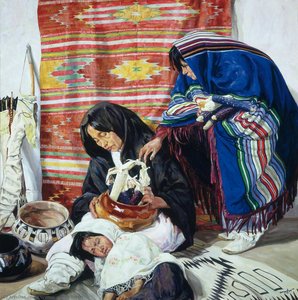
Walter Ufer's "Sleep," painted in 1923, isn’t merely a depiction of three Native American women; it’s an immersion into a world steeped in ritual and profound reverence. The painting immediately draws the viewer in with its rich tapestry of color – predominantly warm reds, oranges, and browns that evoke the earth itself, grounded by cooler blues and greens woven through the textiles and pottery. This palette isn't simply decorative; it speaks to the cultural heritage of the subjects, hinting at a deep connection to the land and ancestral traditions. The composition is carefully orchestrated, centering on the kneeling woman as a focal point, yet subtly inviting us into the periphery of the scene, suggesting an active participation in this sacred space.
Ufer’s masterful technique reveals layers of painstaking detail. He employs a layered oil painting approach, building up texture with deliberate brushstrokes that create a palpable sense of roughness on the clothing – perhaps representing the wear and tear of daily life intertwined with ceremonial garb – while simultaneously rendering the pottery with smooth, almost polished surfaces. This juxtaposition speaks to the duality inherent in Native American culture: the balance between practicality and spirituality, the tangible and the intangible. The lighting, soft and diffused, isn’t dramatic; it's deliberately muted, casting subtle shadows that lend a sense of solemnity and depth to the figures and objects, as if illuminating a secret whispered within a sacred space.
A Window into Taos: Contextualizing Ufer’s Vision
To fully appreciate “Sleep,” it's crucial to understand its historical context. Painted in 1923, during his time in Taos Pueblo, New Mexico, the artwork represents a pivotal moment in Walter Ufer’s career and his deep engagement with Native American culture. He was part of the "Taos Ten," a group of artists who sought to document and celebrate the lives and traditions of the region's indigenous communities. This wasn’t simply an act of observation; it was a deliberate attempt at understanding and portraying these cultures with respect and authenticity, a rare undertaking for American art at the time.
Ufer’s background as a German-born artist profoundly shaped his approach. His training in Europe instilled a meticulous attention to detail and a sophisticated understanding of composition – elements he skillfully translated into his depictions of Native American life. However, it was his immersion within the Taos community that truly informed his work, allowing him to capture not just appearances but also the spirit and essence of these traditions. The painting’s realism is tempered by an underlying sense of mystery, inviting viewers to contemplate the deeper meanings embedded within the scene.
Symbolism Woven into the Fabric
The details within “Sleep” are laden with symbolic significance. The intricately patterned rug serves as a visual anchor, framing the central figures and providing a rich backdrop that speaks to the importance of storytelling and communal life within Native American culture. The pottery, often adorned with geometric designs and natural motifs, represents both artistic skill and spiritual connection – a tangible link to ancestors and the earth. The women themselves, engaged in what appears to be a ritualistic activity, are not simply subjects; they embody generations of tradition, wisdom, and connection to the divine.
The act depicted—kneeling in reverence—suggests healing or a profound spiritual ceremony. The quiet dignity of the figures, coupled with the muted colors and soft lighting, evokes a sense of solemnity and timelessness. It’s an image that transcends mere representation, offering a glimpse into a world governed by ancient beliefs and deeply rooted traditions.
A Legacy of Authenticity: Reproductions and Beyond
Walter Ufer's "Sleep" remains a powerful testament to the beauty and complexity of Native American culture. TopImpressionists offers high-quality, hand-painted reproductions that faithfully capture the painting’s rich detail and evocative atmosphere. These reproductions are more than just images; they are windows into another world—a world of sacred rituals, profound traditions, and enduring wisdom. Investing in a reproduction is an investment in preserving this important piece of American art history and honoring the legacy of Walter Ufer's insightful portrayal.
Otázky a odpovede
Ako "Sleep" vyvažuje svetlo a tieň?
Zaznamenané hodnoty pre „Sleep“ od Walter Ufer sú: jas bright, luminancia Gentle Luminance.
Akú náladu vyjadruje „Sleep“ od Walter Ufer v rámci smeru Contemporary Realism?
Melancholic emócia diela „Sleep“ dopĺňa jeho štýl, ktorý patrí do smeru Contemporary Realism.
Kto je autorom diela "Sleep" a do ktorého umeleckého smeru patrí?
Dielo „Sleep“ vytvoril/a Walter Ufer v štýle Contemporary Realism. Umenec a smer definujú tradíciu tohto diela.
Rýchle fakty a umelecký kvíz
O umelcovite Walter Ufer

Walter Ufer
1876 - 1936, Nemecko
Biografia umelca
Duša Juhozápadu: Život a odkaz Waltera Ufera
Walter Ufer predstavuje kľúčovú postavu amerického impresionizmu, maliara, ktorého ťahy štetcom robili viac než len zachytávanie svetla; zachytával samotné srdcovanie celej kultúry. Narodený v roku 1876 v Hückeswagene v Nemecku, Uferova cesta do vysokých púšč Nového Mexika bola posiate nia len prísnym europeským výkonom, ale aj hlbokou zvedavosťou voči ľudskej existencii. Jeho rané roky formovala nemecko-americká diaspora v Louisville v Kentucky, kde začal absorbovať bohaté textúry svojho dedičstva. Toto základné obdobie, poznačené štúdiami litografie a grafiky, mu doprial technickú precíznosť, ktorá mu neskôr umožnila zvládať zložitosti svetla a tieňa s bezprecedentným majstrovstvom.
Jeho snaha o umeleckú dokonalosť ho priviedla na transformatívnu odysea po celej Európe. Ako cestujúci majster sa Ufer ponorel do rozmanitých umeleckých tradícií kontinentu a zdokonaloval svoju techniku na prestížnych akadémiách v Hamburgu a Drážďane. Toto obdobie intenzívnej intelektuálnej a kreatívnej expanzie vyvrcholilo jeho časom v Mníchove, kde sa venoval intenzívnej štúdiovnej praxi. Keď sa v roku 1911 konečne vrátil do Spojených štátov, priniesol si so sebou sofistikovanú europeskú citlivosť, ktorá bola pripravená na hlboké stretnutie s drsnou, slnekom zaliečenou krajinou amerického Západu.
Vizionár z „Desiatky z Taos“
Rok 1914 znamenal rozhodujúci zlom v Uferovom živote aj v trajektorii amerického umenia. Po vydaní sa do Taos Pueblo v Novom Mexiku sa stal súčasťou výnimočnej umeleckej revolúcie. Prípadom do vplyvnej skupiny známej ako „Taos Ten“ sa Ufer stal centrálnou postavou kolektívu, ktorý sa snažil posunúť od čisto krajinárskej maľby k autentickejšiemu, vizcerálnemu zobrazeniu života domorodcov. Na rozdiel od mnohých svojich súčasníkov, ktorí vnímali Juhozápad cez romantizovanú alebo koloniálnu optiku, pristupoval Ufer svojim predmetom s hlbokým rešpektom a citom pre dôstojnosť každodenného bytia.
Jeho tvorba sa stala mostom medzi europeskými impresionistickými technikami a surovou, duchovnou energiou ľudu Pueblo. Nebol len pozorovateľom, ale kronikárom rituálov, krajín a tichých rytmov komunitného života. Kľúčovým prvkom tejto kreatívnej evolúciu bol jeho vzťah s Jimom Mirabalom, Indiánom z Taos, ktorý slúžil Uferovi ako múza aj spolupracovník. Prostredníctvom tohto spojenia získal Ufer intímne porozumenie kultúrnych nuans definujúcich tento región, čo mu umožnilo vnútiť do svojich pláten pocit živej pravdy, ktorý rezonoval daleko za hranicami Nového Mexika.
Technika, symbolizmus a historický význam
Uferovo dielo je charakteristické majstrovským ovládaním farby a odvážnym, expresívnym nanášaním farieb. Jeho štýl, hoci zakorenený v principoch amerického impresionizmu, sa často naklonil k robustnejšiemu a textúrovanejšiemu prístupu, ktorý zachytával žiar nepriateľského púščneho slnka aj váhu zeme. Svetlo využíval nielen na osvetlenie tvarov, ale aj na vyvolávanie emócií – vytváral scény, kde atmosféra pôsobí ťažkne od histórie a tradície.
Historický význam Waltera Ufera spočíva v jeho schopnosti pozdvihnúť žánrovú maľbu na úroveň hlbokého sociálneho a kultúrneho vyjadrenia. Medzi jeho najvýznamnejšie úspechy patrí:
- Autentická reprezentácia: Odklon od „pastrovejších“ stereotypov života domorodcov k prezentovaniu nuancovanejšieho a humanizovaného portrétu ľudu z Taos.
- Umelecká syntéza: Úspešné spojenie formálneho akademického výcviku z Nemecka s živým, neukázneným duchom amerického Juhozápadu.
- Dedičstvo Taos Ten: Kľúčová úloha pri budovaní Taos ako prvorodeného miesta pre americký modernizmus a vitalného centra umenia zameraného na pôvodné kultúry.
Dnes Uferove maľby zostávajú trvácymi svedectvami o období intenzívneho kultúrneho pretakania. Jeho schopnosť prepletiť technickú prísnosť europeského vzdelania s duchovnou hĺbkou kultúry Pueblo zaisťuje, že jeho dielo naďalej pútavosť, pozývajúce moderných divákov, aby prostredníctvom jeho evokatívnych a majstrovských očí mohli svedčiť o nadčasovom duchu doliny Taos.
Rýchle fakty o umelcovi Walter Ufer
- Artistic Movement Or Style: Taoský impresionizmus
- Artists Or Movements Influenced By This Artist: ['']
- Artists Who Influenced This Artist: ['']
- Date Of Birth: 1876
- Date Of Death: 1936
- Full Name: Walter Ufer
- Nationality: Nemecko-americký
- Notable Artworks:
- Jeho dcéra
- Konštruktorí pustíne
- Po nich
- Place Of Birth: Hückeswagen, Nemecko


Walter Ufer
Sleep
() ·
Včetně rámov: · Ručne maľované olejom na plátne
Celkom