


 Förhandsvisa
 Skicka
 Dela
Dela
 Visa detaljer
 Guide
Guide

 Ladda ner
 Liknande objekt
 Röntgen
 Bildspel
 Q&A
Q&A Statistik
The Grammar


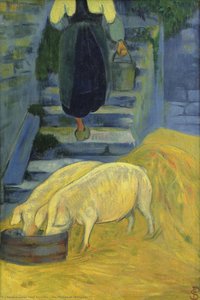
Paul Sérusier's 'The Grammar' (1892) is an iconic Cloisonnism painting, pioneering abstract art & inspiring the Nabis movement. Explore its symbolism and artistic innovation.
 Visa mer
Paul Sérusier (1864-1927) var en fransk konstnär pionjär inom abstrakt konst och inspiration till Nabis-rörelsen. Känd för sin cloisonnism-stil, influerades han av Gauguin och skapade verk som "The Talisman" – en tidig modernism.
Få en utskriftsfärdig fil som vida överträffar webbförhandsvisningen. Varje digital bild vi säljer kommer från en högupplöst master i vår bilddatabas – vanligtvis mellan 5 000 och 15 000 pixlar bred – så att du med trygghet kan göra stora utskrifter, beskära tätt eller återge fina detaljer.
Ingen fil lämnar vår studio utan att ha bearbetats. En digital expert kontrollerar färgerna mot originalmålningen och korrigerar dem vid behov, för att sedan förbättra skärpa och detaljrikedom med professionella retuscheringsverktyg — alltid med full respekt för konstnärens penseldrag och stil. Resultatet är en bild som ser ut som målningen, inte som en filtrerad skanning.
Du godkänner innan arbetet slutförs: vår expert skickar bilden via e-post inom 72 timmar för din granskning. Inte nöjd? Be om förbättringar eller korrigeringar, eller begär återbetalning om kvaliteten inte lever upp till förväntningarna.
Detta är den kvalitet som förlag, designstudior, gallerier och tryckerier litar på.
Digital bild
Ladda ner en högupplöst fil för personlig visning, utskrift och kreativa projekt. ( Byt till tryck Beställ handmålad reproduktion)
Ingår i varje beställning av digital bild
Professionell digital leverans, garanterad
När du väljer TopImpressionists.com får du inte bara en bild – du får ett professionellt förädlat digitalt konstverk, skapat med precision och med en garanterad tillfredsställelse. Här är allt som ingår i din beställning, automatiskt:

Snabb leverans via e-post
Din högupplösta digitala bild skickas till dig via e-post inom 72 timmar efter beställning – redo för omedelbar användning.

AI-förbättrad digital fil
Ditt konstverk optimeras professionellt med hjälp av avancerade AI-verktyg och manuell redigering, vilket garanterar maximal detaljrikedom, skärpa och färgnoggrannhet.

Fri livstidsåterleverans
Har du råkat radera eller tappa bort din fil? Ingen oro – vi skickar den kostnadsfritt till dig när som helst.

Inga importavgifter – någonsin
Njut av ditt konstverk omedelbart utan tull, importavgifter eller leveranskostnader – digitala nedladdningar är alltid skattefria.

Garanterad färgåtergivning
Vi säkerställer att din digitala bild återger de ursprungliga färgerna så exakt som möjligt med hjälp av professionella verktyg och färghantering.

100 dagars nöjdhetsgaranti
Om du inte är nöjd med din digitala bild kommer vi att revidera den eller återbetala 100% inom 100 dagar – utan frågor.

100% pengarna-tillbaka-garanti
Inte nöjd? Få full återbetalning inom 100 dagar efter att du mottagit din digitala fil – utan frågor.

Rabatt vid storköp
Köp 3 bilder, spara 10% – Köp 5, spara 15% – Köp 10+, spara 20%. Perfekt för kreativa projekt, gallerier och byråer.
The Grammar: A Pioneering Exploration of Abstraction
Paul Sérusier’s “Grammar,” painted in 1892, stands as a pivotal work not just within the artist's oeuvre but also as a foundational piece in the development of modern art. More than simply a portrait, it’s an intensely personal and experimental exploration of color, form, and the very nature of representation – a bold step towards abstraction that profoundly influenced generations of artists to come. The painting depicts a woman seated on the ground, absorbed in reading a book, a scene rendered with remarkable intimacy and a deliberate departure from traditional academic styles.
Sérusier’s artistic journey was deeply intertwined with the burgeoning Nabis movement, a group of Symbolist painters who sought to move beyond mere imitation of nature towards expressing inner emotions and spiritual truths. He initially studied at the Académie Julian, but it was his summer sojourn in Pont-Aven, Brittany, that proved transformative. There, under the tutelage of Paul Gauguin – a figure whose influence extended far beyond technique – Sérusier encountered the revolutionary approach of Cloisonnism, championed by Gauguin himself. This style, characterized by sharply defined outlines and areas of flat color applied in small, separate strokes, aimed to mimic the appearance of stained glass, creating a sense of luminous clarity and symbolic resonance.
Cloisonnism and the Language of Color
“Grammar” exemplifies this Cloisonnism technique with striking precision. The woman’s figure is not rendered through subtle gradations of tone but rather defined by bold, distinct outlines – a deliberate simplification that prioritizes color and form over meticulous detail. Sérusier employs a vibrant palette, dominated by deep blues, greens, and ochres, creating an atmosphere both serene and slightly melancholic. The colors aren’t blended; instead, they are applied in small, separate strokes, building up layers of hue and texture. This technique, combined with the flattened perspective, creates a sense of immediacy and directness, as if the painting is capturing a fleeting moment of contemplation.
Crucially, Sérusier’s use of color isn't merely descriptive; it carries symbolic weight. The blues evoke a sense of introspection and mystery, while the greens suggest connection to nature – a key theme in Symbolist art. The muted ochres contribute to the painting’s overall feeling of quietude and contemplation. The deliberate choice of colors, rather than realistic representation, is central to the work's expressive power.
A Study in Form and Abstraction
Beyond its technical mastery, “Grammar” represents a significant shift towards abstraction. While not entirely devoid of recognizable forms – the woman’s figure, the book, the surrounding objects – the painting prioritizes the exploration of color and form over strict representation. The simplified shapes, flattened perspective, and emphasis on pure color anticipate later developments in abstract art, foreshadowing the work of artists like Kandinsky and Mondrian. It's a deliberate move away from photographic realism towards a more subjective and expressive approach to visual language.
The painting’s title, “Grammar,” is particularly intriguing. It suggests that Sérusier was not simply depicting a scene but rather exploring the fundamental building blocks of artistic expression – the elements of color, line, and form – in a way that transcends traditional representation. The book itself becomes a symbol of knowledge and contemplation, inviting the viewer to engage with the painting on a deeper level.
Legacy and Inspiration
“Grammar” remains a vital work in the history of modern art, demonstrating Sérusier’s pioneering spirit and his profound influence on subsequent generations. It's a testament to the power of abstraction to convey emotion, ideas, and spiritual truths. Reproductions of this evocative painting continue to inspire artists and collectors alike, offering a glimpse into the heart of artistic innovation and the enduring quest for new forms of visual expression.
Frågor och svar
Kan jag använda augmented reality för att se "The Grammar" av Paul Sérusier i mitt rum?
"The Grammar" av Paul Sérusier kan förhandsvisas på din egen vägg via konstverkets Förhandsvisning i AR-sida med hjälp av förstärkt verklighet (AR) på en kompatibel enhet.
Hur förhåller sig stilen i "The Grammar" till sin skapares epok?
"The Grammar" av Paul Sérusier tillhör Cloisonnism / Nabis-rörelsen och skapades under sin konstnärs talet-era.
Vilken mättnad och intensitet har "The Grammar" av Paul Sérusier?
Färgen i "The Grammar" har en mättnad på Muted och en intensitet på Monochromatic.
Liknande konstverk




Konstnärsbiografi
Paul Sérusier: Pioneer of Abstraction and the Nabis
Paul Sérusier, född i Paris 1864 och död i Morlaix 1927, var en fransk konstnär vars verk markerade ett avgörande ögonblick i utvecklingen av modern konst. Han är främst känd som en pionjär inom abstrakt konst och en nyckelperson i den inflytelserika konströrelsen Nabis. Sérusiers konstnärliga resa präglades av en djupgående strävan efter att uttrycka känslor och perceptioner genom färg och form, vilket ledde till banbrytande experiment som inspirerade framtida generationer av konstnärer. Sérusier fick sin utbildning vid den prestigefyllda Académie Julian i Paris, där han studerade klassisk konst och utvecklade sina färdigheter. Det var under hans tid på akademien som han kom i kontakt med andra framstående konstnärer, inklusive Maurice Denis och Édouard Vuillard, vilka skulle bli viktiga samarbetspartners och inflytelserika figurer i den franska konströrelsen. En avgörande händelse i Sérusiers konstnärliga utveckling var hans vistelse vid Pont-Aven under sommaren 1888. Här deltog han i en grupp av konstnärer som leddes av Paul Gauguin, och det var under Gauguins inflytande som Sérusier började utforska nya sätt att uttrycka sig visuellt. Gauguin uppmuntrade Sérusier att frigöra sig från traditionella målningsmetoder och istället fokusera på att förmedla sina egna intryck och känslor genom rena färger och enkla former. Denna inspiration ledde till Sérusiers mest kända verk, *Bois d’Amour* (1888), som är ett exempel på cloisonnism – en teknik där formerna avbildas genom distinkta konturer och färgblock. Detta verk markerade ett viktigt steg mot abstraktion och visade Sérusiers förmåga att bryta sig loss från traditionella konstkonventioner.The Nabis and the Pursuit of Synthesis
Sérusier spelade en central roll i bildandet av den kortlivade men inflytelserika konströrelsen Nabis, som uppstod 1889. Namnet "Nabis" kommer från det hebreiska ordet för "profet", och rörelsen syftade till att skapa en ny form av konst som skulle vara både dekorativ och fin – en syntes mellan konst och hantverk. Sérusier, tillsammans med Paul Gauguin, Maurice Denis, Pierre Bonnard och Édouard Vuillard, bildade kärnan i Nabis-gruppen och utforskade gemensamt nya sätt att uttrycka sig visuellt. Nabis-konstnärerna var intresserade av att skapa konst som inte bara representerade den yttre världen utan också förmedlade inre känslor och idéer. De använde ofta dämpade färger, enkla former och dekorativa mönster för att skapa en atmosfär av mystik och andlighet. Sérusiers bidrag till Nabis-rörelsen var särskilt viktiga, eftersom han var en av de första konstnärerna som experimenterade med abstraktion och utforskade möjligheterna att uttrycka sig genom färg och form utan att nödvändigtvis försöka återskapa den yttre verkligheten.Key Works and Artistic Innovations
Sérusiers konstverk kännetecknas av en djupgående känsla för färg, form och ljus. Han var en mästare på att förmedla atmosfär och stämning genom sina målningar, och hans verk är ofta fyllda med en subtil melankoli och längtan efter något bortom den yttre världen. Några av Sérusiers mest kända verk inkluderar: * **Bois d’Amour (1888):** Ett banbrytande verk som visar Sérusiers experimenterande med cloisonnism och abstraktion. * **L'Averse (1893):** En målning som fångar en regnig dag i Pont-Aven, och där Sérusier använder dämpade färger och enkla former för att skapa en atmosfär av melankoli och stillhet. * **Portrait of Paul Ranson (1890):** Ett porträtt av konstnären Paul Ranson som visar Sérusiers förmåga att fånga essensen av ett mänskligt ansikte genom färg och form. * **The Snake Eaters (1894):** En surrealistisk målning som utforskar teman kring död, förgänglighet och det okända. Sérusier var också en framstående teoretiker inom konsten, och han skrev boken "ABC de la peinture" (1921), i vilken han beskriver sina idéer om konstens natur och hur den bör skapas.Legacy and Influence
Paul Sérusiers verk har haft ett betydande inflytande på utvecklingen av modern konst. Hans experimenterande med abstraktion, färg och form inspirerade en hel generation av konstnärer, inklusive Henri Matisse och Wassily Kandinsky. Han är ofta betraktad som en pionjär inom abstrakt konst och en nyckelperson i den franska avant-gardets historia. Sérusiers konst fortsätter att fascinera och inspirera konstintresserade världen över, och hans verk representerar ett viktigt steg mot en mer subjektiv och känslomässig form av konst. Han lämnade ett arv av innovation och kreativitet som fortsätter att forma konsten än idag.
Paul Sérusier
1864 - 1927 , Frankrike
Kort om konstnären
- Artistic Movement Or Style: Post-Impressionism
- Artists Or Movements Influenced By This Artist:
- Nabis
- Synthetism
- Artists Who Influenced This Artist:
- Paul Gauguin
- Maurice Denis
- Date Of Birth: 9 nov 1864
- Date Of Death: 7 okt 1927
- Full Name: Louis-Paul-Henri Sérusier
- Nationality: Fransk
- Notable Artworks:
- L'averse
- Porträtt Paul Ranson
- Melancholy
- Snakesätare
- Place Of Birth: Paris, Frankrike