

 Önizle
 Gönder
 Paylaş
 Detaylar
 Rehber

 Dosyayı İndir
 Benzerleri
 X-Işını
 Slayt Gösterisi
 İstatistikler
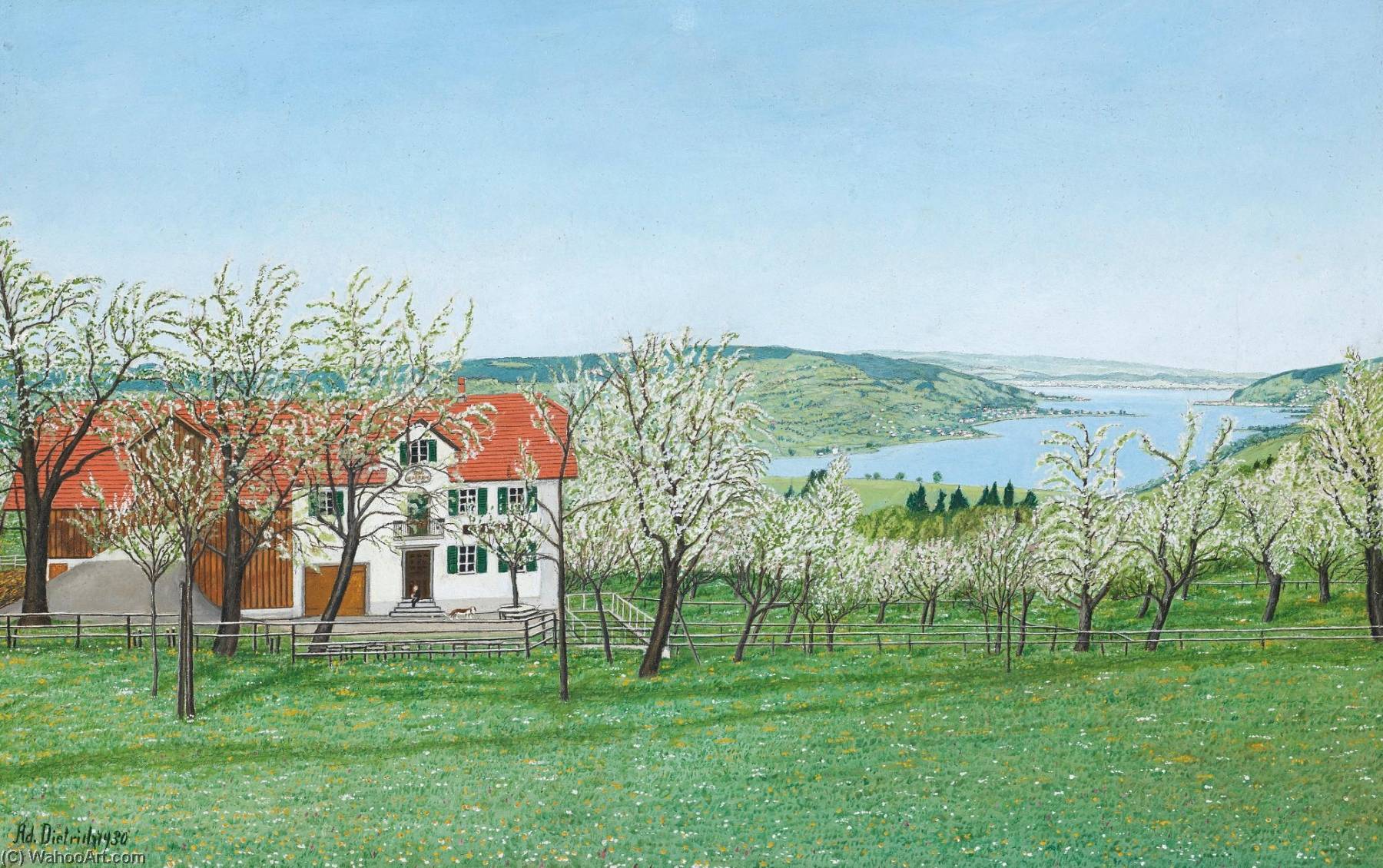
Eppenberg bei Eschenz, 1930
Adolf Dietrich (1877-1957) was a renowned Swiss Naïve artist of the 20th century, associated with New Objectivity. Explore his vibrant paintings of rural landscapes, still lifes & scenes of daily life. A key figure in Swiss art history.
 Devamını Oku
Web önizlemesinin çok ötesinde, baskıya hazır bir dosya edinin. Sattığımız her dijital görüntü, stok veri tabanımızdaki yüksek çözünürlüklü bir ana dosyadan —genellikle 5.000 ila 15.000 piksel genişliğinde— gelir; böylece büyük boyutlarda baskı alabilir, dar kırpmalar yapabilir veya ince detayları güvenle yeniden üretebilirsiniz.
Stüdyomuzdan çıkan hiçbir dosya dokunulmadan çıkmaz. Bir dijital uzman, renkleri orijinal tabloyla karşılaştırarak kontrol eder ve gerekirse düzeltir; ardından profesyonel rötuş araçlarıyla netliği ve detayları artırır — bunu yaparken her zaman sanatçının fırça darbelerine ve üslubuna sadık kalır. Sonuç, filtrelenmiş bir tarama gibi değil, bizzat tablonun kendisi gibi görünen bir görüntüdür.
İşlem tamamlanmadan önce onay verirsiniz: Uzmanımız, incelemeniz için görseli 72 saat içinde e-posta yoluyla gönderir. Memnun kalmadınız mı? İyileştirme veya düzeltme talep edebilir ya da kalite beklentinizin altında kalırsa iade isteyebilirsiniz.
Yayıncıların, tasarım stüdyolarının, galerilerin ve matbaaların güvendiği kalite budur.
Dijital Görsel
Kişisel kullanım, baskı ve yaratıcı projeleriniz için yüksek çözünürlüklü bir dosya indirin. ( Baskı Satışına Geç El Yapımı Tablo Satın Al)
Her Dijital Görüntü Siparişine Dahil Olanlar
Profesyonel Dijital Teslimat Garantisi
TopImpressionists.com seçtiğinizde, sadece bir görsel edinmekle kalmaz; titizlikle hazırlanmış, profesyonelce iyileştirilmiş dijital bir sanat eserine sahip olur ve memnuniyet garantisiyle güvence altına alınırsınız. Siparişinizle birlikte otomatik olarak sunulan her şey şunlardır:

Hızlı E-posta ile Teslimat
Yüksek çözünürlüklü dijital görüntü dosyanız, siparişinizin ardından en geç 72 saat içinde e-posta ile size gönderilecek ve hemen kullanıma hazır olacaktır.

Yapay Zeka Destekli Dijital Dosya
Sanat eseriniz; maksimum detay, netlik ve renk doğruluğu sağlamak amacıyla gelişmiş yapay zeka araçları ve manuel düzenleme kullanılarak profesyonelce optimize edilmektedir.

Ömür Boyu Ücretsiz Yeniden Gönderim
Dosyanızı yanlışlıkla mı sildiniz yoksa kayıp mı oldu? Endişelenmeyin; dosyanızı dilediğiniz zaman size ücretsiz olarak tekrar göndereceğiz.

Asla İthalat Ücreti Ödemeyin
Sanat eserinizin tadını gümrük vergisi, harç veya teslimat ücreti ödemeden anında çıkarın; dijital indirmeler her zaman vergiden muaftır.

Renk Doğruluğu Garantisi
Profesyonel araçlar ve renk yönetimi kullanarak dijital görselinizin orijinal renklere mümkün olduğunca yakın yansıtılmasını sağlıyoruz.

100 Günlük Memnuniyet Garantisi
If you're not satisfied with your digital image, we'll revise it or refund 100% within 100 days - no questions asked.

100% Para İadesi Garantisi
Memnun kalmadınız mı? Dijital dosyanızı teslim aldıktan sonraki 100 gün içinde, hiçbir soru sorulmaksızın tam para iadesi alabilirsiniz.

Toplu Sipariş İndirimleri
Buy 3 images, save 10% - Buy 5, save 15% - Buy 10+, save 20%. Great for creative projects, galleries, and agencies.
Sanatçı Biyografisi
A Life Rooted in the Swiss Landscape
Adolf Dietrich, born in 1877 and passing away in 1957, was a quietly significant figure in 20th-century Swiss art. Though not widely known internationally during his lifetime, he has since been recognized as a leading exponent of Naïve art, deeply connected to the traditions of New Objectivity. His life unfolded largely within the serene setting of Berlingen, Switzerland, on Lake Constance, and this geographical anchoring profoundly shaped both the subject matter and spirit of his work. Dietrich wasn’t an artist who sought out bustling urban scenes or avant-garde experimentation; instead, he turned inward, meticulously documenting the rhythms of rural existence with a unique blend of precision and heartfelt simplicity. He was, in essence, a chronicler of a disappearing world—a world of farmers, orchards, and the quiet dignity of everyday labor. His artistic journey wasn’t one of dramatic shifts or stylistic revolutions but rather a consistent refinement of his vision, a deepening engagement with the visual language of his surroundings.The Painterly Language of Simplicity
Dietrich's paintings are immediately recognizable for their distinctive style. He eschewed academic conventions in favor of a deliberately naive approach—a term that shouldn’t be mistaken for lack of skill, but rather an intentional rejection of illusionistic depth and perspective. His forms are solid and clearly defined, often outlined with dark contours, reminiscent of folk art traditions and children's drawings. Colors are vibrant yet grounded, reflecting the natural hues of the Swiss countryside: the rich greens of meadows, the warm ochres of barns, the deep blues of the lake. He possessed an extraordinary eye for detail, rendering each leaf, flower, and cobblestone with painstaking accuracy. However, this meticulousness wasn’t employed to create a photographic realism; instead, it served to emphasize the inherent beauty and order within the natural world. His compositions are often characterized by a flattened perspective and a sense of stillness, inviting viewers to linger and contemplate the quiet poetry of his scenes. He frequently depicted still lifes—arrangements of fruit, vegetables, and household objects—that radiate a sense of abundance and contentment.Influences and Artistic Development
While Dietrich’s style is often categorized as Naïve, it wasn't born in isolation. The artistic climate of the early 20th century, particularly the rise of New Objectivity (Neue Sachlichkeit) in Germany, exerted a subtle influence on his work. This movement emphasized clarity, realism, and a rejection of emotional excess—qualities that resonate strongly with Dietrich’s paintings. However, he diverged from the often-critical or satirical tone of many New Objectivity artists, choosing instead to celebrate the beauty and dignity of rural life. His primary influence, however, stemmed from the folk art traditions of Switzerland, particularly the decorative painting found on furniture and houses in his region. He absorbed the bold colors, simplified forms, and directness of expression that characterized these vernacular styles. Over time, Dietrich’s work evolved from a more purely descriptive approach to one that incorporated elements of symbolism and personal narrative. While he rarely depicted dramatic events, his paintings often convey a sense of underlying emotion—a quiet joy in the simple pleasures of life or a subtle melancholy for a world undergoing change.Themes and Recurring Motifs
Several themes recur throughout Dietrich’s oeuvre. Rural landscapes are central to his work, depicting scenes of farming, harvesting, and village life. He frequently painted orchards laden with fruit, vineyards basking in the sun, and fields dotted with wildflowers. These landscapes aren't merely representations of physical places; they are imbued with a sense of nostalgia and reverence for the natural world. Still lifes also occupy a prominent place in his paintings—arrangements of fruits, vegetables, flowers, and household objects that radiate a sense of abundance and contentment.- The depiction of daily life: Dietrich’s scenes often feature ordinary people engaged in everyday activities – tending gardens, washing clothes, or simply enjoying a meal.
- Celebration of the seasons: He captured the changing rhythms of nature with meticulous detail, from the blossoming of spring to the harvest of autumn.
- The importance of community: His paintings often depict scenes of social gathering and communal labor, highlighting the bonds that connect people to their land and each other.
Historical Significance and Legacy
Adolf Dietrich’s historical significance lies in his ability to capture the essence of a disappearing way of life. His paintings offer a poignant glimpse into the rural Switzerland of the early 20th century—a world that was rapidly changing under the pressures of modernization and industrialization. While he wasn't actively engaged in political or social commentary, his work implicitly celebrates the values of simplicity, community, and connection to nature. In recent years, there has been a growing appreciation for Dietrich’s unique artistic vision. His paintings are now recognized as important examples of Naïve art and valuable documents of Swiss cultural history. He stands as a testament to the power of quiet observation—a reminder that beauty can be found in the most ordinary of places and that even the simplest subjects can be imbued with profound meaning. His work continues to resonate with viewers today, offering a sense of peace, nostalgia, and a renewed appreciation for the rhythms of the natural world.
Adolf Dietrich
1877 - 1957
Kısa Bilgiler
- Full Name: Adolf Dietrich
- Nationality: Swiss
- Date Of Birth: 1877
- Date Of Death: 1957
- Place Of Birth: Berlingen, Switzerland
- Notable Artworks:
- Frühlingslandschaft am Untersee,
- Mädchen mit kurzen Haaren,
- Berlingen vom See aus
- Artistic Movement Or Style: Neue Sachlichkeit, Naïve art