


 Önizle
 Gönder
 Paylaş
 Detaylar
 Rehber

 Dosyayı İndir
 Benzerleri
 X-Işını
 Slayt Gösterisi
 İstatistikler
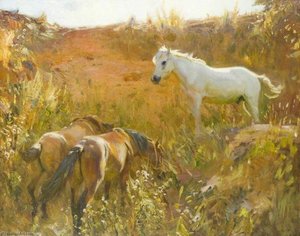
Up to His Knees
 25.0 x 34.0 cm
 Nuneaton Museum And Art Gallery
 Devamını Oku
Explore the evocative paintings of Alfred William Strutt, a British artist known for landscapes, portraits & historical scenes, particularly from New Zealand. Discover his unique style!
Bu sayfada sergilenen eser telif hakkı yasasıyla korunmaktadır; bu da yasal olarak eserin birebir kopyasını oluşturamayacağımız veya satamayacağımız anlamına gelir. Bu koruma, aşağıdakiler gibi uluslararası anlaşmalar kapsamında uygulanmaktadır: Bern Sözleşmesi ve aşağıdakiler de dahil olmak üzere ulusal yasalarca belirlenen ABD Telif Hakkı Kanunu - 17. Başlık.
Bu yöntem, koruma altındaki sanat eserinin kopyalanmasını veya çoğaltılmasını içermediği için telif hakkı düzenlemelerine tam uyum sağlar. Bunun yerine, yaratıcı bir yeniden yorumlamadır; orijinalinden etkilenen ancak onunla aynı olmayan yeni bir tablodur.
Giclée / Sanat Baskısı
Hızlı üretim ve esnek bitiş seçenekleriyle müze kalitesinde giclée veya kanvas baskı. ( El Yapımı Tablo Satın Al Dijital Görsel Satışına Geç)




































Standart Boyutlar
özel boyutlu
CM
INCH
Eserin orijinal oranlarıyla uyumlu, önceden belirlenmiş boyutlarımız arasından seçim yapın.
Loading sizes...

genişlik
yükseklik
Çerçevenize veya duvarınıza uygun olması için ihtiyacınız olan genişlik ve yüksekliği yazın. Bir baskı yalnızca kesilebilir, görselden daha büyük hale getirilemez; bu nedenle farklı bir formdaki boyut seçimi, görselin bir kısmının kaybına neden olur. Herhangi bir baskı yapmadan önce onaylamanız için size bir dijital taslak gönderiyoruz. Bu sayfada gösterilen resim gerçek kesimi göstermez — bunu yalnızca taslak gösterir.
Dünya Çapında Teslimat (); standart 4/5 hafta yerine 2 haftada. (26 Ekim)

Dünya Çapında Ücretsiz Ekspres Kargo

Yüksek Kaliteli Keten Tuval

Tam Nakliye Sigortası

Gümrük Vergisi İadesi Garantisi

Gerçek Renk Uyumu Garantisi

100 Günlük İade Koşulları (Sadece Üretim Hatalı Ürünler İçin)

%100 Para İade Garantisi

Toplu Alım Avantajı
 Cam seçeneği yalnızca 110 cm altındaki boyutlar için mevcuttur.

Up to His Knees
Giclée / Sanat Baskısı
Baskı Boyutu
-


Toplam Fiyat
₺ 3377
The painting "Up to His Knees" by Alfred William Strutt is a masterpiece that embodies the essence of natural beauty and tranquility. This stunning oil on canvas piece, measuring 25 x 34 cm, is currently housed at the Nuneaton Museum And Art Gallery in the United Kingdom.
The painting's serene atmosphere and intricate details make it a standout piece in the world of art, and its availability as a handmade oil painting reproduction on https://TopImpressionists.com makes it accessible to art lovers everywhere.
A Glimpse into the Painting's Details
The painting depicts a majestic brown horse standing in a lush green field, surrounded by vibrant flowers. The horse is positioned near the center of the scene, with several other horses visible in the background, creating a sense of depth and perspective. The overall atmosphere of the painting exudes a sense of peace and freedom, inviting the viewer to step into the serene world of Alfred William Strutt.Exploring the Artist's Style
Alfred William Strutt was a renowned artist known for his exceptional skill in capturing the beauty of nature. His paintings often featured animals, landscapes, and rural scenes, showcasing his ability to convey emotion and atmosphere through his brushstrokes. "Up to His Knees" is a testament to his talent, with the intricate details and textures of the horse's coat and the surrounding environment demonstrating his mastery of oil painting.- View more artworks by Alfred William Strutt on https://TopImpressionists.com/@/Alfred-William-Strutt
- Discover other beautiful paintings, such as Vasily Dmitrievich Polenov's "Sea of Galilee" on /art/list/?Filter=8XZ4E5-Vasily-Dmitrievich-Polenov-Sea-of-Galilee
- Learn more about the Nuneaton Museum And Art Gallery and its collection on https://TopImpressionists.com
The painting's serene atmosphere and intricate details make it a standout piece in the world of art, and its availability as a handmade oil painting reproduction on https://TopImpressionists.com makes it accessible to art lovers everywhere.
Soru ve Cevaplar
"Up to His Knees" eserinin formatı ve boyutu nedir?
Alfred William Strutt imzalı "Up to His Knees", 25 x 34 cm boyutlarında bir Landscape eser olarak tasarlanmıştır.
"Up to His Knees" eserinin ön izlemesini nerede görebilirim?
"Up to His Knees" eserinin Önizleme sayfası, sipariş vermeden önce eseri önizlemenize olanak tanır.
Alfred William Strutt başka hangi isimlerle tanınmaktadır?
"Up to His Knees" eserinin yaratıcısı Alfred William Strutt için kayıtlı diğer isimler arasında William Strutt yer almaktadır.




Sanatçı Biyografisi
The Intersection of Precision and Poetic Vision
Alfred William Strutt (1856–1924) remains a captivating figure in the tapestry of British art, representing a unique moment where the meticulous rigor of scientific observation met the sweeping emotionality of the Victorian era. Born in New Zealand to the visionary William Thomas Strutt—a man whose innovations in iron framing would forever alter the landscape of architecture—Alfred was raised in an environment where craftsmanship and structural integrity were paramount. This early exposure to the principles of engineering and fine detail instilled in him a profound respect for the physical world, a quality that would later define his artistic signature. His upbringing allowed him to bridge the gap between the burgeoning scientific inquiries of the late 19th century and the established traditions of Romanticism.
His formative years, spent navigating the intellectual corridors of Chelmsford and Cambridge, provided the academic foundation necessary for his multifaceted career. Under the guidance of his father and through his association with the rigorous atmosphere of Trinity College, Strutt developed a worldview that saw no conflict between the analytical eye and the creative spirit. His early training in engraving and drawing, influenced by the historical documentation styles of Joseph Strutt, taught him the importance of precision. This technical mastery allowed him to move seamlessly between genres, from the delicate, intimate textures of portraiture to the expansive, atmospheric grandeur of landscape painting.
A Mastery of Light, Texture, and Narrative
Strutt’s body of work is characterized by an extraordinary ability to capture both the tangible weight of the material world and the ephemeral nature of light. In his more intimate works, such as Young woman holding a book, he demonstrates a profound sensitivity to the Victorian soul. Through the careful rendering of heavy silk, ornate fabrics, and the soft luminosity of skin, he invites the viewer into a private moment of contemplation. Here, the subject is not merely a figure in a frame but a vessel for themes of literacy, interiority, and the quiet dignity of intellectual life. The book itself serves as a powerful symbol, acting as a bridge between the external social reality and the boundless reaches of the human imagination.
When his gaze turned toward the natural world or historical epic, Strutt’s technique expanded to embrace the dramatic influences of masters like Turner and Constable. His landscapes often possess a rhythmic vitality, where the interplay of light and shadow creates a sense of living breath within the canvas. Whether depicting the serene biblical narratives of Jerusalem Pilgrims or the rugged, untamed beauty found in scenes like Up to His Knees, his brushwork remains remarkably controlled yet emotionally resonant. He possessed a rare talent for utilizing warm tones and detailed compositions to evoke a sense of nostalgia and reverence, making his historical scenes feel less like distant memories and more like present, breathing realities.
Legacy of an Observational Pioneer
The significance of Alfred William Strutt lies in his refusal to separate the observer from the creator. While many of his contemporaries were moving toward purely abstract or impressionistic expressions, Strutt maintained a commitment to the "modern observation" of reality—a belief that true art must be rooted in an accurate understanding of form and structure. This commitment was perhaps most visible in his fascination with the structural revolutions of his time; just as his father utilized iron to redefine safety and aesthetics in architecture, Alfred used the structural elements of composition to reinforce the emotional impact of his subjects.
His contributions to the art world are marked by several enduring achievements:
- Technical Versatility: The seamless transition between the minute details of portraiture and the large-scale drama of historical and landscape painting.
- Symbolic Depth: The integration of contemporary Victorian values, such as the importance of literature and education, into fine art compositions.
- Historical Synthesis: A unique ability to blend the Romantic tradition with a burgeoning scientific interest in the natural world's mechanics.
Today, Strutt’s work serves as a vital historical record, capturing the aesthetic transitions of a century in flux. His paintings remain much more than mere depictions; they are windows into an era that sought to find harmony between the progress of industry and the enduring beauty of the natural and human spirit.

Kısa Bilgiler
- Artistic Movement Or Style: Victorian Painting
- Artists Or Movements Influenced By This Artist: ['Royal Academy']
- Artists Who Influenced This Artist: ['William Wynne Ryland']
- Date Of Birth: July 3, 1825
- Date Of Death: January 3, 1915
- Full Name: Alfred William Strutt
- Nationality: British
- Notable Artworks:
- The Old Cottage
- Horses
- Place Of Birth: Teignmouth, Devonshire