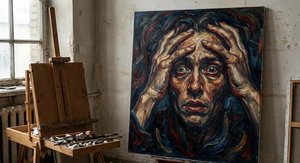
Amedeo Modigliani: The Haunting Beauty of Longing
Amedeo Clemente Modigliani (1884 – 1920) stands as one of the most poignant figures in early 20th-century art, a testament to artistic vision tragically curtailed by illness and circumstance. Born into Livorno’s vibrant Sephardic Jewish community—a haven for persecuted faiths—his formative years were marked not only by intellectual stimulation but also by recurring bouts of tuberculosis, fostering within him an acute sensitivity to fragility that would profoundly influence his oeuvre.
Modigliani's artistic journey began with a grounding in classical and Renaissance art, nurtured by his mother and grandfather who instilled in him the spirit of thinkers like Nietzsche, Baudelaire, and Lautréamont. These influences propelled him toward an aesthetic rejection of convention—a deliberate embrace of simplicity and expressive power—that would define his distinctive style.
His early artistic explorations centered on portraiture and sculpture, mirroring the humanist ideals prevalent at the time. He honed his skills at Livorno’s Accademia di Belle Arti, studying under Guglielmo Micheli alongside fellow artists like Picasso and Brâncuși—a formative encounter that cemented his connection to the burgeoning École de Paris movement.
The Style of Longing: Modigliani's Signature Technique
Modigliani’s artistic breakthrough arrived in Paris, where he established a studio in Montmartre amidst a constellation of avant-garde artists. He swiftly developed a revolutionary technique characterized by elongated faces and figures—a stylistic hallmark that immediately distinguished him from his contemporaries. This distinctive approach wasn't merely decorative; it conveyed an emotional depth rooted in melancholy and longing.
The artist meticulously sculpted the contours of his subjects’ features, employing a method he termed “the sculpture,” prioritizing expressive lines over realistic representation. He achieved this ethereal effect through a process of applying thin layers of plaster to a preliminary sketch, gradually building up form while maintaining the delicate curves and subtle distortions that became synonymous with Modigliani’s style.
Symbolism Within Elegance: Recurring Themes in His Paintings
Modigliani's paintings frequently explored themes of solitude, beauty, and vulnerability—subjects imbued with a palpable sense of yearning. He often depicted women nude figures bathed in soft light, capturing their serene expressions and conveying an unspoken sadness. These portraits weren’t simply representations of the human form; they were meditations on emotion and psychological states.
The artist's use of color—primarily muted hues—reinforced this mood of introspection. He favored shades of ochre, beige, and gray, creating canvases that felt both luminous and subtly shadowed. These palettes mirrored the emotional landscape of his subjects, reflecting a profound awareness of human suffering and beauty intertwined.
Legacy and Enduring Appeal
Despite facing considerable hardship throughout his life—including debilitating illness and financial instability—Modigliani achieved remarkable artistic success posthumously. His elongated portraits captivated audiences and critics alike, establishing him as an icon of Expressionism and securing his place in art history. Today, Modigliani’s work continues to inspire artists and collectors worldwide, its haunting beauty and evocative style resonating across generations.



 Preview
 Tabloyu Sipariş Et
 Paylaş
 Paylaş
 Detayları Gör

 İndir
İndir
 Benzerlerini gör
 X-Işını
 Slayt Gösterisi
 Tümünü Gör






































 Cam seçeneği yalnızca 110 cm altındaki boyutlar için mevcuttur.